FR4 Board Failure Analysis in High Voltage Systems
2026-06-05 17:23:50
Engineering teams and purchasing managers in the electrical manufacturing, power distribution, and industrial equipment sectors are very worried about FR4 board failure studies in high voltage systems. To keep expensive equipment from breaking and people from getting hurt, it's important to know how glass-reinforced epoxy laminates fail when they're put under high voltage stress. This detailed guide looks at how FR4 boards work in harsh electrical settings, lets you know how they usually break, and gives you useful tips for finding good materials. We'll help you protect your systems and make the best decisions for long-term operating integrity by giving you structured analysis and useful insights.
Understanding FR4 Boards in High Voltage Applications
What Makes FR4 Suitable for High Voltage Systems?
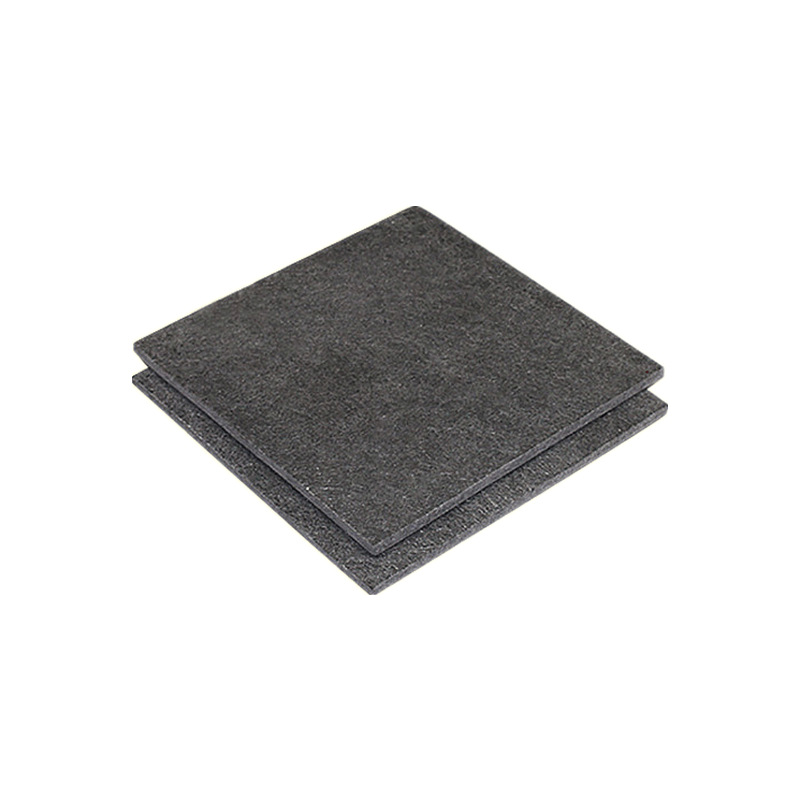
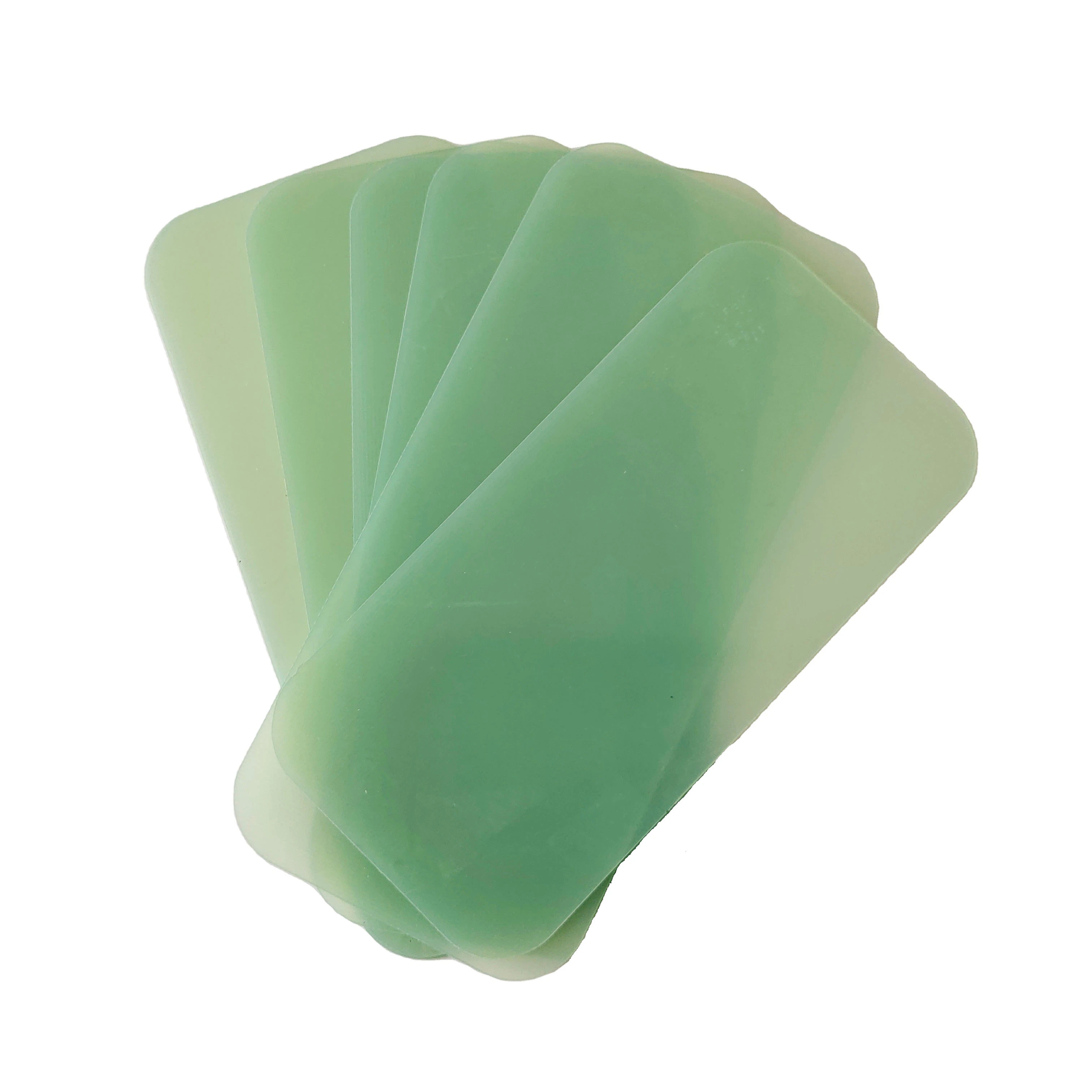
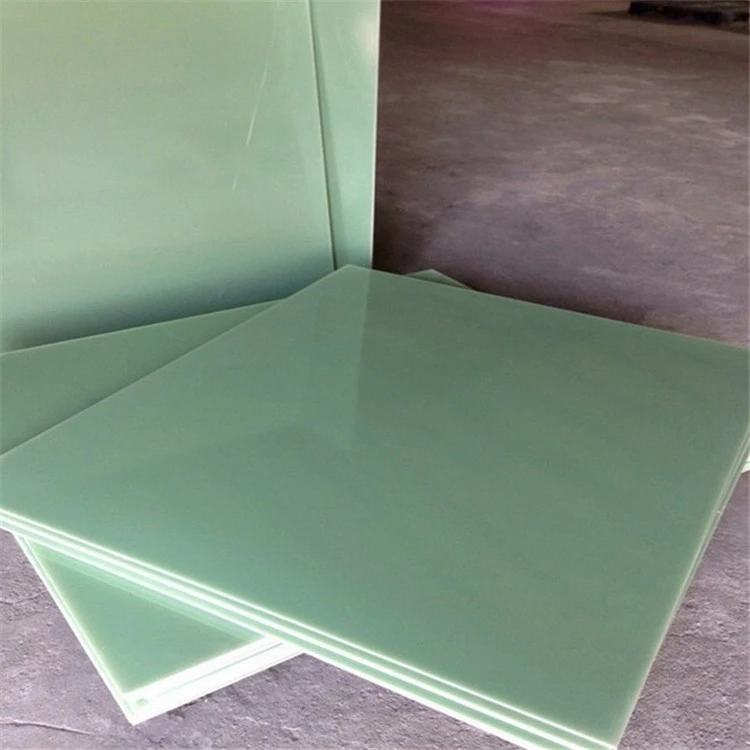
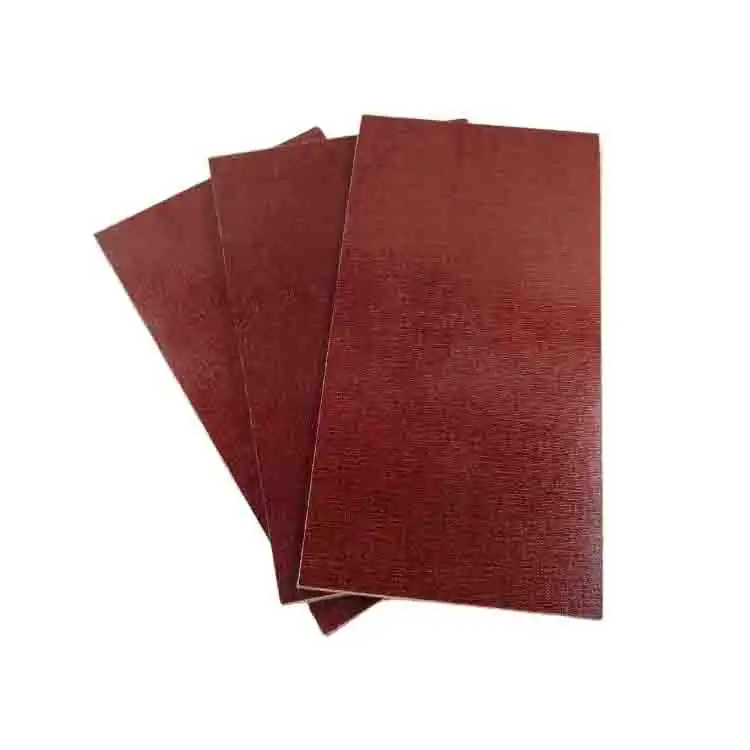
FR4 board is the standard for electrical insulation. It is made of thermosetting epoxy resin and continuous filament glass cloth. The "FR" label means that it is flame-resistant and meets UL94 V-0 standards. This is because it contains bromine or halogen-free phosphorus compounds that stop fires from spreading. This material solves three main problems in high voltage applications: keeping the dielectric integrity under electric field stress; withstanding thermal cycling without losing its shape; and providing mechanical support that can handle the shock and vibration loads that are common in switchgear and transformer assemblies.
Critical Properties for High Voltage Performance
Standard FR4 board sheets have a dielectric strength of 20 to 50 kV/mm, which means they can handle most industry power needs. The glass transition temperature (Tg) of a material has a big effect on how long it lasts and how well it works. Standard FR4 board has a Tg value of 130°C to 140°C, while High-Tg versions hit 170°C to 180°C, which is necessary for lead-free soldering and vehicle uses that are exposed to heat from the engine compartment. Water absorption stays incredibly low at 0.1% to 0.25%, which means that insulation resistance stays high even in wet power plants where humidity is a constant problem.
Material Composition and Structural Characteristics
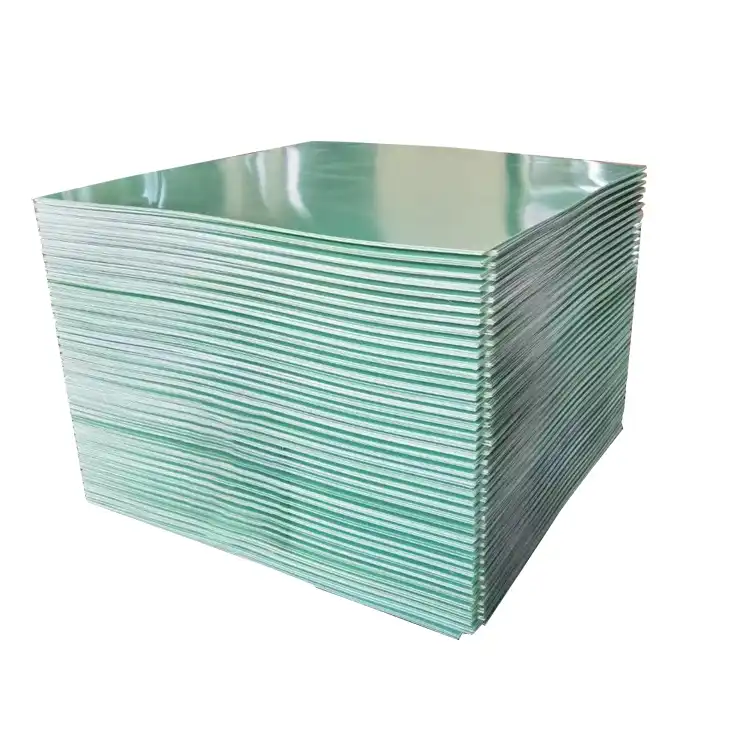
The knitted glass cloth provides mechanical support, making the structure very strong and light, so it doesn't bend when equipment is mounted on it. Fibers are glued together with epoxy resin to make a strong structure that can stand up to most industrial solvents, oils, and weak acids. This chemical stability is very useful in transformer setups where mineral oil comes into frequent contact. Manufacturers can make sheets with thicknesses ranging from 0.5 mm to 100 mm thanks to the layered construction. These sheets must have tight tolerances so that they can be precisely CNC machined into complex insulation shapes and component spacers.
Common Failure Modes of FR4 Boards in High Voltage Systems
Electrical Breakdown and Dielectric Failures
In high voltage FR4 board uses, partial discharge action is the main way that electricity fails. Localized ionization happens when voltage differences are higher than the material's dielectric strength at very small holes or contamination sites. These corona discharges slowly break down the epoxy matrix, making electrical paths known as "tracking." Material flaws, especially ionic contaminants that are introduced during production or handling, speed up this breakdown by a huge amount. We've seen tracking problems in power distribution equipment caused by fingerprint residues that contain sodium chloride. This causes localized conductivity when mixed with moisture absorption.
Thermal Stress and Heat-Related Degradation
Inadequate heat escape leads to multiple failure paths that weaken the structure. When the working temperature goes above the glass transition point, FR4 board softens and grows a lot along the Z-axis, which is not parallel to the laminate layers. In PCB applications, this growth causes shear stress at the copper-to-substrate surfaces, which causes barrel cracks that break the electrical continuity. When epoxy resin is exposed to temperatures above its rated continuous operating temperatures for a long time (usually 130°C for standard grades), it breaks down chemically and turns dark, which is called "browning." This chemical breakdown makes the resin less strong and more brittle, which makes the boards more likely to crack when motor control assemblies vibrate.
When temperature changes cause the glass cloth and resin core to expand and contract differently, this is called delamination. Because of this, the internal stresses separate the laminate layers, making air holes that lower the dielectric strength and hold wetness. This type of failure happens a lot in battery control systems for cars, where changes in temperature from -40°C to 85°C cause damage that builds up over thousands of rounds.
Environmental and Chemical Stress Factors
Even though FR4 board is designed to absorb very little water, moisture absorption is a major long-term stability issue. When water molecules are taken in humid coastal areas or warm regions, they raise the dielectric constant and lower the insulation resistance. More importantly, laminates of poor quality may grow Conductive Anodic Filament (CAF) when voltage bias causes metal ions to move through the glass-resin contact, making branching short circuits that can't be seen.
Chemical exposure changes depending on where it is used. Mineral oil can slowly soften some epoxy mixtures in transformer systems. Cutting fluids and hydraulic oils can be used in industrial machines. If you don't put protective coats on outdoor power tools, UV radiation breaks down the surface resin, which leads to chalking and poor surface conductivity. Knowing about these environmental factors helps with choosing materials and planning for preventive upkeep.
Systematic Failure Analysis Approach for FR4 in High Voltage Contexts
Initial Symptom Identification and Documentation
Before any testing is done, a careful eye study is the first step in a good failure analysis. We record patterns of surface darkening that show thermal hotspots caused by localized current leaks. Charring or carbonization close to the edges shows that partial discharge activity is responsible for tracking routes. Warping and changes in size and shape are signs of being exposed to high temperatures. Cracks that run perpendicular to the lines of stress show when there has been a mechanical overload or a heat shock. By taking pictures of these signs from different angles, you can keep the proof that will be used to guide future testing procedures.
Root Cause Analysis Methodologies
High-potential (hipot) testing is used in electrical testing to measure the breakdown voltage and insulation resistance in a controlled environment. By comparing failed samples to the specs for new material, you can figure out how bad the degradation is. Differential scanning calorimetry (DSC) is used to do thermal research to find out if the glass transition temperature has changed because the plastic is breaking down or because of water absorption. Scanning electron microscopy (SEM) shows tiny cracks spreading, delamination surfaces, and contamination particles that you can't see with the naked eye.
Chemical research through Fourier-transform infrared spectroscopy (FTIR) is a chemical research method used to find polymer breakdown products and contamination sources. We used this method a lot when we found that a solvent leftover from a supplier's cleaning process was weakening epoxy crosslinking and causing device motor clamps to break down early. To find out if a structure is weakening because of chemical or temperature cycle, it is put through mechanical tests that measure its flexural strength and impact resistance.
Implementing Corrective Actions and Prevention
The results of the analysis help make focused changes to the processes of design, material selection, and quality control. Tracking risks can be reduced by making the creepage lengths between high-voltage wires longer. By choosing High-Tg FR4 board types, you can get around problems with heat performance in tough situations. Using conformal coating in harsh settings guards against contact to chemicals and water. These safety steps, which have been proven through accelerated life testing, cut down on failures in the field and guarantee claims by a large amount.
Comparing FR4 with Alternative PCB Materials in High Voltage Environments
Performance Trade-offs in Material Selection
Five to ten times better at removing heat than standard FR4 board, metal-core laminates are better at conducting heat. This benefit is very important in high-power LED drivers and motor controls, where a lot of components cause a lot of heat. However, metal cores raise the cost of materials by 40% to 60% and make it harder to separate electrical signals, which FR4 board naturally does through its insulator base.
Rogers high-frequency laminates have very low loss tangent values and are very stable when it comes to dielectric. These properties are very important for RF uses and high-speed digital circuits. Because they are made of PTFE, their electrical properties stay the same across a wide range of temperatures. But the wait time for buying is eight to twelve weeks, while it's only two to four weeks for standard FR4 board. This makes the supply chain harder for projects that need to finish quickly.
Polyimide substrates can handle constant temps of up to 240°C, which is much higher than what FR4 board can handle. This ability to withstand high temperatures is useful for technology used in aerospace and cars. The much more expensive material—usually three to five times the price of normal FR4 board—means that polyimide can only be used in places where the higher cost is worth it for heating reasons.
Cost-Benefit Framework for Procurement Decisions
Instead of just looking at material unit prices, we suggest that you look at the total system lifecycle costs. Standard FR4 board sheets are the best choice for uses that need to work at temperatures below 130°C all the time and with mild voltage stress of less than 10kV. High-Tg FR4 board types offer inexpensive improvements in thermal performance for lead-free assembly processes and places with relatively high temperatures. Specialty materials are only worth the extra money when they can't meet certain performance standards, like high frequency, extreme temperature, or excellent thermal conductivity, by optimizing and refining the design of FR4 board.
Procurement and Quality Assurance Strategies for Reliable FR4 Boards
Evaluating Supplier Capabilities and Certifications
When you work with makers that have strong quality systems, you can avoid costly problems in the field. If you want to be sure that your quality processes are recorded, look for ISO 9001 approval. UL certification makes sure that flame-retardant qualities meet safety standards. RoHS and REACH compliance proves that environmental rules are being followed, which is becoming more and more important for the European and car markets. To check the uniformity of the production process, you can ask for process capability data (Cpk values) for important factors such as thickness tolerance and dielectric strength.
When demand goes up, a supplier's production capacity affects how reliably they can give. When a manufacturer has more than one production line, they can quickly move resources around to meet demand without lowering the quality. With CNC machining skills on-site, complicated shapes can be made precisely, without the need for extra steps that increase the risk of damage during handling and lengthen wait times.
Custom Manufacturing and Technical Support
Standard sheet sizes might not fit the shape of your unique component, which wastes materials and costs money. Custom cutting, drilling, and routing services from suppliers make the best use of materials while keeping the tight standards needed for automatic assembly processes. Minimum order sizes vary a lot between providers, from single sample sheets to pallet loads. Making these levels clear during the original talks helps avoid procurement surprises.
The ability to provide technical help is what sets exceptional providers apart from average ones. If engineers know what your application needs, they can suggest the best material grades, make design changes that make things more reliable, and use systematic analysis to figure out why things are breaking down in the field. This method to working together as a team provides value beyond the supply of goods.
Sample Testing and Pre-Production Validation
Specification mismatches and quality issues can be lessened by asking for samples of the material before making large purchases. Use your real working conditions to test sample materials for electrical breakdown, thermal cycle, and checking their dimensions. This test finds possible problems during the development phase, when making changes to the design is still cost-effective. This is better than finding problems during the production ramp or field launch.
Large sales can be more sure of their quality with pre-shipment inspection systems. Conformance is made sure before the goods leave the plant by having a third party check the dimensions, surface quality, and material certification papers. Even though these checks add a small amount to the budget for buying things, they greatly lower the chances of getting materials that don't meet specifications, which can stop production lines and hurt relationships with customers.
Conclusion
Understanding how failures happen, choosing the right material grades, and working with suppliers who care about quality are all important for making FR4 board solutions reliable in high voltage systems. Systematic analysis methods can find and stop the main failure paths, which are electrical breakdown, thermal decay, and external stresses. When procurement teams compare different materials using total lifecycle cost models instead of just unit prices, they can make smart choices that balance performance needs with budget limits. Using strong quality control methods, like checking the licensing of suppliers and following strict sample testing routines, can help prevent problems in the field that could affect safety and the continuity of operations.
FAQ
What causes most FR4 board failures in high voltage applications?
In high voltage systems, failure rates are mostly caused by partial discharge and heat stress. Microscopic holes, pollution, and flaws in the material form concentrated electric fields that start to track and eventually cause the dielectric to break down. Thermal problems happen when the amount of heat absorption isn't enough for the amount of power being used. This lets the temperature rise above what the material can handle, which leads to delamination and changes in its shape.
Can standard FR4 handle high-frequency high voltage applications?
Standard FR4 board works well in power frequency uses (50–60 Hz), but it can't do as well above 1 MHz because it has a high loss factor. Rogers or polyimide substrates, which have lower dielectric loss, are better for high-frequency circuits that generate high volts. Talk to people who know a lot about materials to make sure that the features of the substrate fit your frequency and voltage needs.
How do I request samples or custom quotes?
Get in touch with providers directly and give them specific information, such as the voltage rates, working temperature range, size requirements, and expected yearly volume. Giving full information about the application allows for correct material suggestions and competitive price. Most well-known makers answer technical questions within 24 to 48 hours with preliminary suggestions and information on when samples will be available.
Partner with J&Q for Reliable FR4 Board Solutions
For more than 20 years, J&Q has been making high-quality FR4 boards and epoxy laminates that are designed for tough high-voltage uses. Our technical team knows how important it is for power transfer equipment, industrial tools, and car systems to work at their best. We keep a lot of quality certifications, like UL recognition and RoHS compliance, to make sure that the materials we use meet strict industry standards. We can meet the needs of both prototype development and high-volume production thanks to our dedicated CNC machining skills and flexible minimum order numbers. Our combined transportation services shorten delivery times, and our experienced engineers help with applications all the way through the lifecycle of your project. Email our team at info@jhd-material.com to talk about your particular needs and ask for examples of the material. Find out why top FR4 board makers and OEM providers depend on J&Q for reliable quality and quick service. You can look at all of our products and scientific information at jhd-material.com.
References
Institute of Electrical and Electronics Engineers (2019). "Dielectric Breakdown Mechanisms in Laminated Composite Materials for High Voltage Applications." IEEE Transactions on Dielectrics and Electrical Insulation, Volume 26, Issue 4.
International Electrotechnical Commission (2021). "IEC 60893-3: Specifications for Industrial Rigid Laminated Sheets Based on Thermosetting Resins for Electrical Purposes."
National Electrical Manufacturers Association (2020). "NEMA LI 1: Industrial Laminated Thermosetting Products - Specifications and Test Methods."
Society of Automotive Engineers (2018). "SAE J2464: Electric and Hybrid Vehicle Rechargeable Energy Storage System (RESS) Safety and Abuse Testing."
Underwriters Laboratories (2022). "UL 746E: Polymeric Materials - Industrial Laminates, Filament Wound Tubing, Vulcanized Fiber, and Materials Used in Printed Wiring Boards."
Zhang, L., & Chen, X. (2020). "Thermal Aging Effects on Mechanical and Electrical Properties of FR-4 Composite Laminates in Power Electronic Applications." Journal of Composite Materials, Volume 54, Issue 12.