G10 Fiberglass Sheet for CNC Machining Applications
2026-05-26 17:01:37
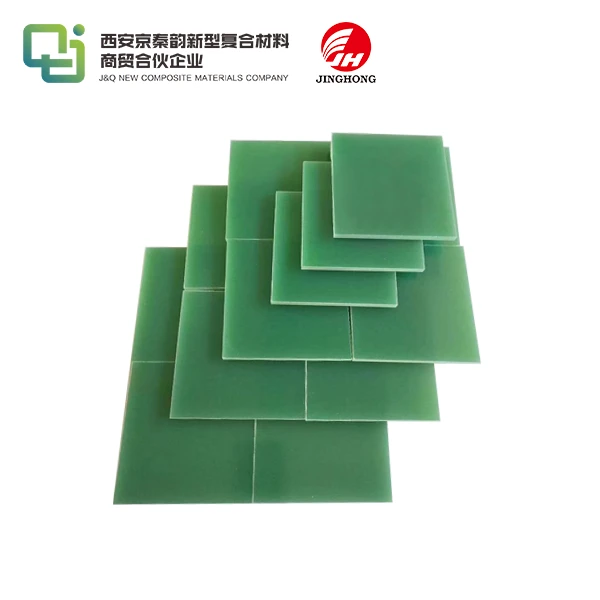
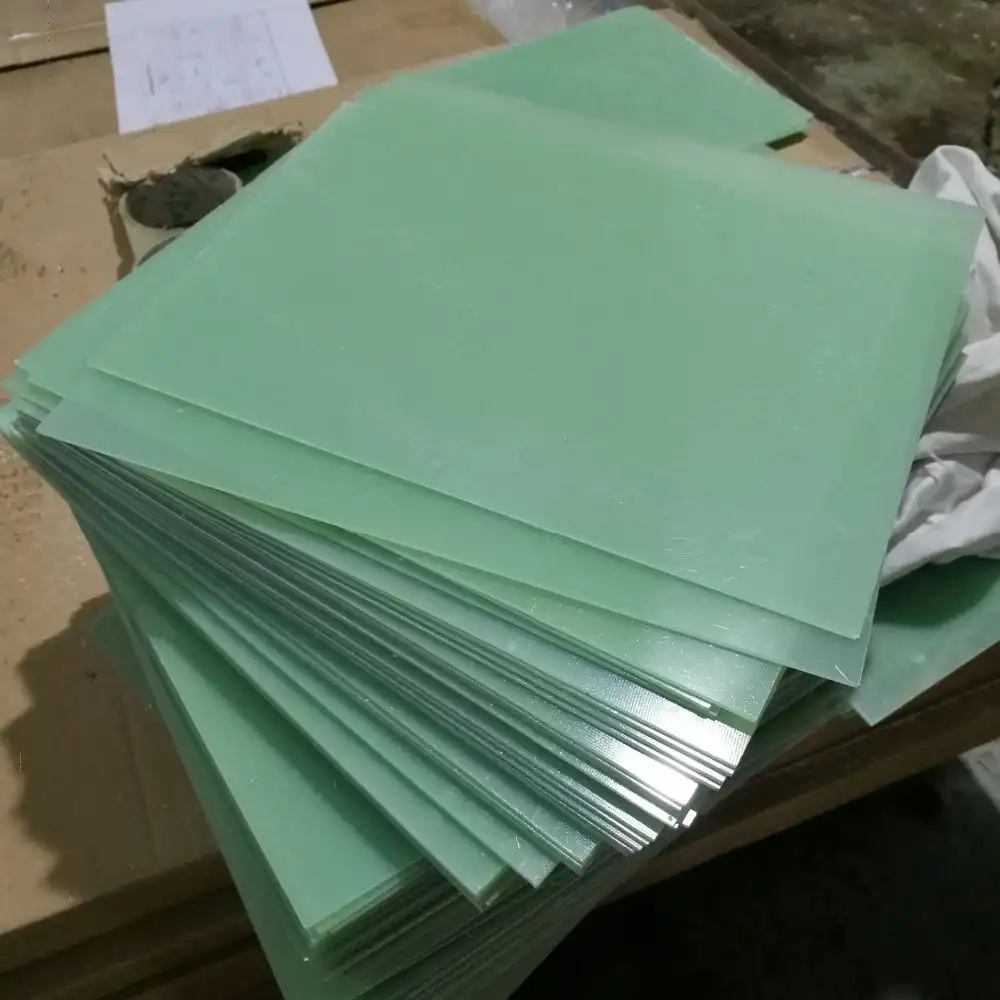
It is important to know what G10 fiberglass sheet can do when you are looking for materials for fine industrial parts. This high-pressure fiberglass-epoxy laminate is very strong, stable at high temperatures, and doesn't conduct electricity. Because of these qualities, it is essential for CNC cutting tasks in the power, automobile, and electrical industries. G10 is made by carefully gluing together woven glass fabric and epoxy resin under heat and pressure. It is made to strict NEMA standards and is very easy to work with and stays the same size in harsh production settings.
Understanding G10 Fiberglass Sheet and Its Technical Properties
What Defines G10 as a Premium Laminate Material
G10 is a special kind of thermosetting industrial laminate made of a continuous weave glass cloth base that is fully saturated with epoxy resin binder. In the production process, several cloth sheets are stacked on top of each other, soaked in resin, and then the whole thing is cured under controlled heat above 150°C and pressures of several hundred psi. By using this method, a thick, void-free structure is made, which combines different parts into a single hybrid that performs amazingly well. Unlike phenolic laminates or regular fiberglass, the mix of epoxy and glass makes a material with very strong bonds between layers. This makes it less likely that layers will come apart during precision cutting operations.
Mechanical and Electrical Performance Characteristics
The engineering standards for G10 meet important needs in the industry. This material can handle heavy loads without permanently changing shape because its bending strength is usually between 380 and 450 MPa. It has a dielectric strength of more than 20 kV/mm perpendicular to the laminations, which makes it a good choice for electrical protection in switchgear systems and motor parts. The material stays the same size at temperatures ranging from -40°C to 130°C, and it doesn't expand or contract much during use, so machining tolerances stay the same. Even after being submerged for a long time, it doesn't absorb more than 0.5% of water, so it keeps its electrical qualities in damp places where other materials might break.
G10 Compared to FR4 and Alternative Laminates
When choosing materials for CNC work, engineering managers often compare G10 fiberglass sheet to FR4. Even though both are made of glass-epoxy, G10 fiberglass sheet is usually stronger and more resistant to moisture, which makes it better for structure parts that are put under a lot of stress. FR4 with flame-retardant additives works great in places that need UL94 V-0 ratings for flammability, like consumer electronics and PCB manufacturing. Another option is G11, which has a temperature range that goes above 140°C thanks to a changed resin chemistry. It can be used for generator insulation and high-temperature motor parts. By knowing these differences, procurement teams can match the properties of materials to the needs of particular applications, combining cost with performance needs.
Advantages of Using G10 Fiberglass Sheets in CNC Machining
Superior Machinability and Dimensional Precision
Conventional CNC processes like cutting, drilling, turning, and routing work very well with G10. When the right tools are used, the cloth has clean lines that don't fray or pull out a lot of fibers. When machining rough ceramics or filled composites, carbide cutting tools lose their sharp edges faster. It is important for precision systems in electrical switchgear and automobile fittings that machined parts stay within tight tolerances, usually within ±0.05mm for thickness and ±0.1mm for external measurements. Work hardening doesn't happen much to the material during cutting, so the surface finishes are the same from one production run to the next. This steadiness in dimensions means less waste and fewer secondary processes, which has a direct effect on the cost of production.
Thermal and Chemical Resilience in Harsh Environments
Components used in industrial settings are often put in harsh situations where material degradation is a major worry. G10 is very resistant to mineral oils, hydraulic fluids, and most industrial solvents that are common in places where machines are used. When petroleum-based lubricants come in touch with the cured epoxy resin matrix, it doesn't soften or grow. This keeps the structure of gears and bearing systems intact. The thermal performance stays stable up to 130°C when used continuously, and it can withstand short-term exposures up to 180°C without breaking down. This temperature range includes most motor housing uses, generator barriers, and parts inside car engines. Even though the material doesn't put out fires on its own like FR4, its flame resistance is good enough for many industrial uses where arc tracking and electrical flashover are risks.
Proven Applications Across Industrial Sectors
Real-world applications show how flexible G10 is. Precision-machined G10 insulators are used by companies that make power distribution equipment as spark barriers between high-voltage bus bars. The dielectric strength of the material keeps tracking breakdowns from happening. Automotive part makers use G10 to make battery pack spacers and thermal barriers because it is mechanically strong and keeps cells lined up even when the temperature and pressure change. In food handling equipment, G10 gears and wear plates are used because the material doesn't get dirty and doesn't react badly with cleaning chemicals, which makes it better than metal options. These uses show that G10 can improve the dependability of products while still meeting high quality standards.
How to Select the Right G10 Fiberglass Sheet for Your CNC Machining Needs
Evaluating Thickness and Surface Finish Requirements
Before choosing a material, you should know what your component's shape and role are. G10 fiberglass sheet can be as thin as 0.5 mm or as thick as 100 mm. Common stock widths are 1.0 mm, 1.5 mm, 2.0 mm, 3.0 mm, and more as you go through bigger plates. For electrical protection, thin sheets work well as motor slot liners and coil separators. Thick plates, on the other hand, are used for structure in machined bases and support frames. You can choose a dark, semi-gloss, or glossy finish for the surface. Post-lamination sanding changes how the next step is machined. When putting things together again, matte surfaces stick better than polished ones, and polished finishes make moving wear less of a problem.
Comparing Performance Against Budget Constraints
Purchasing professionals are always under pressure to find the best deals on materials without lowering the quality. Prices for G10 are usually in the middle. It's cheaper than high-temperature G11 or specialized ceramic composites, but more expensive than phenolic laminates or FR4. Machining effectiveness should be included in the total cost analysis, since G10 is easier to work with than harder materials and often cuts down on cycle times and tool wear. When compared to spot-market prices, volume purchasing deals with well-known sellers can lead to price cuts of up to 25%. Custom cutting services, in which suppliers send material already cut to almost exact measurements, cut down on waste and on the work that needs to be done in-house, which could help cover the higher cost of each unit of material.
Certification and Quality Verification Essentials
Technical buying teams have to make sure that the products they get meet the requirements of the specifications and the rules. Suppliers you can trust will give you material test results that show the mechanical qualities, dielectric strength, water absorption, and dimensional tolerances of the material. Look for companies that use ISO 9001 quality control systems to make sure that their production processes are reliable and that you can track their products. RoHS compliance paperwork proves that no restricted substances are present, which is very important for parts that are shipped to European markets or used in consumer goods. Even though UL recognition isn't always given to G10, it means that the material has been tested by a third party for electricity and fire safety. Before placing a big order, ask for samples of the materials to be tested in-house to make sure they work properly. This will allow your engineering team to check the materials' machining properties and how well they work in real-world situations.
Trusted Suppliers and Where to Buy G10 Fiberglass Sheets Wholesale
Identifying Reputable Manufacturers and Distributors
Industrial laminates have a supply chain that includes both direct makers who make the raw sheets by laminating them and specialized wholesalers who keep standard sizes in stock so that orders can be filled quickly. Manufacturers who have been in business for more than twenty years usually have a better understanding of technology and can work with custom formulas or non-standard measurements. When developing or replacing things quickly, distribution networks are helpful because they can send smaller amounts of items more quickly. When looking at possible providers, you should look at their production skills, such as the size of their press, the range of thicknesses they offer, and the quality control tools they have. Companies that run their own logistics networks can better handle foreign packages, cutting down on lead times and making it easier to get documents through customs.
Certification Standards and Industry Reputation
Credentials of the provider are the first step in quality security. If a company has ISO 9001 certification, it means that they have set up quality management methods that include tools for corrective action, process control, and tracking of materials. The ISO 14001 environmental certification shows that a company is committed to using sustainable production methods, which is becoming more and more important for supply chain responsibility programs in businesses. Check out the supplier's name by talking to people in the same business and reading reviews from past customers. Long-term partnerships with major OEM makers show steady quality and dependable delivery. Technical support is very important. Suppliers who give application engineering help make the best choices for materials and machine settings, which adds value beyond just providing basic G10 fiberglass sheet.
Direct Sourcing Versus Distribution Networks
How you buy things relies on how much you need and how complicated your supply line is. Direct connections with manufacturers are helpful for large-scale projects with standard specs and steady demand that require dedicated production runs. Manufacturers can give better prices on orders that weigh more than a few hundred kilos, especially if the specs stay the same across multiple delivery drops. When it comes to mixed-material sales, prototype sizes, and quick turnaround times, distribution partners really shine when they keep a wide range of items in stock. Some technical wholesalers give extra services like precise cutting, machining, and kitting that add value to the products they sell. In this way, they work as extension production partners. The best way to do things is usually to use both channels together. For core, high-volume products, you should work directly with manufacturers, and for unique grades and emergency needs, you should keep distributor accounts.
Best Practices for CNC Machining with G10 Fiberglass Sheets
Optimizing Tooling and Cutting Parameters
The right tools and operating conditions are the first steps to successful cutting. Most of the time, carbide cutting with positive rake angles works better than high-speed steel, especially in production settings where tools need to last longer. Fiber pullout and delamination are less likely to happen when the cutting edges are sharp. Dull tools, on the other hand, produce too much heat, which breaks the epoxy matrix and results in a bad surface quality. Cutting speeds of 150 to 250 meters per minute and feed rates of 0.1 to 0.3 mm per tooth are good starting points for milling processes. However, trying to find the best settings for the tool geometry and machine features leads to better results. For through-hole drilling, bits made for composite materials work best. These bits have brad-point shapes or diamond-coated cutting edges that make clean entry and exit holes without a lot of burrs.
Preventing Common Machining Defects
When machining stacked materials, delamination is the main thing that needs to be thought about. This type of failure happens when cutting forces are stronger than the interlaminar bond strength, separating the layers. To avoid this, you should keep your tools sharp, use the right feed rates so you don't overwork the material, and use climb milling methods where the cutter rotates in the same way as the feed. When drilling, having backup support behind the exit surfaces stops outward delamination as the drill goes through the last layer. It's important to get rid of the dust because glass fiber particles are dangerous to breathe in and speed up tool wear if they get back into the cutting zone. The use of coolants is still up for debate. They do help keep temperatures from building up, but water can briefly change the way electrical parts work if they are put into service before they are completely dry.
Post-Machining Quality and Integration
When G10 fiberglass sheet parts are machined, they go through checking and finishing steps that make sure they are the right size and work properly. Edge deburring gets rid of resin flash and fiber whiskers that could get in the way of electrical gaps or assembly operations. Using calibrated micrometers or coordinate measuring tools for precise measurements makes sure that important measures are within the allowed ranges. Isopropyl alcohol cleaning gets rid of grinding leftovers and gets surfaces ready for coating or glue bonding. When you store things properly in places with controlled humidity, wetness doesn't get absorbed, which could temporarily damage electrical qualities. When putting G10 parts together, you need to think about how their thermal expansion rates compare to those of the other materials. Even if the difference is small, it can cause stress to build up in places that are tightly connected and are exposed to temperature changes.
Conclusion
G10 fiberglass sheet has been used for many years in CNC cutting jobs that need strong materials, good electrical protection, and stable temperatures. Its balanced set of properties meets the needs of manufacturers of electrical goods, industrial tools, power systems, car parts, and home appliances. To choose the right material, you need to know exactly what performance you need, compare different options based on their technical features and costs, and work with qualified sources who can consistently deliver high-quality materials on time. Using the right cutting methods will bring out the best in the material while reducing flaws. This will make sure that the parts meet the high standards for size and function that are necessary for successful manufacturing.
FAQ
What thickness range of G10 works best for CNC machining operations?
It is easy to machine G10 fiberglass sheet laminates that are anywhere from 0.5 mm to 100 mm thick. Thinner materials (less than 2 mm) need to be carefully held and supported so they don't bend while they're being cut. On the other hand, plates that are more than 50 mm thick may need more than one cutting pass and strong support. The 3mm to 25mm range is the best for most CNC uses because it balances the ease of handling materials with the speed and strength of the cutting.
How does G10 compare to FR4 regarding heat resistance and insulation properties?
Both materials are great at keeping electricity from flowing through them, and their dielectric strengths are about the same. Most of the time, G10 has slightly better mechanical qualities and resistance to moisture, which makes it better for structure uses. FR4 has flame-retardant additives that meet UL94 V-0 flammability standards. This is important for consumer electronics and other places where fire safety is very important. Both materials are rated for constant operation at temperatures around 130°C, though individual formulations may be different.
Can suppliers provide custom sizing for specialized machining applications?
Authentic makers can make custom sizes, such as thicknesses that aren't standard, sheet sizes that aren't standard, and pre-cut blanks that are made to fit the geometry of particular parts. Custom size cuts down on wasteful materials and can get rid of the need for preliminary cutting, which speeds up the production process. Most of the time, volume needs affect practicality. For example, custom production runs are only necessary for large orders, while standard stock with value-added cutting services could be used for smaller orders.
Partner with J&Q for Your G10 Fiberglass Sheet Requirements
J&Q has been making and selling high-quality insulation materials for more than 20 years. One of the materials they sell is precision-grade G10 fiberglass sheet that is designed for difficult CNC cutting tasks. Our expert team knows exactly what electrical makers, machinery builders, power system designers, and car providers need. We keep a large stock of standard thicknesses and can also make special sizes, which cuts down on material waste and handling time.
We have our own logistics network, which makes it easy to coordinate everything from production to foreign delivery. We offer a real one-stop service that makes managing your supply chain easier. Our quality systems meet foreign standards, such as ISO certifications, which makes sure that every sheet has the same mechanical features, dielectric performance, and dimensions. Engineering support helps you choose the best materials and set the best settings for cutting, turning technical needs into workable solutions.
J&Q blends manufacturing experience with quick service, so whether you're a G10 fiberglass sheet manufacturer looking for a trusted source of materials or an end user needing certified performance, they can help. You can email our team at info@jhd-material.com to talk about your unique application needs, ask for technical data, or get detailed quotes for your future projects. Experience the trustworthiness that comes from working with a well-known source who knows what your business needs.
References
National Electrical Manufacturers Association. (2019). Industrial Laminating Thermosetting Products: NEMA Standards Publication LI 1-2019. National Electrical Manufacturers Association, Rosslyn, Virginia.
Campbell, F.C. (2010). Structural Composite Materials. ASM International, Materials Park, Ohio.
Mazumdar, S.K. (2002). Composites Manufacturing: Materials, Product, and Process Engineering. CRC Press, Boca Raton, Florida.
Chawla, K.K. (2012). Composite Materials: Science and Engineering, Third Edition. Springer Science & Business Media, New York.
Peters, S.T. (1998). Handbook of Composites, Second Edition. Chapman & Hall, London, United Kingdom.
Strong, A.B. (2008). Fundamentals of Composites Manufacturing: Materials, Methods and Applications, Second Edition. Society of Manufacturing Engineers, Dearborn, Michigan.