G10 vs. G11 Sheet: When Does the Extra Cost for Heat Resistance Pay Off?
2026-07-15 17:06:01
It's not enough to just pick any product off the shelf when choosing between G10 sheet and G11 sheet. You need to make sure that the exact heat performance matches your needs. The price difference between these products can be as much as 20 to 30 percent, which is why buying teams are careful. However, that premium turns into safety when running temperatures regularly go above 130°C or when equipment failure has big financial effects. For normal industry conditions, G10 sheet has great mechanical strength and electrical insulation. G11 sheet's improved resin formulation makes it stable in higher temperature zones. If you know where that barrier is for your unique application, you can tell if the extra investment pays off or just makes your material costs go up for no reason.
Understanding G10 and G11 Sheets: Core Material Differences
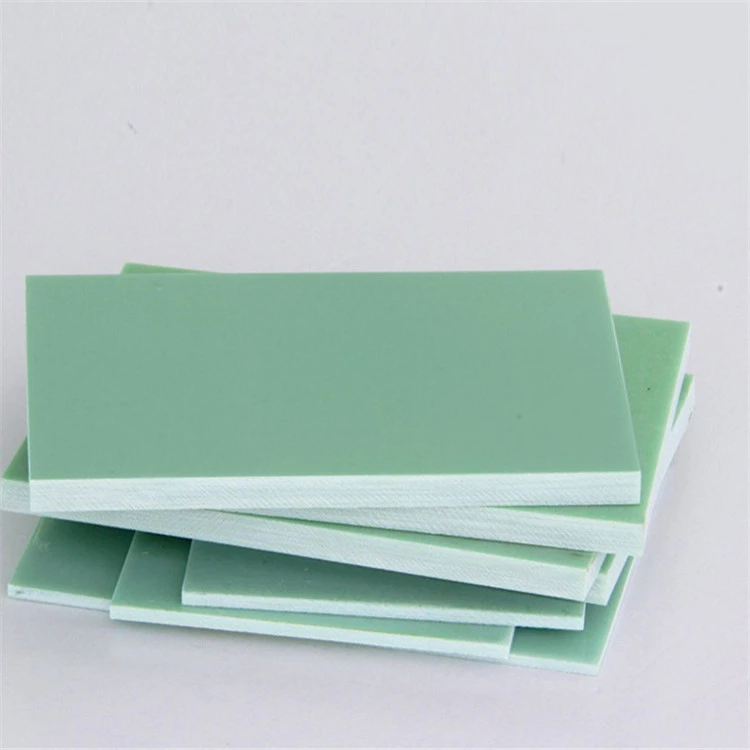
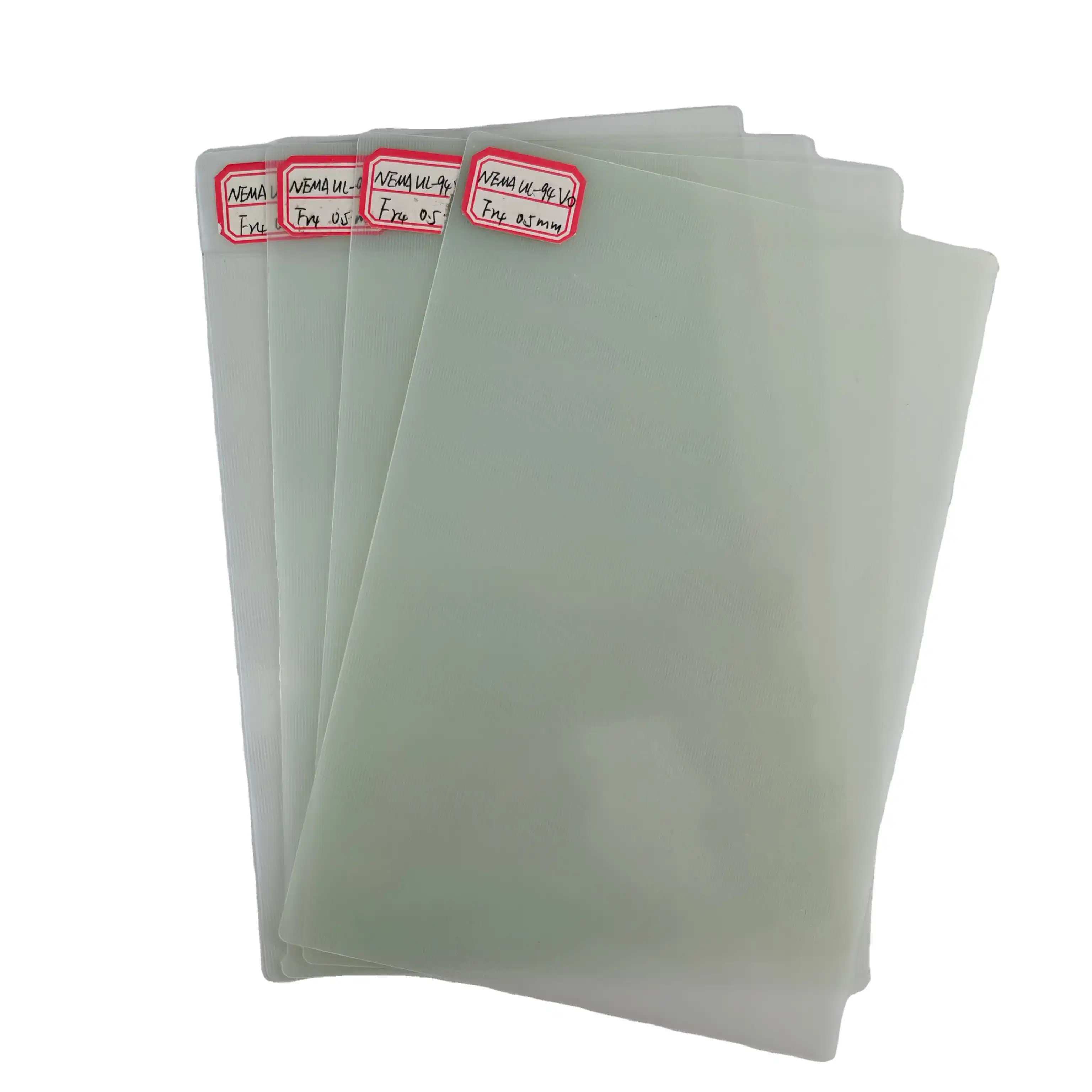
The two materials are both glass-reinforced epoxy laminates. They are made by carefully stacking continuous filament glass cloth that is soaked with thermosetting epoxy resin. When put under a lot of heat and pressure, these layers join together to form a thick, uniform structure that has the tensile strength of glass fibers and the electrical insulation qualities of epoxy that has hardened. This way of making things solves some of the most important problems in engineering, like keeping the shape under stress, keeping out wetness that could cause the insulator to break, and keeping the structure together when metal parts would add too much weight.
Material Composition and Manufacturing Process
Both grades start with woven fiberglass cloth that has epoxy resin binding mixed into it. The resin science and hardening methods are what set them apart. G10 sheet uses a normal epoxy mixture that cures at room temperature and works best for general-purpose uses. G11 sheet uses a changed epoxy system that has higher glass transition temperatures. This means that it needs to cure for longer periods of time at higher temps. This better thermal processing makes the crosslink network in the polymer matrix denser, which directly leads to better heat deflecting properties. For G11 sheet production, factories have to keep tighter controls on the processes, which adds to the higher cost structure.
Thermal Performance Specifications
In real life, temperature stability is what sets these products apart. G10 sheet firmly keeps its mechanical and electrical properties up to 130°C continuous operation, making it a good choice for most motor parts, standard switchgear, and other industry uses. G11 sheet raises that limit to about 180°C, making it work in places where heat spikes are common or where being close to processes that use high temperatures requires extra thermal space. Heat displacement temperature tests according to ASTM D648 standards makes this gap very clear—G11 sheet always does better by 40–50°C when the load conditions are the same. This difference is very important when building safety limits into transformer barriers or insulation for car battery packs, where thermal runaway can be very dangerous.
Mechanical and Electrical Properties Comparison
Besides heat protection, there are small differences in performance across other important measures as well. Both materials have very high dielectric strengths across laminations, usually more than 20 kV/mm, which means they can be used in high-voltage situations. Both types don't absorb much water—below 0.1% when tested according to ASTM D570—so measurements stay accurate in damp places. There are small changes in the mechanical properties. For example, G10 sheet has a slightly higher bending strength at room temperature because of the way its resin is made, while G11 sheet's improved crosslinking makes it better at keeping its mechanical properties as temperatures rise. When engineers choose materials for CNC-machined parts, they like that both grades work well with carbide tools, though the thicker G11 sheet structure may cause tools to wear out a little faster during high-volume production runs.
When Does the Extra Cost of G11 Pay Off?
To justify using high-end products, you need to look at how they fail and how they are actually used. The choice isn't based on vague requirements; it's based on whether your application really puts more stress on the material than G10 sheet has been shown to handle. In a number of business situations, the G11 sheet update always shows a clear return on investment.
High-Temperature Electrical Applications
Temperatures above 50°C are common for power distribution equipment that is used in hot places or spaces that don't have enough air flow. It's easy for component surfaces to get to 120–140°C when you add in the resistive heating from high-current buswork and the radiant heat from transformers next to them. In these settings, G10 sheet is working right on the edge of what it can do, with not much room for error in case of sudden heat events. A single arc flash or short-term overload can raise temps to the point where plastic starts to break down, which weakens the dielectric. G11 sheet gives a system the thermal space it needs to go from being on the edge to being strong. When electrical engineers design switchgear for substations in the southwestern United States or the Middle East, they usually use G11 sheet. They do this because they know that the 25% increase in material costs is nothing compared to the costs of unplanned outages or catastrophic equipment failure.
Automotive Thermal Management Components
The temperatures inside the battery systems of electric vehicles are very difficult. Insulating barriers between cell units must be able to handle the heat that is produced during regular charge-discharge cycles and also protect against thermal runaway events. During fast charging, the temperature of the battery pack can stay around 60°C, but if one cell fails, the temperature of that cell can rise to over 200°C in seconds. Because G11 sheet has a higher heat deflection temperature, these barriers keep their structural integrity for longer during a thermal event. This gives thermal propagation barriers more time to work and battery management systems more time to separate damaged modules. Failure mode and effects analyses done by tier-1 automotive suppliers give designs that use G10 sheet in these places higher risk scores and often require G11 sheet instead, even though it costs more. When you compare the material price to the cost of recalls or the liability risk from battery fires, it goes away completely.
Continuous High-Temperature Industrial Processes
When plastics are molded, metals are heated, or industrial baking is done nearby, electrical and structural parts are exposed to high temperatures for long periods of time. When designing equipment for these areas, machinery makers have to do some simple math: G10 sheet parts may need to be replaced every 18 to 24 months because prolonged heat exposure weakens the resin matrix, while G11 sheet parts usually last 4-5 years in the same circumstances. When you add up the costs of not only replacing parts but also the time lost during upkeep, the wages of the technicians who do the work, and the space needed to store extra parts, the math for procurement becomes very convincing. A mechanical engineer who was in charge of a group of injection molding machines said that changing critical insulating spacers from G10 sheet to G11 sheet cut down on maintenance by 60% over three years. The difference in material cost was made up in eight months of less downtime alone.
Cost Analysis and Procurement Considerations
The price of raw materials for epoxy laminates changes based on the cost of glass fiber and the state of the epoxy resin market, but the difference between grades stays pretty stable. Prices for G11 sheet are usually 20–30% higher than prices for similar G10 sheet right now, though this difference gets smaller for big orders where economies of scale kick in.
Purchase Price Factors
The price increase is affected by more than just the cost of the materials. Because G11 sheet's drying cycle is longer, it takes longer for manufacturing capacity to be used up. This slows down production and raises the cost per unit. Chemical suppliers charge more for the specific glue systems that are needed. For high-temperature materials, quality assurance methods include more tests, such as thermal cycling tests, rapid aging studies, and more thorough dimensional stability verification, all of which cost more. These things have an effect on both regular sheet stock and parts that are made to order. When discussing yearly contracts, procurement teams should know that G10 sheet unit prices may go down by 5–8% if a lot of orders are placed, but G11 sheet prices are usually less flexible because of tighter production schedules and the need to find specific raw materials.
Total Cost of Ownership Analysis
Lifecycle economics is part of smart buying, which goes beyond purchase orders. Total ownership costs are greatly affected by how often things need to be replaced. When parts break down too soon, they don't just cost a lot to fix; they cause costs to rise throughout the whole process. An insulated barrier in a generator that breaks down after three years instead of ten years means that it needs to be replaced more than once. Each replacement has costs for purchasing, shipping, inventory management, and labor for installation. The cost of downtime during repair can be much higher than the price of the part itself. A medium-voltage switchgear unit that needs to be shut down for eight hours for repair every time insulating parts need to be replaced loses production value that can easily be more than a thousand dollars per event. To make a strong business case for G11 sheet, these hidden costs must be accurately measured. Maintenance logs from current equipment give the real-world data needed to predict failure rates and the costs that come with them. This turns choosing materials from a buying decision into a planned operational choice.
Procurement Strategy Considerations
Instead of looking at material choice as a variable for buying, industrial buyers who are in charge of Bills of Materials for product lines should think about it during the planning phase. When engineering changes are made after production has begun, they come with big costs, like making changes to the tools used, getting rid of old parts from inventory, and the work of managing change orders all along the supply chain. Getting skilled suppliers involved in the planning phase helps procurement teams understand important trade-offs before they become firm promises. Suppliers with a lot of technical knowledge can often offer mixed methods, where G11 sheet is only used for the most stressed parts and G10 sheet is used in places where there are enough thermal gaps. Cost control and performance guarantee are both taken into account in this improvement. Building ties with makers who keep both types in stock in standard thicknesses also lets you make changes to the prototype more easily and faster when changes are made to the design.
How to Evaluate Heat Resistance Requirements Effectively
By accurately measuring your thermal environment, you can avoid both over-specification, which loses money, and under-specification, which can lead to problems in the field. For this review, it's important to collect data in a planned way and look at working conditions honestly. Not only should testing methods record steady-state temperatures, but they should also record short-term jumps that happen during starting, shutdown, and fault situations. It is normal in industry to specify materials that are rated at least 20 to 30°C above the highest temperatures that are expected to be used. This gives room for the unexpected without going too far with the specifications.
Thermal Measurement and Testing Protocols
Temperature data from the real world always beats theory estimates. Putting thermocouples on existing equipment while it is running normally shows the real temperatures of the parts under typical load conditions. Many engineering teams find big differences between what they thought the design would work like and what it actually does. For example, parts that were supposed to work at 90°C actually reach 130°C at their hottest points in the summer or when they're under a lot of stress. Not only should testing methods record steady-state temperatures, but they should also record short-term jumps that happen during starting, shutdown, and fault situations. As per ASTM D648 heat deflection temperature testing measures the temperature at which a material bends a certain amount under controlled force. This gives standard comparing data. This measure directly tells you how structure parts will behave when they are under both thermal and mechanical stress at the same time. Following the steps in ASTM D149 for dielectric strength tests at high temperatures shows how insulation qualities decrease as temperature rises. This is important for high-voltage uses where safety margins are very important.
Supplier Technical Collaboration
Material sellers with a lot of experience have years of experience using their products in a wide range of businesses. Procurement teams can get more value from suppliers when they use them as professional tools instead of just buying from a list. Suppliers can suggest the best material types and thicknesses by talking in detail about the application, including the working temperature ranges, mechanical loads, weather exposure, and expected service life. Manufacturers with a good reputation keep detailed technical data sheets with property curves that change with temperature. These curves show how mechanical strength, electrical properties, and physical stability change across the working temperature range. Some companies offer thermal modeling services that use finite element analysis to guess what the temperatures of parts will be based on how the equipment is designed and how it is used. This way of working together lowers risk by making sure that the choice of material meets the needs of the application before investing in production tools and supplies.
Integration with Design and Quality Systems
Making choices about which materials to use should be a formal part of the product creation process. Design Failure Mode and Effects Analysis methods should clearly look at thermal stress as a possible failure mode, and material specs should be written down as ways to reduce this risk. When new materials come in, quality control procedures should check more than just the sizes. They should also check the materials' certifications and make sure they can be tracked. NEMA standards set basic property requirements and definitions for grades, but individual makers may go above and beyond these standards. By asking for certified test results for particular production lots, you can be sure that the material you receive has the same properties that were thought of when the design was made. Engineering teams should come up with clear temperature derating rules—safety factors that take into account measurement errors, the effects of time, and unexpected changes in how things work.
Conclusion
Choosing between G10 sheet and G11 sheet materials comes down to matching the heat performance to the real needs of the application while keeping costs low. For places where the temperature stays below 130°C all the time, G10 sheet is a great deal because it is very strong and doesn't conduct electricity, and it's also very cheap. G11 sheet is worth the extra cost in high-temperature situations, places with constant thermal stress, or cases where failure would have serious safety or operational effects. To do good buying, you need to be honest about how things are running, do a lifetime cost analysis that goes beyond the purchase price, and work together with highly skilled sellers. Making a choice about the right materials during construction locks in prices and dependability for years to come, so it's worth the time and effort to do it right the first time.
FAQ
What makes G10 and G11 sheets cost different amounts?
There are several things that affect production that cause the cost gap. Chemical suppliers charge more for improved epoxy resin systems with higher glass transition temperatures that are needed for G11 sheet. Longer drying times at higher temperatures are part of the production processes for G11 sheet. This slows down production and uses more energy per unit. It costs more to test high-temperature products because of stricter quality control rules. The usual 20–30% price difference is caused by these things working together.
Can I switch G11 for G10 in plans that are already made without making any other changes?
Most of the time, material replacement works physically because the measurements and machining properties stay the same. But you should make sure that the ways you fix things and the ways you put them together still work because G11 sheet is a little harder than normal, which could change the torque requirements for threaded systems. For most uses, the electrical qualities stay the same. The change is an improvement, not a compromise, but the cost effects should be looked at again.
How do I find out what my real working temperature is so I can choose the right material?
The most accurate info comes from direct measuring. Install thermocouples on sample parts that will be used in normal operations. This will help you record both steady-state temperatures and sudden peaks that happen during startup or high-load conditions. If the equipment works in climate-controlled spaces, measure how it changes with the seasons. Thermal imaging cameras can quickly look over an area to find hot spots. Include safety margins above the measured values to account for things like tools wearing out and situations that were not expected during operation.
Partner with J&Q for Precision Epoxy Laminate Solutions
You can't just look at specs to choose the best epoxy laminate grade; you need to work with a G10 sheet supplier who knows your application problems inside and out. J&Q has been making high-performance insulating materials for more than 20 years and has also spent ten years figuring out how to meet the foreign buying needs of the electrical, automobile, and industrial machinery industries. Your research teams work directly with ours to figure out what materials are best for the job, what thermal requirements need to be met, and to make sure that the test results are approved and meet your quality standards. Because we handle logistics in-house, we can provide a one-stop service from choosing the materials to delivering them at your site. This saves you the trouble of coordinating with multiple providers. Contact our purchasing agents at info@jhd-material.com to talk about your unique heat resistance needs and find out if G10 sheet or G11 sheet is the best choice for your application in terms of performance and value.
References
National Electrical Manufacturers Association. "Industrial Laminating Thermosetting Products—NEMA Standards Publication LI 1-1998." National Electrical Manufacturers Association, 1998.
Harper, Charles A. "Handbook of Plastics, Elastomers, and Composites." McGraw-Hill Professional, 4th Edition, 2002.
Goosey, Martin T. "Plastics for Electronics." Springer Science & Business Media, 2nd Edition, 1999.
Satas, Donatas and Tracton, Arthur A. "Coatings Technology Handbook." CRC Press, 3rd Edition, 2000.
Lubin, George and Peters, S.T. "Handbook of Composites." Springer Science & Business Media, 2nd Edition, 1998.
Richardson, Terry. "Industrial Plastics: Theory and Applications." Cengage Learning, 6th Edition, 2017.
_1732777843529.webp)