Comparative Study: Thermal Stability of FR4 vs. 3025 Phenolic Cloth Board
2026-07-15 17:06:04
When looking for insulation materials for high-performance electrical systems, it's important to know how they react to heat. FR4 board and 3025 phenolic cloth board are two different ways to deal with problems caused by heat in manufacturing settings. FR4 board, a glass-epoxy material that meets UL94 V-0 flame retardancy standards, keeps its shape at temperatures up to 130–140°C and doesn't absorb more than 0.1% of its weight in water. On the other hand, 3025 phenolic cloth board has average thermal performance and is good for low-cost uses that need basic insulation qualities. This comparison directly answers worries about the dependability of the materials, the compatibility of the assembly process, and the long-term stability of operations during the purchase process.
Understanding FR4 and 3025 Phenolic Cloth Board Materials
The main thing that affects how substrates react to thermal stress during production and in the field is the makeup of the material. Both materials are used to insulate electricity, but because of changes in structure, they have different performance patterns that engineers must carefully study.
FR4 Glass-Epoxy Laminate Composition
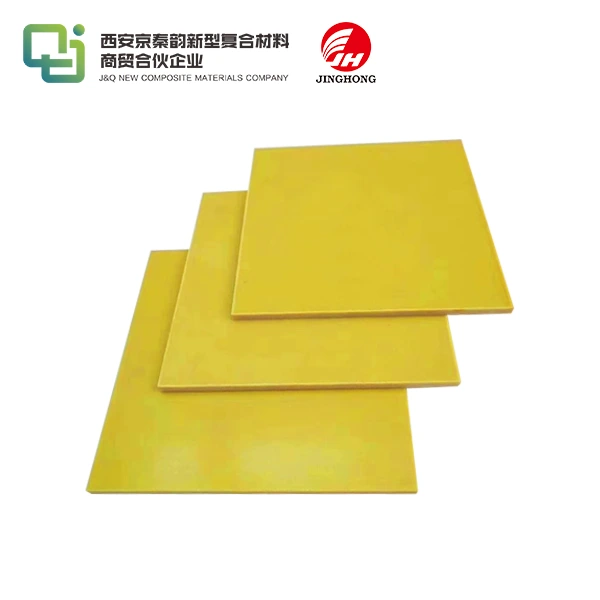
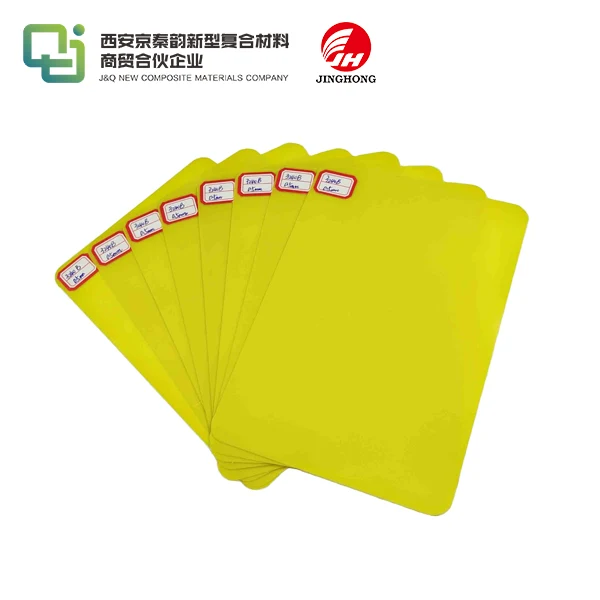
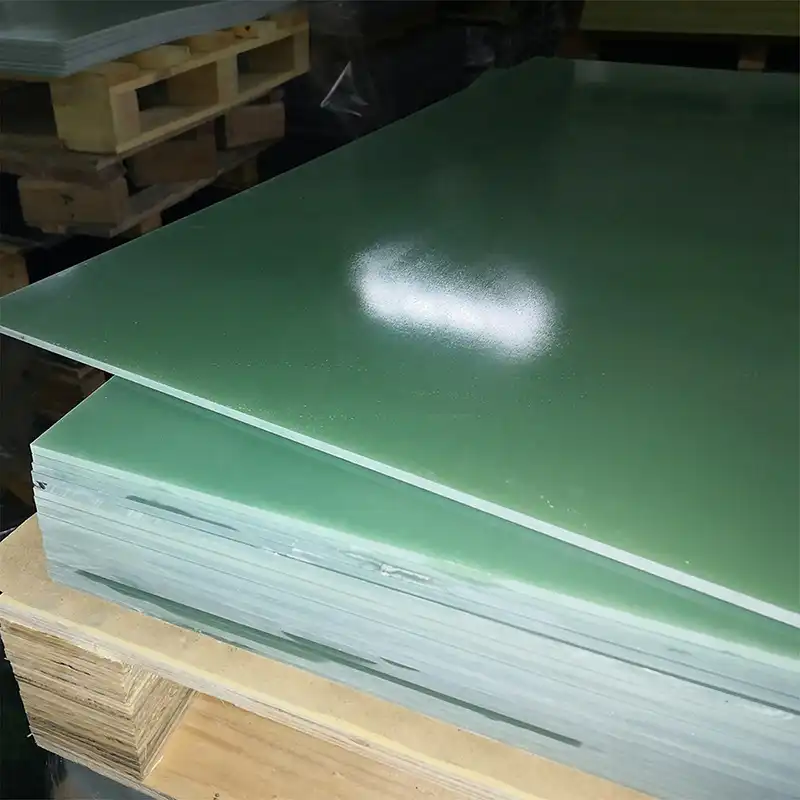
The continuous thread glass cloth in FR4 board insulation is mixed with epoxy resin glue under high pressure. The epoxy matrix has a dielectric strength of over 40 kV perpendicular to the laminates, and the glass fiber support has a mechanical strength of over 340 MPa bending capacity. This mix gives a density between 1.8 and 2.10 g/cm³ and keeps its electrical qualities even when the humidity changes. The "FR" designation means that the material is flame-resistant, and according to UL94 V-0 testing procedures, it will put out the fire itself within 10 seconds of removing the cause of the fire. Standard widths range from 0.5 mm to 100 mm, and the surface can be finished in a natural yellowish-green color or with non-conductive paints to make any color you want.
3025 Phenolic Cloth Board Structure
Phenolic cloth boards are made from cotton or synthetic fabric that has been soaked in phenolic resin and then heated and pressed to harden. The mechanical properties of this construction are good enough for uses that will be used at room temperature, and the electrical insulation properties are average. The cloth support keeps its shape under normal circumstances, but it loses its effectiveness faster than FR4 board when it is exposed to high temperatures for a long time. Moisture absorption is usually between 1% and 2%, which is much higher than glass-epoxy options. This makes dielectric performance worse in wet working conditions. The material is easy to work with normal tools, and it saves money when making a lot of things and the temperature needs are low.
Critical Thermal Performance Indicators
The glass transition temperature (Tg) is the point at which thermosetting plastics change from being stiff to being soft. Standard FR4 board has a Tg rating of 130–140°C, while High-Tg versions can hit 170–180°C for tough uses. Below Tg, materials keep their shape and mechanical qualities. Above this point, their expansion coefficients rise sharply, which could lead to warping or delamination. Thermal deterioration is when chemicals break down irreversibly at very high temperatures, usually above 300°C for FR4 board and lower for phenolic materials. When buying teams know these factors, they can match the material's capabilities with the specific manufacturing processes and operating temperature profiles that are used in motor housings, switchgear assemblies, and power distribution components.
Comparative Analysis: Thermal Stability of FR4 vs. 3025 Phenolic Cloth Board
There are clear differences in how well these materials work in the real world when you look at how well they handle industrial assembly processes and constant heat loads. The data shows big differences that affect how reliable a product is and how much it can produce.
Assembly Process Thermal Endurance
Wave soldering and reflow processes briefly subject surfaces to temperatures of up to 260°C. FR4 boards can handle these changes in temperature without damaging their structure. They keep their shape and layer adhesion throughout normal lead-free soldering profiles. There is no "measling" (subsurface whitening) in the glass-epoxy matrix, which means that it doesn't absorb more than 0.1% of water during heating, which stops steam pressure from building up. On the other hand, 3025 phenolic cloth boards are more likely to bend when heated during soldering, especially when they are thicker than 3mm. Because cotton-phenolic construction naturally has a higher moisture content, fast heating can cause internal pressure, which can sometimes cause delamination or surface blistering that makes electrical separation less effective.
Continuous Operating Temperature Performance
Tests of long-term contact show that these materials age in different ways. FR4 board keeps its mechanical strength and electrical properties even after being used continuously for thousands of hours at 120°C, with only minor changes in size or properties. Within the recommended temperature ranges, the epoxy resin system doesn't oxidize or break down thermally. This means that the insulation resistance stays above 10^12 ohms even when it's wet outside. When temperatures are below 90°C, phenolic cloth boards are stable enough, but when temperatures stay high for a long time, they age faster. Over time, the phenolic resin slowly breaks down at high temperatures, making it more brittle. Eventually, this makes it less resistant to impact and more likely to crack. This performance gap is very important in places where materials are exposed to high temperatures for a long time, like generator shields or motor insulation.
Thermal Cycling and Dimensional Stability
During its lifetime, industrial equipment goes through many rounds of heating and cooling. When the temperature changes, mechanical stress is caused by the different coefficients of thermal expansion of the base materials and the attached components. The lower expansion rate of FR4 board (usually 14–17 ppm/°C in-plane) keeps solder joints and through-hole plates from being stressed when the temperature ranges from -40°C to +125°C. The glass support limits changes in size, which stops the buildup of warping that makes it hard to line the parts. Phenolic cloth boards expand more quickly, especially through their width, which can make it harder to mount mechanical parts correctly after a lot of cycles. Test results from car electronics show that FR4 board assemblies keep the electricity flowing through more than 3000 thermal cycles, while phenolic options start to lose their connections after 1500 cycles of the same conditions.
Cost-Performance Trade-offs
Material prices depend on how hard they are to make and how much the raw materials cost. For example, FR4 board costs more than other materials because it performs better. In procurement analysis, the initial cost of the materials must be weighed against the costs that could come up if they fail, such as guarantee claims, field replacements, and damage to the brand's image. Phenolic cloth boards save money right away for uses that don't need to handle high temperatures, have short expected lifespans, or work in safe settings. When it comes to cost, the economics strongly favor FR4 board for safety-critical parts, high-reliability uses, or goods with longer warranty terms. The constant process compatibility of FR4 board is especially helpful for automated assembly operations, as it lowers the amount of scrap and rework that needs to be done, which takes away from phenolic's obvious price advantage.
Application Scenarios and Suitability in B2B Procurement
Matching the powers of materials to the needs of a specific business improves both the reliability of performance and the efficiency of buying. It is helpful for engineering teams to know which material works best in a given situation.
High-Performance Electronics Applications
Materials that can survive high temperatures without breaking down are needed for automotive engine control units, aircraft electronics, and internet infrastructure. FR4 boards are the base for building layered PCBs that need to have tight control over impedance and stable links through vias. Its stable dielectric constant (4.4–4.8 at 1MHz) across temperature ranges protects data integrity in high-frequency circuits that work at high temperatures. The arc resistance and Comparative Tracking Index (CTI) scores of FR4 board are especially useful for power electronics applications because they keep the surface from tracking breakdowns when exposed to high voltage and contamination. These industries put material dependability ahead of starting costs because they know that mistakes in safety-critical systems cost a lot more than differences in substrate prices.
Industrial Machinery and Equipment
When making machines with electrical control systems, motor drives, and sensor connections, they have to work in moderately hot places where both materials might work, based on the needs. FR4 board works best for CNC-machined test tools, wave solder pallets, and structural insulation parts that are heated and cooled many times. The glass support doesn't crack or deform when it's loaded mechanically by air motors and mounting hardware. The dimensional stability of FR4 board helps manufacturing jigs keep their fine alignment limits even after hundreds of thermal cycles. 3025 phenolic cloth boards can work well for projects on a budget as long as they have enough temperature reserves. They are especially good for mechanical spacers, low-voltage barriers, and parts that work continuously below 80°C.
Power Distribution and Transformer Components
Insulation sheets are used to separate coils, support busbars, and keep arcs from touching each other in utility-scale equipment and industrial transformers. For these uses, the materials must be approved to be resistant to flames, strong against short-circuit forces, and reliable for decades. FR4 board insulation meeting NEMA FR-4 and IEC 60893 standards has been shown to work well in important power systems. When the material is subject to long-term electrical stress and external contamination, it doesn't track or become carbonized on the surface. Long procurement processes and strict quality standards in this sector support well-known material specifications with a lot of field experience. This makes FR4 board the usual choice, even though it costs more to buy. Phenolic materials aren't used very often, mostly in old designs or as extra protection where they don't get too hot.
Procurement Decision Framework
To choose the right material, you need to look at more than just its temperature grade. In many fields, material decisions are based on meeting regulations. For example, UL recognition, RoHS compliance, and certifications relevant to the field create necessary requirements. Lead times from suppliers affect production schedules, especially when custom orders or tight thickness limits need special production runs. Pricing and minimum amounts are affected by the number of orders. For example, bigger promises can get bulk discounts that close the price gaps between material types. When making new goods, being able to provide technical support is very important because application engineering help makes choosing the right materials and processing settings easier. Instead of just looking at prices, procurement teams should make lists of accepted vendors based on quality approvals, production capacity checks, and reliable delivery performance.
Evaluating Suppliers and Procurement Options for FR4 Boards
Finding reputable sources for materials is an important part of procurement that affects both the quality of the product and the effectiveness of production. Systematic source review lowers the risks that come with material properties that aren't regular or deliveries that don't go as planned.
Essential Supplier Qualification Criteria
Quality management systems give people a solid base of trust in the consistency and traceability of the products they make. ISO 9001 certification shows that process controls have been set up, and ISO 14001 certification shows that a company is committed to environmental management. Material-specific certifications, such as UL marks, show that goods meet written performance standards after being tested by a third party. Verification of production capacity makes sure that providers can meet rising demand without lowering quality or lengthening lead times. A company's technical skills are very important, especially when it comes to custom sizes, surface treatments, or tight tolerance requirements. When suppliers test and record materials in-house for things like thermal properties, electrical traits, and mechanical performance, buying teams can make sure the FR4 boards are up to par before committing to production.
Regional Supply Chain Considerations
The majority of FR4 board production happens in a few key producing areas, each with its own benefits. Asian providers offer low prices and a lot of production space, which is good for making a lot of standard items. For tough jobs, European companies usually put a lot of emphasis on special grades, tight standards, and quick expert support. Customers in the region who value supply chain security and less complicated shipping can benefit from North American sources because they are close by. When it comes to important production materials, multi-sourcing methods lower the risks that come with relying on a single source. By comparing suppliers from different areas, procurement teams can find the best mix between lowering costs and meeting the quality and reliability of supplies and services that are important to their business.
Practical Procurement Processes
Before committing to large quantities of production, it is important to test samples. By asking for sample kits with different thickness choices, engineering teams can do tests that are specific to the application, such as machining trials, thermal cycling, and electrical proof. The technical paperwork review should include datasheets for materials, test results that confirm thermal properties, and certificates of conformance that prove compliance with regulations. Clear volume forecasts and multi-year commitment talks that secure favorable terms while ensuring source capacity sharing help with price negotiations. When planning logistics, you need to think about how to package the goods, how to ship fragile laminates, and how to keep track of your supplies in a way that balances costs with keeping production going.
J&Q has more than 20 years of experience making insulation sheets and 10 years of experience in foreign trade. Our integrated logistics skills make the buying process easier by combining shipping and customs handling, which takes away the need for foreign buyers to coordinate a lot of different tasks. Manufacturing partnerships that span global trade networks make it possible to get a wide range of material types while keeping quality standards the same. Customization requests, such as non-standard sizes, special resin systems, and volume-appropriate packing, can be met by having direct relationships with factories. Because we cover so many operating areas, we can be a one-stop shop for procurement teams making choices about what materials to buy and how to best optimize the supply chain.
Conclusion
When you compare the thermal stability of FR4 board and 3025 phenolic cloth board, you can see that they work differently, which should help you decide which material to use. Because FR4 boards are better at withstanding heat, keeping their shape, and not absorbing wetness, they are more expensive but are worth it for demanding uses. Phenolic options are cheaper in temperature-safe settings, but they only last for a shorter time. To be successful at procurement, you need to make sure that the material's capabilities match the needs of the application while also checking the quality systems, expert support, and delivery trustworthiness of the provider. Material specifications and supply chain tactics will continue to change over the next few years as new trends toward better performance grades and sustainable sources take hold.
FAQ
Why is FR4 more stable at high temperatures than 3025 phenolic board?
FR4 board has a higher glass transition temperature (130–140°C vs. about 110°C) and less moisture absorption thanks to its glass fiber support and epoxy glue chemistry. This keeps it from breaking down during assembly processes and long-term use at high temperatures.
Can 3025 phenolic cloth boards handle temperatures for lead-free soldering?
Phenolic materials don't work very well with lead-free soldering because they are more likely to bend and delamination. The success rests on how thick the boards are, how well they are treated for moisture, and how well the temperature profiles are controlled during assembly.
How can buying teams check the temperature performance data that suppliers give them?
Ask authorized labs to send you test results that confirm the Tg values, temperatures at which the material breaks down, and measures of its dimensional stability. Testing by a third party gives you more trust than data from the seller alone.
Partner with J&Q for Reliable FR4 Board Solutions
J&Q has a wide range of FR4 board options and has been making them for over 20 years, so they can help you with your insulation material needs. Our expert team helps you choose the best materials and makes sure that the specs match exactly with your needs for thermal performance and building methods. As a seller of insulation materials with a lot of experience, we keep a large stock of standard widths and can also make boards to your specific measurements through established manufacturing partnerships. Integrated transportation services take away the hassle of coordinating, sending grouped packages straight to your facility with all the necessary paperwork and quality certification. Email our application engineers at info@jhd-material.com to talk about the specifics of your project, get sample evaluation kits, or get full technical documents. We turn buying problems into easy answers by communicating quickly and using materials of proven quality.
References
IPC-4101 Specification for Base Materials for Rigid and Multilayer Printed Boards, Institute for Printed Circuits, 2020 Revision.
NEMA LI 1-1998 Industrial Laminated Thermosetting Products, National Electrical Manufacturers Association Standards Publication.
Coombs, C.F., "Printed Circuits Handbook: Seventh Edition," McGraw-Hill Education, 2016, Chapter 8: Base Materials for High-Performance PCBs.
Harper, C.A., "Electronic Materials and Processes Handbook: Fourth Edition," McGraw-Hill Professional, 2015, Section 4.3: Thermal Properties of Insulating Laminates.
UL 94 Standard for Safety of Flammability of Plastic Materials for Parts in Devices and Appliances, Underwriters Laboratories, Current Edition.
Jawitz, M.W., "Materials for Rigid and Flexible Printed Wiring Boards," CRC Press, 2007, Chapter 3: Thermal Characterization of Laminate Systems.