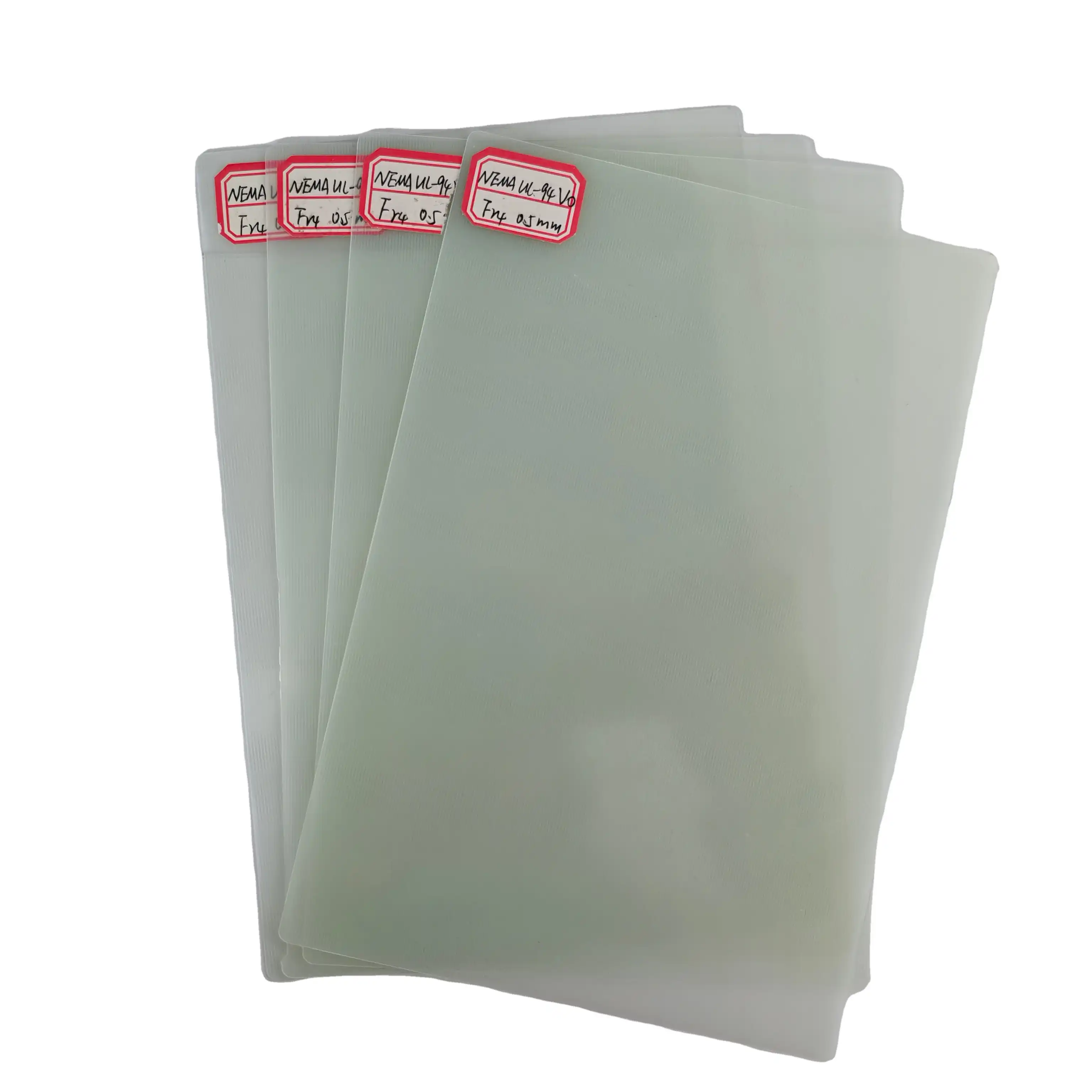
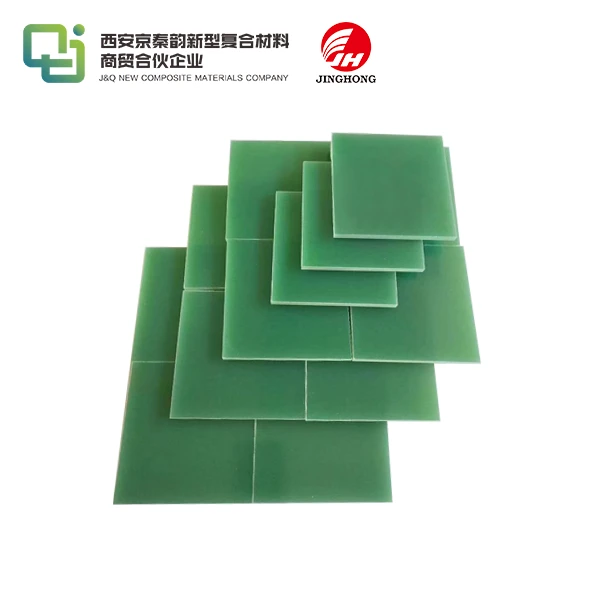
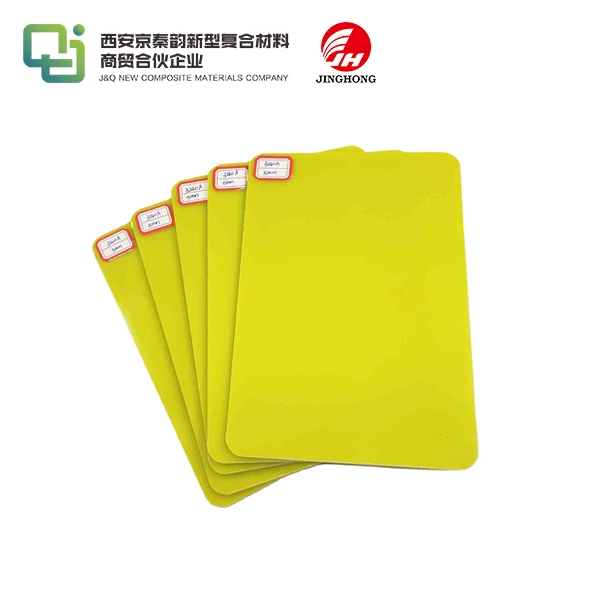
Heat Resistant Bakelite Sheet for Mechanical Parts
2026-05-12 15:55:09
When engineers have to deal with both thermal stress and mechanical pressure, heat-resistant Bakelite sheet has been shown to work well. This phenolic laminate blends thermosetting chemistry that is over a hundred years old with current production accuracy to make electrical insulation and structural parts that last longer than regular plastics in harsh environments. Heat-resistant phenolic sheets fill in important performance gaps where temperature changes and mechanical forces meet in places like motor housings and transformer barriers.
Understanding Heat Resistant Bakelite Sheets
The Chemistry Behind Phenolic Laminates
Bakelite sheets that can withstand high temperatures come from phenol-formaldehyde resin condensation, a thermosetting process that Leo Baekeland invented in 1907. While thermoplastics weaken when heated, phenolic resin crosses-links in a way that can't be undone during hardening, creating a three-dimensional network of molecules. This structure keeps the shape stable up to 300°F (149°C) and keeps the material from breaking down when it is heated and cooled many times. The base of the laminate, which is usually cellulose paper or fabric cloth, absorbs the resin under controlled pressure. This makes a combination that is strong enough to hold weight and doesn't conduct electricity too well.
Manufacturing Processes That Enhance Performance
Hydraulic presses that produce 1,000 to 1,500 PSI and keep temperatures between 280 and 320°F are used to make phenolic laminates today. Multiple layers of resin-soaked material can be pressed into flat sheets that are any thickness between 0.5 mm and 50 mm, with limits of ±0.1 mm for precise uses. Post-cure conditioning gets rid of any volatiles that are still present, making sure that the dielectric properties are the same from batch to batch. This controlled polymerization is what makes industrial-grade sheets different from consumer molding compounds. It also makes CNC machining qualities that are needed for making tight-tolerance mechanical parts predictable.
Laminate Grades and Application Profiles
Different types of phenolic meet different operating needs. NEMA Grade XX paper-based laminates are good for general electrical protection when cost is an issue. On the other hand, Grade XXX fabric-reinforced types are better at protecting mechanical spacers and gears from impact. Canvas-based laminates have better tensile strength for wear plates, while cotton fabric types are a good mix between being easy to machine and being resistant to heat. We've seen that buying teams forget to include grade specs, which causes parts to break too soon when thermal or mechanical loads are higher than the material's values.
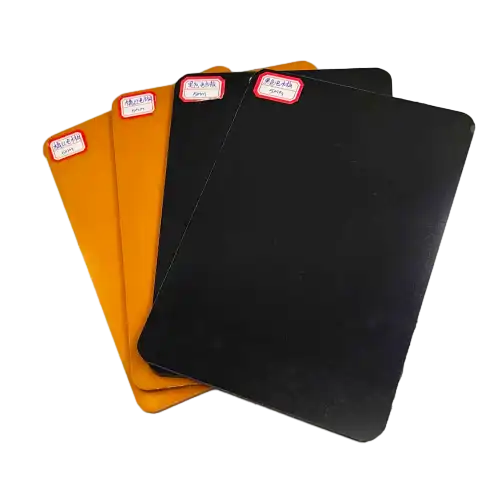
Advantages of Using Heat Resistant Bakelite Sheets in Mechanical Parts
Superior Thermal and Mechanical Integration
When industrial plastics like PVC and acetal bend, phenolic laminates keep their shape. The material doesn't expand or contract much when heated or cooled (about 20 to 30 x 10⁻⁶ per °C), so its dimensions don't change when the temperature changes from -40°F to 300°F. Its compressive strength is higher than 30,000 PSI, which makes it suitable for load-bearing uses like motor mounting brackets and circuit breaker supports. This mix gets rid of the need for mixed kits, which cuts down on the number of parts and possible weak spots in high-stress mechanical systems.
The resistance to heat goes beyond the steady temperature limit. In transformer enclosures where localized hot spots appear, Bakelite sheet can survive occasional spikes to 350°F without losing its dielectric qualities. According to ASTM D495, arc resistance values that are higher than 180 seconds stop carbon from tracking in switchgear uses. Because of these performance traits, power distribution engineers still choose phenolic laminates even though there are newer composite materials on the market.
Cost-Efficiency Across Product Lifecycles
Getting things is only a small part of the total costs of owning. Phenolic laminates can be machined smoothly with standard carbide tools, so you don't need the special tools needed for ceramics or the problems that filled nylons often have with surface finishing. A lot less scrap is made during CNC processes because the material behaves predictably and tools don't wear out as quickly. Parts stay the same size for years without warping, which cuts down on guarantee claims and repairs in the field.
Machines that are exposed to hydraulic fluids and cleaning agents will last longer if they are resistant to chemicals like oils, weak acids, and solvents. Unlike metal options, phenolic sheets never rust, so they don't need to be maintained or shut down when they're not supposed to be. Automotive makers have seen lifetime costs drop by 15 to 20 percent when they switch from metal insulation brackets to properly designed Bakelite components. This is mostly because the Bakelite components are easier to install and last longer.
Environmental Durability and Operational Reliability
After 24 hours of soaking, less than 1.5% of the moisture is still absorbed, so the electrical qualities are kept even in damp places where hygroscopic plastics fail. This steadiness is very important for power tools used outside and for marine electricity systems. The material naturally doesn't catch fire and goes out on its own within seconds of taking away the spark. It meets UL94 V-0 standards without any halogenated chemicals, which is good for both safety and the environment.
Because they don't spread flames and keep heat in, phenolic barriers are used by companies that make automotive battery packs. Designers of home appliances use Bakelite for motor insulation frames because it stops vibrations and blocks electrical leaking paths. These real-life examples show how temperature and mechanical properties can work together to solve difficult engineering problems that materials with only one property can't handle.
How to Identify and Select the Right Bakelite Sheet for Mechanical Parts
Physical and Chemical Identification Techniques
The cross-section of real phenolic laminates such as Bakelite sheet is a distinct brown to black color, which sets them apart from surface-coated options. A quick look along the edges shows laminating layers, which confirms that the base is made of paper or fabric. When heated with a soldering tool, phenolic material gives off a strong chemical smell, which can be used as a quick field test to make sure it is real. For more thorough testing, acetone wipe tests are used. Real Bakelite doesn't let solvents penetrate, but fakes show surface weakening or color transfer.
Critical Selection Criteria for Mechanical Applications
Electrical space and assembly fit are directly affected by thickness tolerance. Standard industrial grades have a thickness difference of ±5%, while precision-ground sheets have a variation of ±0.05mm for uses that need exact spacing. Laminate density shows how much resin is in it and how well it has cured. Good sheets have a density of 1.35 to 1.45 g/cm³, while lower densities mean that the polymerization process isn't finished or there is too much filler material.
The dielectric strength needed depends on the voltage being used. For PCB support structures working below 600V, 8–10 kV/mm breakdown resistance is enough, but 12–15 kV/mm levels are needed for high-voltage switchgear. When mechanical engineers check data on compression and flexural strengths, they should compare them to real-life load conditions and make sure that safety factors are taken into account for cycle or impact loading scenarios.
Order Quantity and Customization Considerations
Minimum order amounts affect the choice of materials, especially when making prototypes. Standard sheet widths, which are usually 1000mm x 2000mm, allow for cost-effective small-batch purchases. Custom measurements, on the other hand, mean that production runs have to be above a certain level to be profitable. Lead times depend on the grade that is available. For example, standard XX paper grades can be shipped within days, but special canvas laminates may need 3–4 weeks to schedule production.
Custom machining services take raw sheets and turn them into finished parts, but they need detailed sketches that show where the holes should go, how the edges should be treated, and how the surface should be finished. CNC routers can handle complicated shapes, but for mass output, complicated designs may need progressive die stamping. We suggest working with suppliers who can do their own production during the design phase. Their knowledge of how things are made can often lead to cost-saving changes in the shape.
Procurement Guide: Buying Heat Resistant Bakelite Sheets for Mechanical Parts
Evaluating Supplier Credentials and Certifications
Suppliers with a good reputation use ISO 9001 quality management systems and give test results on materials that show their electrical and mechanical features. UL recognition for certain grades proves that they meet North American safety standards, which is important for goods that need to be approved by an agency. Documentation that meets ROHS standards makes sure that restricted chemicals are not present. This is part of the supply chain due diligence that electronics companies do when they send their products to foreign markets.
Beyond the quality of the materials, manufacturing skills are important when producing products such as Bakelite sheet. When it comes to process control, suppliers with specific laminate production lines are better than dealers who get their materials from more than one mill. In-house testing labs make it easy to quickly confirm the quality of materials and create unique grades, and in-house fabrication facilities make it easier to go from prototypes to production. Long-term relationships with suppliers lower buying risk because established sellers know the specific needs of each application and will notify buyers ahead of time of any material or lead time changes.
Pricing Structures and Total Cost Analysis
Prices for phenolic sheets depend on the grade's complexity, thickness, and the number of sheets ordered. Paper-based laminates are much cheaper than fabric-reinforced ones. Canvas grades are more expensive because the base material is more expensive and production is slower. If the thickness is more than 25 mm, there are extra costs because the hardening process takes longer and the press can't hold as much. Volume savings usually start at 500 kg, and prices go down as you commit to more than one ton.
The total landing cost takes into account freight, which is often forgotten when first evaluating an item. Phenolic sheets are thick and pretty heavy when they are shipped; a single 1000mm x 2000mm x 10mm sheet weighs about 28 kg. Many US buyers find that shipments from domestic providers that offer consolidated shipping or in-house services are cheaper than shipments from other countries directly. We've worked with customers to find the best times and amounts to place orders, combining the costs of keeping goods with the benefits of faster shipping.
Custom Molding and Prototyping Support
Molded phenolic parts are sometimes better than machined sheet stock when the geometry is complicated, especially for high-volume uses. Compression molding makes parts that are almost net-shaped and have features that are built in, so no extra work is needed. Tooling prices stay reasonable above 5,000 to 10,000 pieces per year, based on how complicated the parts are. By testing designs on prototypes before committing to full production tools, prototype molding services lower the risk of development.
Strategic partners are different from commodity providers because they offer technical help. It is very helpful to be able to talk to applications engineers who know about temperature management, electrical openings, and mechanical stress analysis when choosing materials. Suppliers who offer CAD review services find possible manufacturing problems before an order is placed, and suppliers who offer sample kits let you test the material in your own hands. These features shorten the time it takes to build something and raise the success rate of first articles.
Conclusion
Bakelite sheets that don't melt in heat keep providing technical solutions where strength, electrical insulation, and thermal stability all come together. Their 100-year history of use in electrical, industrial, and automobile settings shows a level of material stability that is hard to match with newer plastics. To choose the right grades, you need to know how laminates are made, what their performance requirements are, and what the needs of your application are. Strategic relationships with suppliers that focus on technical know-how, quality systems, and the ability to make things turn purchases of basic goods into competitive benefits. Phenolic laminates are still needed in tough mechanical uses because they are cost-effective over the lifetime of a product and have been shown to last for a long time.
FAQ
Can Bakelite sheets withstand continuous high-temperature operation?
Good phenolic laminates keep their mechanical and electrical properties even when they are exposed to temperatures as high as 280°F all the time, and they can handle short spikes of up to 350°F. Ratings for temperature vary on the grade chosen and the load factors. Paper-based grades can handle mild thermal stress, while fabric-reinforced grades can handle higher temperatures that don't change. Always compare specific grade scores to real operational profiles, making sure to account for safety gaps that are right for the criticality of the application.
How do phenolic sheets compare to epoxy laminates for mechanical durability?
Phenolic materials are better at resisting impacts and keeping their shape when heated and cooled many times, while epoxy types (like FR4) are better at conducting electricity at higher frequencies. Phenolic laminates are better for industrial uses where radio-frequency performance isn't important because they are cheaper and easier to make. Epoxy composites work well for printed circuit board surfaces that need fine-pitch designs for the conductors.
What environmental considerations affect phenolic sheet selection?
Bakelite doesn't absorb much water and can stand up to most industrial chemicals, but it breaks down when exposed to alkalis for a long time. UV light changes the color of the surface without having a big effect on the bulk qualities. Thermosetting chemistry means that materials can't be recycled easily; parts are used to make composite fills instead of melting down again like thermoplastics can. Flame protection and the lack of halogenated chemicals meet safety and environmental standards in the workplace.
Partner with J&Q for Premium Bakelite Sheet Solutions
J&Q takes more than 20 years of experience making insulating materials straight to the process of buying them. Our expert team knows exactly what electrical insulation systems, mechanical load-bearing parts, and heat management uses need. We have a large stockpile of all phenolic grades, so we can quickly meet the needs of both prototypes and production runs. As a well-known company that makes Bakelite sheets and also has manufacturing and shipping services, we offer full solutions, from figuring out the right materials to delivering the finished parts. Our quality control systems are up to international standards, and you can find full material traceability and certification documents to back up your compliance needs. Email our applications engineers at info@jhd-material.com to talk about the problems you're having with a certain mechanical part, get examples of the material, or get full quotes. We can help you succeed as an engineer by giving you tried-and-true epoxy options and quick technical support.
References
Baekeland, L. H. (1909). "The Synthesis, Constitution, and Uses of Bakelite." Journal of Industrial and Engineering Chemistry, 1(3), 149-161.
American Society for Testing and Materials. (2021). ASTM D709-19: Standard Specification for Laminated Thermosetting Materials. West Conshohocken, PA: ASTM International.
National Electrical Manufacturers Association. (2018). NEMA LI 1-1998 (R2018): Industrial Laminated Thermosetting Products. Rosslyn, VA: NEMA Standards Publication.
Harper, C. A. (2004). Handbook of Plastics, Elastomers, and Composites (4th ed.). New York: McGraw-Hill Professional.
Fried, J. R. (2014). Polymer Science and Technology (3rd ed.). Upper Saddle River, NJ: Prentice Hall.
Richardson, T., & Lokensgard, E. (2018). Industrial Plastics: Theory and Applications (6th ed.). Boston: Cengage Learning.