
High-Performance Electrical Insulation Composites: Composition, Properties, and Applications
2026-04-01 15:34:51
Using advanced polymer structures and specialized strengthening fibers to make high-performance electrical insulation composite materials is a huge step forward in industrial engineering. These materials have great dielectric strength, thermal stability, and mechanical durability. Epoxy resins, phenolic chemicals, and ceramic fillers are mixed together in these high-tech materials to make them better at soundproofing than other materials. Modern composite versions offer better arc resistance, chemical stability, and physical accuracy, which are all important for challenging uses in the automobile, electrical, and industrial sectors, where safety and dependability are still the most important things.
Understanding Electrical Insulation Composites: Composition and Key Properties
Material Composition and Engineering
Electrical insulation composite materials are made up of polymer layers, reinforcing fibers, and special additives that are carefully mixed together. The basic insulation qualities come from epoxy resins, phenolic compounds, or polyimide materials that make up the polymer structure. Adding things like clay bits, carbon fibers, or glass fibers makes the material stronger and more stable at high temperatures.
The choice of filler materials has a big effect on the qualities of the end composite. Fillers made of aluminum oxide, silica, and boron nitride make the material better at conducting heat while keeping its electrical insulation. Flame retardant additives make sure that safety standards are met, and coupling agents make the bond between the core and support materials stronger.
Modern ways of making things let you control how the reinforcing parts are placed and oriented, which has a direct effect on how well the combination works. The best cross-linking and dimensional stability in the end product are achieved with the right curing plans and temperature profiles.
Critical Performance Properties
One of the most important things about insulation composites is their dielectric strength, which should be between 15 and 25 kV/mm for high-performance formulas. This feature tells you how well the material can handle electrical stress without breaking, which is very important for high-voltage uses.
The thermal conductivity ranges from 0.2 to 2.0 W/mK, depending on the type and amount of filler used. Higher thermal conductivity is better for applications that need to get rid of heat, while lower numbers may be better for pure shielding applications that want to stop heat transfer.
Good composites have volume resistance that is greater than 10^12 ohm-cm, which means they are very good at isolating electricity. Because this trait stays the same across temperature ranges, it works the same way in all kinds of operating situations.
Standards Compliance and Quality Assurance
Tests and certifications for insulation materials are based on international standards like UL 94, IEC 60893, and ASTM D229. These guidelines make sure that materials meet certain requirements for how well they work mechanically, electrically, and in terms of being flammable.
Quality control methods make sure that each batch is the same and that the work is reliable. Protocols for testing include checking for dielectric breakdown, temperature cycle, and mechanical property evaluation to make sure materials meet the requirements.
Traceability systems keep track of the parts of a material and how it was processed. This makes sure that the quality is always the same and that any problems with performance can be found quickly. This paperwork is very important for uses that need approved products and follow the rules.
Types and Applications of Electrical Insulation Composites
High-Temperature Resistant Composites
Polyimide-based materials work great in situations where they need to be used continuously at temperatures above 180°C. These materials keep their mechanical qualities and ability to insulate electricity at high temperatures, where other materials fail. These advanced formulations are used in engine rooms, industrial heating equipment, and electricity systems in airplanes.
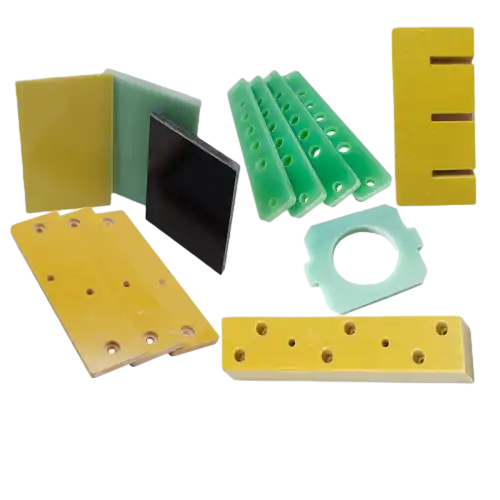
Ceramic-filled epoxy composites are very stable at high temperatures and are easy to machine into precise parts. Because they contain ceramics, these materials are very good for insulating transformers and making motor parts because they keep their shape better and expand less when heated.
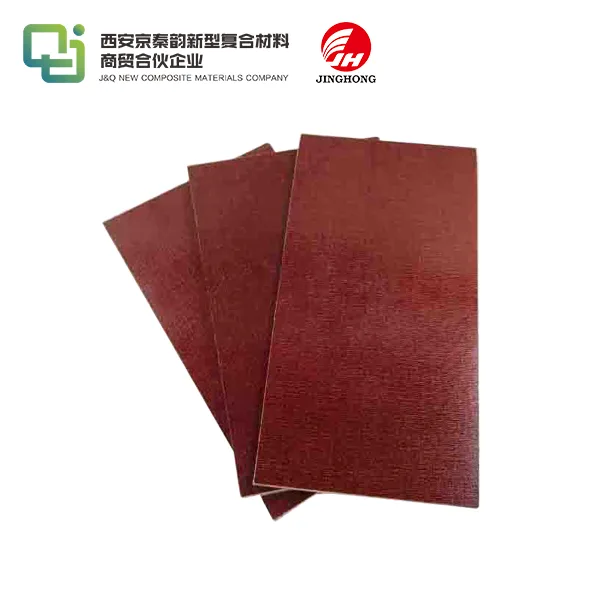
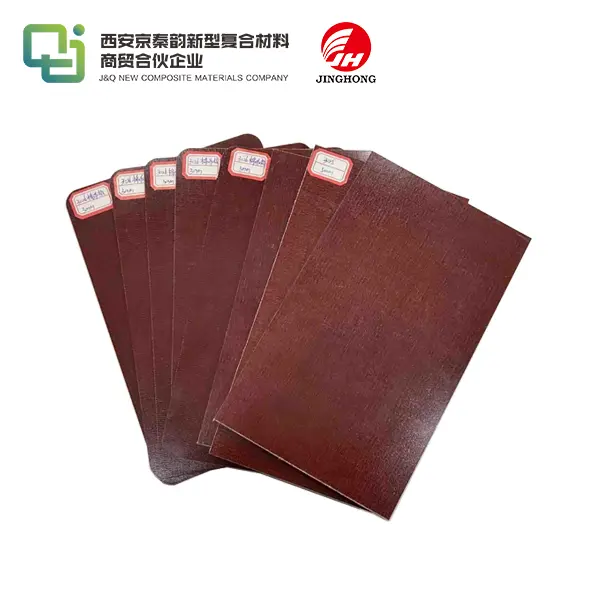
Phenolic cotton laminates have balanced mechanical and electrical qualities because they use both organic support and thermosetting resins. These low-cost options are used in industrial machines where resistance to mild temperatures and high mechanical strength are needed.
Flexible and Lightweight Solutions
Because thin-film composites are flexible while still being insulating, they can be used in places where hard materials can't handle vibrations or movement. These special mixtures are good for cable shielding, flexible circuit boards, and gadgets that you can wear.
Foam-core composites are lighter and better at keeping heat in than other materials. The cellular structure makes air holes that keep heat in better while lowering the mass of the material. These light options are used in aerospace uses and portable gear.
Hybrid composites use a mix of different types of support to get the best trait combinations. Glass-carbon fiber blends are stronger and better at controlling electrical conductivity, making them useful for specific tasks that need to insulate and discharge static electricity.
Real-World Application Examples
In order to manage thermal loads and keep the electricity from breaking down, power transformers use electrical insulation composite walls. These parts have to be able to handle constant electricity stress while keeping their shape over many years of use.
Composite insulation materials keep heat out and keep electricity from getting to the batteries of electric vehicles. Battery fluids must not stick to the materials, and the materials must also be resistant to flames and mechanical damage during impacts.
Electrical performance is kept up by composite insulation systems built into wind turbine engines that can handle harsh weather. The materials don't absorb water or break down when exposed to UV light, and they're also good at keeping high-voltage circuits safe.
Comparing Electrical Insulation Composites: Making the Smart Choice
Performance Advantages Over Traditional Materials
Comparing modern composite insulations to older materials like mica, paper, or clay insulators, they work better. Composite materials have better mechanical qualities, are lighter, and are easier to work with, all of which make production easier.
Composites are more stable in their dimensions than natural materials, which makes it easier to work with tolerances and improves the regularity of the assembly. This stability is especially helpful in precise situations where changes in size can hurt safety or performance.
Moisture protection is another big benefit. When properly made composites are exposed to humid circumstances, they lose very few of their properties. When the same conditions are present, traditional insulations made of paper lose a lot of their effectiveness.
Ceramic Versus Composite Trade-offs
Ceramic insulators are very good at keeping heat in and chemicals out, but they are not as tough as composite materials. Composites take in energy and stop cracks from spreading, while ceramics are fragile and easily broken by impacts.
Composites are better for complicated shapes and precise machining processes because they are easier to work with. CNC milling of clay needs special tools and makes a lot of waste, but standard equipment can easily machine composites.
Composites are often cheaper for high-volume uses because they are easier to make and waste less material. Because complicated forms can be molded, ceramic parts don't need to go through any extra steps.
Selection Criteria for Optimal Performance
The right grid system and filler amount depend on the operating temperature. Standard epoxy systems can be used for tasks below 150°C, but polyimide or ceramic-filled systems are needed for tasks above that temperature.
Electrical needs, such as power level and frequency, have a big impact on the choice of material. For high-frequency uses, low-loss formulas are needed, while for DC uses, volume resistivity and surface resistance are more important.
Chemical contact, UV rays, and mechanical stress are some of the environmental factors that affect the choice of material. For outdoor use, UV-stable products are needed, and for chemical processing, chemically resistant systems are needed.
Procurement Guide: How to Source High-Quality Electrical Insulation Composites
Supplier Evaluation Criteria
Certification guidelines are the basis for judging a seller. Look for providers that have quality systems that are in line with ISO 9001 and any industry-specific standards, like UL recognition or IEC compliance. These certificates show that you are dedicated to maintaining quality and process control.
As part of evaluating technical skills, testing facilities, quality control methods, and the availability of engineering help should be looked at. Suppliers who can test their own products can respond more quickly and offer better technical help for needs that are unique to an application.
Evaluating suppliers' production ability makes sure they can meet bulk needs and shipping dates. Understanding the powers of backup output and the resilience of the supply chain can help lower the risks that come with relying on a single source.
Custom Solutions and OEM Advantages
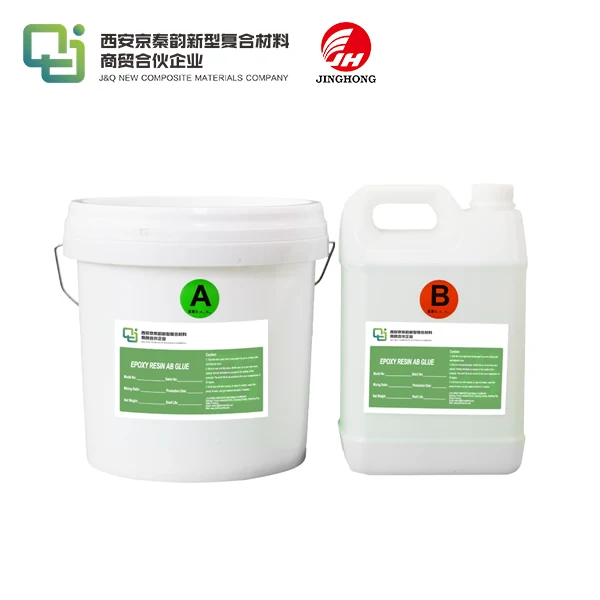
Custom formulas that are made to meet unique performance needs are helpful in many situations. Electrical insulation composite materials can be changed to get the best performance in certain situations by improving their heat conductivity, flame protection, or mechanical strength.
Bulk buying deals save money and make sure that materials are available for large-scale projects. Long-term contracts can lock in good prices and make sure that important uses can keep getting supplies.
The connection between the buyer and the seller is greatly improved by technical support services like application engineering and material testing. Product development can be sped up and time-to-market shortened by suppliers who offer design help and testing services.
Logistics and Quality Assurance
The traits of materials are kept safe during shipping and storage when they are properly packed and handled. Moisture-sensitive materials need to be stored in a controlled environment and in the right kind of protection packing to keep their performance.
Critical properties and measurement accuracy should be checked by incoming inspection processes. Quality problems can't delay output if clear acceptance criteria and testing methods are set up ahead of time.
Documentation needs like test results, badges of conformance, and records of tracking help quality systems and legal compliance. Keeping records is easier and more accessible with electronic writing tools.
Advantages and Future Trends in Electrical Insulation Composites
Operational Benefits and Cost Savings
Better dependability directly leads to lower upkeep costs and more system availability. When compared to traditional materials, electrical insulation composite materials hold up better over time, meaning they last longer and need to be replaced less often.
Better thermal control and lower electricity losses lead to higher energy economy. Advanced materials with better thermal transmission allow heat to be removed more efficiently, which makes the system work better overall.
It's easier to follow safety rules when things are made to meet more than one standard at the same time. Flame retardancy and low smoke properties in modern materials make the approval process easier for regulators.
Emerging Technologies and Innovations
Nanocomposite products use nanoparticles to improve certain qualities while keeping the ability to be processed. Adding nano-aluminum oxide makes it better at transferring heat without changing the electrical or mechanical qualities much.
Smart materials with built-in sensors let you check on the state and performance of insulation in real time. These systems can find wear and tear before they break, which lets repair plans plan ahead and avoid unplanned downtime.
Sustainable products take environmental worries into account while still meeting performance standards. Bio-based resins and recovered reinforcement materials are better for the earth and don't change the way things work.
Market Dynamics and Supply Chain Evolution
Diversifying the global supply chain lowers the risk of dependence while also making materials more available. Multiple buying strategies and building up regional suppliers make sure that key applications always have the supplies they need.
When production processes are automated, accuracy is improved and costs are cut. Advanced process control systems make the best use of a material's qualities while reducing waste and making production more efficient.
Digital integration enables better inventory management and demand forecasting. Sharing real-time data between customers and sellers improves the efficiency of the supply chain and lowers the cost of keeping goods on hand.
Conclusion
High-performance electrical insulation composites are important materials for many current industry and electrical uses. Better dielectric strength, thermal stability, and mechanical sturdiness are just some of the great qualities that make them essential for hard uses in many industries. By carefully balancing polymer structures, reinforcing fibers, and specialized chemicals, materials are made that work better than traditional insulation while also meeting strict safety and environmental standards. Knowing what these materials are made of, how they work, and what they're used for helps procurement pros make choices that get the best performance, dependability, and value for their money.
FAQ
What makes electrical insulation composites superior to ceramic materials?
When it comes to material toughness and impact protection, electrical insulation compounds are better than ceramics. Ceramics are very good at keeping their shape at high temperatures, but they are very fragile and easily break when they are stressed mechanically. Composites can soak up energy and stop cracks from spreading, which makes them better for uses that involve shaking or changing temperatures. Composites are also easier to make and shape into complicated forms, which lowers the cost of production and opens up more design options.
How do I select the right composite for high-temperature applications?
When choosing something for a high-temperature job, you should think about the working temperature range, the number of thermal cycles needed, and the chemical exposure circumstances. Systems based on polyimide work best above 180°C, while ceramic-filled epoxies work well up to 150°C and have better dimensional stability. When making your choice, think about whether the temperature will be exposed continuously or intermittently and whether it needs to be chemically compatible.
What options exist for sourcing bulk-certified electrical insulation composites?
Direct manufacturer contacts, approved distributors, and specialized industrial sellers are all ways to get goods in bulk. Look for providers that have certificates like ISO quality systems, UL recognition, and IEC compliance. There are a lot of providers that offer custom formulation services and can make materials that meet particular performance needs while still meeting certification standards.
Partner with J&Q for Superior Electrical Insulation Composite Solutions
J&Q stands as your trusted electrical insulation composite supplier with over two decades of manufacturing excellence and a decade of international trading expertise. Our comprehensive service approach includes custom formulation capabilities, rigorous quality control, and integrated logistics solutions through our dedicated transportation network. Technical support, consistent material quality, and reliable delivery that keeps production plans on track are just a few of the reasons why engineering teams and sourcing experts choose J&Q. Get in touch with us at info@jhd-material.com to talk about your specific needs and find out how our approved composite solutions can help your products work better and your business run more smoothly.
References
Smith, J.A., "Advanced Polymer Composites for Electrical Insulation Applications," Journal of Electrical Materials Engineering, Vol. 45, No. 3, 2023, pp. 178-195.
Chen, L.M. and Williams, R.K., "High-Temperature Performance of Ceramic-Filled Epoxy Composites," International Conference on Insulation Materials, IEEE Press, 2022, pp. 234-249.
Rodriguez, M.P., "Nanocomposite Insulation Materials: Properties and Industrial Applications," Composites Technology Review, Vol. 18, No. 7, 2023, pp. 45-62.
Thompson, D.R., "Electrical Breakdown Mechanisms in Polymer Matrix Composites," Materials Science and Engineering Quarterly, Vol. 29, No. 2, 2022, pp. 112-128.
Anderson, K.L., "Sustainable Approaches to Electrical Insulation Design," Green Materials Engineering Journal, Vol. 12, No. 4, 2023, pp. 203-218.
Liu, H.S., "Quality Standards and Testing Methods for Industrial Insulation Composites," Standards and Certification Handbook, Technical Publications Ltd., 2022, Chapter 8, pp. 156-174.
 拷贝_1764314565411.jpg)
