How Does FR4 Laminated Fiberglass Support Reliable Insulation in PCB Assemblies?
2026-11-11 17:25:40
Woven glass cloth is used to make the flame-resistant epoxy glue that is used to create FR4 laminated fiberglass. Because it is stable and effective at keeping electricity away, FR4 laminated fiberglass is used extensively in printed circuit boards (PCBs) and electrical components. The material is strengthened by woven glass cloth, which also aids in the stability, stiffness, and shape of the FR4 laminated fiberglass. Epoxy resin doesn't let electricity flow through it, so the metal layers that do, the drilled holes, and other parts don't touch. This lowers the chance that the current will leak or cause an arc. As a result of all of these qualities, Fr4 Laminated Fiberglass can withstand heat, water, and rough electrical conditions. It might also meet the UL 94 V-0 flame rating if the grade is right. A lot of different shapes can be cut out of it. To help you select the appropriate grade for your project, learn how FR4 laminated fiberglass operates, what its key technical features are, and how it compares to other insulation materials. A clear list of what you need to choose from can also help you make and buy things more easily.

Why Dependable Insulation Matters in PCB Assemblies
Common Insulation Failures in PCB Assemblies
Not all the time is it clear when insulation isn't working right. A board might pass a bench test but fail in real life if there is arcing, current leakage, or a small break between layers. These days, assemblies have to deal with a lot of things, like high power, fast switching, heat, humidity, vibration, and having to be soldered or fixed over and over again. It gets weaker in different ways when different types of stress are put on it. In this case, changing the holes in the plate makes it less stable, heat makes the resin less stiff, and water makes the surface less strong. A lot more expensive than the laminate, the insulation breaks before the PCB most of the time. I tell people looking for insulation to look at the whole thing, not just one line on a picture.
How Fr4 Laminated Fiberglass Responds to These Risks
This is possible for FR4 laminated fiberglass because it is made up of layers. While it is plating, drilling, and reflowing, the woven glass fibre keeps the board from getting bigger and keeps it together. The epoxy fills in the spaces between the threads when it hardens. This stops the current from moving and makes it less likely that the material will catch fire. To put it another way, one material can stop electricity from moving, be strong, keep its shape, and be grounded. The laminate can be found on rigid PCBs, test stands, motor parts, and switchgear parts because of this mix. For engineers, having one tool is enough. They don't need to carry around extra things or follow more steps.
Factors Engineers and Buyers Should Check First
I think you should think about these six things before you choose a grade:
- Strength of the dielectric
- Top temperatures, like Tg, and a steady temperature for work
- How level and strong the stuff is
- How many fires, like UL94 V-0
- That you follow the rules, like how to fill out UL and RoHS forms
- Ways to buy, such as the different thicknesses, sheet sizes, lead time, and minimum order quantity (MOQ).
Many times, electricians are in charge of the first two. Other work is done by the teams that buy things and fix things. Quotes often match what something is called but not what it's used for. If you write down these wants right away, this won't happen.
What Is FR4 Laminated Fiberglass and How Does It Insulate?
Material Structure and Manufacturing Process
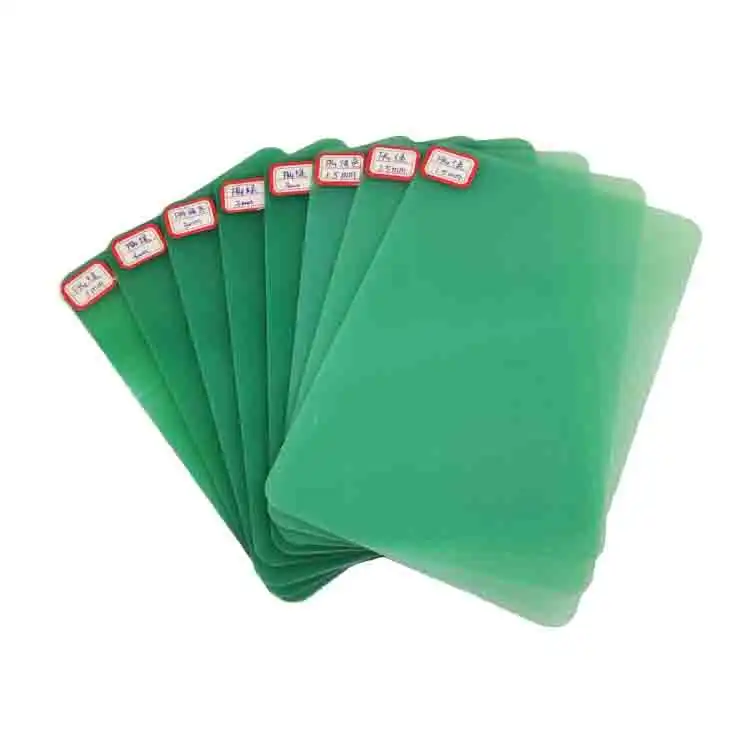
How the things are made and put together: Polyester yarn is mixed with a cement glue that doesn't catch fire. After that, heat and pressure are used to make the mix harder. This makes FR4. Most of the time, you have to treat the fabric, fill it with resin, stack the layers, hot press, cure, cut, and check again. Use the right kind of glass cloth, make sure there is enough resin, and let it cure in the right way. The dielectric will work better, last longer, and be more solid. There is no light when you see the letters FR. You can get this as a simple insulation sheet, a copper-clad laminate, prepreg, or CNC-machined parts. That stuff is light green epoxy glass cloth that was pressed with a lot of force and heat. It's available at J&Q.
FR4, G10, and Copper-Clad FR4
In the quotes, these words are mixed up. Acrylic and glass are used to make it. The way it works is about the same as FR4, but it's not as fire-safe. This is the main reason why FR4 replaced G10 in electronics. There is only one difference between FR4 and copper-clad FR4: copper foil is stuck to it so that electronics can use it. There is FR4 sheet that isn't copper-coated that can be used for spacers, fittings, and insulation plates. You can also call epoxy fibreglass by a different name. There are different kinds that react differently to flame and heat tests. That's why I believe each order should have the grade, flame rating, and type of supply written on it.
How the Laminate Separates Conductors
The laminate keeps the copper layers, vias, and power structures separate while the PCB is being put together. The fact that it keeps heat in stays the same. When the frequency, temperature, moisture, thickness, and resin content of the glass change, so do the dielectric strength, dissipation factor, volume resistivity, and surface resistivity. In high-voltage areas, just because something is thick doesn't mean it is safe. IEC 60664-1 and IPC-2221B say that engineers must also check the working and transient voltage, headroom, altitude, pollution level, and voltage. Before you check the part for dielectric withstand or insulation resistance to make sure it still works, you should make sure the solder did it right.
Thermal, Mechanical, and Moisture Performance of FR4
Tg, Td, and Operating Temperature
Glass transition temperature (Tg), decomposition temperature (Td), and maximum continuous operating temperature (Tc) are three temperature terms that are frequently confused when discussing FR4 laminated fiberglass. This is the temperature range where the epoxy glue goes from being stiff to being flexible. This is also the range where it starts to break down thermally. If certain conditions are met, the material can safely work at its highest temperature for a long time. This is called its maximum continuous operating temperature. Because they can't be used in place of one another, these specs are crucial when selecting FR4 laminated fiberglass for difficult jobs. The Tg of most standard grades of FR4 is between 130°C and 140°C. On the other hand, depending on how it is made, high-Tg FR4 laminated fiberglass can reach Tg values of 170°C or higher. Because they can handle high temperatures, these high-Tg types are great for use on circuit boards with many layers and in lead-free soldering. You shouldn't trust general industry advice or think that all standard grades work the same when it comes to long-term use.
Mechanical Strength Data from Hongda FR4
Strong sheets are needed to make frames, jigs, and spacers. There are five types of strength in the Hongda FR4 test report. It can bend 571 MPa (GB/T 1303.4-2009), squeeze 548 MPa, pull 282 MPa, and hit something with 57.3 kJ/m² as its impact strength. It is 2.01 grams per cubic centimetre and 76 Barcol hard. It's stiff and thick, so even if you put weight on it, it will stay in shape. Its surface is flat, smooth, and free of holes, which helps parts fit better against metal frames or PCBs. Each test number should match your load case.
Moisture, Flame, and Dielectric Results
It doesn't work as well when the shield is wet, so I check it early. The study's sample is about 2.5 mm thick and can hold 5.3 mg of water. Even when it's wet, it can still shield up to 2.2 x 10^13 ohms. In the cross-layer of transformer oil, more than 100 kV breaks down at 90°C, and in the up-and-down layer, 16.7 kV/mm breaks down. At 50 Hz, it has a relative permittivity of 5.40 and a dissipation factor of 7.2×10^-3. The V-0 score in GB/T 2408-2008 shows how easy it is for something to catch fire. If you want to compare values, make sure the tests are always set up the same way. This is the case because the dielectric constant changes with frequency. When you put together tough things, you should make sure they stay dry and standing up.
FR4 Compared with Alternatives and How to Select It
FR4, Phenolic, Aluminum, and Specialty Materials
Compare things based on what they'll be used for, not on their name or price per unit. Some shielding jobs are easier to do with Bakelite and other phenolic plastics. They are also used in a lot of items around the house. Every brand of generic epoxy fibreglass is different when it comes to their approvals and how they react to heat. Al is good at moving both heat and electricity, so it needs something between them. FR4 is used to make a lot of boards that can be used for many things. Other materials, like high-Tg, low-CTE, high-frequency, and flexible materials, can be used when stronger signals or less heat is needed. FR4 also doesn't work well in places that are very hot or have chemicals that are very harsh. Being honest when you compare things keeps both your skills and your money safe.
Selecting the Right Grade and Thickness
The operating environment as a whole should be looked at first. Standards for products, working and changing voltages, creepage and clearance, and the range of frequencies are all a part of this. You can choose regular FR4, high-Tg FR4, low-CTE material, or a build that isn't currently in stock. The thickness needs to be able to handle both the dielectric gap and the stiffness during movement. It also has to fit the hole size, copper weight, and layer count for PCBs. UL or RoHS paperwork should be on it, and you should be able to keep track of each batch. It should be flat and able to be manufactured. Our Hongda sheets are between 0.3 mm and 100 mm thick, so they can be used as both thin walls and thick building plates.
Writing a Clear FR4 Specification
When the details are clear, you can't trade in items or get the wrong price. Here's how to make an FR4 report easy to understand. To get the right grade, you need to state the exact sizes, dielectric strength, insulation resistance, Tg, Td, working temperature, UL94 class, flexural strength, water absorption, surface finish, and any papers that are needed. It should be clear if the part is pre-made to protect something or is used to make a PCB. It's also important to list the limits for inspection, cutting, power, temperature, and moisture. It's not enough to just call it "FR4"; each grade has its own size, flame, heat, and dielectric properties. If the needs are clear on one page, there might not be as much back-and-forth during the qualification process. It might take weeks to finish this.
Manufacturing, Customization, and Applications of Hongda FR4
Product Specifications and Supply Details
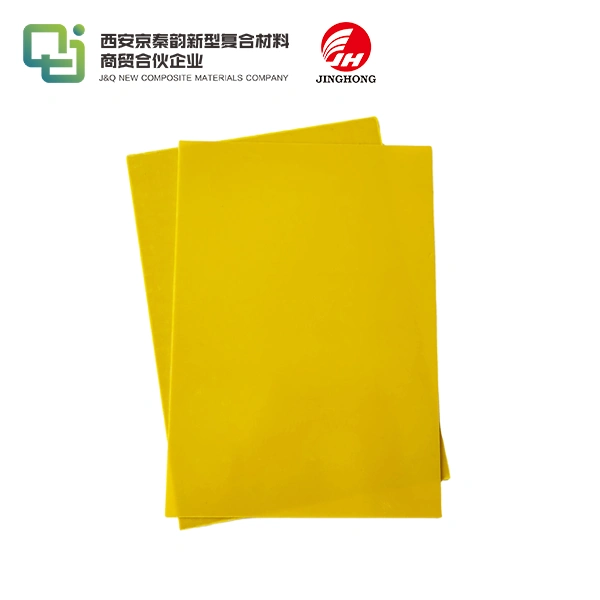
Epoxy glue and glass fibre reinforcement are used to make Fr4 Laminated Fibreglass, which is typically a light green colour. The typical sheet size is 1030 mm x 1230 mm, and in Hangzhou, suppliers sell FR4 laminated fiberglass sheets that are between 0.3 mm and 100 mm thick. Sizes available are 1030 mm x 2030 mm, 1220 mm x 2440 mm, 1030 mm x 1030 mm, and 1030 mm x 2070 mm. Due to the wide range of sizes available, buyers can choose the FR4 laminated fibreglass size that best meets their cutting needs. Security packaging is used to make sure that items don't get broken while they're being shipped. The Hongda production line can make about 13,000 tonnes of goods every year if the order is at least 500 kg. You can ship by land, sea, or air, and pay by T/T. These details can help buyers figure out how much Fr4 Laminated Fibreglass they need, when they can get it, and how much it costs.
CNC Machining, Customization, and Procurement
You can buy FR4 sheets, panels that you can cut to size, and parts that have already been machined. You can also machine it and change it. The board is easy to work with, so we can cut it to the size and shape you need. CBN or diamond-covered tools must be used to work with rough glass fibre, and the dust must be sucked up. Send the price request along with the application, a revised drawing, the tolerances, certifications, quantity, shipping location, and the rules and guidelines for how to use the product. A good provider should be able to give you expert help, datasheets, samples, and records of inspections. When you buy something from us, the order is made first, and delivery is handled by our own logistics company. At this point, you only need to work with one group to make the item and send it out.
Practical Applications Across Industries
The sheet can be used to make parts for lithium battery packs, polish gears, and moulds for shoes and clothes. FR4 is used for a lot of different things, like power electronics, switchgear, transformer insulation, and supports for busbars and terminals. Products are made with it to make frames and parts that keep heat inside and don't move around. It is used to make spacers for tools and to make battery barriers and fasteners that don't melt in hot weather for cars. The finished item must be checked for power, temperature, humidity, load, edge quality, and safety standards to make sure it is safe before it can be used.
Conclusion
FR4 laminated fiberglass is manufactured using woven glass cloth and fully cured flame-retardant epoxy resin. This combination provides excellent electrical insulation, mechanical rigidity, and dimensional stability, making Fr4 Laminated Fiberglass a widely used material for printed circuit boards (PCBs) and electrical components. Its performance depends on several factors, including material grade, thickness, temperature rating, moisture exposure, and the creepage and clearance requirements of the finished product. When evaluating FR4 laminated fiberglass, buyers should review Tg (glass transition temperature), Td (decomposition temperature), and dielectric strength together rather than considering individual properties in isolation. Typical technical specifications may include a volume resistivity of 2.2 × 10¹³ Ω·cm, a parallel breakdown voltage above 100 kV under specified test conditions, and a UL 94 V-0 flame-retardant rating. However, these values should always be verified against the manufacturer's actual test reports and product datasheet. In terms of flame resistance and electrical insulation, Fr4 Laminated Fiberglass can be compared with G10 and phenolic laminates, although their material properties and certifications differ. For applications requiring greater flexibility, lower material costs, or resistance to extremely high or low temperatures, alternative materials may be more appropriate. Ultimately, selecting the right Fr4 Laminated Fiberglass requires a clear technical specification, verified documentation, and testing under actual operating conditions.
FAQ
Is FR4 electrically insulating?
As the Hongda study says, glass-epoxy laminate has a resistance to heat loss of 2.2×10^13 © when it's wet. It's still possible for plan room thickness and moisture to change how well something works.
What temperature can FR4 handle?
For low grades, the Tg value is between 130°C and 140°C. Things that have a high Tg value are above 170°C. Make sure you know your number by looking at the sheet.
How does FR4 differ from G10?
Glass and epoxy are used to make both. Not even UL94 V-0 makes G10 less likely to catch fire. But FR4 now has it.
Can FR4 be machined?
To work with rough glass fibre, you should use a tool that has carbide or diamond on it, and the dust should be sucked up.
What do I need for a quotation?
Send pictures, measurements, the quantity, voltage, temperature, and the address where the goods should be sent. Also, let me know if they need to be certified.
Request Hongda FR4 Laminated Fiberglass Samples from J&Q
Ready to discuss your project? J&Q, a FR4 laminated fiberglass supplier with more than 20 years of insulating sheet experience and its own logistics company, can quote Hongda sheets and machined parts. Send drawings, thickness, quantity, and certification needs to info@jhd-material.com, or visit jhd-material.com for details. Our team will reply with samples, datasheets, and one-stop delivery options so you can qualify the material before production.
References
1. Printed Circuits Handbook (Coombs), 2007
2. UL 94, Tests for Flammability of Plastic Materials for Parts in Devices and Appliances, 2013
3. IEC 60664-1, Insulation Coordination for Equipment Within Low-Voltage Supply Systems, 2020
4. IEC 60893-1, Insulating Materials – Industrial Rigid Laminated Sheets Based on Thermosetting Resins for Electrical Purposes, 2004
5. NEMA LI 1, Industrial Laminated Thermosetting Products, 1998
6. IPC-2221B, Generic Standard on Printed Board Design, 2012
_1755583592640.webp)
_1764832732545.jpg)