How Does G10 Fiberglass Tube Perform Under Heat and Pressure?
2026-08-11 17:29:13
G10 Fiberglass Tube delivers exceptional performance under heat and pressure, maintaining structural integrity at continuous operating temperatures up to 140°C (284°F) while supporting compressive loads exceeding 65,000 psi. This high-pressure thermosetting laminate resists thermal deformation and mechanical stress far better than standard plastics, making it an engineering staple for electrical insulation, mechanical supports, and structural components in demanding industrial environments where both thermal stability and load-bearing capacity are non-negotiable.
Understanding G10 Fiberglass Tube: Composition and Key Properties
What Defines G10 as a High-Performance Laminate
G10 Fiberglass Tube is made of continuous filament glass cloth that has been soaked in epoxy resin. It is then cured under controlled heat and pressure, as required by NEMA G10 and MIL-I-24768/2 (Type GEE) standards. During the production process, thermosetting epoxy is used to join several layers of woven fiberglass cloth together. This makes a composite that has the tensile strength of glass fibers and the chemical resistance and bonding qualities of epoxy resin. This way of building makes a tube that is rigid, stable in its dimensions, and has few holes and a consistent wall thickness.
Core Physical and Mechanical Characteristics
The material's mechanical properties are very good, and engineering managers and procurement teams in many industries like it. Standard thickness materials have a tensile strength of 40,000 psi and a flexural strength of 75,000 psi. With a compression strength of 65,000 psi, the G10 Fiberglass Tube will stay in form even when it's under a lot of vertical pressure. The bond strength between laminate layers is 2,200 psi, which means that they won't come apart when the temperature changes or when they are under mechanical stress. At just 0.11% over 24 hours, water absorption stays incredibly low. This keeps the accuracy of measurements and electrical properties in damp places.
How G10 Differs from FR4 and G11 Variants
G10 Fiberglass Tube is mechanically similar to FR4, but it doesn't have any brominated flame retardants. This makes it slightly stronger and less likely to absorb water. Because it meets UL94 V-0 standards for flammability, FR4 is required in places where fire safety is important. G11 has a different epoxy formula that allows it to work continuously at temperatures up to about 170°C. It is more resistant to heat than G10 Fiberglass Tube, but it costs more for the materials. These differences help you choose the right material for your purpose based on whether thermal performance, flame protection, or mechanical strength are more important.
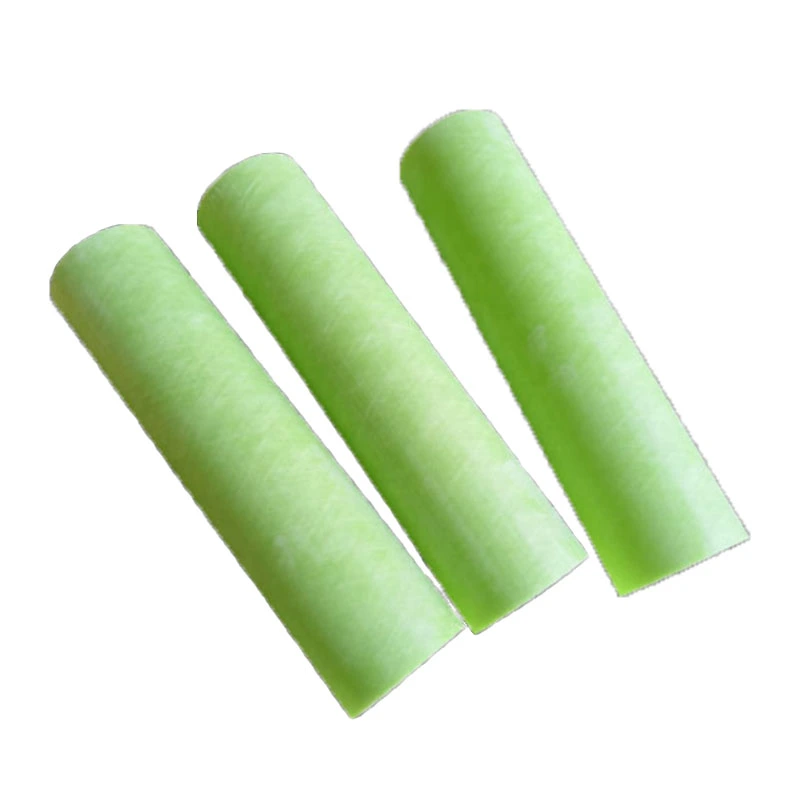
Performance of G10 Fiberglass Tube Under Heat and Pressure
Thermal Stability Across Operating Temperature Ranges
G10 Fiberglass Tube reliably keeps its mechanical properties up to 140°C when it is used continuously. Short-term trips to higher temperatures are possible depending on the load and duration. Beyond this point, the epoxy resin matrix starts to soften, which eventually lowers the bending and compressive strengths. It's interesting that G10 Fiberglass Tube works really well in cold environments, where most plastics break. The material can be used in a wide range of temperatures, from very cold to 140°C. This makes it useful for transformer bushings, motor slot wedges, and structural spacers in equipment that has to deal with temperature changes.
Load-Bearing Capacity Under Mechanical Stress
With a compression strength of 65,000 psi, the G10 Fiberglass Tube can be used as a structural support in machinery frames, bearing housings, and electrical standoffs where loads are concentrated on small cross-sections. At 19,000 psi, shear strength keeps the material from breaking when lateral forces or torsional loads are applied during use. The Izod impact strength of 14.00 at high temperatures shows that it can withstand sudden mechanical shocks. This lowers the risk of catastrophic failure in places where vibrations are common, like in industrial machinery or car use.
Combined Heat and Pressure Performance in Real Applications
G10 Fiberglass Tube shows why it is still a favorite in engineering when heat and pressure act at the same time. Transformer makers use G10 Fiberglass Tubes for arc barriers and coil shielding because the material can handle both the heat from electrical resistance and the pressure from electromagnetic forces when there is a fault. G10 Fiberglass Tube bushings are used in high-load bearings that are close to motors, where friction and electrical heating cause temperatures to rise as bearing loads get close to their design limits. These real-life situations show that G10 Fiberglass Tube has a balanced performance profile.
Comparing G10 Fiberglass Tube to Other Materials for Heat and Pressure Applications
G10 Versus Carbon Fiber Composites
Carbon fiber has better strength-to-weight ratios and is more thermally stable, so its properties can be kept at temperatures above 200°C with certain resin systems. But carbon fiber carries electricity, which means it can't be used for electrical shielding jobs where G10 Fiberglass Tube works well. The difference in price is also important. Carbon fiber materials usually cost three to five times as much as G10 Fiberglass Tube, which means they can't be used in situations where cost is important. Most industrial buyers find that G10 Fiberglass Tube is a better value than carbon fiber when it comes to electrical insulation, chemical resistance, and price.
G10 Compared to Engineering Thermoplastics
Engineering plastics like PEEK and PEI can withstand higher temperatures than G10 Fiberglass Tube. For example, PEEK can work at temperatures up to 260°C. These thermoplastics are also easy to machine and can be reformed at high temperatures. But G10 Fiberglass Tube is better at keeping its shape under load, being resistant to strong acids, and keeping electricity from flowing through it. The electrical strength of G10 Fiberglass Tube stays high across all of its temperature range, while thermoplastics lose more of their properties as they get closer to their limits. When deciding between these materials, procurement managers weigh the need for thermal performance against the need for electrical performance and long-term steadiness in dimensions.
Selecting Between G10, G11, and FR4 for Specific Needs
Which glass-epoxy laminate is best for your project depends on the needs of the application. When UL or other fire safety certifications call for flame-retardant materials, which is common in electronics and building electrical systems, FR4 has to be used. When operating temperatures regularly reach 140°C, like in high-temperature motor parts or aerospace uses, G11's higher price is worth it. When flame retardancy isn't needed, and working temperatures stay within its range, G10 Fiberglass Tube is a good compromise. It has strong mechanical and electrical qualities at a reasonable price.
Procurement Insights: How to Source Quality G10 Fiberglass Tube for Heat and Pressure Uses
Critical Specifications and Certification Requirements
When looking for epoxy-glass tube, dimensional tolerances have a direct effect on how well and how precisely the setup works. Set the limits for the inside diameter, outside diameter, and wall thickness that are right for the way you will be cutting and putting the parts together. Ask for proof that the material meets the standards set by NEMA G10 or MIL-I-24768/2, as well as test results that prove its tensile strength, flexural strength, and dielectric strength. Suppliers who provide batch-specific test data show strict quality control, which lowers the number of inspections that need to be done and the number of assembly failures.
Evaluating Supplier Capabilities and Reliability
Suppliers with a lot of experience know that industrial buyers need more than just standard goods. They also need expert help, the ability to make changes, and reliable shipping. Check to see if potential suppliers can cut G10 Fiberglass Tubes to the right size, offer UV-resistant coatings for outdoor use, and meet custom length needs that go beyond the standard 36- to 48-inch stock sizes. Suppliers with their own machining facilities and technical support can help improve designs during the proposal phase, which could cut down on waste and the overall cost of the project.
Bulk Ordering Strategies and Logistics Considerations
Buying in bulk can save you money, but you need to be very careful about how you store your goods and how you manage your inventory. For long periods of time, epoxy glue breaks down in direct sunlight, so G10 Fiberglass Tubes should be kept in climate-controlled areas out of the sun. Talk to suppliers about wait times that work with your production plans. You should weigh the costs of keeping inventory against the chance that production will be held up because of a lack of materials. Integrated logistics services from suppliers make it easier to do business across borders and keep freight simple, which is especially helpful when coordinating deliveries to multiple manufacturing sites.
Advantages and Limitations of Using G10 Fiberglass Tube in Heat and Pressure Environments
Key Benefits Driving Industrial Adoption
Because they are electrically insulating and strong mechanically, G10 Fiberglass Tubes can't be replaced in situations where metal parts would cause short-circuits or eddy current losses. Chemical resistance means that the material can handle oils, solvents, and weak acids that are common in industrial settings. This means that there are no worries about corrosion like there are with metal alternatives. Low moisture absorption keeps the electrical qualities and accuracy of the measurements even when it's wet outside, which lowers the need for upkeep and increases the service life. These traits solve major problems for companies that make electrical equipment, distribute electricity, and build machines that need solid parts that don't need much upkeep.
Practical Limitations and Mitigation Strategies
Because it can only work at 140°C, G10 Fiberglass Tube can't be used in ultra-high-temperature situations; in those cases, G11 or clay separators are needed. Because the material is rigid and rough, it is hard to machine. You need carbide or diamond-coated tools and good dust clearance to keep workers safe from glass fiber particles. UV degradation means that outdoor uses are limited unless protective coatings are used, which adds steps to the process and costs money. During the planning process, engineers can choose the right materials for each application zone by knowing these limitations. They can use G10 Fiberglass Tube when its strengths match the needs and other materials when its limitations pose risks.
Emerging Trends in Glass-Epoxy Laminate Technology
Materials science keeps making glass-epoxy laminates better by changing the resins to make them more thermally stable and improving the surface processes to make them more resistant to UV light. Manufacturers are asking for more and more environmental paperwork, which forces providers to improve production methods so that less energy is used and less waste is made. Some providers now offer laminates with recycled content or programs that will take back old materials. This helps the environment without affecting function. Keeping up with these changes helps buying teams make sure that the materials they choose are in line with the company's environmental goals and technical performance standards.
Conclusion
G10 Fiberglass Tube has been used for many years and has been shown to work well in situations with both high heat and high pressure. Its balanced mechanical qualities, ability to insulate electrical current, and chemical resistance meet important needs in the automobile, industrial machinery, power systems, and electrical manufacturing sectors. Engineers and procurement experts can use G10 Fiberglass Tube more effectively where its strengths bring the most value by knowing the thermal and machining limits that exist. The material is cheaper than advanced composites and specialized plastics, which makes it possible to make a lot of it while still meeting the performance standards needed in harsh industrial settings.
FAQ
What Temperature Range Can G10 Fiberglass Tube Withstand?
G10 Fiberglass Tube can work steadily at temperatures up to 140°C (284°F), and the epoxy resin matrix keeps the structure strong at all these temps. Temperature changes that are only a little above this limit are acceptable for short periods of time, based on the length of time and the mechanical load. The material also works really well in cold situations, showing that it can be used in a wide range of temperatures where other materials fail.
How Does G10 Compare to Carbon Fiber for Pressure Applications?
G10 Fiberglass Tube has the same tensile and bending strengths as many carbon fiber composites, but it costs a lot less—often three to five times less. Electrical qualities are the main difference: G10 Fiberglass Tube is great at blocking electricity, while carbon fiber moves electricity around. When both mechanical strength and electrical isolation are important, G10 Fiberglass Tube is the best technical and cost-effective choice for pressure-bearing parts.
Can G10 Tubes Be Customized for Specialized Industrial Applications?
Expert suppliers can cut G10 Fiberglass Tubes to exact finished sizes, custom lengths, and unique shapes, such as with threaded ends, flanges, or slots. When used correctly, normal machine tools can be used on the material. However, carbide or diamond-coated tools last longer when working with larger amounts of it. UV-resistant coats, changes to the dimensions, and property testing that is specific to each batch can all be used to meet the needs of different industry sectors.
Partner with J&Q for Your G10 Fiberglass Tube Requirements
Every time they work with a G10 Fiberglass Tube provider, J&Q brings more than 20 years of experience making high-quality products and ten years of experience in foreign trade. Our engineering team knows exactly what your uses need in terms of heat, force, and electricity, and they can give you technical advice that helps you choose the best materials and build the best parts. We have strict quality systems that make sure that measurements and properties stay the same across production runs. You can get batch-specific test data to help with your inspection processes when the products arrive. Our combined logistics skills allow us to provide a one-stop service from the initial specification to the final delivery. This makes the buying process easier and reduces the complexity of planning. You can talk to our team at info@jhd-material.com about your heat and pressure application needs, get unique quotes, or look through our huge collection of products at jhd-material.com.
References
1. National Electrical Manufacturers Association. "Industrial Laminating Thermosetting Products: NEMA Standards Publication LI 1-1998." National Electrical Manufacturers Association, 1998.
2. Military Specifications and Standards. "Military Specification MIL-I-24768/2: Insulation Sheet, Laminated, Thermosetting, Glass Cloth, Epoxy Resin." United States Department of Defense, 1981.
3. Harper, Charles A. "Handbook of Plastics, Elastomers, and Composites, Fourth Edition." McGraw-Hill Professional, 2002.
4. Mazumdar, Sanjay K. "Composites Manufacturing: Materials, Product, and Process Engineering." CRC Press, 2001.
5. Chawla, Krishan K. "Composite Materials: Science and Engineering, Third Edition." Springer Science & Business Media, 2012.
6. Goosey, Martin. "Plastics for Electronics, Second Edition." Springer Science & Business Media, 1999.
.webp)

_1764832200426.jpg)