Phenolic Cotton Sheet Supports Durable Electrical Insulation Solutions
2026-08-11 17:29:15
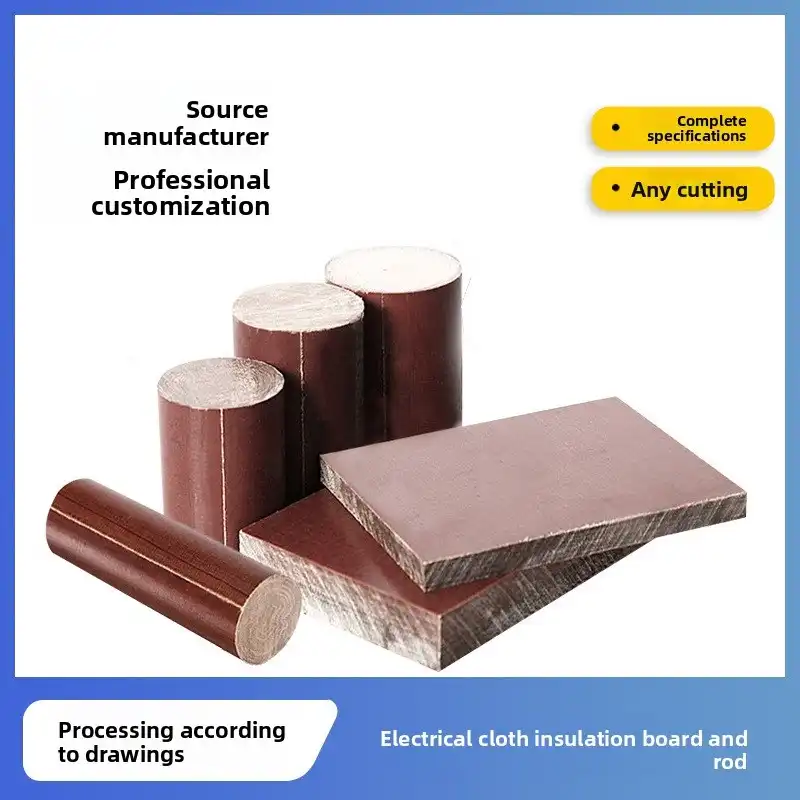
When your electrical systems demand unwavering reliability under extreme conditions, the choice of insulation material becomes critical. Phenolic cotton sheets have emerged as a trusted solution for industries requiring robust electrical insulation combined with exceptional mechanical strength. Manufactured through high-pressure lamination of cotton fabric layers impregnated with phenolic resin, these composite materials deliver performance where failure isn't an option. We've witnessed engineering teams across electrical manufacturing, industrial machinery, power distribution, automotive, and appliance sectors increasingly specify these laminates for applications demanding both dielectric integrity and structural resilience.
Understanding Phenolic Cotton Sheet: Composition and Core Properties
Manufacturing Process Behind Superior Performance
A exact industrial method is needed to make Phenolic Cotton Sheet cloth laminates, which affects how well they work in the end. The first thing that manufacturers do is choose high-quality woven cotton fabric that has a consistent weave density and good fiber quality. This cloth base is fully saturated with phenolic resin, which is also known as bakelite. This makes sure that all of the fiber layers are fully saturated. After the layers of saturated cloth are stacked, they are heated to over 150°C and put under a lot of pressure to cure. This thermosetting process crosses-links the resin matrix in a way that can't be undone. This turns the different fabric plies into a single, hard composite structure whose properties are stable across a range of thicknesses.
Material Characteristics That Matter in Real Applications
The laminate that was made has a unique mix of properties that aren't often found in solutions made of a single material. As a defining feature, mechanical strength is very high, with tensile strengths much higher than those of phenolic paper laminates while still having good impact resistance. This toughness keeps things from breaking completely when sudden mechanical loads are put on them. This is a very important safety trait for rotating machines. Dimensional stability under thermal cycles makes sure that parts stay within exact specs throughout their service life, which stops alignment problems that happen with materials that aren't as stable. The ability to fight chemicals like oils, acids, and industrial fluids makes things last longer in dirty places like factories.
Compliance Standards and Certification Requirements
Meeting regulatory requirements is what specification confidence is built on. These laminates usually meet the ASTM D709 standards for industrial laminated thermosetting goods. This gives buying teams a way to measure how well the products are performing. RoHS compliance makes sure that materials follow the rules about dangerous substances in the environment, which is becoming more and more important for electronics going into controlled markets. Flame resistance ratings usually range from 94V-0 to 94HB, depending on the resin formulation and thickness. UL recognition for certain grades confirms these ratings. Electrical insulation works as well as or better than what's needed for transformer boards. Depending on the grade and testing conditions, dielectric strength values can hit 10-15 kV/mm.
Comparing Phenolic Cotton Sheets with Alternative Materials for Electrical Insulation
Phenolic Cotton Versus Fiberglass Laminates
When engineering teams look at different materials, knowing how they compare in terms of performance helps them make the best choice. Fiberglass-reinforced epoxy laminates, such as FR4, are the best choice for PCB uses that need the best dielectric performance because they have better electrical insulation qualities and higher temperature rates. However, Phenolic Cotton Sheets have clear benefits in uses that require a lot of mechanical strength. Their natural ability to dampen vibrations lowers noise pollution in gearing systems, which is something rigid fiberglass composites don't have. The material also cuts more smoothly because it doesn't have the fiber breakage and tool wear that come with rough glass fibers. This lowers the cost of making complex shapes.
Performance Trade-offs with Bakelite Paper Laminates
When it comes to phenolic laminates, phenolic paper sheets are the more affordable option. They offer great electrical protection at lower prices. In this way, paper-based grades are perfect for uses that are only related to electricity, like transformer barriers and arc chutes. Cotton-based versions lose some of their electrical performance but gain a lot of their mechanical toughness. When they are hit hard, Phenolic Cotton Sheets bend and absorb the force instead of breaking. This keeps them from breaking in a way that makes paper laminates useless for structure uses. Which of these materials to use depends on whether electrical separation or mechanical strength is more important for your purpose.
Cost-Effectiveness Analysis for Procurement Planning
Budget always plays a role in choosing materials, but focused only on unit cost can make you miss the total costs of ownership. Phenolic Cotton Sheets are in the middle of the price range. They are more expensive than some types of paper phenolic, but not as expensive as advanced FR4 grades or engineering thermoplastics. Their longer service life in harsh mechanical environments means they don't need to be replaced as often, which lowers their lifecycle costs even though they cost more at first. The material is very easy to machine, which cuts down on the time it takes to make things and the wear and tear on tools. This is especially helpful for custom OEM parts that need to be exact. When reviewing options, procurement teams should look at the cost per year of service instead of the cost per kilogram.
Applications and Advantages of Phenolic Cotton Sheets in Industrial Settings
Electrical Equipment Applications
These laminates are used a lot in the electrical manufacturing industry for parts that need to be both insulated and strong. Phenolic Cotton Sheet parts are used as insulating barriers between live wires in switchgear systems. The arc resistance of the material stops tracking failures. Manufacturers of transformers use thicker grades to make complex coil shapes and support structures. They use dimensional stability to keep critical spacing during heat cycle. The mix of good dielectric strength and great mechanical anchoring properties in terminal boards makes it possible to keep fasteners in place without compromising insulation. Slot wedges and phase separators are two motor uses where heat resistance up to 120°C constant operation guards against thermal degradation.
Industrial Machinery Components
The material's mechanical qualities are used by machinery builders to make parts that don't wear out easily. This is a very important use for gear manufacturing, especially in power transmission systems where metal-to-metal contact makes too much noise. Phenolic Cotton Sheet gears work quietly and also act as mechanical fuses, which means they are meant to break before they damage expensive drive shafts or motors when they get stuck. The material's self-lubricating features and ability to keep its shape under pressure are used on bearing surfaces and wear strips. Spacers and standoffs keep exact lengths between parts in systems that are exposed to chemicals, where metal parts would rust.
Performance Case Study: Power Distribution Enhancement
A local transformer maker had problems with their distribution transformer line that kept happening because paper-based insulation walls broke when the transformers were shipped. The failure mode was completely eliminated when Phenolic Cotton Sheets were used as arc barriers and coil supports. The better impact resistance took in transportation stresses without hurting the structure and kept the dielectric performance that was needed. By getting rid of the need to check for cracked parts before installation, field installation rates went up. In the real world, this shows how the choice of material has a direct effect on both the reliability of a product and its working efficiency. The small extra cost is justified by fewer warranty claims and higher customer happiness.
Procurement Guide: Sourcing Phenolic Cotton Sheets for Your Business Needs
Critical Purchasing Considerations
To do successful procurement, you must first understand what the supplier can do and how to place an order. Manufacturers and distributors have very different minimum order quantities, which can be as low as one sheet for prototyping or as high as a pallet for production runs. Lead times depend on the grade that is available and the level of customization that is needed. Stock sizes usually ship within days, but custom mixtures may need a few weeks for the resin to be mixed and cured. For electrical uses, thickness choices range from 0.5 mm to 50 mm and more for structural parts, with standard steps available in most product lines. Custom changes can include specific resin formulas for better chemical protection, colored versions to make it easier to find parts, and composite layups that balance cost with performance needs.
Evaluating Suppliers and Manufacturers
To find trustworthy partners, you need to do more than just compare prices. Certification portfolios show how well a company can make things and how committed they are to quality. As a starting point, look for ISO 9001 quality management systems and ISO 14001 environmental certifications. The availability of technical help is what sets application engineering-capable providers apart from distributors. Manufacturers who have been making laminates for decades can help you choose the right materials, suggest different grades, and fix problems with the production process. Customer reviews and industry references back up claims of quality and service. This is especially helpful when choosing materials for important applications where failures in the field could have big effects.
Regional Sourcing Strategies
While global supply lines have benefits, they are also very complicated. Because they are closer, North American producers can offer benefits like shorter lead times, easier logistics, and better technical teamwork for development projects. Asian producers, especially those who have been exporting for a long time, offer competitive prices for large orders, but procurement teams need to be aware that shipping can take a long time and communication can be difficult. European suppliers are often very good at making custom formulations and specialized grades for niche uses that need certain approvals or performance characteristics. For just-in-time (JIT) production needs, balanced sourcing strategies might use domestic suppliers. For commodity grades and planned inventory builds, they could use international partners.
Technical Specifications and Quality Assurance for Phenolic Cotton Sheets
Key Technical Parameters
Clear specifications keep expensive mistakes from happening and keep things from not working right. The thickness tolerance has a direct effect on how well the parts fit together and how far apart the wires are. For standard industrial grades, the tolerance is usually ±10%, and for precision grades, it's ±5% or tighter. Specifications for mechanical strength include tensile strength above 70 MPa, compressive strength above 170 MPa, and bending strength between 90 and 140 MPa. These numbers depend on the grade and how the test is oriented in relation to the laminate layers. The dielectric strength changes with thickness, and is usually given as 10-15 kV/mm under standard test conditions. Continuous working limits are set by temperature ratings. For normal Phenolic Cotton Sheet grades, these are usually 120°C, but short trips up to 150°C are fine in many formulations.
Fire Performance and Safety Ratings
The ability to fight flames determines whether something can be used in places where fire safety is important. UL 94 testing gives uniform flammability ratings, with V-0 scores showing that the fire will go out on its own within seconds of the ignition source being removed. HB ratings mean that the fire will burn more slowly but spread more slowly. Oxygen index readings show the lowest amount of oxygen needed for burning. Higher numbers mean the material is more resistant to flames. Arc resistance scores show how well a material stops electricity from moving across its surface when exposed to an arc. This is very important for switches and high-voltage uses. Not vague claims like "flame retardant" should be used in procurement specifications. Instead, specific test standards and ratings should be used.
Quality Verification Protocols
Strong incoming inspection procedures are needed to protect your investment. Ask for full material datasheets that list the material's physical, electrical, and thermal qualities along with test method sources. Certificates of compliance show that something meets certain standards, such as ASTM D709 or related IEC publications. For important uses, you might want to require batch-specific test reports that show the real values for important parameters that were measured. A visual review should look for even color, which means the resin is spread out evenly, no holes or delamination, and clean-cut edges with minimal fiber tearing. Dimensional checking makes sure that the width is within the allowed ranges across the whole sheet. Setting up these rules with suppliers before they commit to production stops quality surprises during the ramp-up of production.
Conclusion
When choosing Phenolic Cotton Sheets for electrical insulation, you have to make a strategic choice that balances performance, dependability, and cost-effectiveness. These composite laminates have the mechanical toughness needed for harsh industrial settings and still have the dielectric properties that are important. By knowing the basics of composition, comparing options accurately, and following strict procurement procedures, engineering teams can safely define these materials. Whether you need Phenolic Cotton Sheets for power transfer equipment, industrial machinery parts, or precise electrical setups, they have been used successfully for decades in a wide range of industries.
FAQ
Why choose phenolic cotton sheets over other insulation materials?
When both electrical insulation and mechanical durability are needed, Phenolic Cotton Sheet laminates are the best choice. Paper phenolic grades break when they hit something, but cotton variants can handle shock loads without breaking completely. Compared to more modern FR4 materials, they provide good dielectric performance at a much lower cost for uses that don't need extreme electrical or temperature rates. The natural damping qualities of the material lower shaking and noise in mechanical systems. Rigid fiberglass or clay insulators don't have these benefits.
How do I select the appropriate thickness and grade?
The width you choose is based on the needs of the application. Based on dielectric strength values, the minimum insulation thickness is set by the electrical spacing requirements and voltage levels. For mechanical uses, you need to figure out the thickness by taking into account the load, span, and deflection limits. Choosing the right grade means finding a balance between cost, electricity performance, and mechanical power. Formulations of a higher grade have better qualities but cost more. Instead of over-specifying, talk to experienced suppliers who offer application engineering support to make sure that the material's requirements match its actual operating conditions.
Can phenolic cotton sheets be customized for specific requirements?
Customization options include changing the thickness, cutting to exact forms, changing the resin mixture for better flame or chemical resistance, and treating the surface to make it stick better for bonding operations. Most makers can meet unique needs as long as the order quantity is high enough to cover the costs of developing tools or new recipes. Prototyping services let you test things out before committing to production. Custom colors make it easier to find parts in complicated assemblies. Talk about specific needs early on in the procurement process to find out if they are possible, how long it will take, and how much it will cost to make changes.
Partner with J&Q for Premium Phenolic Cotton Sheet Solutions
J&Q can help you with your toughest electrical insulation problems because they have been making high-quality insulating materials for over 20 years. Our Phenolic Cotton Sheet provider services go beyond just delivering products; they also include full technical partnering. We've been navigating the complicated world of international trade for more than 10 years, and we've perfected supply chain processes that get rid of the most common problems that come up when buying things from other countries. Our long-term partnerships with trade partners in the United States and other countries make sure that materials are always available and that prices are competitive, which is good for your bottom line. The integrated logistics company that works with us offers true one-stop service, from discussing your needs at the beginning to delivering the final product to your facility. Engineering managers and procurement experts trust our technical team to suggest the best grades for each application, along with full paperwork to back up your quality systems. Contact us today at info@jhd-material.com to talk about your Phenolic Cotton Sheet needs with experts who know both about materials science and how things are made in the real world. You can look at our full line of reliable electrical insulation products at jhd-material.com.
References
1. Harper, C.A. (2004). Handbook of Building Materials for Fire Protection. McGraw-Hill Professional Engineering.
2. Lubin, G. & Peters, S.T. (1998). Handbook of Composites: Second Edition. Chapman & Hall Industrial Laminates Division.
3. Margolis, J.M. (1986). Engineering Thermoplastics: Properties and Applications – Industrial Laminates and Thermosets. Marcel Dekker Incorporated.
4. ASTM International (2019). ASTM D709-17 Standard Specification for Laminated Thermosetting Materials. ASTM Standards Worldwide.
5. Fried, J.R. (2014). Polymer Science and Technology: Third Edition – Thermoset Composites Chapter. Prentice Hall PTR Upper Saddle River.
6. National Electrical Manufacturers Association (2016). NEMA LI 1-1998 (R2016): Industrial Laminating Thermosetting Products. NEMA Standards Publication.
_1755583592640.webp)
_1764314369204.jpg)