How Does G11 Sheet Perform in High-Temperature Electrical Insulation Applications?
2026-11-11 17:27:26
G11 Sheet works well as an electrical shield for high temperatures as long as the design doesn't go too far. If you want to buy an epoxy glass composite, this one with glass strands is the best. It's stronger, more dielectric, and better at handling heat than most of them, even G10. For the most part, it keeps its shape and strength even when it gets hot. In other words, it can be used in switches, motors, engines, and transformers. What kind of plastic was used, how thick it was, how well it was handled, the working conditions, and the seller's written specs still affect how well it works. Before you place a big order below, make sure those specs are correct. Let me show you.
Insulation has to deal with heat, voltage, vibration, and mechanical stress all at the same time in motors, generators, transformers, and switchgear. If one part is weak, the whole thing might not last as long.
G11 Sheet Thermal Performance in High-Temperature Applications
Reading Thermal Class and Temperature Ratings Correctly
A temperature mark could mean one of three things: an insulator thermal class, short-term temperature protection, or a temperature that is best for long-term use. IEC 60085 sets the temperature ranges for shielding around electricity. Class H, which is around 180°C, is often linked to G11 laminates. Few sources agree on what G-11's temperature is, but most agree that it is 155°C and in Class F. Just because it has a class doesn't mean that it will always be able to work at that temperature. Hot spots, load, and duty cycle can change what the real limit is. You should compare your own temperature profile to the supplier's technical data sheet.
Thermal Cycling, Aging, and Resin Embrittlement
The temperature changes a lot of the time. The laminate shrinks and grows with each turn as the motors start and stop and the switches handle the most weight. Temperature changes over time can weaken the epoxy matrix, which could lead to small cracks, edges that break off, or the matrix coming apart. If this process is left open for longer, electrical stress is put on it, or weight is put on it, it moves faster. The temperature at which G11 resin turns into glass is between 155°C and 180°C. This is warmer than the temperature at which most G10s turn into glass. There is room for design if you stay below that level. You'll get more accurate results if you schedule age tests around when you actually work.
Dimensional Stability and Dielectric Behavior Under Heat
The parts of insulation are often pressed together tightly, so stability is important. G11 doesn't soak up more than 0.15% water, so when the air is humid, it doesn't get bigger. The sheet stays flat thanks to the glass cloth. Heat can change the surface even after it has been ground down because it takes away any stress that is still there. Temperature can also change how a dielectric works. When the temperature goes up, insulation resistance usually goes down. Also, letting heat stay on the resin surface for a long time can damage it. Look at the numbers for the power both at room temperature and at the temperature where you want to use it. Also, tell the seller what thickness you want to buy.

Electrical Insulation Performance of G11 Sheet
Dielectric Strength and Insulation Resistance
The voltage that causes G11 Sheet to fail is usually more than 50 kV perpendicular to the laminations, and it doesn't lose much power. The numbers are different depending on the type of test, the thickness of the object, how it was treated, the temperature, the shape of the wires, and the direction of the test. One way to find the voltage at which the dielectric breaks down is shown in ASTM D149. Two sheets of data should have been made the same way if you want to compare them. We won't test a thin piece the same way we test a thick plate in air or oil. Two things that make insulation less useful are moisture and temperature. You should know what each number means and how it fits into the bigger picture.
Moisture, Surface Tracking, Creepage, and Clearance
You can still use G11 even when it's wet because it doesn't soak up much water. What's on top is just as important as what's in the core, though. For electricity to flow, things like dust, oil, and water can move across a surface. To do this, you need to know how much room there is between things in the air and how far things move on the ground. This is called "tracking." When you add ribs, slots, or longer walls to a sheet, it doesn't get bigger; it just gets longer as it moves. Also, each grade has its own set of fire safety rules. There is no built-in fire resistance in the standard NEMA G-11. FR-5 is, so make sure your entry has the right grade and papers.
Why Bulk Dielectric Strength Is Not Enough
It doesn't mean the method is good just because there is a high breakdown number on a data sheet. Electric fields are stronger near edges that are sharp, and grinding lines or burrs can cause a partial discharge. Cutting leaves behind electrical dust that can find its way into a gap. Another thing that should be looked at is the voltage pattern. High frequencies and fast-rising spikes are worse for shielding than 60 Hz power. As you look over the insulation design, you should look for things like gaps in the assembly, dirt on the surface, and changes in the shape of the parts. You should polish any machined parts and smooth out any sharp edges. You should also test both the raw sheet and the finished parts.
Mechanical Performance of G11 Sheet at Elevated Temperatures
Strength and Stiffness Under Heat
Woven glass makes G11 strong, so it keeps its shape and can hold weight. Because it is held together by glue, the cloth stays warm. It has a density of 1.85 g/cm³ and can bend over 65,000 psi all the way along its length. As the temperature goes up, the mechanical properties get worse because the plastic softens. Over 150 to 155°C, the G-11 grade's tensile properties shouldn't change by more than half. But around 130°C, the G10 grade starts to lose its strength more quickly. Make sure you check all of the numbers that your part depends on when it gets hot. These numbers change for tension, bending, compression, and impact.
Vibration, Fasteners, and Thermal Expansion
Power-related equipment such as motors, engines, train equipment, and industrial drives are constantly exposed to vibration. To ensure long-term stability, G11 Sheet is a suitable material for applications requiring reliable mechanical support and dimensional stability. When designing components, avoid holes, cuts, and sharp corners that could create stress concentrations, and provide sufficient support area. Check the fasteners' torque carefully, as excessive pressure can damage the material. Thermal expansion and contraction may also affect component fit, so allow sufficient clearance to prevent parts from becoming stuck or loosening under temperature changes. Compared with copper, steel, or aluminum, G11 Sheet offers different mechanical and thermal expansion characteristics, which should be considered when selecting materials for vibration-prone assemblies. If the clearance between components is limited, incorporate expansion gaps where necessary. Finally, test the assembled unit under different vibration and temperature conditions to verify its structural stability and performance.
Machining G11 Sheet Without Damaging It
The glass cloth and high-temperature glue are both rough, so the tools you use are very important. Limit the heat and use very sharp tools that are covered in carbide or diamond. The plastic could get broken if you cut it too hot, and the sides won't be as strong. If the feeds and tools are dull or broken, the holes and edges chip and separate. A plate on the back keeps the opening from being broken out. Cutting dust has small pieces of glass in it, and when it mixes with water, it can carry electricity. To keep your work area clean, clear it of dust before you put parts together. The people who work there should wear masks and respirators. Let us know what kind of machining you need before we start making the thing. We can make things of any size or thickness.
G11 Sheet Compared With Other Insulation Materials and Where It Is Used
G11 Versus G10 and FR4
Both the G10 and the G11 are made of glass-reinforced epoxy, which is why they look the same. The main difference is how well they handle heat. G11 works better when it's warmer. G10 might be less expensive when it's cooler, but it stops being strong above 130°C. It's also harder to work with G11. But FR4 needs its own study because it is a different type of flame-resistant epoxy glass that is used a lot in PCBs and has its own needs. As long as your design needs both UL 94 V-0 flame behavior and heat capability, it doesn't matter what grade the provider has. Pick something based on what the job needs, not on price or a single temperature rating.
G11 Versus Mica and Ceramic
Mica and clay can be better than epoxy laminates in places that need to stay cool or out of the way of fire, even when the temperature is over 200°C. They also cost more, break more often, and are tougher to work with than glass-epoxy. Also, you can't put heavy things on them. G11 is a good number in the middle. You can use tungsten or diamond tools to work on it, and it doesn't chip as easily. It also protects and gives you structure at the same time. You can compare them by seeing how they hold up in heat, how much they cost, how much water they soak up, and how flexible they are. For long-term heat above the G11 range or being close to an arc, mica or ceramic might be better.
Typical Applications in Electrical Equipment
In motors and generators, G11 can be used as a barrier, an end-winding support, a slot wedge, or a gap. As long as the dielectric design and fluid interaction are correct, it can be found in shields for transformers and other power equipment, structure supports, and clamping parts. Helpers, arc chutes, phase barriers, and clamps can be used with switchgear and busbar systems. On G11, soldering pallets and carrier plates were cut out for mechanics to use in the making of electronics. The waves are used to connect them. Heaters and the controls that run them need to pay more attention to cold spots, hot spots, and heating elements that are close by. These are everyday uses, not things that everyone agrees on.
How to Select, Check, and Verify the Right G11 Sheet for a B2B Project
Define Requirements and Match Product Specifications
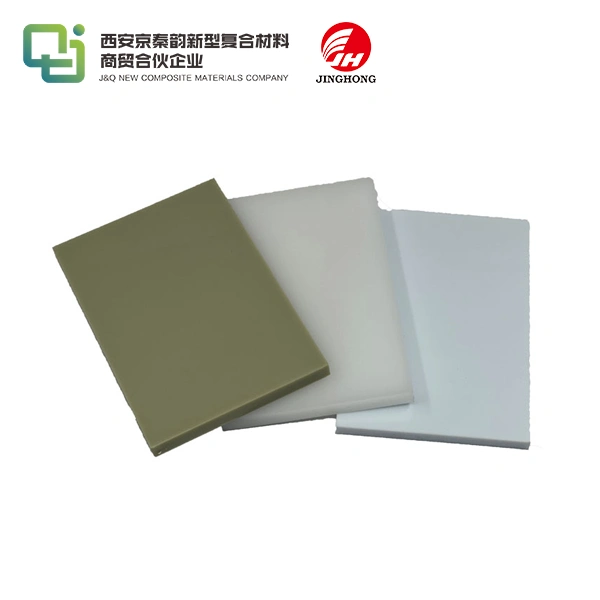
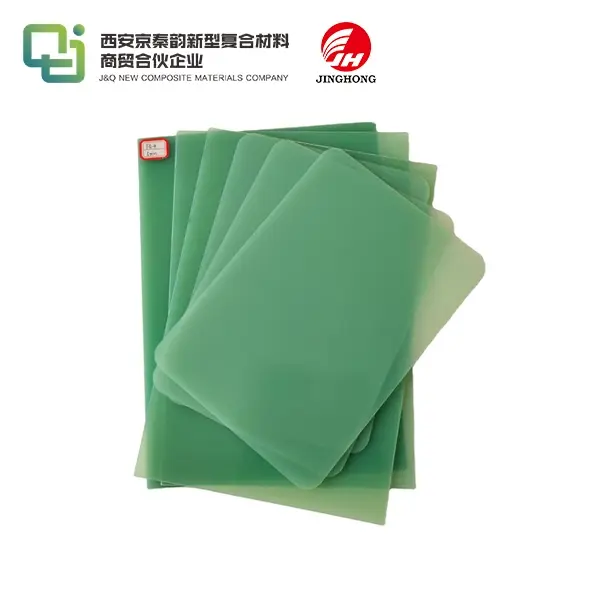
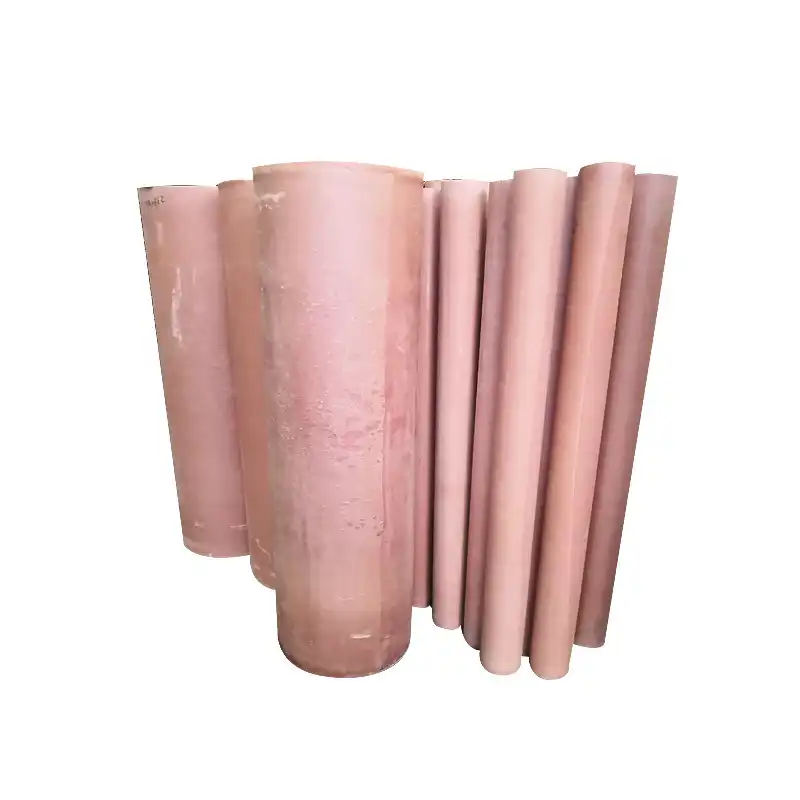
First, write down all the changes in temperature (both slow and fast), humidity, chemicals, shaking, mechanical load, voltage, and frequency. In the next step, set goals for the electrical strength, resistance to insulation, bending and compression strength, water absorption, thickness tolerance, and flatness. Next, look at what the seller is offering and decide if it fits with your goals. You can choose JingHong G11 Sheet that is 0.3 mm thick or 100 mm thick. A light green color comes from the epoxy resin that it's made of. The sizes are 1030 mm x 1230 mm each. It can be made in four sizes: 1030 × 2030 mm, 1220 × 2440 mm, 1030 × 1030 mm, and 1030 × 2070 mm. The minimum order quantity is 500 kg, and each year we can deal with 43,000 tons. You can pay by T/T. Things are sent by sea, land, or air in boxes to keep them safe.
Mistakes That Reduce Insulation Performance
First, people are wrong when they think that a Class H grade is a grade that will never change. Others only look at electrical data at room temperature and don't think about humidity or thermal aging. They also don't clean or burr parts and choose thickness based on voltage alone. The width can also be changed by creep, heat loss, mounting room, and limits. When someone agrees to buy a material, they may later find that the lead time, sheet size, ability to make things, or packaging doesn't fit with their plans. Make sure those things are okay and that the seller can handle returns before you say yes. For long-term programs like those for cars and appliances, it's just as important that the batch is the same as the first sample.
Verifying Performance Before Full-Scale Procurement
It tells you about the item's grade, test standards, thermal classification, electrical and mechanical values, tolerances, and how to store it. If a company sells G-11 or epoxy laminates, you should make sure they follow NEMA LI 1 and IEC 60893-3-2. Please ask for samples or prototypes that are made from the same materials as the real thing. After that, check the quality of the work, the fit, the surface, and the way it was put together. To do application tests at a temperature of about 150°C, follow these steps. Thermal aging, dielectric withstand, insulation resistance, humidity conditioning, vibration, temperature cycling, and flexural testing are some of these tests. Set clear goals for the buy plan that can be measured. These goals should include things like size, delamination, edge quality, electrical results, marking, packing, and electrical results. In its product details, J&Q talks about ISO 9001, UL 94 V-0, and ASTM D635 standards. You should check which certificates are right for your grade and order.
Conclusion
It is stronger in the insulating area and keeps heat in better than G10 Sheet, so G11 Sheet can be used for high-temperature electrical shielding. We learned that thermal class, short-term resistance, and continuous operating temperature are not the same thing. How long something lasts depends on its age, how much it moves, and how heavy it is. To get a sense of the electrical values, we need to look at more than just the bulk dielectric strength. We also need to look at the edges, contamination, and creepage. As the temperature rises, the mechanical strength decreases, so you need to check the bolts, the shaking, and the expansion. Structure and insulation are both important for motors, generators, transformers, and switches. For these jobs, G11 is a better choice than G10, FR4, mica, and ceramic. You can't just choose based on the temperature rating. You should also look at written specs, examples, and application tests.
FAQ
How hot or cold can G11 Sheet handle?
Many sources say that Class H insulation is 155°C, but G11 is usually connected to it. Class H insulation is around 180°C. The number on the supplier's data sheet might not be right for long-term use because it depends on the material, design, age, load, and environment. Check your part by looking at the number.
What's the difference between G11 and G10, and can it be used in two different kinds of appliances?
G11 stays stronger in hot weather, but G10 might be cheaper in cold weather. G11 can be used for phase separators, slot wedges, end-winding supports, and phase separators if the heat and electrical tests go well. Even though less than 0.15% of water is taken in, humidity still weakens shielding.
Is it possible to machine G11? In that case, what forms do I need to ask for?
This process gets rid of the dust and keeps the heat in check. It can work with diamond or tungsten tools. Most of the time, people bring a technical data sheet, a certificate of conformance, records of tracking, inspection reports, and test paperwork with them when they buy something.
Discuss Your G11 Sheet Insulation Requirements With J&Q
Choosing G11 Sheet involves more than comparing temperature ratings. Send J&Q your grade, thickness, electrical needs, loading, tolerances, and delivery schedule, and our technical team will respond. With more than 20 years in insulating sheet production, over 10 years in foreign trade, and our own logistics company, we act as a G11 Sheet supplier with one-stop service. Email info@jhd-material.com or visit jhd-material.com to request a data sheet, sample, or quotation.
References
1. NEMA LI 1 Industrial Laminated Thermosetting Products, 1998
2. IEC 60893-3-2 Insulating Materials – Industrial Rigid Laminated Sheets Based on Thermosetting Resins for Electrical Purposes – Requirements for Rigid Laminated Sheets Based on Epoxy Resins, 2011
3. IEC 60085 Electrical Insulation – Thermal Evaluation and Designation, 2007
4. ASTM D149 Standard Test Method for Dielectric Breakdown Voltage and Dielectric Strength of Solid Electrical Insulating Materials at Commercial Power Frequencies, 2020
5. ASTM D790 Standard Test Methods for Flexural Properties of Unreinforced and Reinforced Plastics and Electrical Insulating Materials, 2017
5. ASTM D570 Standard Test Method for Water Absorption of Plastics, 2018