Industrial Design Trends Using FR4 Board Materials
2026-05-14 17:19:28
The business world is always changing, and FR4 board materials have become essential for many modern mechanical and electrical uses. More and more, engineers and buying teams are realizing that these flame-resistant epoxy laminates are the best way to combine mechanical strength with electrical separation. Knowing about the latest design trends helps people make choices about which materials to use that will meet both short-term production needs and long-term reliability standards. This is especially important when dealing with harsh temperature conditions and strict safety rules.
Understanding FR4 Boards: Composition, Properties, and Industrial Applications
What Makes FR4 Insulation Board Unique?
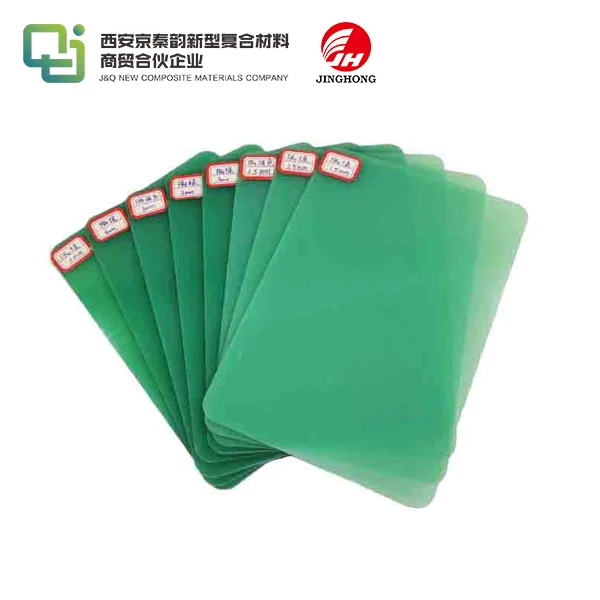
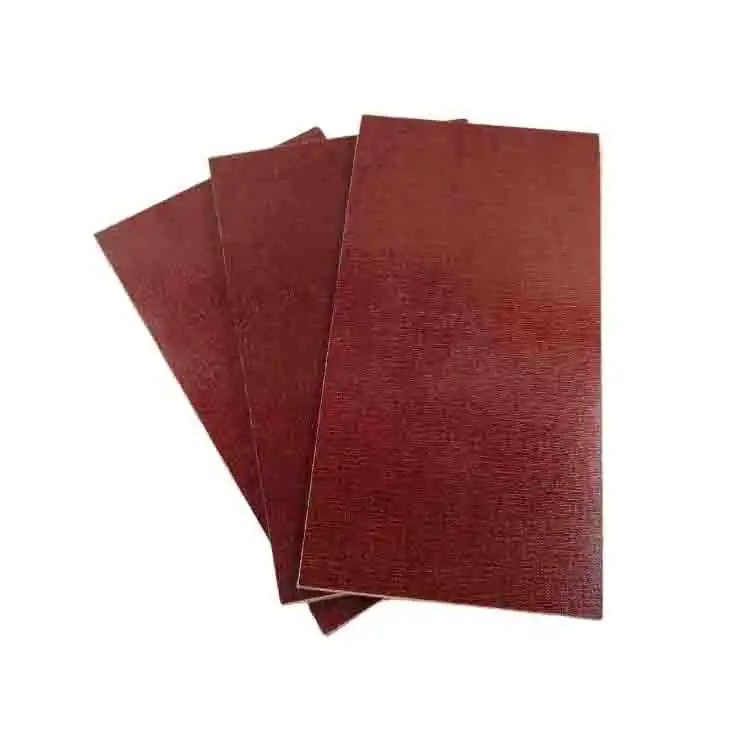
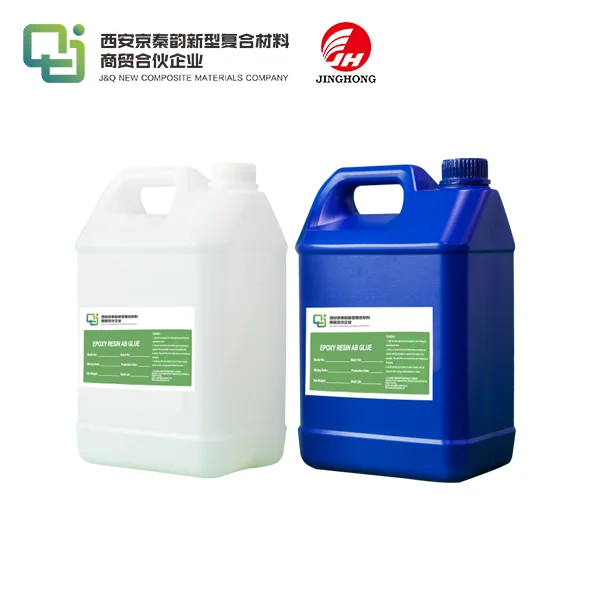
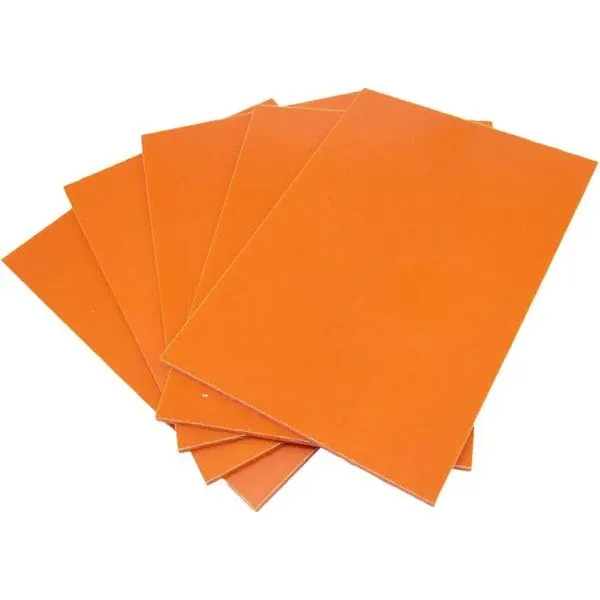
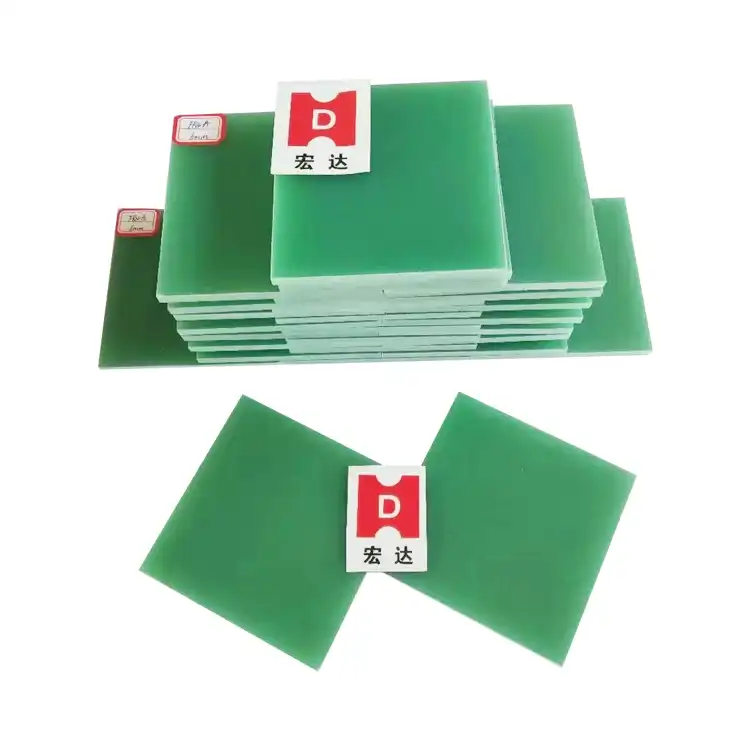
FR4 board insulation represents a high-quality, high-pressure thermosetting industrial laminate made from continuous filament glass cloth that is mixed with epoxy resin glue. "FR" stands for "Flame Retardant," which means that the material meets UL94 V-0 standards and will put out a fire on its own within ten seconds of being removed from a fuel source. This mixture directly addresses problems in the industry, such as structures failing in damp places, dielectrics breaking down at high voltage, and problems with maintaining shape during thermal cycles. The braided fiberglass has great tensile strength, and the epoxy matrix has great electrical insulating qualities that natural insulators just can't match.
Core Physical and Electrical Properties
The material has unique properties that make it ideal for tough uses. High tensile strength means that it doesn't bend or break easily, which is important for PCB support systems and motor parts. The epoxy resin acts as a barrier, stopping current flow through the base. This gives the material its electrical insulation qualities. Thermal stability means that the material can survive high temperatures without breaking down. For most uses, a Glass Transition Temperature (Tg) of 130°C to 140°C is enough, but High-Tg versions can hit 170°C or higher. Water absorption stays very low at 0.1% to 0.2%, so the dielectric strength stays above 30 kV/mm even when it's wet outside.
Industrial Application Spectrum
We see a wide range of deployments in many areas. High-density printed circuit boards are the most common use, especially in car ECUs and aircraft electronics, where CAF resistance stops conductive paths from forming in hot environments. These laminates are used as busbar supports, phase barriers, and structural insulation parts in high-voltage switches and transformers to stop arcing during short-circuit events. Dimensional stability keeps precision machining jigs and test tools from shifting even after being heated many times. This makes sure that they are perfectly aligned for delicate electronic assembly processes. Appliance motor clamps and insulation frames use the material's ability to keep heat separate while keeping its mechanical strength during mass production.
Comparative Analysis: FR4 Boards vs Alternative PCB Materials in Industrial Design
Material Options and Performance Trade-offs
To choose the right material, you need to know how different options match in key areas. Aluminum-backed boards are great at getting rid of heat, which makes them good for power electronics and LED panels. However, they are rigid, which makes design less flexible. Rogers materials have great high-frequency performance and low dielectric loss, making them perfect for RF circuits and telecommunications equipment. However, because they are expensive, they can only be used in certain situations. Ceramic surfaces are great for extreme conditions because they conduct heat well and keep their shape, but they are harder to machine and cost more. Polyimide films are flexible and can withstand temperatures up to 260°C. They are used in aircraft uses where weight and the ability to bend are important.
Even though these unique materials are useful in some situations, FR4 boards are still the most common choice for industrial designs. The value argument is strong when cost-effectiveness is paired with a wide range of thermal and mechanical qualities. Different structural needs can be met by thicknesses ranging from 0.5 mm to 25 mm. Buyers can be sure of the quality of a product when it has UL, ROHS, or ISO approvals. The material can be CNC-machined into complicated shapes without the need for special tools. This lowers the cost of prototypes and speeds up the development process.
Procurement Considerations for Material Selection
Most industrial electronics work well with dielectric constant values around 4.5 at 1MHz. However, loss tangent specs can change the purity of signals in high-speed circuits. Tolerances for thickness have a direct effect on how precisely an assembly fits together. Reliable providers keep tolerances within ±10% for normal grades. For high-voltage uses, insulation with a volume resistance above 10^14 ohm-cm is sufficient. Flame protection approval is important for equipment and consumer gadgets that have to follow the rules exactly. Before agreeing to bulk orders, engineering managers should ask for material data sheets that list these factors.
Current Industrial Design Trends Leveraging FR4 Board Materials
Miniaturization and Smart Device Integration
These days, electronics need assemblies that are smaller and smaller without losing efficiency. Because of the Internet of Things, makers have to make complex circuits that fit into small areas. FR4 board surfaces support this trend because they are stable in size and can be used for fine-pitch component fitting. Consistent lamination quality is needed for complex layered boards to keep signals working across tightly packed lines. As the power density goes up, thermal management becomes more important. Stable Tg values keep materials from bending, which could damage solder joints or cause electrical shorts in small systems.
Sustainability and Environmental Compliance
Regulatory forces change how many materials different businesses use. European REACH rules and North American environmental standards affect the types of chemicals used, which increases the need for halogen-free flame retardants that still meet UL94 V-0 standards. More and more, procurement teams are checking the environmental management systems of suppliers to find partners who use resources efficiently and reduce waste. In a life cycle review, things like recycling and getting rid of things at the end of their useful lives are also taken into account. These things help companies reach their sustainability goals while also making sure they can access markets in places where rules apply.
Manufacturing Process Innovations
Modern methods for laminating make it easier for layers to stick together and stop holes from forming, which improves both electrical performance and mechanical stability. Surface finish choices like HASL, ENIG, and OSP have a direct effect on how well components connect and how easily they can be soldered. Laser drilling makes microvias possible that allow high-density connection systems without damaging the base. Automated optical screening systems find flaws early in production runs, which lowers the amount of scrap and raises the accuracy of each batch. Procurement workers should judge sellers based on the investments they make in manufacturing technology, since process skills have a direct effect on the quality of the product and how reliably it is delivered.
Procurement Guide: Sourcing High-Quality FR4 Boards for Industrial Applications
Supplier Evaluation Criteria
Finding trustworthy partners takes a methodical look at a lot of different factors. Compliance with certifications shows dedication to quality systems. For example, ISO 9001 sets basic limits for processes, while IATF 16949 for the car industry or AS9100 for the aerospace industry show specialized knowledge. Order numbers must match production capabilities so that there are no delays in fulfilling orders during times of high demand. Technical help skills are important when specs need to be changed or when there are problems with an application.
Before committing to a number, a sample should be evaluated. Ask for samples that are typical and have the thickness, finish, and limits that you want for your FR4 board requirements. Verify the dimensions using measuring tools that have been properly adjusted. If electrical efficiency is very important, check the dielectric strength and surface resistance. Check the quality of the edges and the uniformity of the surface finish. These are signs of good production practice. Write down the results to set realistic goals before discussing the terms of the contract.
Cost Optimization Strategies
Buying in bulk lowers the cost per unit, but you have to be careful to keep track of your goods so that things don't go out of date. Talk about different levels of volume with clear price breaks that encourage bigger contracts while still allowing for changes in demand. Standardizing sheet sizes and thicknesses across product lines makes buying easier and may lead to more savings. Long-term contracts with fixed prices protect against changes in the market and ensure a steady supply. Transportation costs a lot of money. Suppliers with well-established logistics networks or freight services that work together cut down on delivery times and landing costs.
Quality Verification and Supply Chain Management
In just-in-time manufacturing settings, managing lead times is very important. Set up clear work plans with extra time built in for checking the quality and possibly fixing problems. For each shipment, you should ask for Certificate of Conformance paperwork and compare the material specs to the buy orders. Set up procedures for receiving inspection that check each batch for important parameters. Make backup plans that include other sources to lower the risk of disruptions caused by relying on a single source. These steps protect the flow of production and keep quality standards high all along the supply chain.
Future Outlook: The Evolution of FR4 Boards in Industrial Design
Material Science Advancements
Dielectric features are still being improved through research to meet more and more specific needs. Changing the way resins are made makes them better at handling heat, so they can be used in a wider range of temperatures without losing their power. Nanoparticle reinforcement technologies promise to make mechanical parts like gears and structure spaces more resistant to wear. Low-loss formulations can be used in high-frequency uses that were previously only possible with specific materials. Based on these changes, FR4 board will likely still be useful even when the needs for their use get stricter.
Industry 4.0 and Digital Procurement
Automation changes how we work with suppliers and how we place orders. Digital platforms let you see your goods in real time, which helps buying teams figure out the best times and amounts to place orders. Predictive analytics tools look ahead at trends of demand, which helps sellers match their production capacity with what customers want. Electronic paperwork tools make it easier to check for compliance and keep track of things. These tools make the whole buying process more open and less work for administrators.
Strategic Partnership Development
More and more, successful buying plans put an emphasis on working together rather than just doing business. Getting sources involved early in the planning process lets you choose the best materials based on how they can be manufactured and how much they cost. Joint development deals can speed up the process of customizing software for specific uses. Suppliers can better handle their capacity and raw material stocks when they are clear about changes to forecasts. These methods make supply chains strong so they can adapt to changing market conditions while keeping quality and service performance high.
Conclusion
As time goes on, industrial design keeps getting more complicated, smaller, and more environmentally friendly. FR4 board are still a big part of these trends because they work well for electrical, mechanical, and cooling needs. When engineering managers and buying workers know about the properties of materials, how they can be made, and the best ways to buy things, they can make decisions that make products more reliable and cost-effective. As industrial uses get more complicated, new technologies and working together with suppliers should make the supply chain more reliable and improve performance. Companies can stay ahead of the competition if they regularly check out new materials and the skills of their suppliers.
FAQ
How do I verify supplier credibility before committing to large orders?
Ask for quality standards, such as UL and ISO 9001 approval. Ask for customer recommendations from people in the same line of work as you. Do site checks if the number of orders justifies the cost. Before moving up to production numbers, start with small trial orders to test the quality of the product and how well it delivers. Read over the return and guarantee policies to know what you can do if the FR4 board materials don't meet your needs.
What thickness should I specify for my application?
Choosing the right thickness relies on how much mechanical load you need and how much electricity insulation you need. Thinner sheets (0.5mm to 1.6mm) are good for PCBs and light-weight structures. Thicknesses between 3mm and 6mm give switchgear parts and motor mounts structural strength. For heavy mechanical spacers and high-voltage insulation walls, 10mm to 25mm thick choices are available. Talk to application experts about how to match the thickness to the load estimates and voltage clearance needs.
Can these materials handle high-frequency RF applications?
Standard grades work well for frequencies below 1GHz, but as the frequency goes up, dielectric loss goes up. Low-loss formulas are especially useful for high-frequency designs because they are made to reduce signal loss as much as possible. When choosing materials for RF circuits, look at the loss line parameters. It's possible that Rogers or PTFE-based laminates would work better for demanding microwave uses above 10GHz.
Partner with J&Q for Premium FR4 Board Solutions
J&Q has been making high-quality insulation products for more than 20 years and offers both technical help and full customer service. Our factories follow strict quality standards, such as UL and ROHS approval, to make sure that the materials they use meet foreign standards. As a seller of FR4 board solutions with a lot of experience, we have a large selection of standard and special boards that can be used for both quick prototypes and large production runs. Integrated logistics skills make it easier for buying teams to handle the supply chain and coordinate deliveries more efficiently. Our technical staff works with engineering managers to choose the best materials for each job, taking into account things like electrical protection needs, heating requirements, and mechanical loads. Email our team at info@jhd-material.com to talk about the needs of your application, get examples of the material, or get full quotes. Visit jhd-material.com to see all of our products and learn how our "one-stop service" makes buying easier and makes sure that the quality of all of your industrial projects is the same.
References
Coombs, Clyde F. Printed Circuits Handbook. 7th ed. McGraw-Hill Education, 2016.
Harper, Charles A. Electronic Materials and Processes Handbook. 4th ed. McGraw-Hill Professional, 2018.
Institute for Printed Circuits. IPC-4101 Specification for Base Materials for Rigid and Multilayer Printed Boards. IPC International, 2020.
Jawitz, Martin W. Materials for Rigid and Flexible Printed Wiring Boards. CRC Press, 2007.
Klein Wassink, R.J. Soldering in Electronics: A Practical Guide to Surface Mount and Traditional Techniques. 2nd ed. Electrochemical Publications, 1989.
Prasad, Ray P. Surface Mount Technology: Principles and Practice. 2nd ed. Springer Science+Business Media, 1997.