Is G10 Sheet Better Than Phenolic Board for Insulation?
2026-07-31 16:51:24
When choosing insulation materials for industrial applications, G10 sheet consistently outperforms phenolic board in environments demanding exceptional moisture resistance, dimensional stability, and high dielectric strength. The continuous filament glass cloth construction of G10 sheet combined with epoxy resin delivers near-zero water absorption—typically below 0.1%—ensuring electrical properties remain stable even in humid or submerged conditions. While phenolic boards offer adequate thermal resistance and flame retardancy for general applications, G10 sheet proves superior for precision electronics, high-voltage switchgear, and structural components requiring both mechanical integrity and electrical insulation reliability.
Understanding Insulation Needs in B2B Industrial Applications
Industrial insulation materials have to meet strict performance standards that have a direct effect on how well and safely the equipment works. In modern factories, parts are subjected to changing temperatures, chemicals, mechanical stress, and electrical loads that can break down materials within months of being used.
Critical Performance Requirements
Effective insulation options deal with a number of technical issues at the same time. Thermal resistance stops the flow of heat that could harm sensitive electronics or make power transmission systems less effective. Mechanical robustness makes sure that parts can handle installation stress, pressure, and contact without breaking or delaminating. Chemical stability keeps things from breaking down when they come in contact with oils, solvents, cleaning products, and natural toxins that are common in factories.
For many uses, the electrical insulation properties are probably the most important thing to look at. To keep voltage from dropping, materials must have a high dielectric strength, a low dissipation factor, and the ability to stop arc tracking, which can make conductive carbon paths across insulator surfaces.
Industrial Use Cases Driving Material Selection
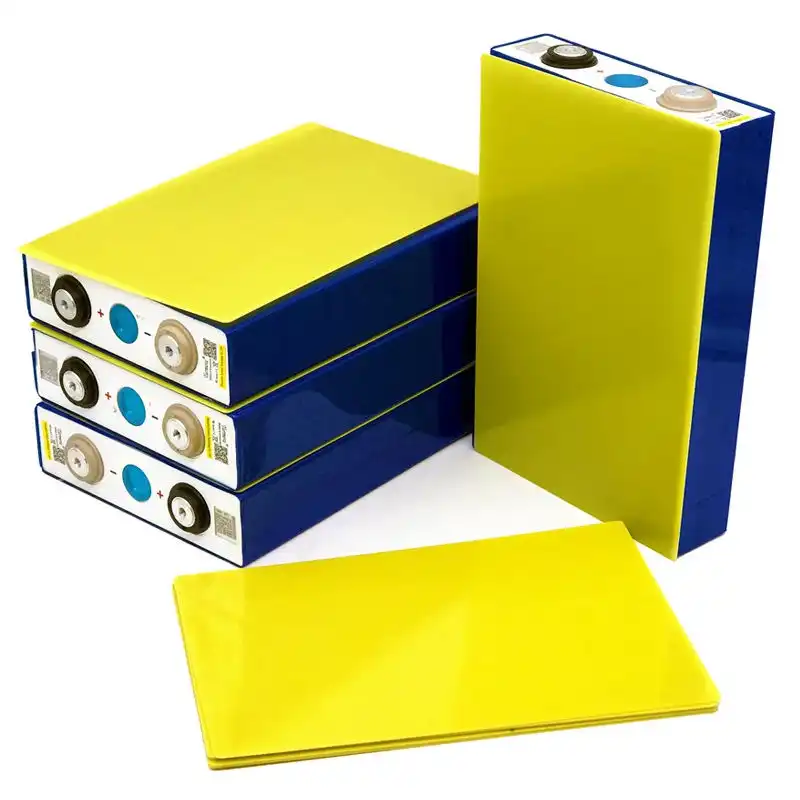
Electronics companies that make PCB supports, switchgear panels, and motor housings look for materials that stay within the right dimensions during CNC machining and meet UL and ROHS certification standards. When automotive makers make battery pack barriers and heat-resistant fixings, they need materials that keep the quality the same across production runs and can be customised for different vehicle platforms.
Power distribution companies that put up transformer barriers and coil insulation need materials that have been tested for temperature stability and come with full quality documentation. When builders of industrial machinery use structural insulation and wear-resistant parts together, they test materials to see how well they can hold weight and keep their shape over time while the machinery is in use.
Material Properties of G10 Sheet and Phenolic Board
By understanding the differences in composition between these laminate materials, you can see why their performance is so different in different situations.
Composition and Manufacturing Process
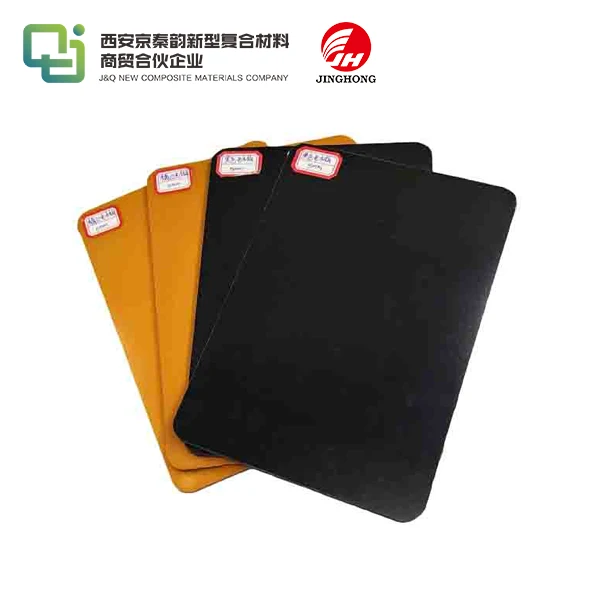
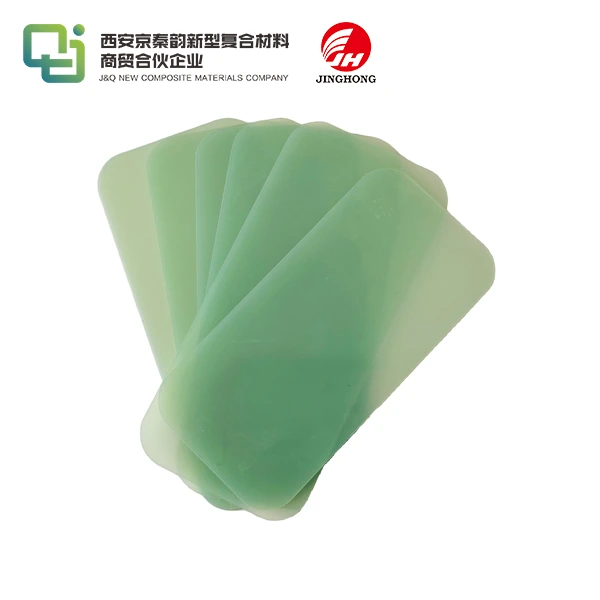
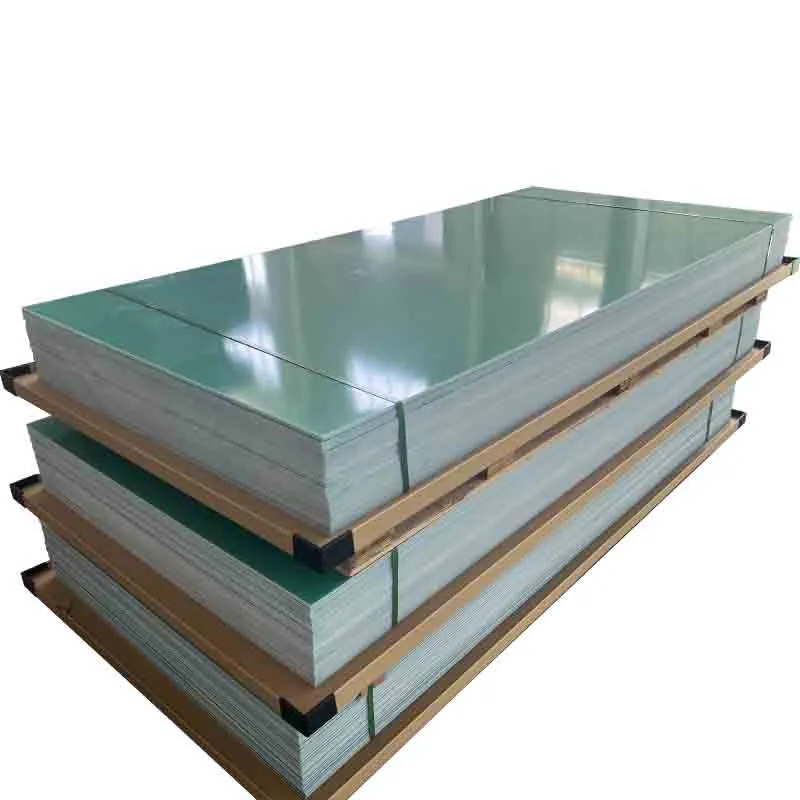
Continuous filament glass cloth is mixed with epoxy glue to make G10 sheet. The sheet is then fixed under controlled heat and pressure. During this thermosetting process, molecules cross-link, which holds the glass reinforcement to the resin base forever. The continuous glass fibres give it great tensile strength and rigidity, and the epoxy resin makes it very good at blocking electricity and keeping out water.
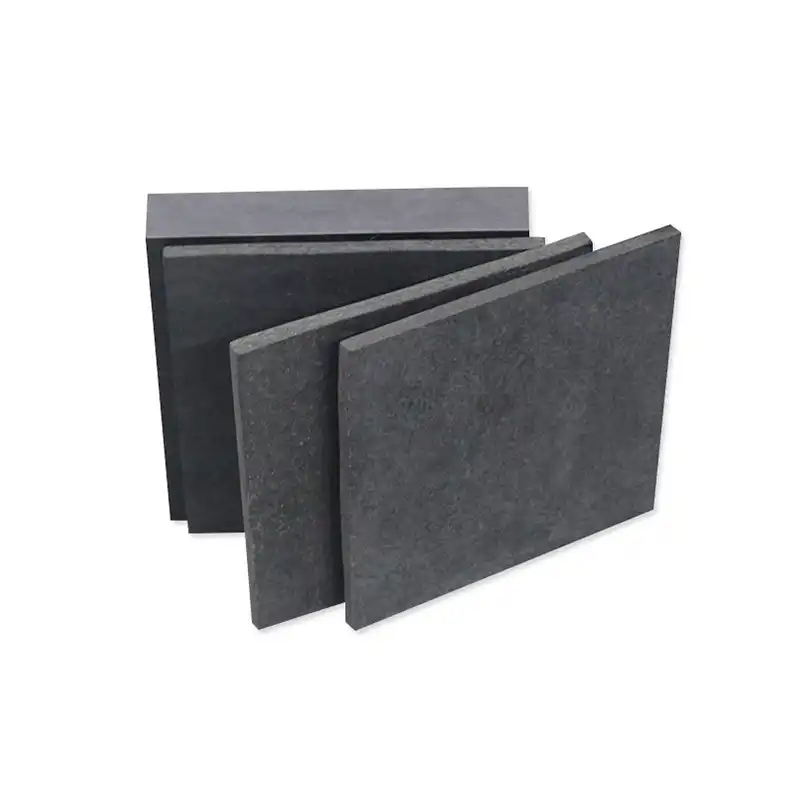
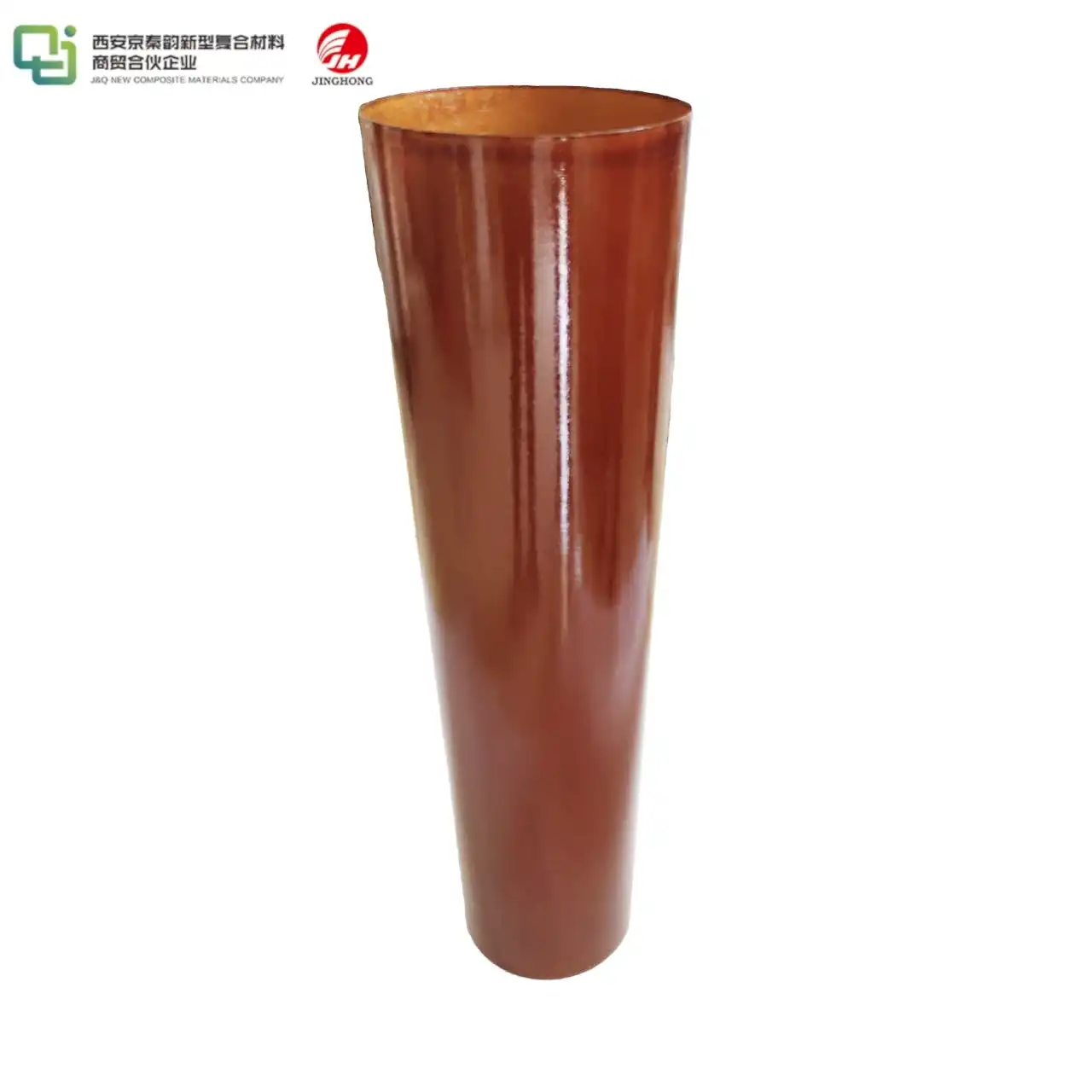
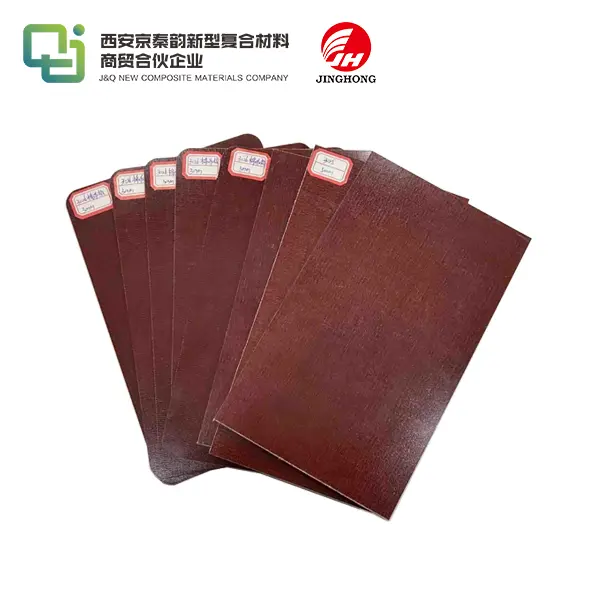
Phenolic boards are made of phenolic resin that is glued to cotton fabric or paper-based laminates. Several layers of paper or fabric are saturated with phenolic glue, stacked on top of each other, and then heated and pressed together to harden the assembly. The chemical structure of the phenolic resin makes this a rigid laminate that is good at resisting heat and naturally putting out fires.
Mechanical and Thermal Characteristics
The glass fibre support in G10 sheet gives it a tensile strength of over 40,000 psi, which is a lot more than phenolic boards, which usually have a range of 8,000 to 12,000 psi. This strength advantage directly leads to smaller parts that can handle the same mechanical loads, which lowers the cost of materials and the weight of the system.
Different materials have very different thermal properties. It is possible for G10 sheet to keep its mechanical properties at constant working temperatures of around 130°C. Short trips to higher temperatures are also possible without immediate degradation. Phenolic boards naturally fight flames better and can often put out fires on their own without any extra ingredients. This makes them good for situations where fire safety is the most important thing.
Moisture Resistance and Dimensional Stability
The ability to absorb water is a key differentiator. Even after being submerged for a long time, G10 sheet takes less than 0.1% of its weight in water. This keeps its shape and keeps its electrical properties from breaking down in damp places. When the epoxy resin is completely hard, it forms a barrier against water that keeps the glass fibre reinforcement safe.
Phenolic boards, especially those with paper-based substrates, are better at absorbing water. Depending on the formulation and the environment, absorption rates can be anywhere from 1% to 5%. This taking in of water changes the size of the material, which can put mechanical stress on parts and lower its dielectric strength by making paths for electricity to flow through it.
Performance Comparison: Is G10 Sheet Better Than Phenolic Board?
When you compare these materials across key performance measures, you can see that each one has clear benefits that help you choose the right material for a given application.
Electrical Insulation Performance
Under normal test settings, the dielectric strength of G10 sheet is about 400 to 500 volts per mil. This is the voltage needed to break the material across its width. The moisture-resistant resin structure keeps this great insulation ability stable across a wide range of temperatures and humidity levels.
Phenolic boards usually have an electrical strength of 250 to 350 volts per mil, which is good for most uses but can break down in places with a lot of moisture. In many phenolic formulations, the paper-based substrate absorbs water, which creates conductive pathways. This makes the insulation less effective over time.
Measurements of surface and volume resistance show that G10 sheet is a better electrical insulator than other materials. Even if the surface gets dirty, the epoxy glue keeps its high resistance values, which stop leaking currents. When phenolic materials are dry, they have good resistance, but when they get wet, their resistivity drops a lot.
Mechanical Durability Under Industrial Conditions
The way different materials are machined shows how they are different in real life. When the right speeds and feeds are used, G10 sheet can be machined cleanly with carbide or diamond-tipped tools, keeping tight tolerances without delamination or fibre pullout. The material is dimensionally stable, which means that made parts will stay within certain limits for as long as they are used.
Because they are not as hard, phenolic boards are easier to machine, but they are more likely to chip and delaminate along the edges, especially when making thin features or holes with a small diameter. When clamping forces are put on the paper-based material, it can get compressed, which makes fine machining more difficult.
Impact strength and load-bearing ability make G10 sheet a good choice for mechanically stressful situations. The continuous glass fibre reinforcement spreads the load throughout the structure of the material. This stops cracks from spreading, which can happen in phenolic boards where separate layers of paper can separate under long-term loading.
Cost Considerations and Lifecycle Value
Because they cost 30 to 50 percent less per pound than G10 sheet, phenolic boards are better for uses that need to save money. Because of this difference in price, phenolic materials are good for everyday uses where high performance is not needed in large quantities.
A lot of the time, lifecycle research turns this initial cost edge around. The better dimensional stability of G10 sheet cuts down on waste during machining and gets rid of the need to redo work on parts that warp or change sizes while they're in use. The material's resistance to wetness makes it last longer in damp places, which cuts down on replacements and the labour costs that come with them.
Total operating costs also take into account how energy efficient a home is. The low dissipation factor of G10 sheet keeps energy loss to a minimum in electrical uses. This is especially important for power distribution parts that are used all the time for decades. This edge in efficiency grows when service gaps are longer.
Practical Buying Guide: Choosing Between G10 Sheet and Phenolic Board
To choose the right insulation materials, you need to carefully look at the needs of the application, the properties of the materials, and the qualifications of the suppliers.
Application-Specific Performance Requirements
The excellent insulating strength and moisture protection of G10 sheet make it a great choice for high-voltage electrical parts. When working with voltages above 600 volts, switchgear supports, transformer barriers, and busbar insulators need materials that keep the electricity from flowing even when the temperature and humidity change.
G10 sheet is best for structural parts that need to be made with tight tolerances and keep their shape over long periods of time. The material doesn't warp, swell, or creep deform under long-term loads, which makes it useful for motor housings, mechanical spacers, and structural insulation.
Phenolic boards may work well in flame-sensitive areas where cost constraints make other materials unavailable. In controlled environments, phenolic materials can be used well in terminal blocks, motor bases, and appliance insulation frames as long as they don't get too wet.
Environmental and Compliance Considerations
Chemical exposure profiles help choose the right materials for industry and process tools. G10 sheet doesn't break down when exposed to most oils, solvents, and weak acids, so it can be used for parts that will be touching hydraulic fluids, cleaners, and lubricants. If you put phenolic boards in strong acids or alkaline solutions, they might get soft or peel off.
Changing the temperature has different effects on how well an object works. Thermal cycling between -50°C and 130°C doesn't cause micro-cracks or delamination in G10 sheet. It keeps its mechanical properties. When the temperature of phenolic boards is changed over and over, the moisture content changes, which can cause internal stress cracks.
Choosing the right material for safety-critical uses is affected by the rules that must be followed. UL recognition, ROHS compliance, and NEMA grade certifications give electrical equipment manufacturers the proof they need that their products work. Suppliers with quality systems, certifications, and testing tools make sure that the products they give always meet the standards that were set.
Supplier Evaluation and Sourcing Strategy
Reliability of suppliers affects production plans and the quality of parts. Manufacturers who have complete quality control systems that check for thickness limit (0.005 inches), ultrasonic delamination testing, and dielectric strength proof make materials that can be used in precise situations.
Suppliers can offer materials that are best for certain uses when they can be customised. Buyers can get finished parts instead of raw materials thanks to CNC machining, custom thickness options, and specialised formulas. This cuts down on internal processing costs and wait times.
Supply chain planning is affected by lead time dependability and production capabilities for large volumes. Suppliers who keep enough inventory and production capacity on hand make sure that materials are available when demand goes up without affecting delivery times. When you work with providers for a long time, you get access to technical support and application engineering knowledge that helps you choose the best materials and create the best parts.
Why Leading B2B Clients Prefer G10 Sheet for Advanced Insulation Needs
G10 sheet is being asked for more and more by industrial customers for uses where the performance of the material directly affects the reliability of the product and its position in the market.
Superior Mechanical and Electrical Properties
G10 sheet is the best material for small electrical equipment that needs to be strong and safe from voltage fluctuations because it has excellent electrical insulation and high tensile strength. By using G10 sheet for phase barriers and busbar supports, switchgear manufacturers can keep safety margins the same while reducing the size of the enclosure.
Dimensional stability eliminates guarantee claims that are linked to parts growing or warping. For electronics makers making gear for tropical areas, G10 sheet is required to make sure that PCB supports and mounting mounts stay in place over decades of product lifecycles.
Integration with Modern Manufacturing Processes
Precision CNC cutting lets you make shapes that would be hard to make with less-durable materials. The ability of G10 sheet to be machined is used by automakers that make battery pack insulation parts to make combined features that cut down on assembly steps and make production more efficient.
When the traits of a material stay the same from one production batch to the next, process variation that makes quality control harder is eliminated. Tier-1 producers that use statistical process control depend on the expected mechanical and electrical properties of G10 sheet to keep quality standards high while reducing the number of inspections that need to be done.
Future-Proofing Against Regulatory Evolution
As safety standards change, they put more and more emphasis on long-term dependability and environmental stability. The fact that G10 sheet has been used in difficult situations before means that it can be used in new electrical equipment, which lowers the risk of having to rethink things in the future.
Materials with low dissipation factors and stable electrical properties are becoming more popular as operational efficiency and energy conservation become more important. Power distribution equipment makers use G10 sheet to keep energy losses as low as possible in parts that are used all the time. This helps with sustainability efforts and lowers operational costs.
Conclusion
When better moisture protection, dimensional stability, and electrical insulator performance are needed, G10 sheet is clearly better than phenolic board. While phenolic materials are still a good deal for uses where weather exposure is limited and mechanical needs are low, G10 sheet is necessary for high-precision electronics, high-voltage equipment, and structural parts that need to last for a long time. When choosing insulation materials for important uses, procurement workers should look at the total lifetime costs instead of just the original material prices. They should think about how well the materials can be machined, how long they last, and how much the warranty covers.
FAQ
Can G10 Sheet and Phenolic Board Be Used Interchangeably?
These materials are used for different things and can't be switched out directly without an engineering evaluation. When working with high-voltage electricity or in damp places where phenolic boards would soak up water and lose their insulating power, G10 sheet is the best choice. Phenolic boards can still be used for applications that need to be flame-resistant and self-extinguishing in dry, low-voltage settings. When switching materials, it's important to make sure that their mechanical strength, electrical insulation, and resistance to the environment meet the needs of the application.
Which Material Offers Better Environmental Sustainability?
An environmental effect study shows the pros and cons of different materials. Phenolic boards use paper or cotton bases that can be reused, which cuts down on the use of materials made from petroleum. G10 sheet needs glass fibre and epoxy resin that come from fossil fuels, but it lasts longer, so it doesn't need to be replaced as often. Because they harden at high temperatures, both materials are hard to recover. When thinking about sustainability, you should look at the whole lifecycle impact, which includes the energy used in production, the emissions from transportation, the length of the service life, and the needs for disposal at the end of the life.
What Lead Times Should Buyers Expect for Custom G10 Sheet Orders?
In-stock materials of a standard thickness usually ship within one to two weeks. Four to six weeks are needed for custom thickness specs, specialised formulations, or CNC-machined parts, based on how complicated the order is and when it needs to be made. Lead times may go up to eight weeks for large orders that go beyond normal production runs. Building relationships with experienced suppliers gives you access to technical support and faster processing for needs that need to be met right away.
Partner with J&Q for Premium G10 Sheet Solutions
J&Q has high-quality epoxy laminate materials designed for tough uses that can meet your industrial insulation needs. As a G10 sheet provider, we can offer a wide range of thicknesses, precise control of tolerances, and custom CNC cutting services that make sure the finished parts you order are exactly what you want. For each production batch, we have strict quality control methods that check the dielectric strength, mechanical features, and accuracy of the dimensions. Our logistics system makes sure that delivery times are solid and meet the needs of your production plans.
With more than twenty years of experience making things and ten years of experience in international trade, we know the technical needs and buying problems that electrical equipment makers, industrial machinery builders, and auto suppliers face. Email our technical team at info@jhd-material.com to talk about the needs of your application, get examples of our materials, or get full quotes for your future projects. We give you all the paperwork you need to support UL recognition and ROHS compliance. This speeds up the qualification process and makes sure you're following the rules.
References
1. National Electrical Manufacturers Association. "Industrial Laminating Thermosetting Products - NEMA Standards Publication LD 3-2005." National Electrical Manufacturers Association, 2005.
2. Harper, Charles A. "Handbook of Plastics, Elastomers, and Composites." Fourth Edition, McGraw-Hill Professional, 2002.
3. Lubin, George. "Handbook of Composite Materials." Van Nostrand Reinhold Company, 1982.
4. American Society for Testing and Materials. "ASTM D709 - Standard Specification for Laminated Thermosetting Materials." ASTM International, 2020.
5. Westbrook, Kenneth J. "Electrical Insulating Materials and Systems: International Perspectives." American Society for Testing and Materials, 1995.
6. Tanaka, Toshikatsu. "Dielectric Phenomena in High Voltage Engineering." Academic Press, 1997.