The Ultimate Guide to Bakelite: For DIY Enthusiasts and OEM Purchasers Alike
2026-04-27 17:07:05
For decades, Bakelite sheet has been the go-to choice for people looking for solid insulation materials for electrical assemblies or industrial machinery. This detailed guide explains why phenolic paper laminates are still important for engineering managers, procurement experts, and do-it-yourself enthusiasts who need reliable performance when electrical load and temperature stress are present. Knowing what this material can do turns buying choices from guesswork into strategic advantage, whether you're designing switchgear parts or fixing up old machines.
Understanding Bakelite: Properties, History, and Production Process
The Birth of the World's First Synthetic Plastic
In Yonkers, New York, in 1907, Leo Baekeland made polyoxybenzylmethyleneglycolanhydride, which changed the field of materials science forever. Patented in December 1909, this phenol-formaldehyde glue was made at a time when hard rubber and shellac were used a lot in industry. The American chemistry Society named Bakelite a National Historic Chemical Landmark to honour how it changed the chemistry industry from its roots in cloth dyeing to engineered polymer production. Unlike celluloid, which could catch fire, this thermoset material was incredibly stable, which electrical makers liked right away for use as an insulator.
Chemical Composition and Molecular Structure
When phenol and formaldehyde combine, they cross-link to make polymer chains that harden under heat and pressure and can't be undone. This phenolic glue is mixed into layers of cellulose paper by manufacturers, who then heat them to 300°F and squeeze them very hard. This process, called polymerisation, turns the layered mixture into rigid sheets with a dielectric strength of more than 12 kV/mm. Since machined parts are thermoset, they keep their shape even when heated up to temperatures close to 300°F. This is different from thermoplastics, which soften and bend. The material is resistant to oils, weak acids, and solvents because its molecules are tightly bound together.
Manufacturing Standards and Quality Indicators
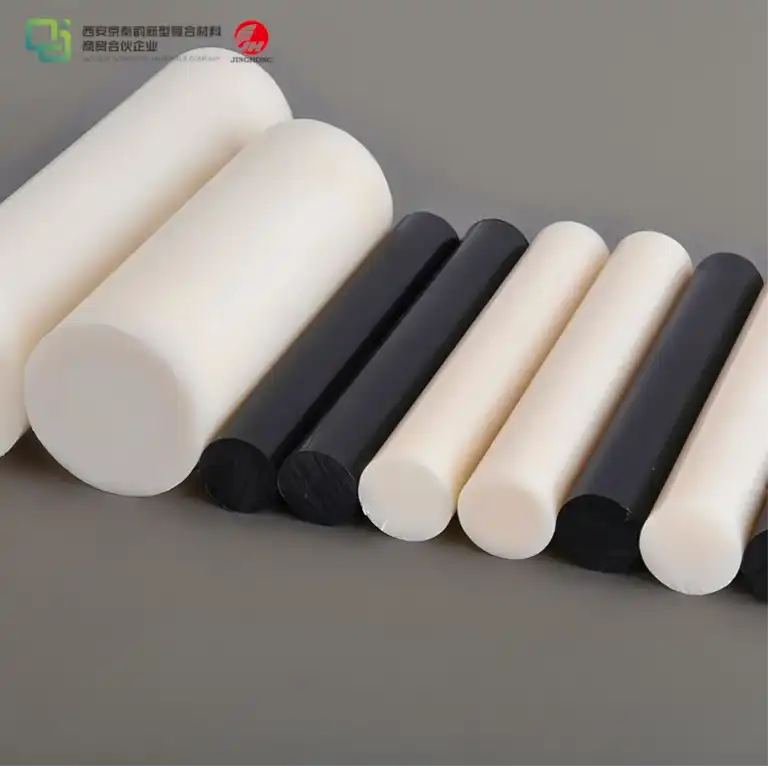
To make high-quality phenolic laminates, you need to be very careful with the resin-to-fiber ratios, cure processes, and thickness tolerances. Sheets made to MIL-I-24768 standards make sure that the mechanical properties are the same from one production batch to the next, which is very important for OEMs handling multi-year supply agreements. The thickness can be anywhere from 0.5 mm for precision seals to 50 mm for structural parts. Standard sheet sizes allow for CNC routing and die-cutting. Third-party testing is used by good providers to make sure that moisture absorption rates are below 1%, flame spread classifications are correct, and the product meets UL/ROHS standards. Visual examination shows even colour distribution with no resin pools or fibre separation, which means the curing process went well.

Bakelite vs Other Materials: A Rational Choice for OEM and B2B Procurement
Comparative Performance Against Modern Composites
An engineering team will often compare Bakelite sheet phenolic laminates to other options like FR4 epoxy boards, melamine compounds, and thermoplastics. Phenolic sheets are better at resisting arcs and absorbing moisture than paper-based melamine. This makes them better for outdoor shelters where humidity levels can change. FR4 glass-epoxy laminates are stronger mechanically, but phenolic materials are cheaper and better for uses that can handle mild flexural loads. When temperatures stay above 200°F for a long time, thermoplastics like nylon shrink. Bakelite, on the other hand, keeps its shape in motor housings and transformer barriers that work in this temperature range.
Cost-Efficiency in High-Volume Production
Procurement managers who use lean manufacturing methods know that the price of phenolic materials goes down as more of them are bought. Because the material is easy to machine, tools don't wear out as quickly when stamping and cutting. This means that the cost of making each unit is lower for production runs of more than 10,000 pieces. Ceramic insulators need to be handled in a certain way, but these sheets come in flat stock that can be fed by machines. The material's density (about 1.4 g/cm³) strikes a mix between weight concerns and insulation needs in automotive assemblies that need to reduce mass. Price changes that are common with speciality polymers can be lessened by buying in bulk from well-known sources.
Lifecycle Durability and Maintenance Impact
Field data from power distribution equipment shows that phenolic components keep their electrical qualities even after decades of going through different temperatures. The material is better at resisting UV degradation than many polycarbonates, which means it can be used outside for longer without needing protective coats. Self-lubricating grades work better than regular industrial plastics in low-lubrication environments, where they are used for gear blanks and thrust washers because they don't wear down as quickly. But buying teams should know that phenolic materials aren't as strong against impact as polycarbonate and aren't as chemically inert as PTFE. Specification mismatches that hurt buyer trust can be avoided by being open about these trade-offs.
Practical Applications of Bakelite in Industry and DIY Projects
Electrical and Electronics Manufacturing
For busbar insulators, terminal blocks, and arc chutes, manufacturers of circuit breakers, switches, and motor controls depend on phenolic sheet. The material's tracking resistance stops carbonised paths from forming on surfaces that are exposed to electrical discharge. This is a type of failure that makes high-voltage systems less safe. Thinner gauges (0.8–1.6mm) are used by PCB makers as mechanical support structures in power sources where FR4 is too expensive. Lamp sockets, commutator segments, and transformer spacers are examples of historical uses where switching materials could cause problems with certified designs. Precision tolerances of within ±0.1mm can be reached with CNC machining, which is necessary for stackable insulating washers in small systems.
Industrial Machinery and Structural Components
For wear pads, guide rails, and mechanical spacers that have to handle compressive loads, machinery makers choose phenolic cotton laminates. The material's ability to keep its shape even when heated and cooled repeatedly keeps slide devices that work in a range of temperatures from sticking. When used in indexing drives, gear blanks made from 20–30 mm thicker stock run more quietly than metal versions because they are electrically isolated. Fabric-reinforced grades can be customised and offer better tensile strength for structural braces. However, engineers must take into account that the material is more likely to break when hit than filled nylons.
Automotive and Transportation Sector
Manufacturers of battery packs are using Bakelite sheet phenolic barriers to separate cell units more and more, because they are resistant to fire and don't conduct electricity. Insulation pads under car electronics keep sensitive circuits from getting too hot in the engine bay and keep their insulating properties even when they are exposed to vibrations. The material can be easily machined, which helps with fast prototyping during research and development. This lets tier-1 suppliers test designs before investing in tools. For vintage car restoration jobs that care about both function and appearance, real phenolic parts are preferred for distributor caps and ignition housings.
Consumer Appliances and DIY Restoration
Phenolic frames are used by appliance makers in motor assemblies, thermal cutoff housings, and control panel substrates. The cost profile of the material fits with the economics of high-volume production, and it meets flammability standards (usually V-0 ratings). Do-it-yourselfers who are repairing radios, phones, and kitchenware from the 1960s and 1970s look for original phenolic parts to keep the collectible value. To tell the difference between real materials and current plastics, you have to test their heat resistance and surface hardness. Real pieces can handle being touched briefly by heated metal probes without deforming. Epoxy adhesives can be used to bond broken parts back together, but the structural strength rarely matches the original moulded construction.
Procuring Bakelite: How to Buy Quality Sheets and Custom Products for Your Business?
Supplier Qualification and Certification Verification
Real B2B procurement starts with checking the qualifications of suppliers beyond what they say in their marketing materials. Technical buyers should ask for ISO 9001 certifications that show consistent output and quality management systems. Material test results that list dielectric strength, flexural modulus, and flame spread classifications make it easy to compare products from different sellers. Suppliers who keep their parts UL-recognized make it easier for goods that need safety agency approvals to follow the rules. Site checks, which can be done in person or by a third party, show how well the factory can make things, how much inventory it has, and how well it controls the process, all of which affect how reliably deliveries happen when demand goes up.
Specification Parameters and Grade Selection
Grades of sheets depend on the type of resin, the support material, and the use they are meant for. For general electrical insulation, paper-based phenolic grades (often given the code XXXP or a similar code) work well, while fabric-reinforced versions (often given the code XXXPC) are better at handling structural loads. To prevent confusion, buyers must be clear about the thickness tolerances, surface finish needs, and colour preferences (usually brown, black, or natural tan). For RF uses, the dielectric constant number is important, while flame ratings (V-0, V-1, or HB) decide if it's right for enclosure uses. Technical datasheets should make it clear what percentage of water they absorb, since too much water can hurt the performance of electronics in damp places.
Pricing Models and Volume Considerations
Phenolic sheet pricing reflects raw material costs, production batch economics, and customization complexity. Standard sheet widths, like 1000x2000mm or something similar, cost less per square meter than custom-cut pieces that need more work. Different suppliers have different levels of volume that cause price breaks. Some offer savings every 100 kg, while others base their tiers on full production runs. Lead times range from two to six weeks, based on the grade that is needed and how it needs to be made. Minimum order amounts balance the efficiency of the supplier with the cost of the buyer's inventory. Making blanket purchase agreements with scheduled releases improves both parties' working capital.
Logistics and Global Sourcing Strategies
When shipping flat sheets, the material is easier to handle than when shipping fragile parts, but it is still important to keep the material dry during shipment. Suppliers with their own transportation departments make customs paperwork and combining goods easier, which cuts down on the delays that can happen with third-party forwarders. Dual-sourcing strategies help keep the supply chain running smoothly by finding qualified vendors in different areas. This way, there is continuity even if geopolitical events or natural disasters affect the main suppliers. Technical communication protocols are also important. Suppliers who offer multilingual support and technical consultation clear up any questions about the specifications before they are put into production. This keeps relationships from getting tense and costs from going up.
Conclusion
When buying Bakelite sheet things, phenolic laminates help people who want to save money but still need high performance in electrical, commercial, and consumer settings. Engineering managers can easily choose the right grades when they know about the material's thermosetting chemistry, production standards, and advantages over other options. Whether buyers are looking for insulation barriers for transformer systems or mechanical parts for fixtures that won't wear down easily, they can form long-lasting partnerships with suppliers who can meet their certification needs and offer good prices based on volume. The material has been used for over a hundred years in harsh environments, which proves that it is still useful. Additionally, current manufacturing controls make sure that the consistency meets today's high quality standards.
FAQ
How can I tell the difference between real phenolic material and fake plastic?
Real phenolic laminates have unique properties that common thermoplastics don't have. By pressing a hot metal probe against an unseen area, the hot pin test quickly confirms that the material is formaldehyde-free, while plastics either soften or give off sweet chemical smells. When you look at real material from the cut ends, you can see that it has a layered structure with compressed paper or fabric plies. Surface hardness testing with a durometer typically yields readings above Shore D 85, exceeding most commodity plastics. It's also helpful to compare the weights of the materials. Phenolic density (1.3–1.4 g/cm³) is higher than styrofoam but lower than filled nylons.
What are the lowest and highest temperatures I should think about for electrical uses?
For standard grades, continuous operating temperatures can easily reach 300°F (149°C), though mechanical properties gradually decrease after 250°F of exposure over a long period of time. When soldering or when there is a fault, short-term trips to 350°F usually don't damage the structure as long as the heat contact is short. The performance in cold temperatures stays stable up to -40°F, keeping the dielectric qualities without breaking easily like some thermoplastics do. Thermal cycling between temperature extremes causes very little change in size—usually less than 0.2% across a 200°F range. This means that the material can be used for outdoor shelters where the weather changes with the seasons.
Partner with J&Q for Reliable Bakelite Sheet Solutions
Over twenty years of experience making high-quality products has helped J&Q become a leader in the industrial insulation market. They serve companies across North America that make electrical parts, machines, and appliances. We have phenolic laminate in stock in thicknesses from 0.5 mm to 50 mm, in both standard and custom types that meet MIL-I-24768 and UL standards. As a fully integrated Bakelite sheet provider, we oversee the quality of production from the resin formulation to the final inspection. This makes sure that each batch meets the critical quality standards set by your OEM. Our in-house shipping department makes sure that all of our goods is handled smoothly, and our engineering support teams help customers figure out how to match the properties of materials with the needs of their applications. You can email us at info@jhd-material.com to talk about bulk prices, get certified test reports, or set up an evaluation of a sample. Our procurement specialists are responsive and know how important it is for you to make decisions quickly about where to get the materials you need.
References
Baekeland, L. H. (1909). The Synthesis, Constitution, and Uses of Bakelite. Industrial & Engineering Chemistry Journal, Vol. 1, No. 3.
American Chemical Society. (1993). National Historic Chemical Landmarks: Bakelite—The World's First Synthetic Plastic. Washington, DC: ACS Publications.
Bijker, W. E. (1995). Of Bicycles, Bakelites, and Bulbs: Toward a Theory of Sociotechnical Change. Cambridge: MIT Press.
Morgan, P. (1954). Phenolic Resins: Chemistry, Applications, and Performance. New York: Reinhold Publishing Corporation.
MIL-I-24768/2 Military Specification. (1991). Plastic Sheet, Laminated, Phenolic, Paper Base, Copper-Clad. U.S. Department of Defense.
Institute of Electrical and Electronics Engineers. (2018). IEEE Standard for Insulation Testing of AC Electric Machinery. IEEE Std 95-2018.