Unveiling the Superior Properties of G10 Epoxy Sheets in Functional Composite Material Applications
2026-04-16 17:25:52
When engineering managers and procurement specialists look at composite materials for important industrial uses, G10 epoxy sheet is always the clear winner. This high-performance laminate is made by carefully curing woven fiberglass cloth and epoxy resin together. This creates a material that solves some of the most important engineering problems, like keeping its shape in harsh environments, insulating electrically very well, and keeping its structure strong when under a lot of stress. G10 epoxy sheet doesn't absorb much water like phenolic laminates or regular plastics do, and it keeps its qualities even at very high and very low temperatures. This makes it an essential material for electronics, power distribution, and precision machinery.
Understanding G10 Epoxy Sheets: Composition and Core Properties
The Manufacturing Process Behind G10 Laminates
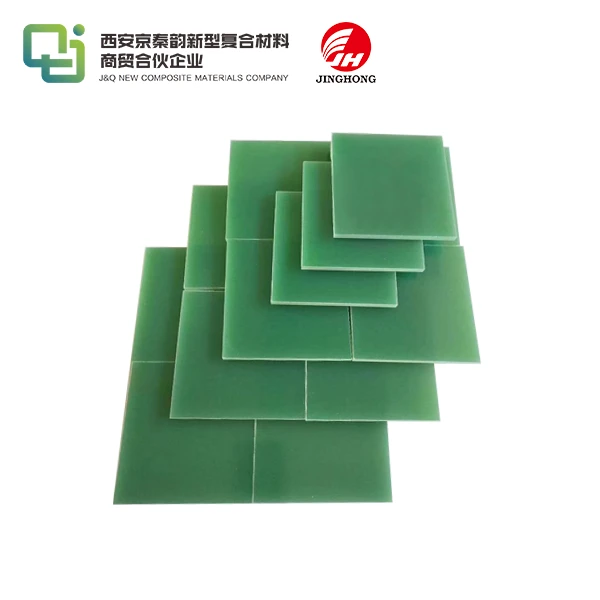
G10 epoxy sheet is a continuous filament glass epoxy laminate that was made by carefully stacking layers on top of each other. Before being stacked and put under a lot of heat and pressure, high-grade epoxy glue is used to soak the woven fiberglass cloth. The thermoset curing process joins the layers together into a single structure that can't be broken down or reshaped, which makes it different from thermoplastic options. Important performance qualities are based on how precisely the parts are manufactured, such as thickness tolerances that have a big impact on CNC machining and the speed of the assembly line.
Mechanical and Electrical Characteristics
The material has a tensile strength of up to 40,000 psi and a compression strength of up to 65,000 psi, which means it can hold a lot of weight. Its bending strength of 75,000 psi makes it useful for tasks that need to be stiff and not bend. Electrically, G10 epoxy sheet has great dielectric qualities and low dissipation factors, which keep signals from getting lost in PCB surfaces and switchgear insulation. A specific gravity of 1.8 means that the material is strong without being too heavy. This balance is especially important in the car and aerospace industries, where reducing mass affects speed and fuel economy.
Thermal and Chemical Resistance
Continuous operating temps go up to 140°C, and short-term exposures above this level are okay. This thermal stability keeps motor housings and generator parts from twisting in places where heat is always being made. Common industrial cleaners, oils, and cleaning agents can't damage it chemically, and the dimensions will stay accurate for the whole service life. At 0.11% over 24 hours, water absorption stays very low. This means that the material doesn't swell or lose its properties like cheaper materials do in humid industrial settings or outdoor uses.
Superior Performance Advantages of G10 Epoxy Sheets in Industrial Applications
Comparison With Alternative Materials
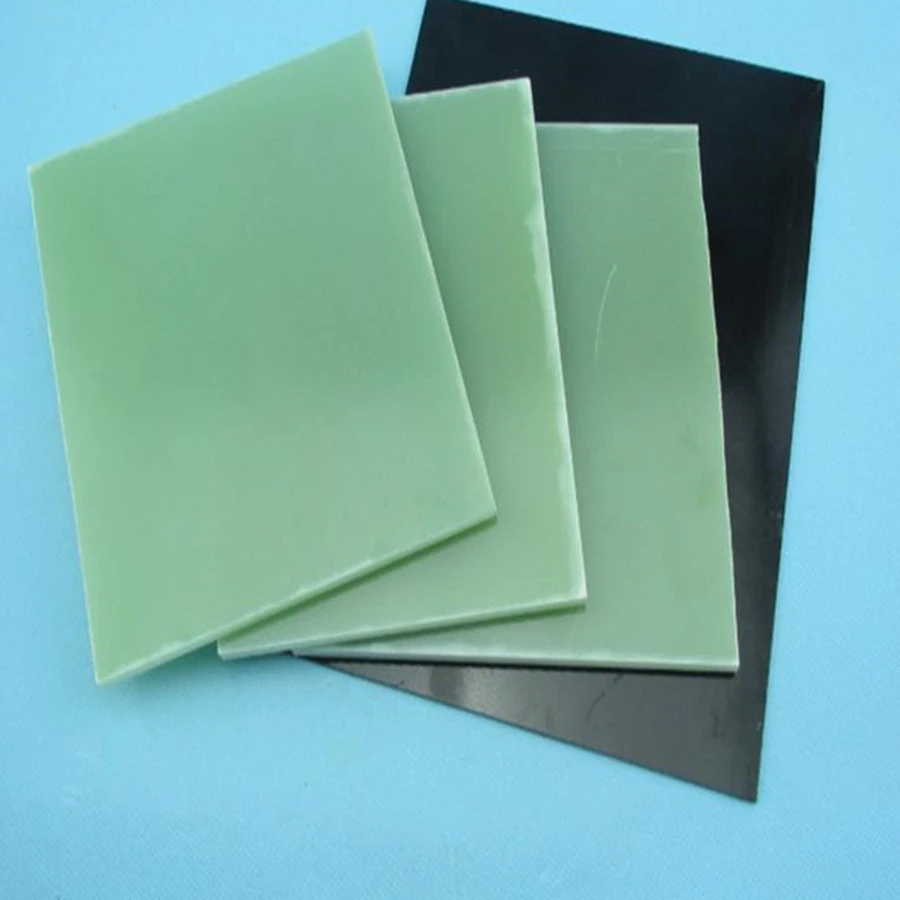
G10 epoxy sheet and FR4 are both glass epoxy laminates, but G10 epoxy sheet is different from FR4 mostly because it has flame resistant ingredients. Standard G10 epoxy sheet has a 94HB grade for flammability when it doesn't contain any bromine compounds. This means that it has slightly higher mechanical strength and resistance to wetness. Because of this, G10 epoxy sheet is better for uses where structure performance is more important than flame protection. When comparing G10 epoxy sheet to phenolic cotton laminates, it has better electrical qualities and stays the same size longer. It costs more, but this is worth it when failure risks have big effects.
The material outperforms standard fiberglass sheets in uniform property distribution and machining predictability. Engineers appreciate the consistent behavior during drilling, milling, and routing operations—reducing tool wear and scrap rates. Compared to ceramic insulators, G10 epoxy sheet is easier to work with and less likely to break, while maintaining adequate insulation for most applications below extreme voltage thresholds.
Longevity and Maintenance Advantages
When properly defined, it has a service life that is much longer than that of competing materials. The finished epoxy matrix doesn't break down like other polymers do over time, so interior applications last for a very long time. This translates directly to reduced replacement costs and maintenance downtime for production equipment. Chemical inertness and mechanical stability work together to keep parts within tight tolerances for their entire working life. This is especially important for precision machinery, where changes in dimensions can cause problems with alignment and wear before their time.
It can withstand radiation and doesn't expand when it gets cold, which makes it useful in science tools and cryogenic systems. Due to its specific qualities, G10 epoxy sheet is the only material that can meet certain needs, making it highly desirable in some industrial situations.
Practical Applications of G10 Epoxy Sheets Across Industries
Electronics and PCB Manufacturing
G10 epoxy sheet is the base material used to make printed circuit boards. They hold electrical lines and parts in place. In high-speed digital electronics and RF uses, the material's dielectric constant remains stable across frequency bands, preserving signal integrity. Manufacturers value CNC machinability because it lets them make exact board shapes, mounting holes, and routing channels without the edges breaking or delaminating. Compliance with UL and RoHS standards ensures that consumer gadgets and business control systems are legal.
G10 epoxy sheet is used in terminal blocks, bus bars, and switchgear parts to prevent arcs and keep live wires from touching each other. It can handle tracking and electrical stress that would wear down or carbonize weaker insulators. The thermal performance of the motor case components is good because they keep the windings separate while letting heat escape through conduction rather than acting as thermal barriers.
Automotive and Aerospace Applications
In electric car battery packs, barrier sheets made of G10 epoxy sheet are used between cell sections to provide electrical insulation and strengthen the structure. The material's resistance to flames stops thermal runaway while keeping its mechanical integrity during contact and shaking events. Heat guards and insulation pads keep sensitive devices safe from the heat of the engine bay and the exhaust system without adding too much weight.
The strength-to-weight ratio is used in aerospace for equipment mounting brackets and internal support panels. For accurate hole shapes and edge profiles needed in airplane assembly, where tolerances have a direct effect on safety and performance, the material cuts easily. The stable dielectric qualities work well for radome parts and radio mounting structures even when the temperature and altitude change.
Industrial Machinery and Power Systems
G10 epoxy sheet is used by transformer makers as coil insulation and spark barriers, preventing electrical breakdown between the windings and the grounded frames. The thermal class lets the device work at its rated temperature without breaking down too quickly. Gears, nuts, and wear plates machined from G10 epoxy sheet last longer in situations where metal components would bind or require constant lubrication. The self-lubricating properties make it less likely that two surfaces will rub against each other, and the hardness stops wear from those surfaces.
Tooling fixtures and jigs work better when their sizes don't change when the temperature changes in a working setting. G10 epoxy sheet stays the same size, unlike metal fittings that grow and contract. This makes sure that parts are always in the same place during machining and assembly. Testing equipment housings keep electrical signals separate and support precise measuring parts.
How to Select and Procure G10 Epoxy Sheets for Your Business Needs?
Critical Specification Parameters
The choice of thickness is based on electrical openings and industrial needs. Standard sizes run from 0.5 mm to 50 mm, and for more precise tasks, smaller standards are available. Engineers should check that the thickness is the same across all sheet sizes, since differences can affect how high parts stack up and how big the finished part is after it's been machined. Surface finish affects how well adhesives and coatings stick to a surface, with options ranging from standard industrial types to precision-ground surfaces for optical or closing uses.
Certification paperwork is very important for businesses that are controlled. Material test results that prove the dielectric strength, flame rating, and dynamic qualities make sure that the design requirements are met. Traceability to NEMA standards or foreign versions makes sure that batches of materials meet the stated characteristics. UL recognition and RoHS compliance documents make the process of certifying products easier.
Supplier Evaluation Criteria
Reliability of lead times affects how production schedules and supplies are managed. Suppliers who keep a lot of stock on hand reduce delays, while those who count on long production processes add risk to supply lines. Logistics of delivery are important, especially for big or large sheets, because freight costs and the ability to handle them affect the total cost of purchase. Having established ties with freight carriers and knowledge with export paperwork makes doing business across borders easier.
Suppliers can offer pre-cut blocks, CNC machined parts, or special types of G10 epoxy sheet if they can customize their products. This processing that adds value cuts down on internal handling and can save money when the volume justifies buying new tools. Technical help when choosing materials helps match grades to the needs of the application, preventing costs from going up too high or using grades that lead to fails in the field.
Cost Optimization Strategies
Committing to buy more often usually gets you better prices, but you have to weigh that against the costs of keeping supplies and the length of time that materials last. Blanket orders with planned drops keep prices stable while still letting you adapt to changes in demand. When you use multi-project procurement, you combine needs from different product lines, which gives you more power with sellers. By standardizing on fewer thickness and grade differences, it becomes easier to keep track of supplies and more of each SKU can be ordered.
Best Practices for Handling and Using G10 Epoxy Sheets
Machining and Fabrication Guidelines
During routing and grinding processes for G10 epoxy sheet, carbide tooling keeps the edge quality and stretches the life of the tool. Dust filtration systems collect the particles that are made during grinding, keeping workers and equipment safe from the rough fiberglass particles. Cutting speeds and feed rates need to be optimized for each job; too fast of a speed creates heat that smears the resin, and too slow of a feed causes edges to chip. Using coolant while drilling stops heat from building up, which would soften the glue and make the hole less good.
By properly supporting the G10 epoxy sheet while it is being cut, bending that can cause errors in measurements can be avoided. With vacuum tables or mechanical clamps, binding forces are spread out so that stress doesn't build up in one place. Sequential cutting techniques rough out the material before doing the fine work, which lets the material relax between steps. Using deburring tools to finish the edges gets rid of the sharp fiberglass strands that get in the way of assembly and pose a safety risk when handling.
Storage and Environmental Considerations
Climate-controlled storage keeps the qualities of materials stable between receiving them and making them. Even though the material doesn't absorb much water, changing temperatures can cause brief changes in size that make fine work harder. When you store sheets flat, they don't bend under their own weight, which is especially important for smaller sizes. Protective covering keeps surfaces clean so that contaminants don't get in the way of gluing or sealing.
Using first-in, first-out stocking methods to rotate materials makes sure that stock ages evenly. Properly sealed G10 epoxy sheet can be stored for an infinite amount of time, but keeping a regular rotation schedule keeps single batches from staying in storage for too long. Edge hits that cause delamination or cracking should be kept to a minimum during handling, especially when moving things from storage to work areas.
Quality Assurance Protocols
The incoming review checks the measurements, quality of the surface, and certification paperwork against the buy orders. Statistical sample plans find a balance between how thorough a check is and how quickly the process can be done. For important uses, it might be necessary to test the dielectric strength or check the dynamic properties of example samples. Documentation keeping makes it possible to find problems in the field that need to be looked into to find their root cause.
As the cutting process goes on, in-process quality checks make sure that the measurements stay within the tolerances. Automated measurement systems speed up inspections and make them more accurate every time. Before putting it together, one last check makes sure that it is clean, has good edges, and doesn't have any cracks or delamination. Establishing documented quality procedures meets the needs of customer audits and boosts trust in the parts that are provided.
Conclusion
G10 epoxy sheet has been used for many years in tough industrial settings because it is strong, doesn't conduct electricity, and doesn't react badly with the environment. Engineering professionals choose this material when its long-term efficiency, ability to maintain its shape, and heat performance make it a good choice. Electronics, cars, power systems, and industrial machines all use the material in a variety of ways, which shows its basic value. With the right specifications based on the needs of the application and partnerships with suppliers that focus on quality and service, buying teams can get materials that meet project goals while keeping costs low.
FAQ
What distinguishes G10 from FR4 epoxy laminates?
G10 epoxy sheet is the original glass epoxy recipe that doesn't have any flame retardant additives. It has slightly better mechanical qualities and protection to moisture. FR4 has better flame ratings because it contains bromine compounds. This makes it the best choice when fire safety rules require specific flammability classes. Most of the time, there aren't big differences in performance because the choice is based on legal standards rather than big changes in properties.
Can G10 withstand outdoor environmental exposure?
Long-term contact to ultraviolet light breaks down epoxy resins, causing surface chalking and loss of properties. When used indoors, the service life is almost infinite, but when used outdoors, protection coatings are needed or other materials that are made to fight weathering should be considered. Covered setups that are out of direct sunlight work well in industrial settings outside.
How does material orientation affect properties?
When G10 epoxy sheet is manufactured, the woven fiberglass cloth creates anisotropic qualities. It is stronger along the weave direction than along the thickness axis. When loads are applied perpendicular to the laminate line, the through-thickness strength should be smaller. When the design is oriented correctly, the main pressures are aligned with the direction of the reinforcement. This makes the structure work more efficiently and stops it from failing too soon.
Partner With J&Q for Reliable G10 Epoxy Sheet Supply
J&Q has been making high-quality insulation products for more than twenty years and has also been doing business internationally for more than ten years, working with building companies around the world. As a well-known provider of G10 epoxy sheet, we keep a large stock of all standard sizes and grades, so we can quickly meet the needs of both prototypes and large production runs. Our integrated logistics services make delivery planning easy, getting rid of the need for complicated supply lines with many vendors. Our quality systems make sure that performance is uniform from batch to batch and meets international standards. Our technical support teams work directly with your engineering staff to match material specs with application needs. Contact our purchasing experts at info@jhd-material.com to discuss your specific requirements and find out how our production depth and service commitment can help your project succeed.
References
National Electrical Manufacturers Association. "Industrial Laminating Thermosetting Products: NEMA Standards Publication LI 1-1998." National Electrical Manufacturers Association, 1998.
Harper, Charles A. "Handbook of Plastics, Elastomers, and Composites." McGraw-Hill Professional, 4th Edition, 2002.
Lubin, George. "Handbook of Composite Materials." Van Nostrand Reinhold Company, 1982.
Chawla, Krishan K. "Composite Materials: Science and Engineering." Springer Science & Business Media, 3rd Edition, 2012.
Mallick, P.K. "Fiber-Reinforced Composites: Materials, Manufacturing, and Design." CRC Press, 3rd Edition, 2007.
Peters, S.T. "Handbook of Composites." Chapman and Hall, 2nd Edition, 1998.