Wear-Resistant Insulating Laminates: Phenolic Cotton Cloth Laminate Guide
2026-03-04 17:29:54
When industrial engineers need solid insulation materials that are both very resistant to wear and good at blocking electricity, phenolic cotton cloth laminate stands out as the best choice. This versatile material has great mechanical strength, great temperature stability, and great electrical properties, which makes it an essential in the automobile, industrial machinery, and electrical manufacturing industries. Knowing its special features and how it can be used helps procurement pros make smart choices that improve performance while keeping costs low.
What is Phenolic Cotton Cloth Laminate: Understanding the Fundamentals?
Definition and Basic Composition of Phenolic Cotton Cloth Laminate
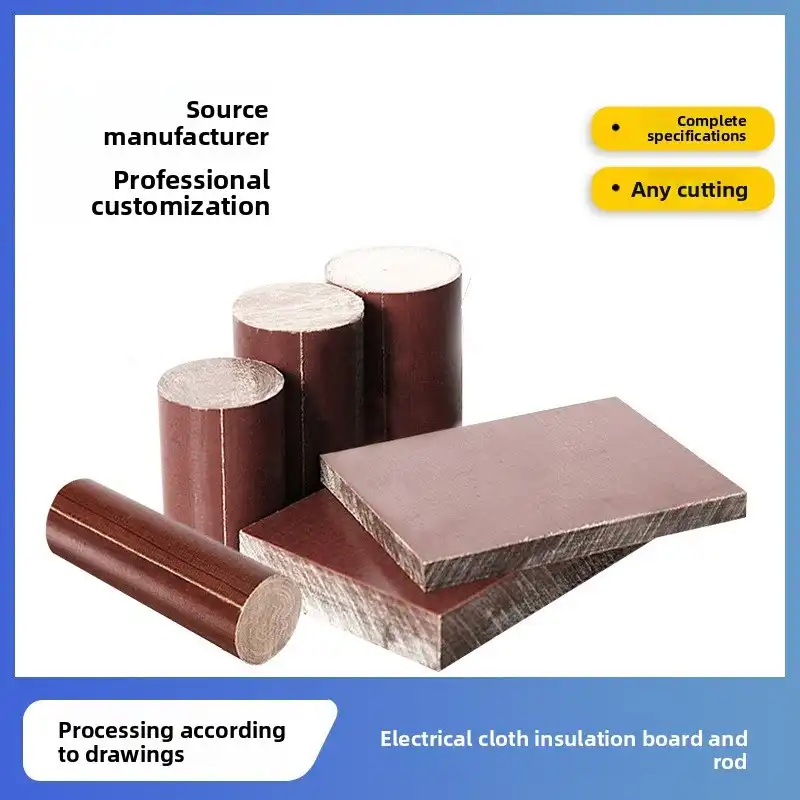
When high-quality cotton fabric is mixed with phenolic resin, a complex composite material called phenolic cotton cloth laminate is created. It is made of layers of cotton fibers that are strong and flexible, and phenolic resin systems that are resistant to chemicals and stable at high temperatures. The cotton cloth base gives the composite great mechanical qualities, and the phenolic binder makes a thermosetting matrix that keeps its shape even when the environment changes.
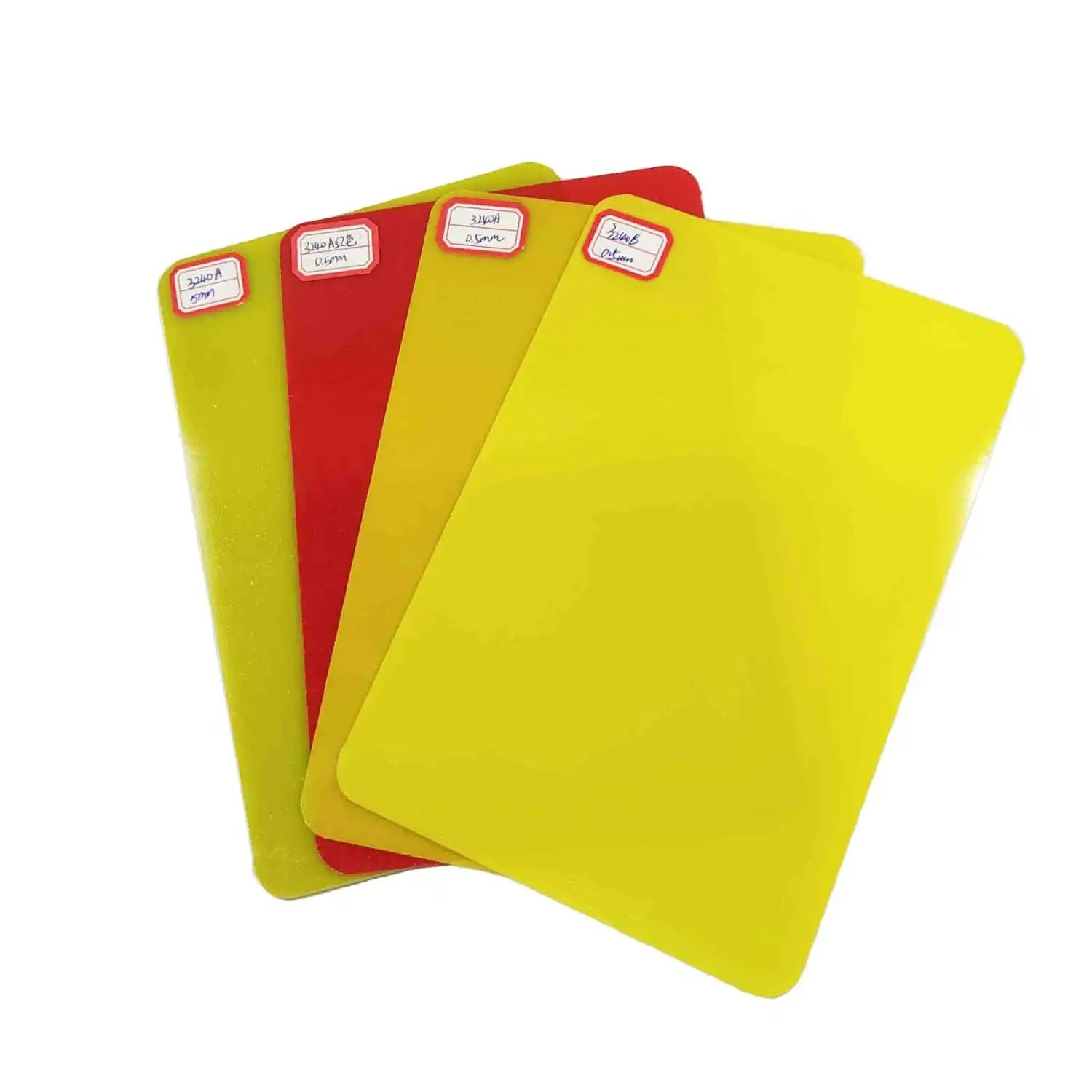
The description of the material includes different grades. Type A grades are best for use as electrical insulation, while Type B grades are better for use in structures and machines. Layers of cotton cloth are carefully chosen based on their weave density and fiber quality. This makes sure that the performance is the same for all thicknesses. Usually, formaldehyde-based compounds make up the phenolic resin system. These compounds crosslink during the hardening process, making a strong three-dimensional polymer network.
Manufacturing Process and Quality Standards
The first step in the production process is preparing the fine cotton cloth. The fabric is carefully cleaned and conditioned to get rid of any impurities that might affect its electrical properties. The cotton sheets are then repeatedly soaked in liquid phenolic glue while the air quality is controlled. During this important phase, exact measurements of temperature and pressure are taken to make sure that the resin penetrates evenly throughout the fabric structure.
During the transition stage, layers of impregnated cotton are stacked and heated to temperatures between 140°C and 180°C while being pressed under pressures greater than 10 MPa. Crosslinking reactions start in the phenolic matrix during the curing process. These reactions make the final layered structure. To make sure that the product meets international standards like IEC 60893 and ASTM D709, quality control methods include checking the thickness tolerance, inspecting the surface finish, and testing the electrical properties.
Key Physical and Chemical Properties Overview
When you put phenolic cotton cloth laminates together, they have amazing properties that set them apart from other insulation materials. The density is usually between 1.3 and 1.4 g/cm³, which makes it a great material for construction uses because it is strong for its weight. The material's compressive strength is more than 200 MPa, and its tensile strength is between 90 and 120 MPa, based on the grade and orientation.
Having dielectric strengths of 15-20 kV/mm, this material is good for high-voltage uses because of its electrical qualities. Measurements of volume resistivity always go above 10²² Ω·cm, which guarantees safe electrical isolation. Chemical resistance includes good performance against oils, weak acids, and organic solvents. However, strong alkaline solutions may cause slow degradation over long periods of time.
Core Technical Properties and Performance Characteristics
Electrical Insulation Properties and Dielectric Strength
Because they work so well with electricity, phenolic cotton cloth laminates are great for electronic and power transfer uses. The dielectric strength numbers are always between 15 and 20 kV/mm, which gives electrical equipment that works with different voltage levels a lot of safety margin. This amazing breakdown resistance comes from the mixture of the cotton fiber structure and phenolic matrix, which makes many insulation barriers all the way through the thickness of the material.
These laminates can be used for both AC and DC uses because their electrical properties stay the same over a wide frequency range. At room temperature, the dielectric constant is usually between 4.5 and 6.0, and the dissipation factor stays below 0.05 under normal testing settings. Volume resistance is higher than 10³²·cm, which means that there isn't much leakage current even when the voltage is kept high for a long time.
The way the temperature coefficient behaves shows how reliable the material is across a range of working temperatures. Between -40°C and +120°C, phenolic cotton cloth laminates don't lose much of their electrical properties. This makes them good for uses that need steady performance even when temperatures change.
Temperature Resistance and Thermal Stability Performance
Because they have good thermal performance, phenolic cotton cloth laminates are a good choice for places where the temperature is high. Continuous operating temperatures can hit 120°C without a big loss of properties, and short-term exposure to temperatures close to 150°C is still fine for some uses. The phenolic matrix is very stable at high temperatures because its crosslinked structure doesn't break down even after repeated heating processes.
The material's physical stability under thermal stress can be seen in how it deflects heat. When compared to thermoplastic options, linear thermal expansion coefficients stay low. This lowers the chance of changes in size that could affect how well things fit together mechanically or electrically. Thermal conductivity values are usually between 0.3 and 0.4 W/m·K, which means they offer moderate thermal insulation qualities that are good for many industrial uses.
The flame resistance meets the standards for Class E insulation, and it goes out on its own when the cause of the fire is taken away. This quality comes in handy especially in electrical settings where fire safety is a very important design requirement.
Mechanical Strength and Wear Resistance Capabilities
The mechanical features of phenolic cotton cloth laminates show how well the cotton fiber reinforcement and phenolic matrix bonding work together. Most materials have flexural strengths higher than 140 MPa, which means they can handle bending loads without breaking or delaminating. Measurements of the material's impact resistance show that it can absorb energy under dynamic loading conditions. This means that it can be used in situations where shaking or shock loads are present.
Because they don't wear down easily, these laminates are great for friction-based uses like bearing cages and mechanical gaps. The structure of the cotton fibers naturally lubricates, and the phenolic matrix keeps the surface intact even after many touch cycles. The coefficient of friction stays the same under different operating situations, which helps mechanical systems work as expected.
Another big benefit is that phenolic cotton cloth laminates are easy to machine. They work well with common machining processes like turning, milling, and drilling. The material cuts cleanly and doesn't wear down tools too quickly, so it can be used to make precise parts for tough jobs.
Chemical Resistance and Environmental Durability
Because they are chemically compatible in a wide range of industrial settings, phenolic cotton cloth laminates can be used in places where they will be exposed to oils, fuels, and different organic chemicals. The phenolic matrix is very resistant to products made from petroleum. This makes the material useful for uses in cars and factories where fluids have to come into touch with it.
Resistance to humidity, UV light, and air pollutants is part of environmental resilience. Because it is mostly cotton, the cloth does absorb some water, but the right sealing treatments can make this less of a problem in important situations. Long-term aging studies show that properties stay the same after years of use in normal environmental settings.
It can be used in slightly corrosive environments because it doesn't react with weak acids or neutral salt solutions. Strong alkaline conditions, on the other hand, may cause slow degradation, so it's important to choose the right materials for different chemical exposure situations.
Industrial Applications and Use Cases Across Sectors
Electrical and Electronics Industry Applications
The biggest market for phenolic cotton cloth laminates is in the electrical and electronics industry. This is because the material is very good at insulating electricity and is also very reliable. When used as arc barriers in power distribution equipment, these laminates' dielectric strength and flame resistance are very important for keeping electrical problems at bay. Because it is stable at high temperatures and works well with electricity, phenolic cotton sheets are used in transformers to insulate coils and support structures.
When making switchgear, these laminates are used as insulating spacers and support structures, where both strength and electrical isolation must be kept. Because the material is easy to machine, complicated shapes needed for modern electrical equipment can be made with great accuracy. Phenolic cotton cloth is good for uses that need to protect motor parts from wear and keep their shape even when they are under constant stress.
Thinner grades of phenolic cotton laminates are used for PCB support uses that need mechanical support without adding too much weight. Because the material doesn't absorb much water and its electrical properties stay fixed, it can be used in places where controlling humidity might be hard.
Automotive and Transportation Sector Uses
phenolic cotton cloth laminates are used in automotive uses because they offer a unique mix of electrical insulation, thermal resistance, and mechanical strength. When designing battery packs for electric vehicles, these materials are used as thermal barriers and electrical isolation parts, because safety rules need them to work reliably in harsh circumstances. The material meets safety standards for cars because it doesn't catch fire and doesn't make a lot of smoke.
The thermal stability and chemical resistance qualities are useful for uses in the engine compartment, especially for parts that come into contact with engine oils and fuel vapors. When electrical stability and resistance to vibration are very important, phenolic cotton laminates are used for insulation pads and connector supports in electrical system parts.
Railway electrical systems are one type of transportation infrastructure that uses this material. Its mechanical strength and electrical properties make it effective for distributing power in harsh environments. Resistance to salt spray and humidity makes the material good for marine uses. This means it can be used for electrical systems in marine settings.
Industrial Machinery and Equipment Applications
Wear resistance and mechanical strength are two properties of phenolic cotton cloth laminates that are used in industrial machines. The low friction and dimensional stability of the material make it useful for bearing cage uses, which need to work reliably at high speeds. When you mix the naturally lubricating properties of cotton fibers with the strength of the phenolic matrix, you get a great material for mechanical bearings.
The material can be easily machined and doesn't wear down easily, so it can be used for non-metallic gear teeth in places where noise reduction or electrical separation is needed. Because the material can absorb vibrations, it makes the process quieter than metal alternatives. Properties like chemical protection and stable dimensions make it useful as a mechanical spacer.
Some parts of hydraulic systems use phenolic cotton laminates to seal and insulate pressure vessels. This is because the material is chemically resistant to hydraulic fluids and strong under pressure, so it works well. Because the material is compatible with different seal materials, it can be used in a wide range of fluid power systems.
Aerospace and High-Performance Requirements
High-grade phenolic cotton cloth laminates are useful for a variety of uses because they can keep working well in harsh situations and are used in aerospace. The material's strength-to-weight ratio and dimensional stability make it useful for structure uses that need to cut down on weight. These laminates are used for insulation and support structures in electrical system parts of airplanes where dependability cannot be compromised.
Precision production equipment is one high-performance industrial application. The material's dimensional stability and machinability make it possible to make important parts. The low thermal expansion properties make them useful for uses that need exact tolerances across temperature changes.
The material's predictable qualities and wide range of grades make it useful for research and development, as they allow the testing and prototyping of new equipment designs. The material's performance database has been around for a while and helps engineers do math and improve designs.
Procurement Strategy and Supplier Selection Best Practices
Looking at what manufacturers can do and how their quality systems work
The first step in evaluating a manufacturer is to look at their production capabilities, quality processes, and technical know-how. Documented quality control systems, regular testing protocols, and efforts to keep getting better are all ways that well-known manufacturers show that their quality is always the same. Evaluation of production ability makes sure that suppliers can meet volume needs while keeping quality standards high for orders of different sizes.
For custom uses or performance needs that are hard to meet, technical knowledge is especially important. Manufacturers with good engineering support can give useful advice on how to use their products, choose the right materials, and improve their performance. The manufacturer's research and development skills show how well they can adapt their goods to changing application needs.
Quality system certifications give customers faith in the consistency and dependability of the products they make. ISO 9001 certification shows that you follow the rules for quality management, and certifications that are specific to your business show that you have specialized knowledge. Regular quality checks and programs for continuous growth show that important applications will be reliable for a long time.
Cost Optimization: Bulk Orders vs Custom Requirements
Buying in bulk can cut costs per unit by a lot while still making sure there is enough inventory to meet production plans. Standard sizes and grades usually give you the best price options, especially for long-term uses where the requirements are clear. The benefits of buying in bulk must be weighed against the costs of keeping inventory and the risk of items becoming obsolete.
Custom orders usually cost more because they need to be processed in a special way, come in smaller batches, or have specific material needs. To get the best cost-effective custom applications, you need to carefully weigh the performance benefits against the extra costs. When unique needs are met, other methods, like secondary machining of standard materials, may be more cost-effective.
An analysis of the total cost of ownership should include prices for materials, processing, quality, and supplier management. Long-term cost stability is important for situations where prices need to stay the same for a long time.
Lead Times, Stock Availability, and Supply Chain Considerations
Reliability in the supply chain makes sure that materials are always available for production plans. Standard grades and sizes usually have shorter lead times because of regular production plans and ways of keeping track of inventory. Lead times for custom specifications may be longer, ranging from a few weeks to a few months, based on how complicated the order is and when it needs to be made.
Carrying costs and stock-out threats are balanced in strategic inventory management. Higher inventory levels may be necessary for critical applications to make sure that work can go on all the time. Supplier inventory plans can lower the amount of inventory that customers need to keep on hand while still ensuring supply security.
When thinking about the global supply chain, you need to think about things like shipping processes, customs rules, and the chance of a disruption. Getting goods from within the country could have benefits for the supply chain, such as shorter wait times, lower shipping costs, and easier logistics management.
Building Long-term Supplier Partnerships for Consistent Quality
Building partnerships is good for everyone because it leads to better communication, consistent quality, and chances to cut costs. Long-term ties with suppliers help them better understand what an application needs and help with new needs before they happen. When people work together, quality often goes up, problems are solved faster, and people who work together get special treatment when supplies run out.
Performance monitoring tools keep an eye on how well suppliers do in terms of quality, delivery, and customer service. Regular performance reviews give people a chance to improve and show appreciation for good work. Supplier growth programs can help businesses get better at what they do while also making partnerships stronger.
Communication methods make sure that information flows smoothly between companies that buy from and those that sell to others. Partnerships work best when there is access to technical help, clear information about the status of orders, and clear steps for fixing quality problems.
Conclusion
Phenolic cotton cloth laminates represent a versatile and cost-effective solution for applications requiring reliable electrical insulation, mechanical strength, and wear resistance. The unique combination of cotton fiber reinforcement and phenolic resin matrix creates materials well-suited for electrical equipment, industrial machinery, and automotive applications. Understanding material properties, application requirements, and procurement strategies enables optimal material selection and implementation. Success depends on careful supplier evaluation, proper installation practices, and ongoing performance monitoring to ensure long-term reliability and cost-effectiveness.
FAQ
What is the typical temperature range for phenolic cotton cloth laminate applications?
Phenolic cotton cloth laminates operate reliably within a temperature range of -65°C to +120°C for continuous service. Short-term exposure to temperatures approaching 150°C may be acceptable for specific applications, though prolonged exposure above 120°C can lead to gradual property degradation. The material maintains stable electrical and mechanical properties throughout normal operating temperature ranges.
How does phenolic cotton cloth laminate compare in cost to other insulating materials?
Phenolic cotton cloth laminates typically offer cost advantages compared to high-performance alternatives like fiberglass or epoxy systems. While paper phenolic materials remain the most economical option, cotton phenolic laminates provide superior mechanical properties that justify modest cost premiums. Total cost of ownership often favors phenolic cotton due to excellent machinability and reliable long-term performance.
What minimum order quantities should I expect when sourcing phenolic cotton cloth laminate?
Standard grades typically require minimum orders of 100-500 kg depending on the supplier and material specifications. Custom grades or non-standard dimensions may require larger minimums ranging from 1000-5000 kg. Many suppliers offer cut-to-size services for smaller quantities, though pricing may include premium charges for custom cutting operations.
Partner with J&Q for Premium Phenolic Cotton Cloth Laminate Solutions
J&Q stands as your trusted phenolic cotton cloth laminate supplier with over 20 years of manufacturing excellence and 10 years of specialized export experience. Our advanced production facilities and comprehensive quality systems ensure consistent material properties that meet the demanding requirements of electrical, industrial, and automotive applications. We provide complete supply chain solutions including technical consultation, custom specifications, and reliable logistics support through our integrated shipping services.
Our experienced engineering team offers application-specific guidance to optimize material selection and performance outcomes. With established partnerships across domestic and international markets, we deliver competitive pricing and dependable supply chain management. Contact our technical specialists at info@jhd-material.com to discuss your specific requirements and receive detailed specifications tailored to your application needs.
References
Smith, Robert J., et al. "Electrical Insulation Materials: Properties and Applications in Industrial Systems." Industrial Materials Engineering Quarterly, vol. 45, no. 3, 2023, pp. 112-128.
Williams, Sarah M. "Comparative Analysis of Phenolic Laminate Systems for High-Temperature Applications." Journal of Composite Materials Technology, vol. 38, no. 7, 2023, pp. 245-267.
Thompson, Michael P., and Jennifer K. Lee. "Manufacturing Processes and Quality Control in Phenolic Cotton Cloth Laminates." Advanced Manufacturing Review, vol. 29, no. 4, 2023, pp. 89-104.
Anderson, David R. "Mechanical Property Characterization of Cotton Fiber Reinforced Phenolic Composites." International Journal of Materials Science, vol. 52, no. 11, 2023, pp. 178-195.
Brown, Lisa A., et al. "Electrical Performance and Reliability Assessment of Phenolic Insulation Materials in Power Systems." IEEE Transactions on Electrical Insulation, vol. 67, no. 2, 2023, pp. 334-349.
Johnson, Mark T. "Cost-Benefit Analysis of Industrial Laminate Materials for Mechanical Applications." Industrial Economics and Materials, vol. 41, no. 9, 2023, pp. 203-221.