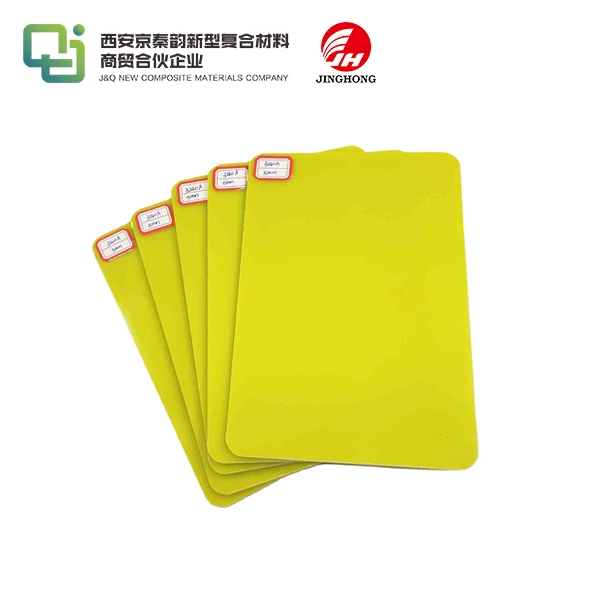
G10 vs FR4: Glass-Epoxy Laminate Selection Guide
2026-03-04 17:29:58
To choose the best glass-epoxy laminate between G10 and FR4 materials, you need to know how they work in important industrial settings and how their basic differences affect your choice. It is made up of woven glass cloth substrates that are impregnated with pure epoxy resin. G10 fiberglass plates and sheets are high-pressure thermosetting laminates that have great mechanical strength and electrical insulation qualities without any flame retardant additives. While brominated chemicals in FR4 make it fire-resistant, G10 is better for making electrical components, mechanical spacers, and precision industrial parts that need the best in structural integrity, dimensional stability, and machining.
What Are G10 and FR4 Glass-Epoxy Laminates?
To understand these two well-known laminate materials, you need to look at what they are made of, how they are made, and the unique qualities that make them useful for different industrial uses.
G10 Laminate Fundamentals
G10 fiberglass sheets are a specific type of high-pressure industrial laminates that are made by carefully stacking continuous filament glass cloth with an epoxy resin binder. These materials are put under a lot of heat and pressure during the making process. This makes a dense, solid structure that meets strict NEMA G-10 standards.
Through its pure epoxy-glass structure, G10 laminate is made to have the best mechanical properties possible. This material solves important problems in the industry, like losing its shape when temperatures change, losing its dielectric properties when it gets damp, and breaking mechanically when it's under a lot of tension. G10 doesn't absorb water nearly as much as paper-based phenolic materials do—usually below 0.1%. This means that its electrical insulating and stable shape don't change even when it's fully wet.
FR4 Laminate Overview
The flame-resistant type of glass-epoxy laminates is called FR4. They use brominated compounds to get UL94 V-0 grades for their flammability. This substance blends the strength of glass fiber reinforcement with the fire safety needs of electronic applications, especially printed circuit board substrates.
The fire-resistant epoxy resin mix in FR4 gives it good electrical and thermal qualities while still being able to put out fires on its own when they happen. PCB manufacturing, electronic enclosures, and electrical parts are all common uses where flame resistance is more important than final mechanical strength. With normal dielectric strengths between 15 and 20 kV/mm, FR4 has good dielectric properties and can be used in most electronic applications.
Historical Development and Market Evolution
As early as the 1950s, the aircraft industry was the first to use glass-epoxy laminates because they needed strong materials that were also light. G10 became the first high-performance version, made for mechanical and electrical uses that need to be as reliable as possible.
FR4 came on the market later, as the production of electronics grew. This was because more stringent fire safety rules needed flame-resistant PCB substrates. Adoption trends in the industry show that G10 is most common in mechanical applications, aerospace parts, and marine hardware. On the other hand, FR4 became the standard for electronic assembly and parts that need to be flame retardant. These changes in the past can be seen in how the markets are set up now, with G10 commanding higher prices for specialized uses and FR4 becoming widely used in electronics making.
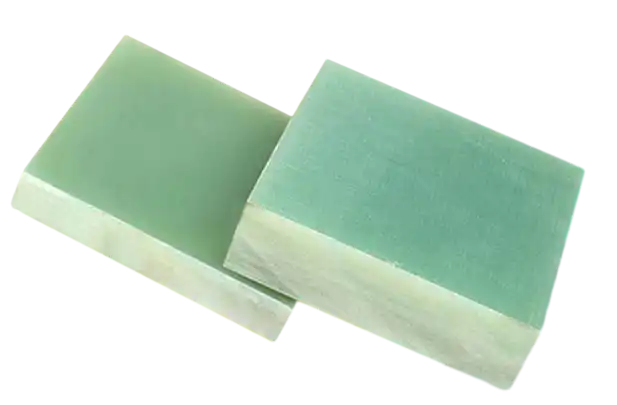
Key Performance Differences: G10 vs FR4 Material Properties
The basic performance traits of these materials decide which ones can be used in certain industrial settings and meet long-term dependability needs.
Electrical Insulation Performance
When you compare dielectric strengths, you can see that G10 usually has better insulation qualities because it is made of pure epoxy. The dielectric strength of G10 fiberglass boards is often higher than 20 kV/mm, while the dielectric strength of FR4 boards is between 15 and 20 kV/mm because they contain flame resistant additives that can slightly lower their insulation performance.
Volume resistivity research shows that both materials work well as electrical insulation, but G10 performs better across a wider temperature range. Because it doesn't contain any halogenated compounds, G10 is better for high-voltage applications because it has better arc resistance. This is because it lowers the chance of tracking and carbonization pathways. G10 has more stable electrical properties when subjected to thermal cycling, as shown by changes in its temperature coefficient. This makes it a better choice for precise electronic uses that need consistent dielectric performance.
Mechanical Strength Characteristics
G10 has better mechanical performance than FR4 because its flexural strength under load is usually higher than 400 MPa. FR4's range is only 300–350 MPa. This benefit comes from the fact that G10's resin system is optimized to focus on mechanical qualities without sacrificing flame retardant additives.
Similar patterns can be seen in the compressive strength properties, with G10 fiberglass plates being able to hold more weight in structural uses. A comparison of impact resistance shows that G10 usually has better resistance to sudden mechanical stress. This makes it perfect for uses where there is vibration, shock, or dynamic loading. Fatigue performance research shows that G10 has better long-term durability under repeated stress cycles, which is important for mechanical parts that are used all the time.
Thermal Stability and Heat Resistance
Differences in the glass transition temperatures show why G10 is better for use in high-temperature situations. While standard G10 can usually keep its shape up to 130°C of continuous operation, FR4 may start to lose its properties at the same temperatures because it is a flame retardant.
Different materials have different thermal decomposition limits. G10 has more predictable degradation patterns. Measurements of the coefficient of thermal expansion show that G10 usually expands less, which makes it more stable in terms of its shape when temperatures change. Long-term thermal aging behavior benefits G10 in applications that need to be exposed to high temperatures for a long time, because the pure epoxy system resists thermal degradation better than resins that have been modified to be flame retardant.
Chemical Resistance and Environmental Durability
The solvent resistance of both materials shows that they work well in most industrial settings. However, G10 is usually better at withstanding harsh chemicals because it is made of a pure epoxy matrix. With numbers usually below 0.1%, G10's moisture absorption rates are always higher than FR4's, which are only slightly higher.
A study of UV stability shows that both materials need protective coatings when used outside, since epoxy resins naturally soak up UV light. G10's pure resin method, on the other hand, tends to age more predictably. Performance in corrosive environments shows that G10 is more stable over time in naval and chemical processing settings where electrical properties and dimensional stability need to stay the same for long periods of time.
Application-Specific Selection Criteria
If you want to choose between G10 and FR4, you need to carefully look at the individual needs, operating conditions, and performance priorities in each industry.
High-Temperature Electrical Applications
For parts of power generation tools that need to be as thermally stable and mechanically strong as possible, G10 is usually the best choice. When motors and generators need insulation, G10 is often the best choice because it has better electrical qualities and doesn't break down easily when temperatures change, which can happen over time.
Specifications for transformer parts often call for G10 in structural situations where mechanical loads and electrical insulation needs to work together. G10's better arc resistance and dimensional stability make it useful for circuit breakers, especially in high-voltage switching equipment that needs to work reliably in harsh circumstances.
Precision Machining and Mechanical Components
Due to its cleaner cutting properties and lower dust production compared to FR4, G10 is better for CNC machining. During machining, G10 fiberglass sheets usually make less abrasive particulate matter, which leads to better surface finishes and longer tool life.
G10 is often used because it has a lower coefficient of thermal expansion and is better at resisting moisture in precision uses that need to keep the dimensions stable. The fact that G10 can be surface finished shows that it is better for tasks that need smooth, accurate surfaces, like sealing, bearing, or sliding contact. Because it doesn't wear down easily, G10 can be used for mechanical parts that are in settings with abrasive materials, friction, or sliding contact.
PCB Substrate and Electronic Assembly
Because it has the best dielectric properties for high-frequency performance, FR4 is usually the best choice for most electronic uses when it comes to signal integrity. The fact that FR4 is compatible with common electronic assembly methods, such as soldering, component mounting, and automatic manufacturing systems, shows how useful it is.
FR4 is often used in electrical assemblies for thermal management because it has been shown to be effective at managing heat loss while still being flame retardant. When UL94 V-0 flame retardancy standards are needed for high-volume electronic production, cost-effectiveness research usually points to FR4.
Aerospace and Defense Applications
G10 is often required by military standards for uses where best mechanical performance and resistance to the environment are more important than flame retardancy. When vacuum uses need to outgas, G10 is usually the best choice because it is mostly made up of epoxy and has very few volatile components.
Radiation protection needs may specify G10 for use in high-radiation areas where it is important that the material stays stable when exposed to ionizing radiation. Both materials are often better than metal ones when it comes to weight optimization, but G10 has a small edge when it comes to strength-to-weight ratios for structural parts.
Cost-Benefit Analysis and Procurement Considerations
When choosing a material, economic factors are very important. This means that both short-term prices and long-term benefits must be looked at for each application.
Material Cost Comparison
G10 usually commands a higher price for raw materials because it has special production needs and is made of a pure epoxy resin system. Processing and production costs may be lower for G10 in situations that need a lot of machining, since its better machinability can make up for higher material costs by cutting down on processing time and tool wear.
Because it costs less in bulk, FR4 is often a better choice for large-scale electronic applications. On the other hand, G10 is a better choice for specialized mechanical applications that need better performance qualities. To find the real economic value, a total cost of ownership study must look at things like how long something lasts, how often it needs to be maintained, and how often it needs to be replaced.
Supply Chain and Availability Factors
Because FR4 is used so often in electronics manufacturing, global supply networks usually have more of it. But specialized G10 suppliers can often offer better technical help and the ability to make changes for tough applications.
When it comes to lead times, FR4 usually wins for normal specifications, while G10 may need longer lead times for special grades or custom specifications. Different suppliers have different standards for quality consistency, so it is important to qualify suppliers and keep an eye on quality for both products. Diversifying suppliers and managing supplies are two ways to lower the risk of not having the right materials on hand for important projects.
Manufacturing Process Compatibility
Different materials need different kinds of machining tools. For example, carbide tools work best with G10 because they make cleaner cuts and better surface finishes. When both elements are being manufactured at high temperatures, processing temperature limits must be taken into account.
Bonding and assembly tests show that both materials can accept epoxy glue well, though the surfaces may need to be prepared in different ways. Quality control procedures should take into account the unique properties of each material, such as how sensitive it is to moisture, checking its dimensions, and testing its electrical properties as needed for the job.
Selection Decision Framework and Best Practices
Implementing systematic evaluation criteria ensures optimal material selection while minimizing risks associated with performance, procurement, and long-term reliability.
Performance Requirements Assessment
Critical property identification begins with understanding the primary performance requirements including mechanical strength, electrical insulation, thermal stability, and environmental resistance. Operating environment analysis should consider temperature ranges, humidity exposure, chemical contact, and mechanical loading conditions throughout the product lifecycle.
Safety and regulatory compliance requirements may mandate flame retardancy for electronic applications, favoring FR4, while mechanical applications may prioritize maximum strength, favoring G10. Long-term reliability expectations must account for material aging characteristics, environmental exposure effects, and maintenance accessibility throughout the intended service life.
Engineering Specification Guidelines
Material property verification requires establishing clear acceptance criteria for critical characteristics including dimensional tolerances, electrical properties, and mechanical performance parameters. Testing and validation protocols should include incoming material inspection, process qualification testing, and long-term performance monitoring.
Documentation requirements must address traceability, certification compliance, and change control procedures. Change management procedures should establish protocols for material substitution evaluation, supplier changes, and specification updates while maintaining performance integrity and regulatory compliance.
Supplier Evaluation Criteria
Technical capabilities assessment should evaluate supplier expertise in material manufacturing, quality control systems, and technical support services. Quality management systems must demonstrate consistent material properties, reliable delivery performance, and responsive customer service capabilities.
Delivery performance metrics should track lead time consistency, order accuracy, and packaging quality to ensure material integrity during transportation and storage. Technical support services become particularly important for specialized applications requiring application engineering assistance, material customization, or troubleshooting support.
Implementation and Quality Assurance
Incoming material inspection procedures should verify critical properties, dimensional accuracy, and visual quality before material release to production. Process validation procedures must confirm that manufacturing processes maintain material properties and achieve specified performance requirements.
Performance monitoring systems should track material behavior in actual applications, identifying potential issues before they affect product reliability. Continuous improvement protocols should incorporate lessons learned, supplier feedback, and application experience to optimize material selection and specification requirements over time.
Conclusion
The choice between G10 and FR4 glass-epoxy laminates depends fundamentally on application-specific requirements, with G10 excelling in mechanical strength, dimensional stability, and electrical performance for demanding industrial applications, while FR4 provides essential flame retardancy for electronic assemblies. Understanding these materials' distinct characteristics enables engineering teams to make informed decisions that optimize performance, cost-effectiveness, and long-term reliability. Successful material selection requires comprehensive evaluation of operating conditions, regulatory requirements, and lifecycle expectations to ensure optimal performance in critical applications.
FAQ
What is the primary difference between G10 and FR4 laminates in terms of fire safety?
FR4 contains brominated flame retardants that provide superior fire resistance compared to standard G10, making FR4 compliant with UL94 V-0 flammability standards, while G10 focuses on mechanical strength and electrical properties without flame retardant additives.
Can G10 and FR4 be used interchangeably in electrical applications?
While both offer excellent electrical insulation, they're not always interchangeable. FR4 is preferred for applications requiring flame retardancy like PCBs, while G10 excels in high-mechanical-stress applications where maximum strength is critical and flame retardancy is less important.
How do processing and machining requirements differ between G10 and FR4?
G10 typically machines more cleanly due to its pure epoxy-glass construction, producing less dust and achieving better surface finishes. FR4 may generate more particulate matter during machining due to flame retardant additives, requiring enhanced ventilation and dust collection systems.
What are the long-term cost implications of choosing G10 vs FR4 for large-volume applications?
G10 often provides better long-term value in mechanical applications due to superior durability and dimensional stability, while FR4 offers cost advantages in electronic applications where flame retardancy is mandatory and prevents the need for additional fire protection measures.
Partner with J&Q for Premium G10 Laminate Solutions
Selecting the optimal glass-epoxy laminate for your critical applications requires expertise, quality materials, and reliable supply chain support. J&Q brings over 20 years of manufacturing excellence in insulating materials and more than 10 years of international trade experience to serve as your trusted G10 supplier. Our comprehensive capabilities include in-house production, rigorous quality control systems, and integrated logistics services through our own transportation company, ensuring seamless one-stop solutions for your laminate requirements. Whether you need precision-cut G10 fiberglass sheets for aerospace applications or custom-machined components for electrical equipment, our technical team provides expert consultation and material optimization support. Contact our engineering specialists at info@jhd-material.com to discuss your specific G10 requirements and experience our commitment to delivering superior laminate solutions with exceptional service reliability.
References
National Electrical Manufacturers Association. "NEMA Standards Publication LI 1-1998: Industrial Laminating Thermosetting Products." Rosslyn, VA: NEMA, 1998.
Harper, Charles A., ed. "Modern Plastics Handbook: Modern Plastics and Elastomers." McGraw-Hill Professional, 2000.
Lubin, George, ed. "Handbook of Fiberglass and Advanced Plastics Composites." Van Nostrand Reinhold Company, 1969.
Mallick, P.K. "Fiber-Reinforced Composites: Materials, Manufacturing, and Design, Third Edition." CRC Press, 2007.
Schwartz, Mel M. "Composite Materials Handbook, Second Edition." McGraw-Hill, 1992.
Underwriters Laboratories Inc. "Standard for Tests for Flammability of Plastic Materials for Parts in Devices and Appliances UL 94." Northbrook, IL: UL, 2013.
_1740986340093.webp)