
What Factors Affect the Glass Transition Temperature (Tg) of Epoxy Resins?
2026-04-02 16:49:43
The chemical make-up, crosslink density, curing conditions, and mix of additives all have a big effect on epoxy resin's glass transition temperature (Tg). These thermosetting polymers change from stiff, glassy states to flexible, rubbery states at certain temperatures set by the limits of molecular mobility. When the chemical backbone is rigid, Tg values go up a lot. This is especially true when aromatic ring structures are present in bisphenol-based formulations. Crosslink density controls how freely molecules can move, and curing parameters and post-treatment processes make the final thermal performance better in ways that are useful in industry.
Understanding Glass Transition Temperature (Tg) in Epoxy Resins
It is important to know the glass transition temperature, which is the temperature at which epoxy resin materials change from being hard and glass-like to being flexible and rubber-like. This change doesn't happen all at once, but rather slowly over a temperature range. This is very important for engineering tasks that need precise thermal performance parameters.
The Physics Behind Tg Behavior
When temperatures rise above the Tg level, some parts of polymer chains gain enough heat energy to push molecules past the forces that hold them together. This makes molecules move faster. When it comes to mechanical properties, this change has a big impact on things like modulus, resistance to impact, and size stability. To guess how things will act when temperatures change, engineers need to know about these changes.
Critical Performance Implications
For example, Tg changes a number of important performance traits that show how well something works in certain situations. When materials are used above their Tg, their modulus drops by a large amount, which could make the structure less strong. Low Tg formulations, on the other hand, that stay tough at service temperatures are better for uses that need to be flexible.
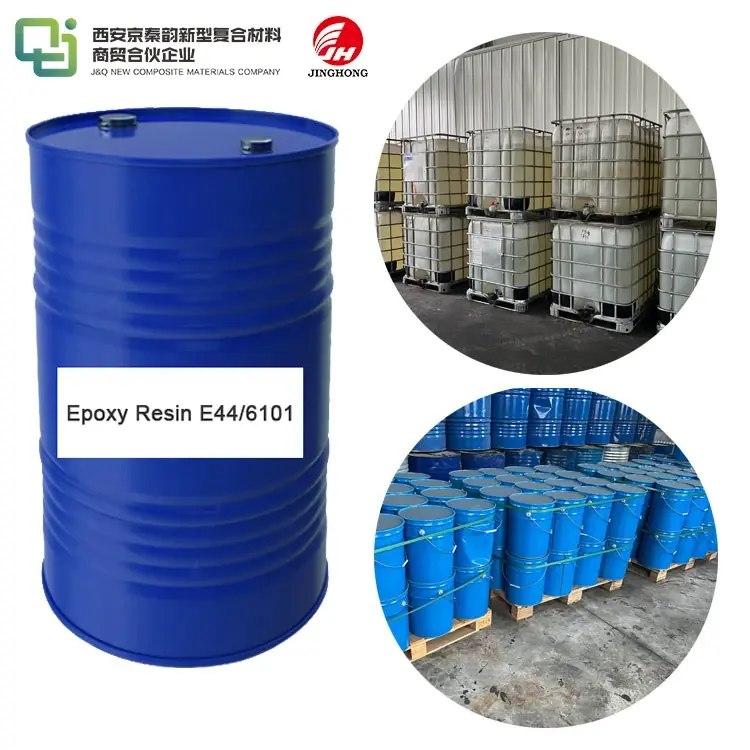
Key Factors Influencing the Glass Transition Temperature (Tg) of Epoxy Resins
The final Tg properties of epoxy systems that have hardened depend on a lot of factors that are all linked to one another. You can pick the right materials and process them in the best way to meet your performance needs if you know about these things.
Chemical Structure: The Fundamental Determinant
The molecules' shape is the main thing that determines how Tg acts in epoxy systems. It is hard for molecules to move in structures with rigid backbones and aromatic rings. This makes transition temperatures rise.
Here are the main parts of Tg's structure that determine how well it works:
- Aromatic Ring Systems: In bisphenol A epoxy resin, the benzene rings are stiff, which keeps the chains from moving. What this means is that their Tg values are usually 20–40°C higher than those of aliphatic chemicals with the same molecular weight.
- Flexible Chain Segments: Polyether linkages and aliphatic spacers make molecules more flexible, which lowers Tg and improves performance at low temperatures and in impact tests.
- Functional Group Effects: Ester and ether bonds make it easier for the material to change shape. This lowers the glass transition temperatures but may make it easier to work with and stick to things better.
These structural variations allow formulators to balance thermal performance with mechanical properties according to specific application requirements. Material selection must consider the trade-offs between high-temperature stability and flexibility characteristics.
Crosslink Density and Network Architecture
The three-dimensional network structure that forms during curing has a lot to do with how a material changes temperature. Networks with more crosslinks are stiffer, which stops molecules from moving and raises Tg values by a large amount.
Crosslink density depends on several things that can be changed during the making and mixing process, such as
- Curing Agent Selection: When picking a curing agent, anhydride hardeners often create higher crosslink densities than amine systems. This can cause Tg to rise by 15 to 30°C, depending on the mix composition and curing conditions.
- Stoichiometric Ratios: The best amount of hardener for crosslinking is found by making the concentration as high as possible. If there is too much or too little, it can weaken the network and bring down the final Tg values.
- Multifunctional Components: Adding hardeners or polyfunctional epoxides can increase crosslink density but shorten the pot life and make processing less flexible.
To make network architecture better, you need to find the best balance between the number of crosslinks, the amount of processing that needs to be done, and the desirable properties. When crosslinking goes too far, it can make things break easily when they are hit.
Curing Conditions and Process Optimization
When something is curing, the temperature and time have a big impact on both the formation of crosslinks and the final Tg properties. When the cure is done at the right time, the reaction is fully changed and the thermal performance is at its best.
How the curing temperature changes things clearly shows that there are connections between the steps in the process and the final features:
- High-Temperature Curing: When you work at 150°C or higher, crosslinking happens faster and Tg can go up by 40 to 60°C compared to cures done at room temperature.
- Extended Cure Times: Higher conversion rates are reached when reaction times are longer at moderate temperatures. This raises Tg while reducing the growth of internal stress.
- Post-Cure Treatments: After the cure, there are treatments that improve crosslinking even more. These include step-by-step heating protocols that can raise Tg by an extra 10–20°C while releasing residual stresses.
When you optimize a process, you need to think about what the equipment can and can't do, the shape of the parts, and how fast you need to make them. When curing isn't done right, the Tg values drop and the mechanical properties get worse.
Additive Effects on Thermal Performance
Adding different things to epoxy resin changes its properties and how it acts when it turns into glass. You can make the best formulation for your performance goals once you know how these things work together.
Plasticizers are more flexible, but they also lose heat in a number of ways.
- Free Volume Increase: When low molecular weight plasticizers are added, they make more space between polymer chains. This lowers the intermolecular forces and Tg by 15–35°C, depending on the concentration.
- Chain End Effects: Reactive diluents that only do one thing can end chains, which lowers the crosslink density and thermal performance.
- Compatibility Issues: If the plasticizers don't work well together, they may separate into different phases and their properties may change quickly over time.
Fillers that reinforce, on the other hand, tend to make things more thermally stable by stopping molecules from moving around and making it easier for them to interact with each other in the cured matrix.
Comparative Analysis of Epoxy Resin Types Based on Tg Characteristics
Many types of epoxy have different Tg ranges because of the chemicals they contain and what they are meant to be used for. When procurement teams know about these differences, they can choose materials that will work well in a range of temperatures.
Standard Bisphenol A Systems
This type of epoxy is most often conventional bisphenol A diglycidyl ether (BADGE) resins. They are well-balanced, which means they can be used for many things. With the right hardeners, these systems usually reach Tg values between 80°C and 120°C when they are fully cured.
Standard systems always work the same way, with good adhesion, average chemical resistance, and predictable processing behavior. They are cheap and easy to find, so you can use them to protect against electricity, bond structures together, and make coatings.
High-Performance Specialty Formulations
Advanced epoxy resin systems use monomers and additives that were specially made to give better thermal performance for tough applications. As long as the Tg value is above 180°C, these mixtures still have great mechanical properties.
Novolac epoxies use multifunctional structures that create highly crosslinked networks with exceptional thermal stability. Trifunctional and tetrafunctional epoxides similarly achieve high Tg values but require careful processing to avoid excessive brittleness.
Flexible and Toughened Variants
Modified epoxy systems incorporate rubber particles or thermoplastic segments to improve impact resistance and flexibility. These modifications typically reduce Tg values but enhance fracture toughness and thermal shock resistance.
Formulations that are flexible are used when resistance to vibration, impact, or thermal cycling is more important than just thermal performance. You can get the best performance for a certain service condition by making sure that thermal stability and flexibility are well balanced.
Practical Implications for Procurement and Application
To pick the right Tg values, you need to make sure that the material's properties match the needs and conditions of service. This analysis helps teams that buy things pick the best materials that work well and don't cost too much.
Application-Specific Tg Requirements
Different industries need different Tg properties based on the temperatures they work at and the conditions of their surroundings. For electronics, Tg values 40 to 60°C above the highest service temperatures are often needed to keep the shape stable and the electrical properties.
Parts for cars go through thermal cycling from -40°C to 150°C, so they need Tg values that let them be flexible at low temperatures and strong at high temperatures. In aerospace, parts that are used for structure often need even better thermal performance, with Tg values above 200°C.
Quality Control and Batch Consistency
To make sure that Tg values stay the same from batch to batch, suppliers must be carefully screened and new materials must be put through tests. Differential scanning calorimetry (DSC) gives precise Tg readings that can be used to manage the process and check the quality.
Here are essential quality control considerations for epoxy resin procurement:
- Supplier Certification: Quality management systems that have been checked make sure that the properties of raw materials stay the same and that controls for processing stay in line with Tg specifications.
- Batch Testing Protocols: Regular DSC analysis checks that Tg values meet requirements and looks for any changes to the formulation that might have an impact on performance.
- Storage Condition Monitoring: Keeping an eye on the temperature and humidity stops things from curing too quickly or getting dirty, which could change the thermal properties.
These quality controls make sure that changes in performance don't happen that could make the final product less safe and reliable in important situations.
Cost-Performance Optimization
When cost and Tg need to be balanced, the best material for the job can be picked. Formulations with a higher Tg level usually cost more since they need to be processed in a more complicated way and use special monomers.
Value engineering finds the lowest Tg values that still meet performance needs without calling for too many expensive high-performance materials. In this analysis, the full lifecycle costs should be looked at. These include things like processing, reliability, and maintenance.
Conclusion
In many fields, the glass transition temperature is one of the most important properties that tells us what the best uses are for epoxy resin. The way Tg acts is based on its chemical structure, and the crosslink density, curing conditions, and additives used can be fine-tuned to meet specific performance needs. When engineers and people who work in procurement know about these links, they can make choices that improve performance and cut costs. You can be sure that the material you choose will work reliably across the expected service temperature ranges if you choose it based on its Tg properties. However, you can still make mistakes in important situations. It keeps getting better because the molecular structure, the parameters used for processing, and the final properties all work together.
FAQ
What is the typical Tg range for commercial epoxy resins?
For most commercial epoxy systems, the Tg value is between 60°C and 200°C, but it depends on how the mixture is made and how it cures. Standard bisphenol A systems can handle temperatures between 80°C and 120°C, but high-performance ones can handle temperatures above 180°C. Most of the time, systems that are cured in heat have higher Tg values than systems that are cured at room temperature.
How does improper curing affect Tg and overall performance?
Tg values drop a lot and mechanical properties change when curing isn't done right. Systems that aren't fully cured may have Tg values 30–50°C lower than materials that are fully cured. This can make them soften too quickly and lose their strength. Chemicals and water can also get through more easily when crosslinking isn't done all the way.
Can additives improve Tg without compromising other properties?
Some reactive and strengthening additives can make the Tg higher while also making some properties better. Most of the time, nano-silica fillers raise Tg by 10 to 20°C. They also make the material stronger and less likely to break. This isn't always the case, though. Most additives have properties that are better or worse depending on how well they work at high temperatures.
What testing methods accurately measure Tg in epoxy systems?
The most accurate way to measure Tg is with differential scanning calorimetry (DSC), which finds the point where the curves for heat capacity versus temperature start to bend. We can learn more from dynamic mechanical analysis (DMA) by checking how modulus changes with temperature. Each method needs samples that have been dried properly and heating rates that can be managed in order to give accurate results.
Partner with J&Q for Superior Epoxy Resin Solutions
You need to know a lot about chemistry and have strong relationships with suppliers in order to pick the best epoxy resin with the right Tg properties. Since J&Q has been making insulating sheets for over 20 years, they know a lot about how to meet the thermal performance needs of many different industrial types. Our technical team helps engineers match Tg specifications with operational needs, and strict testing protocols make sure that the quality is always the same. Some of the best places to buy epoxy resin are the ones we keep a lot of on hand, so we can quickly finish projects that need to be done. Contact our experts at info@jhd-material.com to talk about your specific Tg needs and find out how our integrated logistics can help you buy things faster while still maintaining the highest quality standards.
References
May, Clayton A. "Epoxy Resins: Chemistry and Technology, Second Edition." Marcel Dekker Inc., 1988.
Ellis, Bryan. "Chemistry and Technology of Epoxy Resins." Chapman & Hall, 1993.
Pascault, Jean-Pierre, et al. "Thermosetting Polymers: Structure, Properties and Applications." Marcel Dekker Inc., 2002.
Prolongo, S.G., et al. "Effects of Different Carbon Nanotubes on the Cure Kinetics of Epoxy Resin." Polymer, Vol. 46, 2005.
Ratna, Debdatta. "Handbook of Thermoset Resins: Chemistry, Processing and Applications." Smithers Rapra Technology, 2009.
Wang, Xiaodong, et al. "Glass Transition Temperature of Epoxy Resin Systems: Molecular Dynamics Simulation and Experimental Validation." Journal of Applied Polymer Science, Vol. 142, 2021.

_1753952475136.jpg)
