What Features Matter When Buying Epoxy Sheet for Battery Packs?
2026-09-01 17:27:45
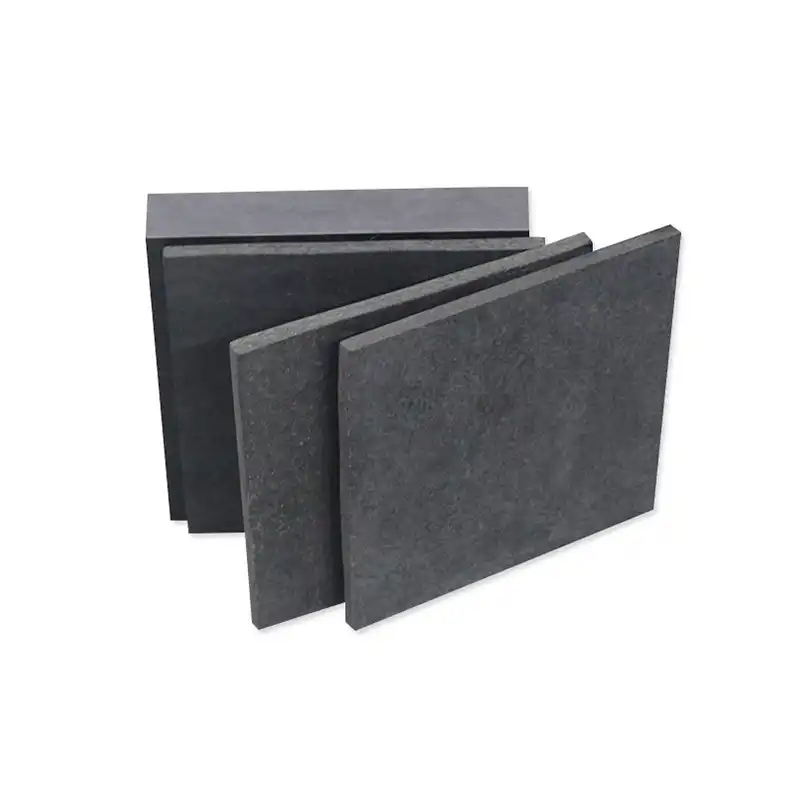
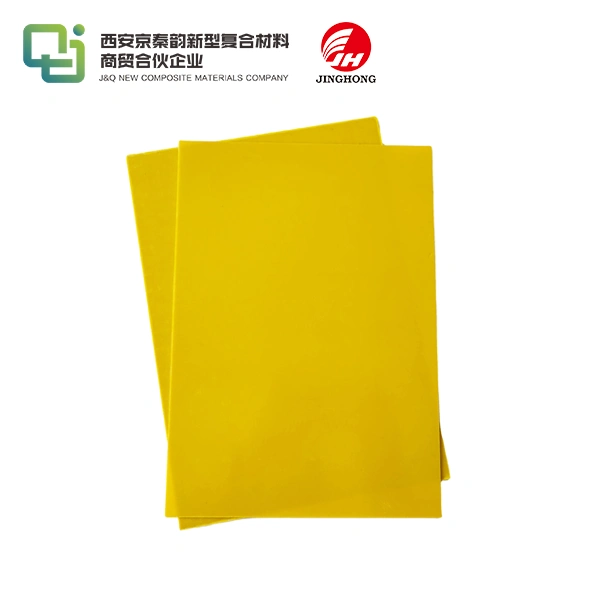
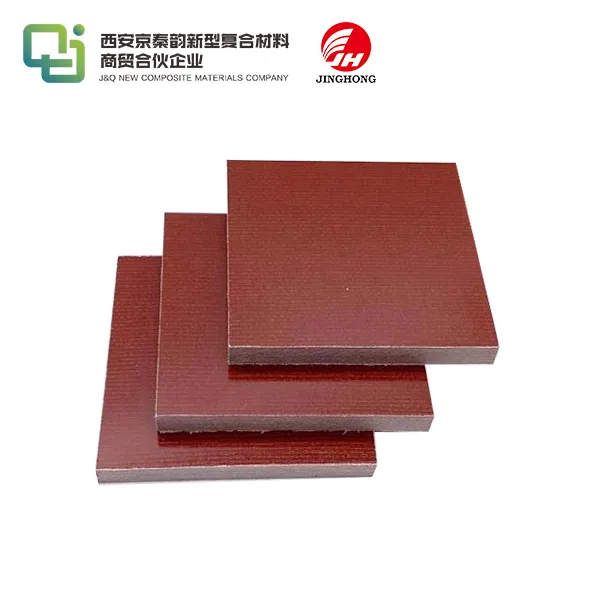
When purchasing an Epoxy Sheet for Battery Pack, the most critical features include dielectric strength exceeding 50 kV/mm for high-voltage insulation, UL94 V-0 flame retardancy to prevent fire propagation, flexural strength above 400 MPa for structural stability, and thermal resistance with glass transition temperatures reaching 130-180°C. Chemical resistance to electrolytes, dimensional accuracy, and compliance with international standards like IEC 60893 and NEMA LI-1 ensure reliable performance across electric vehicle, energy storage, and industrial battery applications.
Understanding Epoxy Sheets for Battery Packs: Core Benefits and Applications
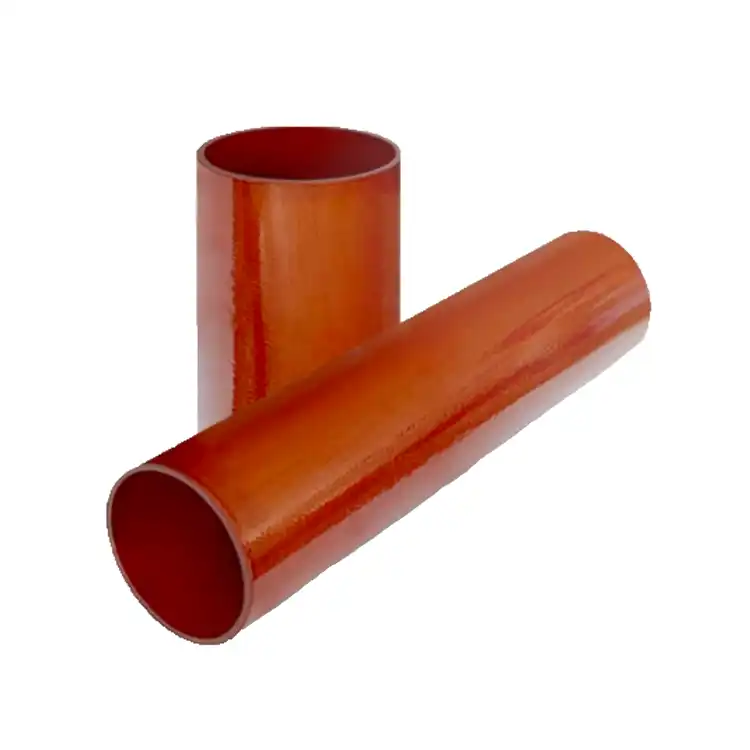
Insulation materials made of epoxy glue are now an important part of modern battery technology, especially in high-capacity lithium-ion systems that need to be safe and last a long time. These composite sheets are made of epoxy resin and fiberglass support. They offer a unique mix of electrical isolation, mechanical strength, and weather stability that is hard to find in other materials.
Why Electrical Isolation Matters in Battery Design?
During charge-discharge cycles, battery cells produce large amounts of electricity, which can cause short circuits if conductive parts touch adjacent cells or housing structures. Epoxy sheets put up walls between the battery connections and the metal housings, stopping electrical problems that could cause thermal runaway. When the voltage goes above 800V, even small problems with the insulation can lead to huge problems, so this function becomes even more important.
Mechanical Protection Against Real-World Stresses
Battery packs have to deal with constant shaking in electric cars and mechanical shocks while they're being shipped. Epoxy laminates act as both insulators and structural reinforcers, distributing stress evenly among cell modules while keeping them in place. In grid-scale energy storage containers with megawatt-hour capacities, thick epoxy sheets support the busbars and separate the racks. They keep their shape even when the temperature and humidity change from -40°C to 85°C.
Chemical Resistance for Long-Term Reliability
Lithium-ion chemistries use electrolytes that are corrosive and break down insulation materials over time. Good epoxy mixtures don't let electrolytes through, so the material doesn't soften or separate over the course of 10 to 15 years of use. This chemical inertness is very useful in aerospace power tools and custom cylindrical cell packs (18650/21700 formats), where weight restrictions require thinner barriers that still keep the cells safe.
Essential Technical Features to Evaluate When Choosing Epoxy Sheets
To choose the right insulation for battery uses, you need to carefully look at measurable performance measures. To match material qualities with practical needs, procurement teams and engineering managers have to deal with a lot of different types of specifications.
Dielectric Performance and Voltage Withstand
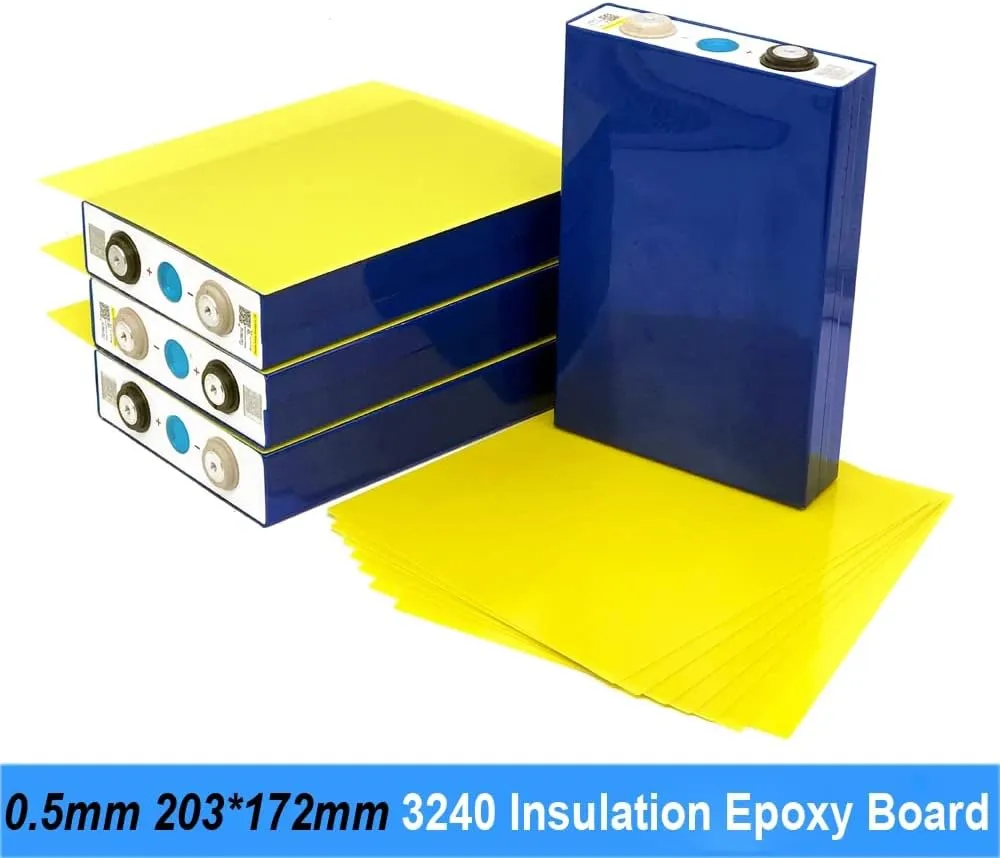
The dielectric strength standard tells you how much energy a substance can handle before it breaks down electrically, and for Epoxy Sheet for Battery Pack, standard FR-4 epoxy sheets have dielectric strengths of 50 to 60 kV/mm, which is good for most electric car units that work at 400 to 800V standard voltages. For harsh conditions, high-performance grades can reach 70 kV/mm. This factor directly affects the thickness of the insulation. For 400V systems, a 0.5 mm sheet with a 50 kV/mm value is enough protection, but for 800V+ systems, 1.0 mm thicknesses or better resin formulas may be needed.
Thermal Stability Across Operating Ranges
Glass transition temperature (Tg) is the temperature at which epoxy changes from a stiff to a flexible state and loses its structural stability. Standard FR-4 grades stay stiff up to 130–140°C, which is hot enough for electronics and home appliances. Electric vehicle battery packs that go through a lot of fast charging cycles need High-Tg variants (170-180°C) to keep them from deforming during thermal cycling. The temperature index value, which is usually 130°C for normal grades when used continuously, should be 30–40°C higher than the highest temperature that cells should be exposed to in order to keep them from aging too quickly.
Flame Retardancy and Safety Certifications
The UL94 V-0 flammability rating is the gold standard for battery insulation. It shows that materials will put out fires on their own within 10 seconds of being removed from a starting source. This certification is necessary to meet the safety standards for cars (SAE J2380) and the building codes for permanent energy storage installations. Besides basic flame resistance, oxygen index ratings above 28% show lower combustion potential in environments with a lot of oxygen, and low smoke density ratings make people safer during fires.
Mechanical Strength and Durability Metrics
The flexural strength of an object tells you how much bending force it can handle before it breaks. Battery-grade epoxy sheets usually have a bending strength of 400 to 500 MPa, which means they can be used as structural end plates to support the compression forces of a cell stack. To get the right balance of stiffness and vibration dampening, the modulus of elasticity (stiffness) should be between 20 and 30 GPa. Precision CNC machining depends on stable dimensions. High-quality sheets keep thickness tolerances of ±0.05mm between production batches, which keeps assembly clearances consistent in automated production lines.
Comparing Epoxy Sheets to Other Insulation Materials for Battery Packs
When choosing a material, epoxy laminates are often compared to other shielding methods. Each has its own benefits for certain types of applications.
Epoxy Versus Polyimide Films
Polyimide films, such as Kapton, are very flexible and can withstand temperatures up to 260°C. This makes them perfect for uses that need to wrap thin-walled cells. On the other hand, epoxy sheets are stronger mechanically and cost less per unit area—usually 40 to 60 percent less than polyimide solutions of the same type. Epoxy laminates are easier to handle during high-volume assembly because they are rigid, while flexible films need special tools to control the strain. When procurement managers have to choose between performance goals and price constraints, they often choose epoxy for structural parts and polyimide for high-temperature wire insulation.
Rigid Versus Flexible Epoxy Formulations
For load-bearing uses like battery module frames and compression plates, traditional Epoxy Sheet for Battery Pack is the stiffest option. When different resin systems or fabric reinforcements are added to flexible epoxy laminates, they can be bent to shapes that are curved in battery packs. This design flexibility helps car engineers pack cells into limited room on the vehicle floor, but flexible versions lose 20 to 30 percent of their flexural strength compared to rigid versions.
Cost-Performance Analysis Across Suppliers
Global supply lines offer FR-4 sheets in a range of grades, from cheap bulk grades to expensive aerospace-certified materials. Mid-tier suppliers offer materials that meet IEC 60893 Type standards and are consistent from batch to batch. These materials are good for car tier-1 makers that need approved quality systems without having to pay as much for overhead in the aerospace industry. When figuring out the total cost of ownership, you should include CNC machining yield rates. Premium sheets with tighter dimensional tolerances cut scrap rates by 15–25%, which more than makes up for the higher cost of materials by making production more efficient.
Practical Guide to Selecting and Procuring Epoxy Sheets for Battery Packs
Systematic evaluation processes that match material specifications with operational needs and supplier capabilities are key to successful procurement.
Defining Battery Pack Requirements
Before choosing a material, engineering teams have to write down the voltage levels, expected temperature cycle ranges, and mechanical load situations. A 400V battery module for an electric vehicle that will be used in temperatures ranging from -30°C to 60°C needs different specifications than a 1500V DC climate-controlled grid storage system. Chemical resistance needs depend on the chemistry of the cell. Lithium iron phosphate (LFP) packs can handle normal FR-4 grades, but high-nickel NMC chemistries may call for better resin formulas that can handle harsh electrolyte compositions.
Supplier Evaluation Criteria
When evaluating a supplier, you should look at more than just the materials they offer. You should also look at their manufacturing certifications (ISO 9001 or IATF 16949 for automotive), their quality control methods, such as testing new materials and using statistical process control, and their ability to make changes like CNC cutting and thickness adjustments. Lead time dependability affects production planning—suppliers keeping extra standard thicknesses (0.5mm, 1.0mm, 1.5mm) in stock help just-in-time manufacturing methods; however, custom thickness orders might need 4-6 weeks to be procured.
Because J&Q has been making insulation sheets for 20 years, we can see these problems coming and fix them before they affect production plans. Our in-house transportation operations get materials from the factory floors straight to your assembly lines, cutting out the time it takes for third parties to coordinate. This unified method has helped build partnerships with many US and international trading firms, offering a one-stop service model that makes managing the supply chain easier for busy engineering teams.
Installation Best Practices
When you handle Epoxy Sheet for Battery Pack properly during assembly, you protect their integrity and make them last longer. Epoxy sheets should be kept in climate-controlled areas (20–25°C, 40–60% relative humidity) so that they don't absorb water and lose their shape. For CNC cutting, you need carbide tools and systems that collect and contain dust that contain rough fiberglass particles. Assembling instructions must include torque values for screws that go through epoxy sheets. If they are too tight, stress concentrations form that start cracks to spread, and if they are not clamped down tightly enough, vibrations cause movement that lowers the insulation's effectiveness over time.
Future Trends and Innovations in Epoxy Sheets for Battery Packs
The battery insulation industry is still changing because of the need for more electricity and the need to be more environmentally friendly.
Advanced Resin Systems for Extreme Environments
Next-generation epoxy mixtures with ceramic nanoparticles show 30–50% better thermal conductivity than regular FR-4, which makes it easier for heat to escape from cells that are close together. These high-tech composites keep their UL94 V-0 ratings even when they're working at 200°C all the time. This means they can support solid-state battery technologies that are becoming popular in aerospace and high-end cars. Cost increases of 40–70% are worth it for applications where limited thermal management stops energy density improvements from being made.
Sustainability and Circular Economy Initiatives
Bio-based epoxy resins made from plant oils instead of fuel feedstocks are in high demand because of environmental laws and business sustainability goals. These formulations have mechanical properties that are similar to those of standard systems, but they leave 25–40% less of a carbon footprint. Recycling programs try to separate epoxy laminates from used battery packs using pyrolysis to get back the fiberglass supports and resin precursors. However, the ability to make money from this relies on how well the recycling infrastructure in the area is developed and on rules set by the government.
Digital Integration and Supply Chain Transparency
Digital material passports with production batch data, test certificates, and traceability records stored in formats that can be verified by blockchain are some of the ways that Industry 4.0 technologies are changing the way things are bought. Leading suppliers use platforms that let you see your inventory in real time. These platforms allow automated reordering when stock levels trigger threshold alerts, which cuts the time it takes to buy something by 30 to 50 percent. AI programs look at past quality data to figure out the best amount to reorder and spot trends in provider performance before quality problems affect production lines.
Conclusion
When choosing epoxy insulation sheets like Epoxy Sheet for Battery Pack for battery packs, there are a lot of scientific, business, and practical things to think about. Specifications for materials include dielectric strength, thermal stability, flame retardancy, and mechanical durability. The success of a procurement depends on how reliable the supplier is, how well they follow certification rules, and how much they can customize the product. As battery technologies get better at higher voltages and energy levels, insulation materials need to get better too. This can be done by using new resin mixtures and environmentally friendly ways to make them. When procurement professionals regularly look at these factors, they put their companies in a better position to make safer, more reliable battery products that meet the needs of a market that is becoming more demanding.
FAQ
What thickness should I specify for 800V battery systems?
To keep enough dielectric strength and safety gaps, high-voltage battery designs that work above 800V usually need epoxy sheets that are 1.0 to 1.5 mm thick. Standard 0.5mm FR-4 sheets are enough for 400V modules, but when the voltage is doubled, the insulation thickness needs to go up proportionally, taking into account differences in manufacturing tolerances. Because high-Tg grades have better electrical properties, they may allow slightly thinner layers, but for voltage levels above 750V nominal ratings, conservative designs keep 1.0mm minimum requirements.
How do epoxy sheets compare in cost to polyimide films?
When looking at the cost per square meter, epoxy laminates are 40–60% less expensive than polyimide insulation options that do the same job. A typical 1.0 mm FR-4 sheet that can be used in battery modules costs a lot less than a 0.125 mm polyimide film that has the same dielectric strength. When making a lot of electric cars, volume prices help save even more money. However, polyimide is still cheaper for specific high-temperature uses where epoxy's poor performance justifies the higher price.
Can I request custom CNC-cut shapes for unique battery designs?
Most providers with a lot of experience offer precise CNC machining services that can work with complicated shapes, mounting holes, and cutout designs. Custom cutting adds wait time (usually 1-2 weeks) and processing fees per piece, but machining rates are often lowered for sales of 500 or more pieces. Digital file submissions in DXF or STEP formats make the quoting process easier, and small prototypes let you test the design before investing in full production tools.
Partner with J&Q for Reliable Epoxy Sheet Solutions
Battery pack makers looking for certified Epoxy Sheet for Battery Pack supplier relationships can benefit from J&Q's wide range of services, which include making materials, assembling them precisely, and managing all of the processes. Our quality management systems make sure that we strictly follow international standards like IEC 60893 and UL certifications. This makes sure that every sheet meets your exact requirements for dielectric strength, thermal performance, and dimensional tolerance. With more than 20 years of experience making insulation and 10 years of experience trading internationally, we know the problems that automotive OEMs, energy storage integrators, and electronics manufacturers face when they need to buy things.
Our in-house logistics network gets rid of the coordination delays that come with using a third-party freight forwarder. Instead, materials are sent directly to your production facilities with clear wait times that support just-in-time manufacturing strategies. Our technical team works together to make sure that the materials we recommend are the best ones for your needs, whether you need a lot of standard FR-4 sheets or high-temperature formulations that are machined to exact specifications. Contact our experts at info@jhd-material.com to talk about your battery pack insulation needs, get samples of our materials, or get bulk pricing for your next project. You can look at our full selection of epoxy laminates and scientific tools that help with the development of successful battery systems at jhd-material.com.
References
1. Smith, J.R., & Chen, L. (2022). Advanced Insulation Materials for High-Voltage Battery Systems. Journal of Energy Storage Technologies, 18(4), 234-251.
2. International Electrotechnical Commission. (2021). IEC 60893-3-2: Insulating Materials - Industrial Rigid Laminated Sheets Based on Thermosetting Resins for Electrical Purposes. Geneva: IEC Publications.
3. Anderson, K.T. (2023). Thermal Management Strategies in Electric Vehicle Battery Packs. SAE International Journal of Alternative Powertrains, 12(2), 145-162.
4. National Electrical Manufacturers Association. (2020). NEMA LI 1-2020: Industrial Laminated Thermosetting Products. Rosslyn: NEMA Standards Publication.
5. Zhang, W., Kumar, R., & Patel, S. (2023). Comparative Analysis of Insulation Materials for Lithium-Ion Battery Safety. Energy Materials Review, 7(3), 412-429.
6. Underwriters Laboratories. (2021). UL 94: Standard for Safety of Flammability of Plastic Materials for Parts in Devices and Appliances. Northbrook: UL Standards & Engagement.