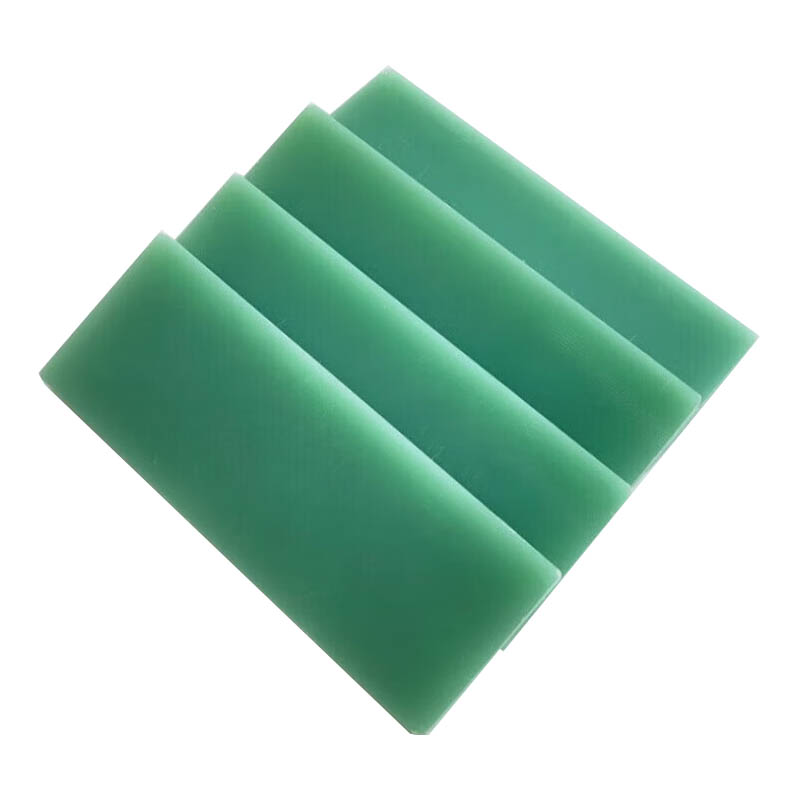
What is the Flexural Modulus of Phenolic Paper Board?
2026-04-24 17:07:30
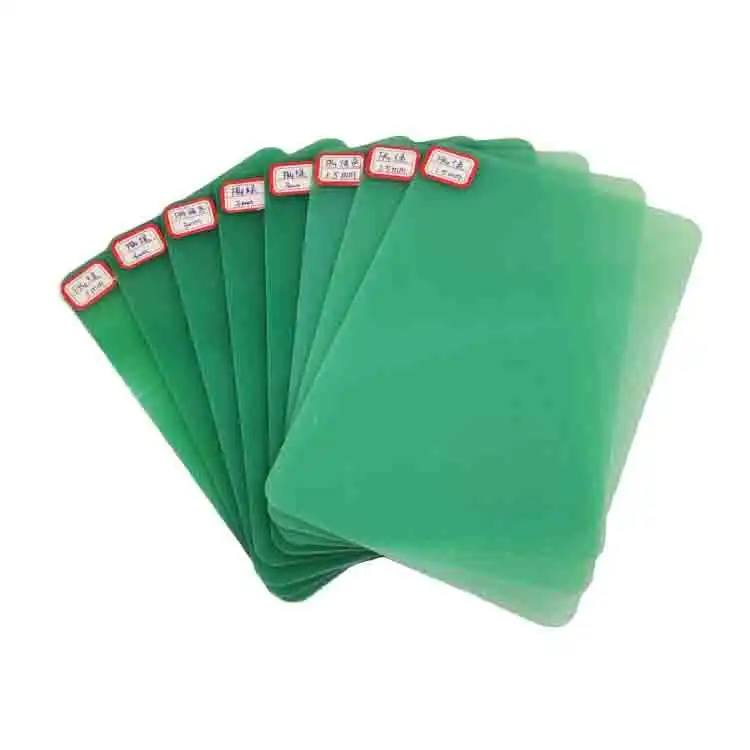
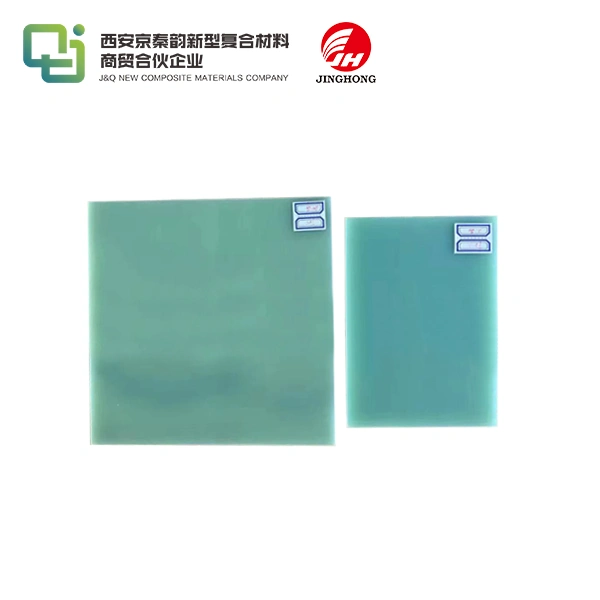
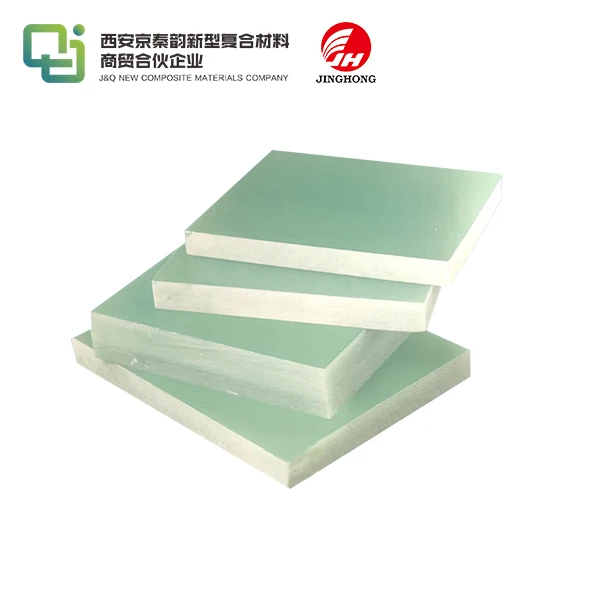
Depending on the grade and manufacturing specifications, the flexural modulus of phenolic paper board usually falls between 6.5 and 10 GPa. This number measures how resistant the material is to bending and deformation when loaded. It basically measures how rigid the laminate stays when it's under stress. This number goes up when there is more resin and denser paper layers. When engineers and procurement specialists know about this parameter, they can better match the performance of a material to the needs of an application. This is true whether they are building high-voltage switchgear, PCB drilling backup boards, or structural jigs that need to stay stable in their dimensions under mechanical stress.
Understanding Phenolic Paper Board and Its Mechanical Properties
Manufacturing Process and Composition
The first step in making phenolic paper board is to carefully cover layers of high-quality kraft paper with a thermosetting phenolic glue. The assembly goes through high-pressure consolidation (about 1000 psi) and high-temperature hardening. Using this method, different sheets of paper and liquid resin are combined to make a rigid, uniform laminate whose mechanical properties can be predicted. The chemical backbone is the phenolic resin matrix, and the cellulose paper fibres make the structure stable and easy to work with.
The composite that was made fills in a big gap in industry materials. Paper-based phenolic boards can be machined smoothly with carbide tools, while glass-based laminates need diamond tools and make a lot of dust. The structure of these laminates stays strong up to 110–120°C continuous working temperatures, while pure plastics melt at higher temperatures. This placement makes the material especially useful for uses that need a modest amount of mechanical strength along with great electrical insulation.
Key Mechanical Characteristics
In addition to its flexural modulus, phenolic paper board has a number of other qualities that affect how well it works in real life. The material has a flexural strength greater than 135 MPa along its length, which means it can handle strong twisting forces before breaking. Compressive strength stays strong even when loaded for a long time, which means it can be used for structural support in electrical boxes.
The "punchability" property described in ASTM D709 guidelines is something that engineers really like. The material can be hot-punched into complicated forms without coming apart, which is a very important property for making a lot of electrical parts. Its density is between 1.30 and 1.45 g/cm³, which makes it stronger for its weight compared to metal alternatives while keeping its non-conductive features. Because of these factors, switchgear makers, PCB makers, and people who build industrial machinery still choose this material even though there are newer composite choices on the market.

In-Depth Analysis of the Flexural Modulus of Phenolic Paper Board
Defining Flexural Modulus in Technical Terms
The flexural modulus, which is also known as the modulus of elasticity in bending, measures how stiff a material is when it bends. In a three-point bending test, a force that is perpendicular to a supporting beam bends the material. In the elastic deformation range, flexural modulus is the ratio of applied stress to resulting strain. This tells us how much power is needed to bend something a certain amount.
The unit used to measure this for phenolic paper board is gigapascals (GPa). Depending on the grade, phenolic paper board usually registers between 6.5 and 10 GPa. The NEMA Grade X types are better for mechanical uses because they have less glue, so they are closer to the lower end of this range. Higher stiffness values are reached by NEMA Grade XXX materials, which are designed for electrical uses in damp places where the resin is fully saturated. This measurement tells you right away if your part will stay within its intended size limits when it's put under mechanical stress or if it will bend too much, which could affect the accuracy of the assembly.
Factors Influencing Flexural Modulus Values
There are a number of manufacturing factors that have a direct effect on the flexural modulus of commercial phenolic paper board goods. The main factor is the amount of resin present; more phenolic resin makes the material more rigid, but it also makes it harder to machine and costs more. How well the glue crosslinks depends on how long the curing cycle lasts and how the pressure is distributed during lamination. This creates the matrix strength that doesn't bend.
The direction and count of the paper layers are also very important. Different bending behaviour is seen in laminates with more individual paper plies spread out through the thickness compared to boards with fewer, thicker sheets. Compression pressure is used by manufacturers to control density. Denser boards have higher modulus values but may become more flimsy over time. The thickness itself provides an interesting dynamic. Thick boards naturally don't bend as easily, but the modulus of the material stays pretty constant across thickness ranges when measured under standard conditions. When procurement teams understand these relationships, they can define the exact grade that is needed instead of ordering too many expensive high-performance variants when standard grades would do.
Standard Testing Methodologies
Standardised testing methods make sure that flexural modulus data is reliable across suppliers and batches. ASTM D790 is the main testing method used in North American supply lines. It specifies sample sizes, support span distances, loading rates, and formulas for calculations. For foreign purchases, especially in European and Asian markets, IEC 60893 does the same thing.
During testing, rectangular examples are bent in three points at controlled strain rates, and instruments record the force that is applied and the deflection that occurs. The test keeps going by stretching and bending the specimen until it breaks or hits a certain strain limit. It is important to test phenolic paper board properly because its modulus values change when it is orientated lengthwise compared to crosswise. This is because the paper fibres are aligned differently in each direction. When looking at datasheets from suppliers, make sure that the reported numbers clearly state the direction of the test and follow accepted standards, rather than using secret internal methods that make it impossible to compare in a meaningful way.
Procurement Considerations: Buying Phenolic Paper Board with Optimal Flexural Properties
Verifying Technical Data and Certifications
The first step in responsible procurement is to make sure that the flexural modulus data given by the supplier is based on real material performance and not just theoretical or optimistic predictions. Ask independent labs that follow ASTM D790 or IEC 60893 protocols to give you certified test results. Not just single-point values that might be used to show the best-case scenarios, but also sample orientation, testing conditions, and statistical distributions should be written down in these papers.
Quality certifications for phenolic paper board give you more faith that the materials will be the same from one production batch to the next. UL recognition under electrical insulation standards means that the material meets certain safety standards for flame protection and dielectric strength. The ROHS and REACH compliance paperwork makes sure that the phenolic resin formulation doesn't contain any banned substances. This is very important for companies that want to sell to European or environmentally conscious customers. Having ISO 9001 approval means that the supplier uses organised quality control methods that lower the differences in mechanical properties between batches. These certifications don't replace technical datasheets, but they do show that the controls used in manufacturing make consistent material that meets written standards.
Grade Selection and Application Matching
There are different types of phenolic paper board that are best for different uses. NEMA Grade X focuses on mechanical properties and machinability while having a lower resin content. This makes it a cost-effective choice for structural parts like jigs, fittings, and wear plates where electrical properties aren't important. Grade XX is a good balance between electrical insulation and moderate resistance to moisture. It can be used for general-purpose switchgear parts and transformer barriers in controlled settings.
NEMA Grade XXX offers the best electrical insulation performance and resistance to moisture through the highest resin saturation. This makes the higher cost worth it in wet or outdoor electrical situations where insulation failure could cause safety risks or expensive downtime. In foreign procurement specifications, PF CP 201 and 202, which are IEC equivalents, do similar things. In addition to the grade, you should carefully think about the thickness. Naturally, thicker boards are more rigid and less likely to break when they hit something, but they are also harder to work with and cost more in materials. Instead of going with the maximum specifications, work with the technical support teams to find the right grade and thickness for your loading conditions, working environment, and cost goals.
Ordering Logistics and Supplier Evaluation
Minimum order quantities change a lot from one supplier to the next because of how they make things and how they distribute them. Large-scale producers may need full-sheet orders or pallet numbers. Specialised distributors, on the other hand, offer cut-to-size services with lower minimums but higher prices. When you buy in bulk, you can usually get better prices. In the industrial plywood market, the price difference between a small lot and a container load is still about 20 to 30 percent.
Lead times change based on whether you order regular catalogue sizes or custom sizes that need special production runs. Standard grades in common thicknesses usually ship within one to two weeks from regional distribution centers. Custom specifications, on the other hand, could take four to eight weeks, based on when they are made. Reliable suppliers keep clear communication about the difference between the actual lead times and the ones they offer and warn of any possible delays ahead of time. Phenolic paper board absorbs moisture from damp air, which can change its shape and warp if it is not kept properly. Storage and handling skills are also important. Suppliers with climate-controlled warehouses and good flat storage practices send you materials that are in better shape, which means that your later processes will use less scrap.
Applications and Case Studies Highlighting Flexural Modulus Importance
Electrical Insulation in High-Voltage Systems
Transformer makers and switchgear assemblers count on the flexural modulus of phenolic paper board to keep the exact distance between powered parts when magnetic forces are present. When there is a fault, strong electromagnetic fields put stress on the wires and busbars, trying to move them. To stop arc-over failures that could destroy equipment or put people in danger, insulation barriers must be able to fight this deflection.
For phase barriers in medium-voltage distribution transformers, one transformer maker we've worked with for ten years says NEMA Grade XXX phenolic board is what you need. Because the material has an 8.5 GPa flexural stiffness, its dimensions stay stable even when it is being moved or when it is under electromagnetic stress. The project engineers figured out how thick the insulation needed to be by looking at the lengths of the unsupported spans and the highest forces that were predicted. They then added safety margins based on IEEE transformer insulation standards. This methodical approach to matching flexural properties with application needs led to no insulation-related field failures in thousands of installed units, showing that correct material design directly leads to product reliability.
PCB Manufacturing Support Structures
A lot of phenolic paper board is used as drilling backup material in the printed circuit board business. When micro-drilling through multi-layer PCBs to make via holes, the drill bit goes out of the way into a backup board that is placed below the workpiece. This backup is very important because it stops burrs from forming on the exit side of the PCB and holds the drill bit as it breaks through, which lowers the deflection that can lead to hole position errors or bit breakage.
In this case, flexural modulus has a direct effect on the accuracy of the cutting. When the drill pushes on backup boards that aren't stiff enough, they bend, letting the bit move as it leaves the PCB. This makes holes that are too big or in the wrong place, which leads to electrical problems in the finished assembly. To save money on materials, a contract maker that makes electronic control modules for cars switched suppliers and now asks for a lower-quality phenolic board with a 6.2 GPa modulus instead of the 8.0 GPa specification they had before. The number of drill bits breaking rose by 35%, and on 12% of panels, the difference in hole position was too big before they undid the change. The lesson reinforced the idea that even small changes in mechanical properties can have big effects on production in places that use precision manufacturing.
Industrial Fixtures and Wear Components
Because it is both flexural stiffness and machinability, phenolic paper board is used by machine builders to make assembly jigs, test fixtures, and low-friction wear parts. A company that makes precision bearings made special assembly fixtures that had to stay the same size through many thermal cycles while parts were being heated for press-fitting. The design of the fixture included phenolic paper board support plates that had an estimated flexural modulus high enough to keep them from bowing when bearing assemblies weighing up to 15 kilograms were put on them.
The engineering team chose NEMA Grade X material with a thickness of 12 mm after using finite element analysis to model how it would bend under load. The first prototypes showed that the real deflection stayed within the 0.15 mm range needed to keep the bearings aligned during pressing operations. The naturally lubricating nature of the phenolic board turned out to be a surprising benefit: the assembled bearings moved smoothly across the fixture surface without needing extra coating or lubrication that could damage the precision bearing surfaces. The fixtures kept their shape and didn't show much wear after three years of constant production use. This shows the long-term benefits of properly specified phenolic laminates in harsh industrial settings.
Conclusion
Flexural modulus is an important specification factor to look at when buying phenolic paper board for business use. These laminates usually have a range of 6.5 to 10 GPa, which makes them good for uses like electrical insulation, supporting structures, and precise machining where low cost and steady performance are more important than high mechanical properties. To successfully buy something, you need to know how the amount of resin, the number of layers of paper, and the grade designation affect this stiffness metric. Then, you need to make sure that the specs you use match the needs of the application, instead of just using the highest values.
We've seen the same patterns in this business for 20 years: buyers who take the time to learn about flexural modulus relationships choose better materials, save money by not specifying too much, and get more reliable products. The comparison data, use cases, and buying tips in this article will help you have confident technical conversations with your providers and make smart choices all along your supply chain.
FAQ
What effect does flexural stiffness have on the life of a product?
In situations where parts are loaded and unloaded many times or are under constant mechanical stress, parts with a higher flexural stiffness tend to last longer. Less deflection under load means less internal pressure in the material, which stops the buildup of fatigue that leads to failure. Maintaining dimensional stability is important for electrical insulation because it stops slow changes in spacing that could cause arc-over failures. But materials that are too stiff can become fragile, and they might break quickly when they hit something instead of deforming elastically. The best modulus combines stiffness and toughness based on how the material will be loaded and the chance of failure in your application.
Can companies make thicknesses to order that have certain flexural properties?
Most well-known manufacturers can make products in any thickness, and lead times range from four to eight weeks, based on the size of the order. Since it's a feature of the material itself, the flexural modulus stays pretty constant even when the thickness changes within the same grade. The absolute bending resistance is higher for thicker boards, but the modulus number doesn't change much. Custom resin formulations that aim for specific modulus values are more complicated requests that are usually only made for large projects where the costs of developing tools and processes are worth it. When properly defined, standard grades meet most application needs.
What certificates make sure that the flexural modulus is correct?
The recognised testing standards, ASTM D790 and IEC 60893, make sure that measures of flexural modulus are the same from one supplier to the next. ISO 17025 certification for testing labs makes sure that the facility keeps its equipment calibrated and its staff trained to follow standard processes. These certifications make sure that the testing methods are correct, but they don't ensure the quality of the materials. For that, ISO 9001 quality management systems that make sure that production processes are always the same are needed. Instead of depending only on datasheet values, get certified test reports from accredited laboratories. This is especially important when the material properties directly affect safety or accuracy in your application.
Partner with J&Q for Reliable Phenolic Paper Board Supply
J&Q sells exactly engineered phenolic paper board materials that come with verified flexural modulus data and quality systems that have been approved. We've been making insulating sheets that meet NEMA and IEC standards for more than 20 years, and they are used in demanding electrical, industrial, and computer projects. We use UL-approved materials that meet ROHS and REACH safety standards and follow ISO 9001 quality management.
To talk about your phenolic paper board needs, please email our procurement experts at info@jhd-material.com. We give you full technical datasheets, certified test reports, and samples of the material so that you can try it out for yourself before committing to large quantities. You can look at our full selection of insulating laminates at jhd-material.com and ask for a quote that is specific to your job.
References
American Society for Testing and Materials. (2017). ASTM D790: Standard Test Methods for Flexural Properties of Unreinforced and Reinforced Plastics and Electrical Insulating Materials. West Conshohocken: ASTM International.
International Electrotechnical Commission. (2019). IEC 60893: Insulating Materials – Industrial Rigid Laminated Sheets Based on Thermosetting Resins for Electrical Purposes. Geneva: IEC Standards Publications.
National Electrical Manufacturers Association. (2018). NEMA LI 1: Industrial Laminated Thermosetting Products. Rosslyn: NEMA Technical Standards.
Gibson, R.F. (2016). Principles of Composite Material Mechanics (4th ed.). Boca Raton: CRC Press.
Harper, C.A. (2015). Handbook of Plastics, Elastomers, and Composites (5th ed.). New York: McGraw-Hill Education.
Mallick, P.K. (2020). Fiber-Reinforced Composites: Materials, Manufacturing, and Design (4th ed.). Boca Raton: CRC Press.