
Where Can G10 ESD Epoxy Board Improve Electronics Manufacturing Safety?
2026-09-24 16:46:27
Electrostatic discharge (ESD) remains one of the most persistent threats in electronics manufacturing. A single uncontrolled static event can destroy a microchip, corrupt a PCB assembly, or trigger costly production downtime. G10 ESD epoxy board addresses this problem directly. Built from woven glass fabric bonded with carbon-modified epoxy resin, it maintains a controlled surface resistivity between 10⁵ and 10⁹ ohms—safely dissipating static charges without acting as a conductor. For engineering managers and technical procurement teams, this material delivers measurable protection across assembly, testing, and packaging stages.
Understanding G10 ESD Epoxy Board and Its Role in Electronics Safety
What Makes It Different from Standard G10?
Standard G10 fiberglass epoxy laminate is very good at keeping electricity from flowing, but in places where ESD is a problem, this trait can be harmful. As you can see, pure insulators keep static charges on their surface. To fix this, G10 ESD Epoxy Board adds volumetric carbon-based electrical agents to the epoxy matrix. This makes the board's whole width behave consistently in terms of dissipating static electricity, not just the surface.
The Science Behind ESD Protection
ANSI/ESD S20.20 says that materials that reduce static electricity must keep their surface resistance between 10⁶ and 10⁹ ohms. This requirement is always met by G10 ESD Epoxy Boards. The ESD property is built into the material, so CNC machining, drilling, or cutting doesn't remove the safety. This is a big plus over surface-coated options, which lose their ESD properties when the coating goes off.
Mechanical and Thermal Properties That Support Safety
In addition to controlling static electricity, G10 ESD Epoxy Board has the same high mechanical strength as regular G10, with a bending strength of over 45,000 PSI. It can work continuously at temperatures between 130°C and 140°C, and during soldering, it can go up to 180°C for short periods of time. Because it performs well in electrical, thermal, and structural areas, it is a reliable choice for harsh production settings.
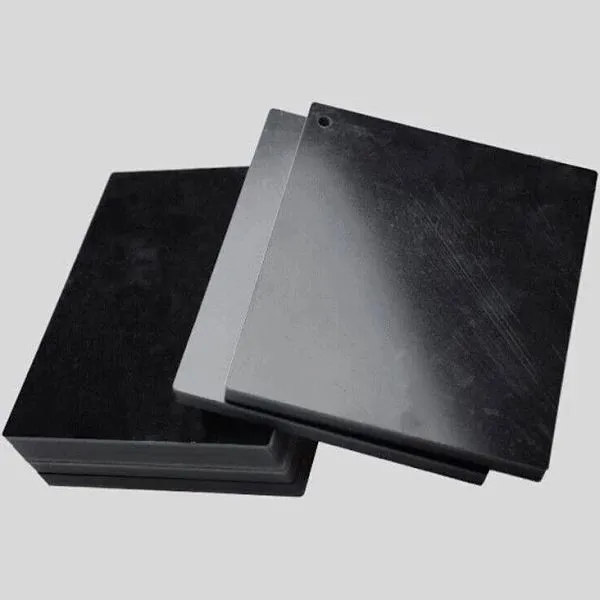
Core Applications of G10 ESD Epoxy Board to Enhance Safety in Electronics Manufacturing
PCB Assembly and SMT Solder Pallets
When components are placed on surface mount technology (SMT) lines, static electricity can damage ICs or BGA packages in a way that is hard to detect. This damage is often not noticed until the product fails in the field. This doesn't happen with G10 ESD Epoxy Board solder pallets and wave soldering carriers because they get rid of the charge before it gets to the sensitive parts. The low thermal mass of the material also speeds up the thermal cycle, which increases output without lowering safety.
ICT and Functional Test Fixtures
Bed-of-nails test fixtures put the board under both mechanical and electrical stress at the same time. These are the main reasons why G10 ESD Epoxy Board works well in this situation:
- Dimensional stability — The board doesn't bend when pogo pins are contacted over and over, so fixture deflection doesn't cause false test failures.
- Static protection for the Unit Under Test (UUT) — Static charges are generated when moving mechanical parts; G10 ESD Epoxy Board gets rid of these charges before they reach the device being tested.
- Chemical resistance — The board can handle cleaning products that are used between test rounds without losing its ability to resist electricity.
Together, these traits lower the number of fake failures and keep high-value parts safe during testing.
Semiconductor Wafer Handling and Storage Trays
Handling silicon wafers in a cleanroom requires both controlling particles and managing static electricity. G10 ESD Epoxy Board trays and carriers don't give off a lot of gas and can stand up to harsh chemical cleaners. Particles in the air are drawn to wafer surfaces by static electricity. ESD-grade material reduces this risk, keeping yield and product integrity safe at the most important stage of semiconductor production.
Comparing G10 ESD Epoxy Board with Other ESD Materials for Electronics Safety
G10 ESD vs. Standard FR4
Because it is easy to find and doesn't cost much, FR4 is the most common substrate used in general PCB uses. FR4, on the other hand, works as a pure insulator. Putting FR4 fixtures close to sensitive parts in areas that are controlled for ESD creates a static risk. This gap is filled by G10 ESD Epoxy Board material, which has the same level of mechanical strength and machinability as other materials but also has controlled dissipative behavior. Changing the material from FR4 to G10 ESD Epoxy Board is a simple way to make high-reliability production lines safer.
G10 ESD vs. Surface-Coated ESD Boards
As a cheaper option, some manufacturers cover standard fiberglass sheets with anti-static coatings. If you scratch or machine the surface of these goods, they lose their ESD protection. This is a big problem on production floors where parts get worn down all the time. Because of its volumetric ESD properties, G10 ESD Epoxy Board keeps its resistivity even after being reworked or reshaped. This makes it the more durable and reliable choice for long-term fixtures.
When to Consider Higher-Performance Alternatives?
G10 ESD Epoxy Board is good for most basic SMT and test tasks. Materials like ESD Durostone or high-Tg laminates may work better for lead-free reflow processes that need to keep the temperature above 260°C for a long time. Before selecting materials, procurement teams should look at the working temperature needs. In spite of this, the G10 ESD Epoxy Board is a good mix of speed and value for most wave soldering, wash tray, and test fixture uses.
Procurement Insights and Supplier Selection for G10 ESD Epoxy Board
What to Verify Before Ordering?
Receiving boards that test as insulators after delivery is a common quality control problem in the market. This could be because they were treated only on the surface or because the conductive filler wasn't spread out evenly. Before you place an order, you should ask for a Certificate of Conformance (CoC) that lists the resistivity values for each batch. It is standard practice for reliable G10 ESD Epoxy Board suppliers to show proof that their products meet ANSI/ESD S20.20 and RoHS standards.
Customization and Machining Considerations
Carbide or diamond-tipped tools can be used to cut G10 ESD Epoxy Board. To get rid of coarse glass fiber dust, dry grinding with vacuum extraction is best. It is important to dry the board completely after using coolants so that the resistance readings are not skewed by water absorption. Suppliers who can do CNC machining can deliver finished fixtures and carriers that meet buyers' needs, so buyers don't have to do as much work themselves.
Total Cost of Ownership
If you only look at the sheet price when making buying choices, you miss the bigger picture. Business data from the ESD Association says that ESD-related damage to electronics parts costs the world's electronics business billions of dollars every year. When boards' resistivity stays the same over their service life, they have fewer scraps, rework hours, and warranty claims. J&Q is a supplier with over 20 years of production experience and its own transportation network. They offer stable batch quality and supply chain continuity.
Future Trends and Continuous Safety Improvements with G10 ESD Epoxy Board
Alignment with Industry 4.0 Manufacturing
The need for fixture materials grows as automated and sensor-integrated environments become more common in electronics production. The G10 ESD Epoxy Board works well with this change because it stays the same size and has stable electrical properties. This makes it suitable for use on precise robotic assembly lines, where even small static events can mess up automated handling systems.
Environmental and Regulatory Drivers
RoHS compliance and halogen-free requirements are affecting how North American and European markets choose materials. When makers use G10 ESD Epoxy Board formulas that meet these environmental standards, regulators trust them to maintain performance. More and more, procurement experts in consumer electronics, medical devices, and defense electronics need proof that products are environmentally friendly along with technical specs.
Long-Term Safety Culture Benefits
A layered ESD protection program is made up of production fixtures, workstations, and packaging systems that all use materials that dissipate static electricity. The S20.20 guideline from the ESD Association suggests this very methodical technique. The G10 ESD Epoxy Board is a useful part of that larger safety architecture. It pays for itself by lowering the number of damages and increasing the life of the fixtures.
Conclusion
There are several places where G10 ESD Epoxy Board makes electronics production safer: SMT assembly, ICT testing, wafer handling, desk fixtures, and packing. It can be used in real production because it is strong, doesn't conduct electricity or magnetism easily, and can be machined. When engineering managers and procurement teams look at insulating materials, G10 ESD Epoxy Board is an investment in the quality of the product and the reliability of production. The next step that makes sense is to choose a provider whose quality paperwork has been checked and whose batches always do well.
FAQ
Does humidity affect the resistivity of G10 ESD board?
High-quality G10 ESD Epoxy Boards use carbon-filled epoxy systems that work the same way no matter how wet the air is. Cheaper items that use surfactants, which are migratory anti-static agents, might not work as well in dry places. Before you buy, you should always check with your seller about the resistivity system.
Can G10 ESD board withstand reflow oven temperatures?
It can be used continuously at temperatures between 130°C and 140°C. This is enough for normal wave soldering, wash trays, and low-temperature carriers. When lead-free soldering processes need to keep temperatures above 260°C for a long time, higher-Tg ESD materials are usually needed.
Why do some boards measure as insulators after they've been sent?
This usually means that an ESD treatment that was only on the surface has worn off or that the conductive filler wasn't spread out evenly during production. Before receiving a package, you should always ask for a Certificate of Conformance with batch-specific resistivity data.
How should G10 ESD board be cut?
Use tools with carbide or diamond tips. It is best to use dry cutting with vacuum dust extraction. Unlike surface-coated options, the volumetric ESD properties stay the same after cutting.
What range of resistance should I choose?
ANSI/ESD S20.20 says that surface resistivity should be between 10⁶ and 10⁹ ohms for static-dissipative uses.
Get G10 ESD Epoxy Board from J&Q — Trusted Supplier for Electronics Manufacturers
Your production line deserves materials that perform consistently from the first sheet to the thousandth. J&Q has supplied insulating sheet products for over 20 years, with a decade of international trading experience and an in-house logistics operation that supports reliable delivery. Contact our team today for custom specifications, sample requests, or bulk quotes on G10 ESD Epoxy Board for sale. Reach us directly at info@jhd-material.com or visit jhd-material.com.
References
1. ESD Association. ESD TR53 — Compliance Verification of ESD Protective Equipment and Materials. ESD Association, 2021.
2. ANSI/ESD S20.20. Protection of Electrical and Electronic Parts, Assemblies and Equipment. ESD Association, 2021.
3. National Electrical Manufacturers Association. NEMA LI 1 — Industrial Laminating Thermosetting Products. NEMA, 2020.
4. Montrose, M. I. EMC and the Printed Circuit Board: Design, Theory, and Layout Made Simple. IEEE Press, 1999.
5. Williams, T. EMC for Product Designers. Newnes/Elsevier, 2017.
6. IPC. IPC-A-610 — Acceptability of Electronic Assemblies. IPC, 2020.
_1755583592640.webp)
