Where Is Phenolic Paper Laminate Commonly Used in Manufacturing?
2026-09-23 17:27:48
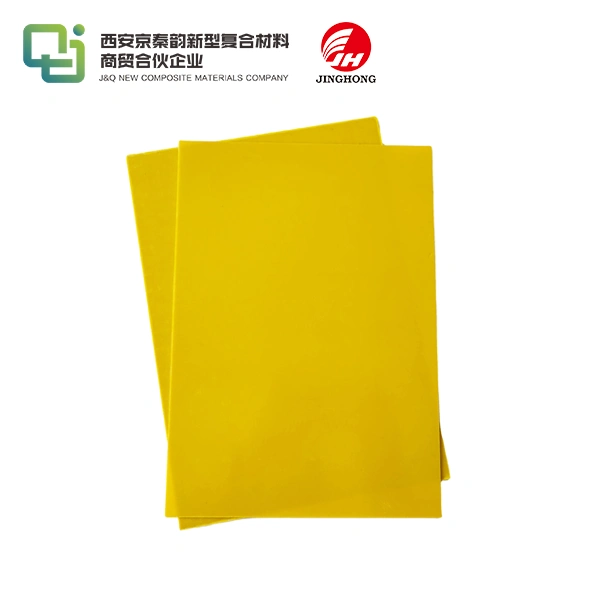
Phenolic paper laminate is one of the most widely adopted thermosetting insulation materials across manufacturing industries. Produced by saturating layers of kraft paper with phenolic resin and curing them under heat and pressure, it delivers a dense, rigid sheet with strong dielectric properties, good mechanical strength, and resistance to mineral oils and weak acids. From transformer coil insulation to motor component spacers, phenolic paper laminate fills the gap where glass-epoxy (FR4) is over-engineered, and plain plastics fall short — making it a go-to choice for cost-aware engineers and procurement teams.
What Is Phenolic Paper Laminate and Why Is It Essential in Manufacturing?
How It Is Made
Several layers of high-quality kraft paper are stacked, saturated with phenolic resin, and then the stack is pressed with controlled heat and pressure. This creates a paper-based phenolic laminate. This process makes a fully hardened sheet that doesn't change shape. The end result is a substance that has a specific gravity of 1.30 to 1.45 g/cm³, a tensile strength of more than 100 MPa, and a temperature rating of Class E (120°C) or Class B (130°C) for continued use.
Key Performance Properties
Mineral oils, chlorinated hydrocarbons, and weak acids don't react with the material, which is why it has been used for a long time in oil-immersed transformer applications. In oil, the dielectric strength is between 300 and 500 V/mil (12 and 20 kV/mm), and high-grade XXX sheets don't absorb more than 1.0% water. Based on these numbers, it can be trusted for medium-voltage electrical shielding at normal frequencies (50/60 Hz).
How It Compares to Alternatives
Phenolic Paper Laminates are much cheaper than FR4 epoxy-glass and are easier to machine, which means that tools last longer when they are used for a lot of jobs. Engineers choose paper phenolics when normal frequency insulation is enough and cost is an issue because FR4 is stronger when hit and works better at high frequencies. Compared to plain thermoplastics or HPL, phenolics are better at withstanding heat and keeping their shape under long-term load.

Common Manufacturing Applications of Phenolic Paper Laminate
Phenolic Paper Laminate is used in many different types of industries. Because it is electrically insulating, resistant to oil, and easy to machine, this material can meet many engineering needs at the same time. The parts that follow discuss the most popular types of applications that our customers ask us to work on.
Electrical and Electronics Manufacturing
Dielectric separation at 50/60 Hz is provided by paper phenolic sheets, especially NEMA grades XX and XXX, which are used in switchgear panels, motor slot liners, and terminal boards. They punch smoothly, and there are P-grade plasticized versions that work well for both cold and warm punching. This makes it faster to make a lot of insulation washers and coil formers. These qualities are exactly what is needed to meet UL and IEC 60893 standards.
Power Generation and Transformer Manufacturing
Paper phenolic sheets are used by transformer makers as coil-to-core barriers, arc screens, and end-insulation platforms. NEMA LI-1 and IEC 60893 (Type PF CP 201/202/203) standards show that the material is stable in transformer oil. This means that it keeps its insulation resistance over long service cycles. Power distribution engineers like how well it handles flames and how stable the temperature is at Class B ratings.
Industrial Machinery and Automotive Components
In places where chemicals are present, machinery builders use paper phenolic sheets as wear pads, mechanical spacers, and structural insulation. In automotive applications, the material is used to make heat-resistant fixture boards and barriers for battery compartments. Self-lubrication makes moving parts less likely to stick, and its ability to withstand pressure and shock often works better than metal or plastic options in these areas.
These real-life uses show why paper phenolic laminates are still the standard choice among engineering-driven buying teams.
Factors Influencing the Selection of Phenolic Paper Laminate for Manufacturing
There are different types of phenolic paper that are used for different tasks. Picking the wrong standard can cause early failure, extra costs, or gaps in compliance. Here are the main factors that buying teams and engineers should look at when making decisions:
- Grade selection: Grade X offers high mechanical strength for structural use. Grade XX is a general-purpose electrical grade. Grade XXX carries the highest resin content and lowest moisture absorption, making it appropriate for humid or oil-immersed environments. "P" suffix grades (XP, XXP, XXXP) add plasticizers for clean cold or warm punching — critical for high-volume component manufacturing.
- Thickness and dimensional tolerance: Standard sheets range from 0.5 mm to 100 mm. Tight thickness tolerances matter for CNC-machined parts, spacers, and stacked insulation assemblies. Confirm tolerances before ordering for OEM projects.
- Compliance requirements: NEMA LI-1, IEC 60893, and ASTM D709 are the governing standards. Confirm which standard applies to your end market — particularly when exporting to North American or European customers.
- Order volume and lead time: Bulk orders reduce unit cost, but minimum order quantities and lead times vary by supplier. Clarify these terms early to avoid supply chain gaps.
Standards to follow: For Phenolic Paper Laminate, NEMA LI-1, IEC 60893, and ASTM D709 are the ones that matter. Make sure you know which standard to use for your final market, especially if you're sending your goods to people in North America or Europe.
"Order amount and lead time": Unit costs go down when you order in bulk, but each supplier has different minimum order quantities and lead times. Make these terms clear right away to avoid holes in the supply line.
How to Choose the Right Phenolic Paper Laminate Supplier
The quality of your suppliers has a direct effect on how consistent your finished parts are. One sheet that doesn't meet the requirements can mess up a whole production batch, so the selection process needs to be taken very seriously.
Certifications and Standards Compliance
Ask suppliers to show proof that their products meet NEMA LI-1, IEC 60893, or ASTM D709 standards, whichever applies. Getting certified to the ISO 9001 quality control system gives you even more peace of mind. During product audits, verified compliance paperwork keeps your tech team safe.
Custom Machining and Sizing Capability
For many manufacturing jobs, sheets need to be cut to specific sizes or CNC-machined into final parts. If your suppliers can cut, drill, and punch metal themselves, they can shorten your supply chain by sending you ready-to-fit parts instead of raw sheets. Before committing to volume, make sure you know what tolerances can be used and if sample orders are available.
Experience and Logistics Support
A seller with a lot of experience in industrial insulation materials knows how the performance of the material is affected by technical details, not just price. J&Q has been making Phenolic Paper Laminate and other insulation sheets for more than 20 years and has been trading with other countries for more than 10 years, working with manufacturers all over North America. Our combined transportation network makes sure that deliveries are always made on time, from the time an order is placed until it is received.
Future Trends in Phenolic Paper Laminate Manufacturing
Eco-Friendly Resin Formulations
Material scientists are working on phenolic resin systems that use bio-based feedstocks and release less formaldehyde. The goal of these formulations is to keep the mechanical and electrical performance of normal grades while reducing their impact on the environment. This is becoming more and more important for companies that want to get green procurement approvals.
Digitalized Supply Chain Management
There are now more providers that offer online specification tools, digital order tracking, and detailed datasheets that can be downloaded. These tools make it easier for procurement teams to compare grades and find proof of compliance, which cuts down on the time it takes from specification to purchase order.
Enhanced High-Temperature Grades
In power devices and EV batteries, the need for materials listed above Class B (130°C) is growing. New phenolic paper composites that can handle higher temperatures are hitting the market. This means that this type of material can be used in warmer areas.
Conclusion
Paper phenolic laminates, including Phenolic Paper Laminate, are used in electrical, industrial, power, and auto parts manufacturing because they are one of the few materials that can balance dielectric performance, cost, and ease of machining. When engineering managers and procurement teams understand the grade differences, compliance standards, and source selection factors we've talked about here, they can better choose the right material, keep costs down, and avoid supply disruptions. Paper-based phenolic laminates should be on your list of materials to use for projects that need solid insulation with a history of success in the business world.
FAQ
What thickness options are standard for paper phenolic sheets?
The thickness of standard Phenolic Paper Laminate sheets ranges from 0.5 mm to 100 mm.
How does paper phenolic compare to epoxy glass in chemical resistance?
Thinner sheets are better for electrical insulation and cut parts, while thicker sheets are better for structural spacers and machined parts.
Can paper phenolic sheets be cold punched?
Epoxy-glass (FR4) is more resistant to chemicals, but it costs more. Paper phenolics are the best choice for settings with oil or mild chemicals and standard frequencies.
Is phenolic paper laminate fire retardant?
To keep the edges from breaking, standard grades often need to be heated to 40°C to 80°C before they can be punched. Grades ending in "P" (XP, XXP, XXXP) have plasticizers that let you punch cleanly when it's cold or warm, which is good for places that make a lot of things.
Get Phenolic Paper Laminate from J&Q — Request a Quote Today
Manufacturers all over the United States buy Phenolic Paper Laminate and a lot of different types of soundproofing sheets from J&Q. We guarantee quality and on-time shipping because we have been making things for more than 20 years and have our own transportation infrastructure. As a reliable Phenolic Paper Laminate provider, you can get in touch with our technical team at info@jhd-material.com or visit jhd-material.com to get a price on the grades you need, as well as custom-cut sheets.
References
1. National Electrical Manufacturers Association. NEMA LI-1: Industrial Laminating Thermosetting Products. NEMA, 2020.
2. International Electrotechnical Commission. IEC 60893: Insulating Materials — Industrial Rigid Laminated Sheets Based on Thermosetting Resins for Electrical Purposes. IEC, 2019.
3. ASTM International. ASTM D709: Standard Specification for Laminated Thermosetting Materials. ASTM, 2021.
4. Harper, Charles A. Handbook of Plastics Technologies. McGraw-Hill, 2006.
5. Brydson, J.A. Plastics Materials, 7th Edition. Butterworth-Heinemann, 1999.
6. Underwriters Laboratories. UL 94: Standard for Tests for Flammability of Plastic Materials for Parts in Devices and Appliances. UL, 2018.