Why Choose 3640 Epoxy Tube for Electrical Insulation Systems?
2026-09-09 17:29:48
When engineers and procurement managers ask what separates a reliable insulation system from one that fails under pressure, the answer often points to material selection. The 3640 epoxy tube is a rigid, glass-fabric-reinforced laminate cylinder produced by hot-rolling alkali-free fiberglass cloth impregnated with epoxy-phenolic resin. Classified under GB/T 5132 and IEC EP GC series standards, it delivers a rare combination of dielectric strength, thermal stability, and mechanical robustness. Across switchgear assemblies, transformer coil cylinders, and motor insulation structures, this material consistently outperforms conventional options in demanding industrial environments.
Understanding 3640 Epoxy Tube: Properties and Technical Specifications
What Is the 3640 Epoxy Tube Made Of?
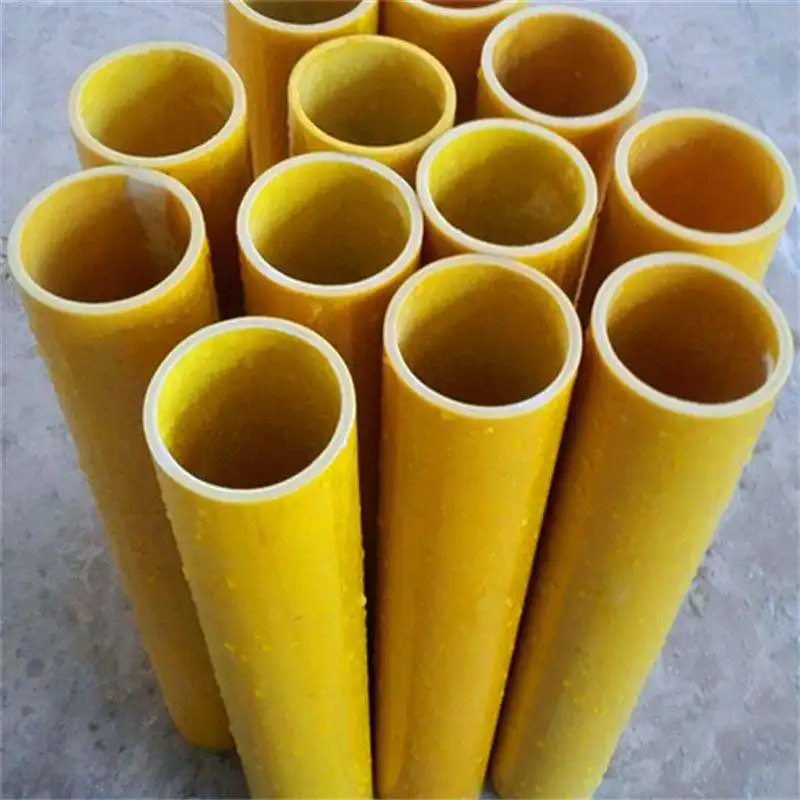
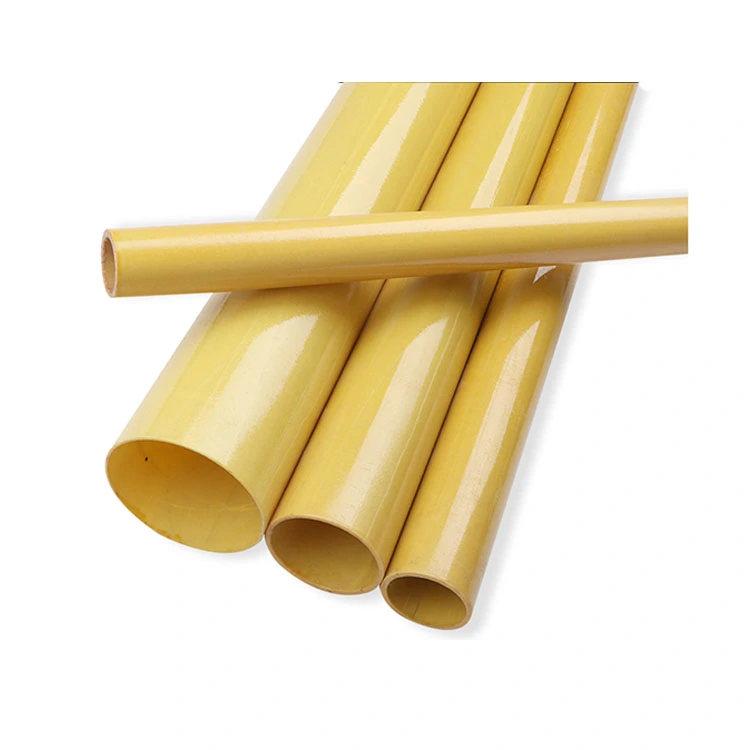
To make the tube, alkali-free fiberglass cloth that has been saturated with epoxy-phenolic resin is wound around a core and then cured under controlled heat and pressure. It makes a hard, yellow plastic tube with a smooth surface, a uniform color, and close tolerances on its dimensions. It has a Class B insulation rating, which means it can be used continuously up to 130°C. Some formulations can reach Class F at 155°C.
Key Technical Properties at a Glance
Engineers can make faster, more confident choices about what to buy when they understand the specs. Here are the main scientific factors that determine how well this material works:
- Density: 1.70–1.90 g/cm³, which means the structure is thick, stable, and not easily deformed
- Water absorption: Less than 0.05% water absorption keeps the dielectric from breaking down in damp substations or outdoor enclosures
- Dielectric strength (parallel to laminations): It has a dielectric strength of more than 10 kV per 25 mm in oil, which proves it can be used for high-voltage assemblies
- Insulation resistance after immersion: After soaking, the insulation resistance is ≥100 MΩ, which ensures hydrolytic stability over a long service life
- Chemical resistance: It can't be damaged by transformer oil or common industrial solvents, which makes it a popular choice for power tools that are filled with liquid
These specs for the 3640 Epoxy Tube aren't just academic standards; they're based on success in the real world, which has been proven by standard tests. These numbers can help procurement teams with engineering approval processes when they are choosing materials for switches, dry-type transformers, or motor end rings.
Advantages of 3640 Epoxy Tube Over Alternative Materials
Why It Outperforms Phenolic and Standard Polyester Tubes
It is easier for phenolic tubes to absorb water, and their interlaminar bending strength is lower. Standard polyester tubes are cheaper, but they tend to get soft at temperatures above 100°C and lose their shape when they are subjected to changing heat loads. Both flaws are fixed by the epoxy fiberglass laminate tube. Its cross-linked resin matrix keeps its mechanical integrity over a bigger range of temperatures and stops hoop-stress cracking during high-speed switchgear operations, which is a type of failure that phenolic materials can't always stop.
There are clear benefits that affect the long-term cost of ownership when you compare insulation tube materials. This is how the 3640 version holds its own:
- Machinability: The dense fiberglass matrix lets CNC turning, drilling, and threading work without delamination, which lets parts like insulating spacers and coil cylinders be precisely machined
- Flame resistance: The epoxy-phenolic glue naturally retards flames, which lowers the risk of fire spreading in tight switchgear cabinets
- Dimensional repeatability: Tight thickness tolerances and even resin distribution support batch-to-batch uniformity, which is important for OEM sourcing managers who run production lines that make a lot of things
- Transformer oil compatibility: This material doesn't grow or break down when soaked in transformer oil, unlike many thermoplastics. It keeps its insulation class rating after years of use.
These benefits directly lead to shorter repair periods and fewer replacements that weren't planned, which lowers the total cost of ownership for facilities that manage big fleets of equipment.
Application and Curing Process for 3640 Epoxy Tube
Where Is It Used in Real Electrical Systems?
The 3640 Epoxy Tube is often made into coil insulation cylinders for dry-type transformers and insulation end coils for distribution transformers. It is used as insulating structural gear in electrical equipment. It can also be found in arc barrier sections, motor slot liners, busbar support tubes, and high-voltage switchgear spacers.
Handling and Machining Best Practices
To get the most out of this material, you need to do some work before you install it. It's important to keep the surfaces clean; any oil or wetness on mating surfaces weakens the bonding in composite systems. When CNC cutting, using carbide tools with slow spindle speeds makes edges that are smooth and don't have fiber pull-out. Fiberglass dust is dangerous to breathe in, so operators should wear dust masks. When the tube is used as a structural insulator, it doesn't need to be post-cured, but for adhesive bonding applications, light surface abrasion makes the adhesion stronger.
Procurement Guide: How to Source and Buy 3640 Epoxy Tubes?
What Buyers Should Verify Before Placing an Order?
When looking for epoxy insulation tubes for business use, you need to think about more than just price. When you buy something from a responsible supplier, you should make sure that they have a written quality management system, test records that can be tracked, and material certification that meets IEC or GB standards. Lead times depend on the thickness of the wall and the inner diameter. Usually, unique sizes need more time to be scheduled into the production schedule.
Buyers evaluating a 3640 Epoxy Tube provider should put these things first:
- Certification and standards compliance: Make sure the material meets GB/T 5132 or a similar IEC EP GC standard, and make sure the seller can provide test records
- Customization capability: Make sure the supplier can handle OEM sizes, different wall thicknesses, or cut-to-length needs for builds that are specific to the application
- Logistics infrastructure for 3640 Epoxy Tube: Suppliers who handle logistics in-house lower the risk of damage during transport and offer more reliable delivery times for large orders.
- Sample availability: Reliable manufacturers offer samples before they ship, which lets engineering teams check the size and electrical properties before committing to full production quantities
At J&Q, we've been making insulation materials for more than 20 years and have been trading with other countries for more than ten years. Our factory has high-tech production lines with automatic winding and curing equipment. We also have an in-house transportation company that helps clients in North America and other places handle deliveries from start to finish.
Real-World Performance and Case Studies
Manufacturers of transformers and switchgear who have added epoxy fiberglass laminate tubes to their insulation systems say that service intervals have gotten longer. Insulation tubes made from this material were used to make dry-type transformers. They fixed problems with coil bending that were caused by thermoplastic alternatives that got soft when the load changed. Managers in charge of engineering said that physical stability during winding operations made the assembly more accurate and cut down on the number of rejects during winding.
Power distribution companies that need arc barriers in medium-voltage switchgear have also started using this material because it doesn't catch fire and works well with oil. The low water absorption rate (below 0.05%) is especially useful in coastal and high-humidity areas where moisture has a history of lowering insulation resistance values. Customers who supply Schneider Electric and other Tier-1 industrial buyers have said that regular quality and surface finish are two of the most important factors for qualifying as a long-term provider.
Conclusion
When it comes to measured dielectric strength, thermal resistance, and machinability, the 3640 Epoxy Tube is the best insulation material on the market. Few other options can match it at similar price points. It solves real engineering problems like breaking down because of moisture, hoop-stress cracking, and changes in size when temperatures change using a material design that has been used successfully in making transformers, putting together switches, and building motors. This epoxy fiberglass tube is still a good long-term investment for buying teams looking for materials that work the same way in different amounts and meet international standards.
FAQ
How does the 3640 epoxy tube differ from a standard polyester insulation tube?
When compared to polyester-based tubes, the epoxy-phenolic glue system has a higher continuous service temperature, better interlaminar shear strength, and less moisture absorption. Most types of polyester soften around 100°C, but this material stays mechanically sound up to 130°C with a Class B rating.
Can it withstand transformer oil immersion over extended periods?
Yes. One thing that makes it unique is that it doesn't react chemically with transformer oil. After immersion testing, the insulation resistance stays at or above 100 MΩ. This is why makers of liquid-filled transformers require it for coil insulation cylinders.
Is CNC machining feasible without delamination risk?
When carbide tools are used at the right feed rates, the thick fiberglass cloth blend structure allows for clean CNC turning, drilling, and threading. Compared to phenolic cotton tubes, the chance of delamination is very low.
What wall thickness and diameter options are available?
You can get both standard and custom sizes. For OEM uses, we can make parts with exact inner diameters, wall thicknesses, and lengths.
Partner with J&Q for Your Epoxy Insulation Tube Supply
J&Q can put you in touch with a reliable 3640 Epoxy Tube manufacturer that has been in business for more than 20 years and has its own dedicated logistics network. Our team is ready to help you with your procurement process, whether you need certified standard dimensions or fully customized OEM specifications. You can get examples or a price quote right away by emailing our expert team at info@jhd-material.com or visiting jhd-material.com to explore our full insulating materials portfolio.
References
1. IEC 60893-3-2: Specification for Industrial Rigid Laminated Sheets Based on Epoxy Resin — International Electrotechnical Commission, 2003
2. GB/T 5132: Test Methods for Laminated Tubes Made of Thermosetting Resins — Standardization Administration of China, 2009
3. Handbook of Electrical and Electronic Insulating Materials — W. T. Shugg, IEEE Press, 1995
4. Transformer Engineering: Design, Technology, and Diagnostics — S. V. Kulkarni & S. A. Khaparde, CRC Press, 2012
5. Electrical Insulation for Rotating Machines — G. C. Stone, E. A. Boulter, I. Culbert & H. Dhirani, IEEE Press / Wiley, 2004
6. Industrial Electrical Engineering and Automation — K. Eliasson, Lund University Faculty of Engineering, 2010