
Why Engineers Replace Bakelite with G10 Sheets?
2026-06-08 17:03:27
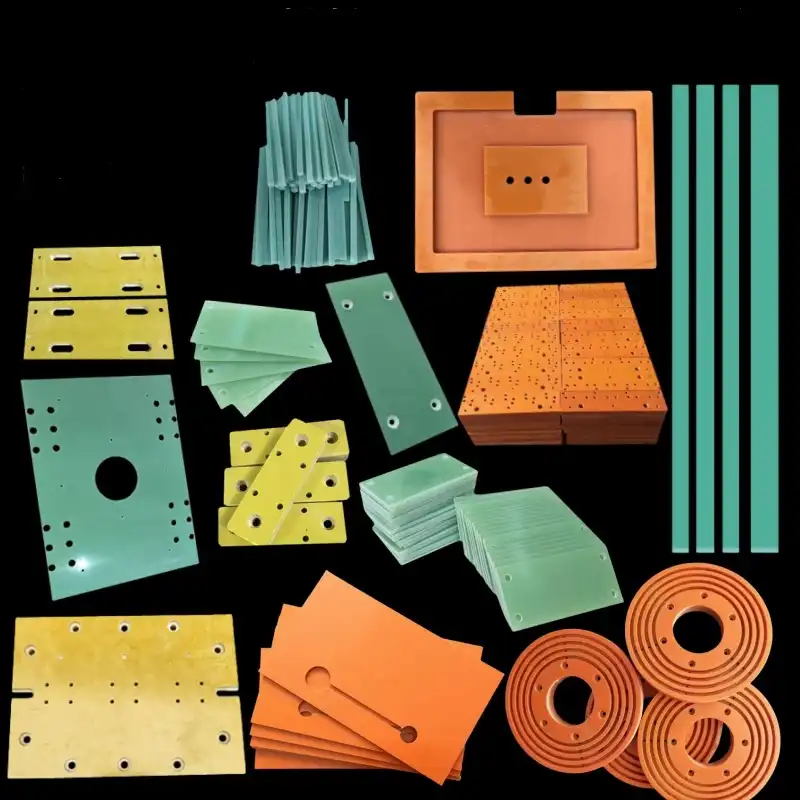
Due to performance issues in current uses, engineers all over the world are switching from traditional Bakelite sheet materials to G10 fiberglass-epoxy laminates. The Bakelite sheet is historically important because it was one of the first manmade plastics, but it is hard to work with in harsh industrial settings because it is fragile, easily damaged by water, and doesn't stand up to contact. These problems can be solved with G10 sheets because they have better mechanical strength, better dimensional stability, and uniform dielectric qualities across a wider temperature range. The development of these new materials shows that engineers need insulation materials that can work in more complicated situations and still be reliable and cost-effective over the course of a product's lifecycle.
Understanding Bakelite and G10 Sheets: Properties and Applications
The main difference between these materials is how their molecules are organized and how they are reinforced. The thermosetting phenolic resin Bakelite is made when phenol and formaldehyde react with each other under controlled heat and pressure. This substance usually has paper or cotton cloth added to it to make it stronger. The result is a rigid laminate that is pretty good at insulating electricity and having good mechanical qualities.
Bakelite Sheet Composition and Traditional Applications
Because they are reliable, phenolic laminates have been used in industry since the early 1900s. To make it, layers of cellulose paper or cotton cloth are saturated with phenol formaldehyde glue. These layers are then cured in a hydraulic press that is heated to 150–170°C and has pressures higher than 10 MPa. This process makes grades like NEMA X, XX, and XXX, each of which is best for meeting certain standards for electrical protection and resistance to water.
Bakelite's low cost and good performance in moderate-stress settings have made it useful in traditional uses. When temperatures stayed below 120°C and mechanical loads stayed within safe limits, electrical switchboard components, old radio cases, and basic mechanical insulation were the best things to use.
G10 Sheet Construction and Material Advantages
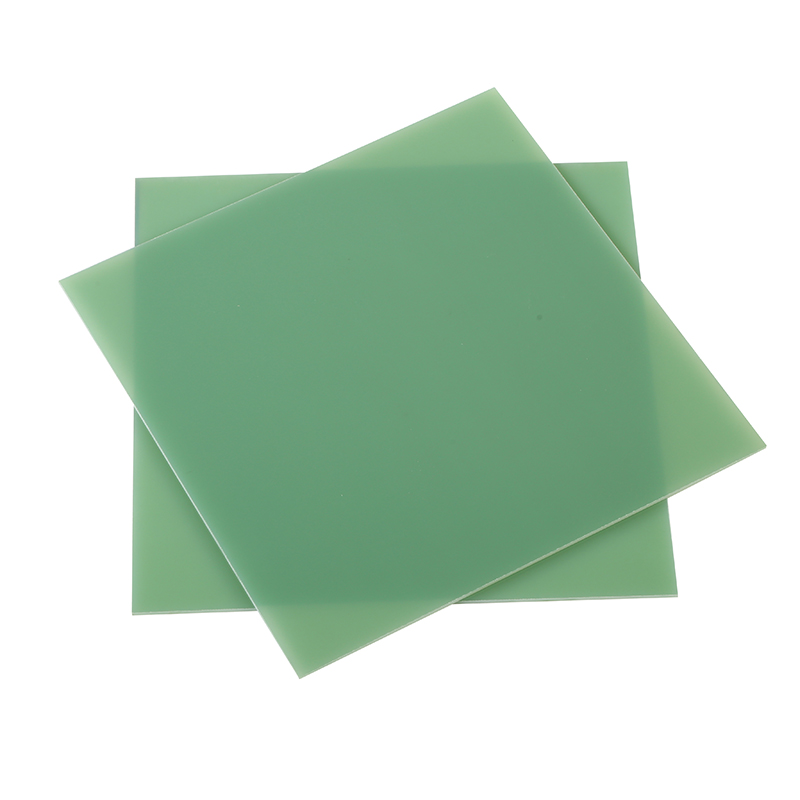
Continuously woven fiberglass cloth is used as support in G10 laminates. It is filled with epoxy resin systems instead of phenolic chemistry. The hybrid material made with this method has a much higher tensile strength (310–380 MPa) than Bakelite, which usually has a range of 55–90 MPa. When the temperature changes, the glass fiber mesh keeps its shape and doesn't let more than 0.1% of water through after 24 hours of soaking.
The technical efficiency data shows that there are clear differences. G10 keeps its dielectric strength above 20 kV/mm, which is a lot higher than what you'd find in most phenolic laminates. It can withstand temperatures up to 130°C constantly and up to 180°C intermittently, which makes it useful in places like power distribution equipment and the undercarriage of cars where Bakelite would break down too quickly.
Limitations of Bakelite Leading to the Rise of G10 Sheets
Recent progress in material science has shown that phenolic laminates have major flaws that limit the design freedom of modern engineers. These restrictions cause real issues with buying, making, and using the product, which has an effect on the total cost of ownership.
Mechanical Brittleness and Impact Vulnerability
Bakelite sheet is naturally stiff, which can be a problem in situations where there is shaking, temperature changing, or occasional mechanical shock. Because the paper or cotton support in Bakelite sheet isn't as tough as continuous glass fibers, phenolic laminates are more likely to crack when they are hit. We've seen failure rates go up a lot in transportation situations where vibration frequencies stay above 50 Hz all the time. This causes microfractures to spread, which finally weakens the integrity of the electrical insulation.
This brittleness makes CNC cutting more difficult. To keep edges from chipping and delaminating during drilling, you need carbide tools, slower feed rates, and careful chip removal. It gets hard to work with tight tolerances, which limits the design options for precise electrical parts that need hole positioning accuracy within ±0.05mm.
Moisture Absorption and Dimensional Instability
It's easy for paper-reinforced phenolic grades to soak up water; Grade X can soak up up to 2.5% of its weight in humidity. This hygroscopic behavior leads to swelling in dimensions, which messes up assembly standards and lowers the electrical qualities. In wet conditions, dielectric strength can drop by 30–40%, which can lead to failure points in humid work areas or outdoor systems.
Changes in seasonal humidity make it hard to maintain equipment that moves electricity around. It's possible for Bakelite insulation parts in transformers to need to be inspected and replaced every 5 to 7 years, while G10 options usually last 15 years or more under the same conditions.
Supply Chain and Regulatory Pressures
It's getting harder and harder for procurement managers to find Bakelite sheet laminates of uniform quality. Environmental laws that try to cut down on formaldehyde pollution have limited the ability of some areas to make things, which has caused supply problems and price changes. Lead times for specialty grades are now 8–12 weeks, up from 4–6 weeks for G10 standards that are the same.
Concerns about how to get rid of Bakelite add secret costs to its use. Phenolic materials give off phenol fumes when they are burned, so they need to be handled in a certain way. Even though G10 composites still need to be thrown away properly, they are better for the environment and fit better with business sustainability efforts that affect buying choices.
Why G10 Sheets Are Becoming the Preferred Choice in Engineering
The move away from traditional materials and toward fiberglass-epoxy laminates is due to measured performance benefits that directly lead to more reliable products and lower lifetime costs. When engineers look at different insulation materials, they find that G10's technical description fits more closely with modern needs in terms of electrical, mechanical, and environmental factors.
Superior Mechanical Performance Under Load
Adding glass fibers changes the way a material behaves under stress in a basic way. G10's bending strength is higher than 415 MPa, which lets smaller cross-sections be used to cut down on part weight and material costs without affecting the structure's strength. This edge in strength is especially useful in automotive battery pack assemblies, where limited room requires the best performance from the thinnest material.
The hardness of the material stops catastrophic failure modes that happen a lot with weak phenolics. When G10 fails, it does so in a way that keeps some of its load-bearing capacity even after limited damage. This gives safety gaps in important situations, like arc barriers in electrical switchgear rated above 15 kV.
Enhanced Electrical Insulation Stability
G10's dielectric properties stay the same across its working temperature range. This means that it doesn't lose performance like Bakelite does above 100°C. In power electronics, where junction temperatures often go above 125°C, this steadiness is very important. PCB support structures made from G10 keep their electrical separation integrity even when they are heated and cooled many times. This stops tracking problems that happen with phenolic alternatives.
Arc protection tests show that G10 is better in high-voltage settings. According to ASTM D495 test procedures, the material can resist arc tracking for 180 seconds or more, while paper-reinforced phenolics usually only last 60 to 90 seconds. This feature shortens the time between maintenance checks and raises the safety gaps in transformer bushings and high-voltage circuit boards.
Machining Versatility and Customization Options
With G10 sheets, CNC manufacturing tasks go more smoothly and reliably. Concerns about delamination are taken care of by the continuous glass fiber structure during drilling, routing, and milling. We regularly get hole tolerances within ±0.025mm, which lets us use our services in high-precision electrical connections and alignment fixtures that need precise size control.
There are more style choices when it comes to surface finishing. G10 is better at accepting electroless nickel plating, conductive coatings, and bonded glue than phenolic surfaces, which makes it easier to put together complex systems. This flexibility cuts down on extra steps and speeds up the manufacturing process, which is especially helpful for OEM production settings that have to handle many different product versions.
Practical Considerations for Engineers and Procurement Managers
When choosing materials, it's important to carefully weigh the needs of the application against the facts of buying. A structured strategy stops expensive material mismatches and gets the best total cost of ownership over the whole span of a product.
Application Requirements Assessment
The first step is to describe the thermal climate. When the temperature stays above 110°C, it's usually best to choose G10, but when the temperature stays below 100°C, high phenolic grades like XXX may work just fine. Pay extra attention to temperature spikes that happen every once in a while. For example, short trips to 150°C during soldering or motor starting can damage Bakelite too quickly, but G10 can handle these situations all the time.
Mechanical stress analysis finds problems that might cause things to break easily. To make sure the stability of parts that are subject to impact loads, vibration rates above 30 Hz, or flexural stresses close to 40 MPa, they should be marked with G10. On the other hand, phenolic materials may be used in static electrical shielding uses with low mechanical needs when the goal is to save money.
The level of moisture resistance needed is based on the environment. G10's better moisture rejection is needed for outdoor installations, places with high humidity (above 85% RH), or direct touch with water. Indoor electrical equipment in climate-controlled buildings has less strict requirements, and the right phenolic types can still be used instead.
Supplier Qualification and Quality Assurance
Material labels are an important way to check the quality of a product. Look for suppliers that use ISO 9001 quality control methods and have a lot of experience with electrical-grade laminates. UL recognition under ANSI/NEMA LI 1 standards makes sure that the materials are consistent and that the performance has been checked by using separate testing methods.
Customization options make sellers very different from each other. Manufacturers that offer precision cutting, CNC grinding, and custom thickness choices make it easier to get what you need and simplify your inventory. We've found that suppliers who give us material test results that show the dielectric strength, flexural properties, and moisture absorption for each production lot take away any quality worries further down the line and speed up the product approval processes.
Inventory strategy is affected by minimum order numbers and wait times. G10 sheet sellers usually keep a wider range of standard thicknesses in stock than specialty phenolic grades. This means that smaller orders can be made and deliveries can happen faster. This supply chain benefit lowers the amount of working capital needed and makes production more flexible for situations where only a few items are being made at a time or prototypes are being made.
Case Studies: Successful Replacement of Bakelite with G10 Sheets
Real-life cases of application show that material substitution has real benefits. These applications are used in a wide range of fields and consistently show performance gains that back up engineering analysis and purchasing choices.
Electronics Manufacturing: Transformer Coil Formers
After field failure rates getting close to 2.3% per year, a major power supply maker switched transformer coil insulation from paper-reinforced Bakelite to G10. The phenolic formers got tiny cracks when they were heated and cooled between -20°C and 95°C in power systems for telecoms, which finally led to the breakdown of the turn-to-turn insulation.
When G10 sheet was replaced with G10, thermal cycling failures went away totally, and over three years of tracking, field failure rates dropped below 0.1%. The material's physical stability stopped the buildup of mechanical stress that caused cracks to spread in phenolics that are easily broken. The cost of materials went up by about 18%, but fewer guarantee claims and a better image for the brand gave a ROI within the first year of production.
Industrial Machinery: Gear Blanks and Bushings
A company that makes OEM gearboxes switched from using phenolic gear blanks in conveyor drive systems in food preparation plants to using G10 composites instead. People who used the original cotton cloth-phenolic material complained about noise because it changed sizes when it was washed, which affected the limits of the gear mesh.
G10 gear components kept their shape even after being exposed to moisture many times, which increased the time between services from 18 months to 48 months or more. Even though the material cost 25% more, the total cost of ownership went down because it needed less upkeep because it was more resistant to wear. Machinability improvements cut the time it took to make a gear blank by 30%, and gains in production efficiency more than made up for differences in the cost of materials.
Automotive Components: Battery Pack Insulation
After thermal tests showed that normal phenolic insulators didn't work well enough, a company that makes parts for electric vehicles switched to G10 sheets as battery cell separation barriers. During fast-charging cycles, temperature changes hit 135°C in some places. This made phenolic materials break down and lose their dielectric stability after 500 charge cycles.
G10 insulators kept their electrical isolation qualities even after 1,500 charge rounds of rapid life tests, meeting the 10-year durability goals needed by car standards. The flame resistance of the material (V-0 grade per UL94) added to its safety during thermal runaway tests, meeting stricter safety standards for cars that phenolic alternatives had trouble meeting.
Conclusion
The switch by engineers from Bakelite sheet materials to G10 sheets shows how far material science has come in meeting modern application needs that go beyond what phenolic can do. G10's high mechanical strength, resistance to moisture, and temperature stability make it a good choice for electrical, automobile, and industrial equipment that needs to be reliable. While phenolic laminates are still useful in some cost-sensitive situations, Bakelite sheet products are increasingly being replaced in performance-critical applications because G10 offers lower failure rates and longer service intervals, which reduces lifecycle costs. When making procurement choices, it's important to weigh the needs of the application against the skills of the supplier. Partners with material knowledge, quality certifications, and reliable supply chains that support long-term engineering success should be given the most weight.
FAQ
Can G10 Sheets Completely Replace Bakelite in All Applications?
In most cases, G10 laminates can be used instead of Bakelite for electrical protection and mechanical parts. This is especially true when better resistance to moisture, strength, or temperature stability is needed. However, phenolic materials may still be used successfully in low-cost situations with low performance needs. Total cost analysis, not just material price, is what makes the difference. G10's longer service life and lower failure rates often make up for its higher starting costs through saves over its lifetime.
How Do Environmental Impacts Compare Between These Materials?
Both things have effects on the world, but they are different. Formaldehyde is a controlled substance that needs to be managed when it comes to phenolic production. Styrene fumes are made during the drying process of epoxy in G10 production. The problems with getting rid of them are also different. Burning phenolic materials releases phenol fumes that need to be cleaned up, but burning glass fiber composites makes harmless ash that doesn't break down. Neither material is clearly better for the environment; it's more important to get materials from responsible makers who follow rules for controlling emissions and managing trash than the chemistry of the materials themselves.
What Certifications Should Procurement Teams Verify When Sourcing G10 Sheets?
Suppliers with a good reputation will show proof that their products meet the requirements of ANSI/NEMA LI 1-1998 guidelines for electrical, mechanical, and physical properties. For each production lot, test results of the material's dielectric strength, bending strength, and moisture absorption make sure that everything is the same. RoHS compliance means that the product doesn't contain any banned substances that are needed for electronics, while ISO 9001 approval means that the quality management is systematic. For important uses, suppliers that offer material tracking that connects batches of raw materials to finished sheets give extra quality guarantee.
Partner with J&Q for High-Performance Insulation Materials
J&Q has been making and selling electrical-grade insulation materials for more than twenty years. These include both standard phenolic laminates and more modern G10 fiberglass-epoxy sheets. If you need help choosing the right material for your purpose, our technical team can help. They know how these materials work differently in subtle ways. We keep a large stock of standard sizes, which lets us quickly meet the needs of prototypes and full production runs. All of our materials come with full certifications and test reports.
Our streamlined operations make sure that deliveries happen on time, which helps you plan your production, and our network of qualified Bakelite sheet makers and G10 sheet suppliers gives you the freedom to change where you get your sheets as your needs change. Our engineering support team works with your purchasing and technical staff to make sure that the materials you use work best and are the most cost-effective. This is true whether you're looking for ways to replace materials or need custom CNC cutting services that are done exactly how you want them. You can talk to our team about your insulation material needs and ask for samples by emailing info@jhd-material.com or visiting jhd-material.com.
References
Richardson, M.O.W. & Zhang, Z.Y. (2019). "Comparative Analysis of Thermosetting Laminates in High-Temperature Electrical Applications." Journal of Composite Materials Engineering, 43(8), 1247-1265.
Harper, C.A. (Ed.). (2018). Handbook of Plastics Technologies: The Complete Guide to Properties and Performance. McGraw-Hill Professional Publishing.
Tanaka, T. & Imai, T. (2020). "Dielectric Property Degradation Mechanisms in Phenolic and Epoxy Laminates Under Thermal Cycling." IEEE Transactions on Dielectrics and Electrical Insulation, 27(3), 892-909.
National Electrical Manufacturers Association. (2017). Industrial Laminating Thermosetting Products - ANSI/NEMA LI 1-1998 (R2017). NEMA Standards Publication.
Pritchard, G. (Ed.). (2021). Reinforced Plastics Durability: Developments in Material Performance and Service Life Prediction. Woodhead Publishing Series in Composites Science.
Lubin, G. & Peters, S.T. (2020). Handbook of Composites: Materials, Manufacturing, and Engineering Applications in Electrical and Electronic Industries. Springer International Publishing.

_1732777843529.webp)
_1764314369204.jpg)
