
Why Is FR4 94V0 Epoxy Board Popular for Electrical Applications?
2026-09-16 17:27:33
FR4 94V0 epoxy board has become the backbone of modern electrical insulation and PCB manufacturing — and for good reason. This fiberglass-reinforced epoxy laminate combines a dielectric breakdown voltage exceeding 40kV, a flexural strength above 400 MPa, and a UL 94 V-0 flame retardant classification, meaning it self-extinguishes within 10 seconds after ignition. Engineers across power distribution, automotive, and electronics sectors rely on it precisely because it balances safety compliance, thermal resilience, and mechanical durability in one material. If you're sourcing insulating laminates for demanding applications, understanding this material's fundamentals will sharpen every procurement decision you make.
What Is FR4 94V0 Epoxy Board?
Material Composition and UL 94 V-0 Classification
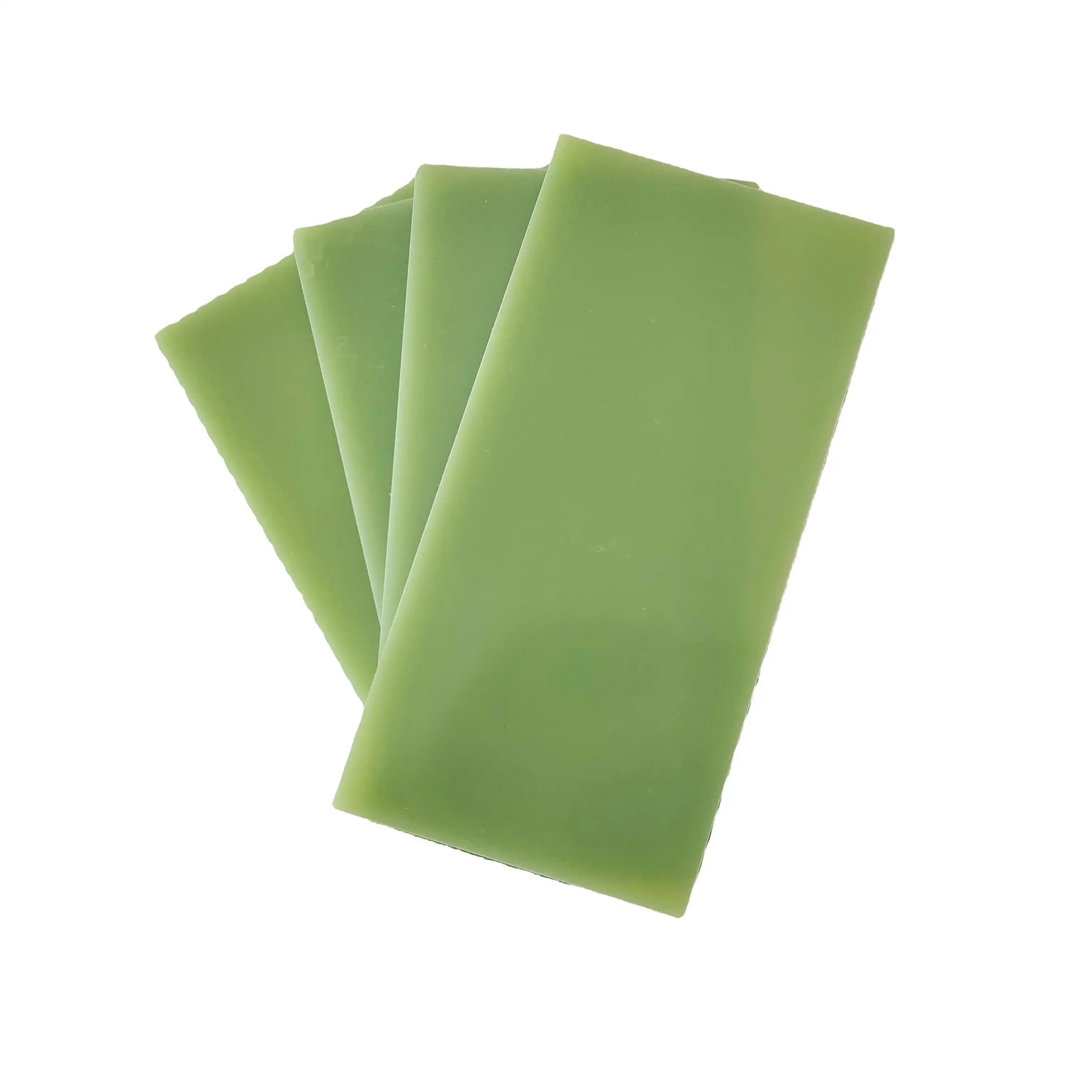
Fr4 94v0 Epoxy Board stands for a fiberglass-reinforced epoxy material that meets the requirements of NEMA LI 1-1998. "FR" means "flame retardant," and "94V0" means the best vertical burn rating under UL 94. This means that the material won't burn for more than 10 seconds and won't make any flaming drips. This approval is needed in areas like consumer electronics, aircraft, and industrial switchgear where fire spread is a major safety risk.
Core Technical Properties
The efficiency of the material is based on facts that can be measured. Its Glass Transition Temperature (Tg) is between 130°C and 140°C for normal grades. For high-temperature environments, High-Tg types go over 170°C. At 1 MHz, the Dielectric Constant (Dk) is between 4.4 and 4.8, and moisture absorption stays below 0.10%. This means that electrical performance is not affected by humidity. The structural strength of this material comes from woven glass fiber support, which keeps it from warping during the reflow and wave soldering processes.
Key Benefits of FR4 94V0 Epoxy Board in Electrical Applications
Not just one property of Fr4 94v0 Epoxy Board makes it so popular across many industries; it's the combination of several important performance traits that other laminates can't match at the same cost-to-performance ratio.
Here are the main benefits that engineers and buying teams count on:
- Superior Electrical Insulation: The material stops electrical arcing even in high-voltage areas because its dielectric breakdown voltage is higher than 40kV. This makes it necessary for switchgear phase barriers, busbar supports, and PCB boards where it is important that the signal stays intact when they are loaded.
- Thermal Stability Under Cycling: Standard grades can handle multiple temperature changes, from reflow soldering temperatures to operational heat, without delamination or measling (white spots). High-Tg versions make this stability last longer in temperatures close to 170°C, which means they can be used for generator coil insulation and motor parts.
- Certified Flame Resistance: UL 94 V-0 isn't just a marketing label; it means that the product is certified to resist flames. It meets the necessary safety standards in North American markets, allowing RoHS compliance and UL recognition for completed systems. This license is often listed as a must-have by engineering managers.
- CNC Machinability: The laminate cuts easily with carbide tools, even though it has abrasive glass fibers in it. Manufacturers make precision solder pallets, bed-of-nails test fixtures, and insulation spacers with very close size tolerances. These parts keep their shape even after being stressed mechanically and thermally many times.
Together, these benefits lower the risk of design, increase the service life of a product, and speed up regulatory approval. These are three results that are very important to engineering managers and technical procurement teams that have to meet tight compliance deadlines.
Comparing FR4 94V0 to Other Epoxy Boards and Materials
Procurement professionals can better use their budgets for sourcing when they know where this material performs better than alternatives. Different uses need different grades of laminate, and the differences in performance should be looked at honestly.
The CEM-1 boards are made of a paper-core composite and don't have the full-glass construction that keeps the boards' shape at high temperatures. Even though FR1 and FR2 grades are cheaper, they only have a V-1 or HB flame rating, which is not enough for uses that need to meet the strictest fire safety standards. Standard Fr4 94v0 Epoxy Board that doesn't have the V-0 approval might work just as well in safe areas but not as well in controlled areas.
Because its Dielectric Constant is between 4.4 and 4.8, Fr4 94v0 Epoxy Board loses more information at frequencies above 1 GHz than high-frequency laminates like Rogers 4003C. Rogers' materials are made for designing RF and microwave circuits, where a tight Dk tolerance is more important than flame resistance. For most industrial controls, power electronics, and consumer device PCBs that work below 1 GHz, though, the higher cost of Rogers rarely makes up for the better specifications.
The total cost of ownership equation always supports Fr4 94v0 Epoxy Board for mid-range electrical applications: it has a lower base material cost, is available from a wide range of suppliers, and is approved to comply with safety standards. This makes procurement easier and lowers long-term liability exposure.
Practical Applications of FR4 94V0 Epoxy Board in Electrical Engineering
PCB Substrates for Electronics and Telecommunications
As the core dielectric layer in multilayer PCBs for servers and telecom infrastructure, the laminate does its job. Its ability to keep working even when temperatures change protects signals in computer hardware over time, which is very important for gear that has to work constantly with changing heat loads.
High-Voltage Switchgear and Power Distribution
A high Comparative Tracking Index (CTI) is needed for machined parts like busbar supports, arc chutes, and phase barriers to keep electrical paths from forming on the surface when there is a lot of electricity and moisture. Power distribution engineers choose this laminate because it keeps the insulation's integrity in places with a lot of moisture, heat, and long-term electrical stress.
Test Fixtures and Industrial Machinery Components
This material, Fr4 94v0 Epoxy Board, is perfect for solder pallets and bed-of-nails test fixtures because it keeps its shape even after being heated over and over again in the same place. OEM sourcing managers in the car and machinery industries also use epoxy glass laminates for mechanical spacers and insulation pads. The quality of the assembly is directly affected by how well the thickness tolerance stays the same from batch to batch.
How to Choose and Where to Source FR4 94V0 Epoxy Boards?
Choosing the right thickness has real technical effects. Thick boards can hold THT parts and help with impedance control in signal-sensitive designs, while thin profiles work best for parts that need to fit in a small space, like USB accessories and Bluetooth modules. If the board is too thin, it could warp when it's soldered, especially in places where the temperature is high.
Before agreeing to a seller, procurement professionals should check the following when they are looking at them:
- For each grade of laminate, proof that it meets UL and RoHS standards
- There are different Tg levels (135°C standard vs. 170°C+ high-Tg) to match the temperature conditions of the job.
- The thickness range and tolerances, which are usually ±0.1 mm for precision uses
- CNC cutting and custom sheet sizes for parts that are made for specific uses
- For a steady supply, you need to know the minimum order amounts, wait times, and logistics infrastructure.
Long-term partnership value is often determined by supplier responsiveness and technical support after the sale more than unit price alone. If a seller has more than 20 years of experience making laminates and combined operations, the supply chain will be more stable, which will help keep production schedules.
Conclusion
In conclusion, Fr4 94v0 Epoxy Board is the best in electrical engineering because it is certified to be flame resistant, has a high dielectric strength, can withstand high temperatures, and can be machined on a CNC machine. These are all properties that engineers and procurement teams need in safety-critical assemblies. In any situation, this grade of laminate consistently provides measurable performance that meets both North American and international standards. It can be used for a multilayer server PCB, a high-voltage arc barrier, or a precise test fixture. The safest way to protect both the integrity of the design and your standing with the government is to buy from a certified, experienced supplier.
FAQ
Does the 94V0 rating make a significant difference over standard FR4?
Yes. Standard Fr4 94v0 Epoxy Board may have a V-1 or HB grade, which lets it burn for longer and spread with flames. The V-0 rating requires self-extinction within 10 seconds and doesn't allow burning particle release. This is an important difference for consumer electronics, industrial controls, and any other product that needs to be UL-approved in the U.S. market.
Is FR4 94V0 suitable for high-frequency circuit design?
It performs reliably in circuits that run at speeds below 1 GHz. When the frequency goes up, its Dielectric Constant of 4.4–4.8 causes signal loss, so low-loss laminates like PTFE or Rogers materials may be needed. When engineers are making RF or microwave assemblies, they should compare the Dk and Df values to the frequencies they want to use.
How should FR4 epoxy laminate sheets be stored to preserve quality?
Keep sheets laid out flat in a dry place where the temperature stays below 40°C and the relative humidity stays below 70%. Do not come into direct contact with water or strong solvents. When stored correctly, moisture and surface contamination are kept at bay, which can hurt the dielectric performance and bonding during later processing.
Get a Custom Quote on FR4 94V0 Epoxy Board From J&Q
Every order from J&Q is backed by more than 20 years of experience making shielding laminates and more than a decade of working with other countries to trade. Our combined transportation infrastructure allows us to provide a one-stop service from production to delivery, without the need for any extra costs or delays caused by middlemen. Get in touch with our technical team for custom specifications and bulk Fr4 94v0 Epoxy Board supplier prices, whether you need standard sheets or parts that are machined just for you. You can email us at info@jhd-material.com or go to jhd-material.com to look through our full laminate catalog and send us your question right away.
References
1. Underwriters Laboratories. UL 94 Standard for Tests for Flammability of Plastic Materials for Parts in Devices and Appliances. UL Standards & Engagement, 2023.
2. National Electrical Manufacturers Association. NEMA LI 1-1998: Industrial Laminating Thermosetting Products. NEMA, 1998.
3. Coombs, C. F., & Holden, H. T. Printed Circuits Handbook (7th ed.). McGraw-Hill Education, 2016.
4. IPC — Association Connecting Electronics Industries. IPC-4101E: Specification for Base Materials for Rigid and Multilayer Printed Boards. IPC, 2017.
5. Harper, C. A. Electronic Materials and Processes Handbook (3rd ed.). McGraw-Hill, 2004.
6. ASTM International. ASTM D149: Standard Test Method for Dielectric Breakdown Voltage and Dielectric Strength of Solid Electrical Insulating Materials. ASTM International, 2020.
