Why Use Epoxy Glass Cloth Laminated Tube in Electrical Applications?
2026-09-15 17:07:51
You already know that the wrong insulation material can ruin a whole system if you work with electricity, power distribution, or industrial machinery. Epoxy glass cloth laminated tube is made of alkali-free glass fibre cloth that is mixed with epoxy resin, rolled out, and then cured in a hot press. It has the strength, dielectric performance, and thermal stability that harsh electrical environments need. This material regularly works better than traditional options when it comes to stability, service life, and meeting UL and RoHS standards. It can be used to make parts for switches, transformers, or motor systems.
Understanding Epoxy Glass Cloth Laminated Tube: Properties and Manufacturing Process
What Makes This Composite Material Unique?
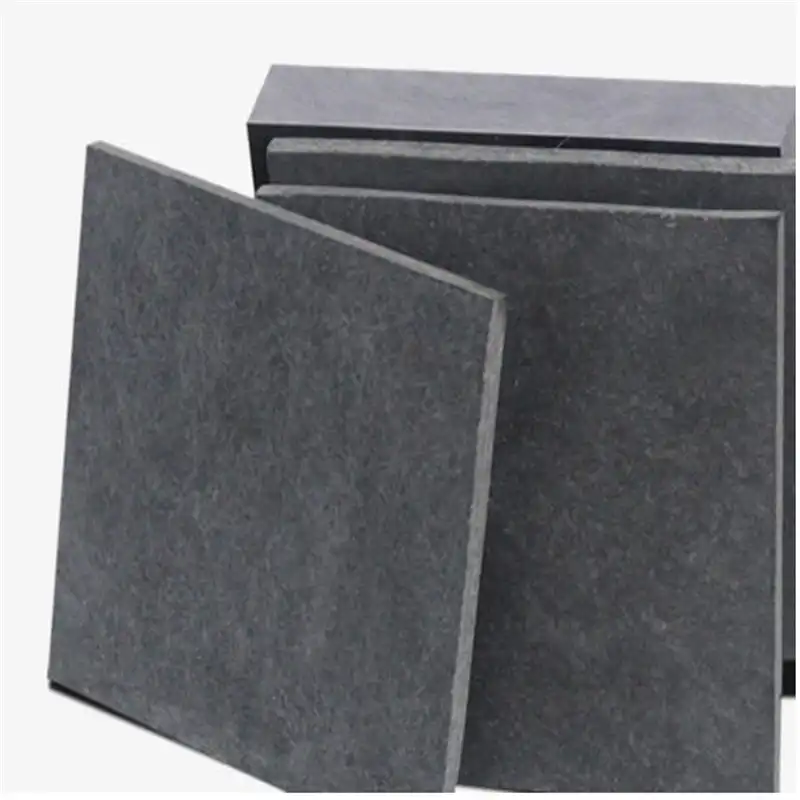
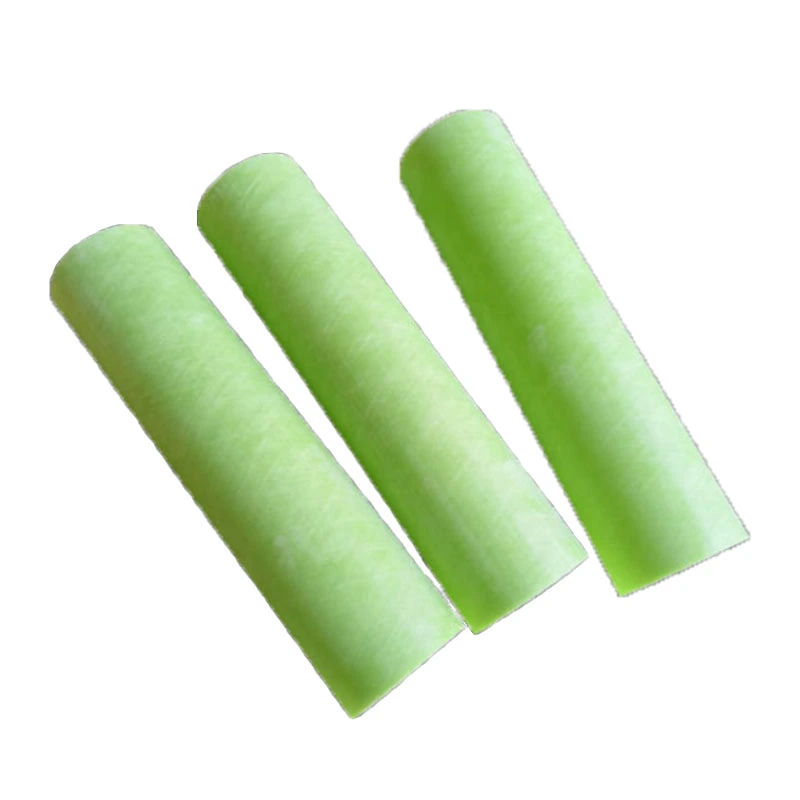
It's strong because Epoxy Glass Cloth Laminated Tubes are made of two strong materials that are combined together. Strength and stability come from alkali-free glass fibre cloth, and epoxy resin holds the layers together to make a dense, void-free matrix. A tube with a smooth, even surface that doesn't soak up water easily is the end result. It is also made to very strict width standards. When electrical stress is put on them for a long time, plastics and normal fibreglass tubes just can't compare.
The following are some important scientific standards for this material:
- The insulation is B class, and it can be used continuously at 130°C (G-11 grade can reach 155°C to 180°C in high-heat areas).
- It has a much higher dielectric strength than standard thermoplastics, which helps keep high voltages separate.
- The best twisting and compression strength is found when the material is loaded and removed many times.
- Absorption of water: A low absorption rate keeps the dielectric stable when it's wet or outside.
- Compliance: UL-certified (E310670), RoHS-compliant, and REACH-compliant so it can be sold in the US and Europe.
They are not made up on the spot; instead, they are based on the performance factors that expert buying teams and engineering managers use to decide which insulation parts to buy.
Manufacturing Process and Quality Controls
The first step for an Epoxy Glass Cloth Laminated Tube is to soak glass cloth in epoxy glue. After carefully winding on mandrels, the product is sealed in a heat press, and finally, it is precisely ground to the required size. Ventilation systems keep the tubes dry and clean during the whole process, and modern automated production lines make sure that the resin is spread out evenly. A test with alcohol makes sure the glue is completely dry. Over time, tubes that aren't fully sealed can leak contaminants into the transformer oil, which makes the insulator weaker. This is an important step.
The outside diameter, wall thickness, length, and resin grade can all be changed to fit your needs. This way, buying teams can give precise sizes for CNC-machined parts without throwing away any material.
Why Epoxy Glass Cloth Laminated Tubes Are Ideal for Electrical Applications
Electrical Insulation Performance
A material's dielectric strength and breakdown voltage are the main things that engineers check when they test it. It doesn't matter if switches and other power distribution equipment have short-term voltage jumps; the electricity doesn't flow through the epoxy glass cloth laminated tubes. They are not as likely to carry electricity as metals are, and they don't break down when tracked or arced as most plastics do.
Here are the main benefits in terms of energy and heat performance:
- High dielectric strength resists breakdown in high-voltage environments, including SF6 and vacuum circuit breakers where arc extinguishing forces are very high.
- Thermal aging resistance keeps the insulation qualities fixed over many heat cycles, which is important for transformer coil supports that have been submerged in hot mineral oil for decades.
- Chemical inertness to mineral oils, weak acids, and alkalis keeps sealed electrical systems structurally sound.
- Low thermal conductivity: In G-10 grade, these tubes have low thermal conductivity, which makes them good for cold equipment where thermal bridging needs to be kept to a minimum at temperatures close to absolute zero.
Longer service intervals, fewer breakdowns in the field, and cheaper lifecycle maintenance costs are all direct results of these benefits. These are results that matter to both engineers and procurement users.
Comparative Analysis: Epoxy Glass Cloth Laminated Tube vs Alternative Materials
Where This Material Outperforms the Competition?
A clear-eyed comparison is needed to choose the right tubular insulation material like Epoxy Glass Cloth Laminated Tube. While plain fiberglass tubes have good electrical properties, they don't always have the resin matrix density that is needed for tight dimensional tolerances. Carbon fiber tubes are very stiff, but they also conduct electricity, which means they can't be used for most insulation tasks. It's easy to work with thermoplastic tubes like PVC and nylon, but they break down quickly above 100°C and soak up water, which makes them less effective as dielectrics. Of course, metal pipe needs extra layers of protection all the way through.
Epoxy Glass Cloth Laminated Tubes occupy a distinct performance tier because they combine non-conductivity, high mechanical strength, chemical resistance, and thermal stability in a single machinable form. When OEM sourcing managers look at the total cost of ownership, the long service life and lower need for secondary insulation treatments make up for the higher unit cost compared to plastics. In bulk procurement scenarios, this ROI advantage becomes even more pronounced.
Practical Applications and Case Studies in Electrical Industry
Real-World Usage Across Critical Sectors
These tubes appear in a wide range of electrical assemblies. In large power transformers, they serve as tap changer insulation shafts and structural support beams, and they can be submerged in hot transformer oil for decades without delaminating. In high-voltage switchgear, they act as arc-quenching chambers and insulating operating rods, able to withstand explosive arc-quenching pressures while keeping the circuits separate. Motor manufacturers use them as coil insulation cylinders in dry-type transformers and as insulation end coils, where dimensional consistency directly affects winding quality.
A relevant industry data point: transformer insulation failures account for a significant share of unplanned outages in power distribution networks, and the main reason is often material degradation rather than a design mistake. By specifying fully hardened, approved Epoxy Glass Cloth Laminated Tubes, a main source of failure at the component level is removed.
Emerging procurement trends also reflect a growing preference for materials that comply with evolving electrical safety standards and support eco-friendly manufacturing claims — both areas where UL-certified, RoHS-compliant tubes hold a clear advantage over legacy insulation materials.
How to Choose and Procure Epoxy Glass Cloth Laminated Tubes for Your Business Needs?
Supplier Evaluation Criteria That Protect Your Supply Chain
When looking for a good Epoxy Glass Cloth Laminated Tube provider, it's not enough to just compare unit prices. What really affects the outcome of a project is how reliable the licenses are, how stable the batches are, and how well the seller can meet large-scale unique needs.
When looking at possible suppliers, put these things in order of importance:
- The certifications should be up-to-date and easy to check for UL, RoHS, REACH, and ISO 9001.
- Customisation: Make sure that the provider can make non-standard sizes with very tight tolerances, not just catalogue sizes.
- Batch consistency: Ask for test reports from more than one production run to make sure that the mechanical and electrical qualities stay the same.
- Lead time transparency: Know when things will be shipped and when they will be made before you commit to project deadlines.
- Logistics integration: Handoff risks and delivery delays are lower for suppliers who have their own logistics departments.
When you negotiate bulk orders with a single qualified seller instead of spreading the volume across several vendors, you usually get better pricing, faster scheduling, and more helpful technical support.
Conclusion
Epoxy Glass Cloth Laminated Tubes have a unique mix of dielectric strength, thermal stability, chemical resistance, and mechanical toughness that is hard to find in other materials used in harsh electrical environments. This material is used in a wide range of high-stakes electrical applications, such as cryogenic support structures, operating rods for switchgear, and insulation shafts for transformers. For buying teams and experts who are making choices about where to get things, the proof is clear: asking for approved, properly cured epoxy fibreglass tubes lowers the chance of failure, increases service life, and lowers the total cost of ownership.
FAQ
What is the difference between FR-4 and G-10 grade tubes?
In terms of strength, both grades are about the same. FR-4 has a UL94 V-0 flame rating because it has a flame suppressant made of bromine in it. Because of this, it is the best choice for protected electrical systems that need to meet fire safety standards. G-10 doesn't have any flame retardant additives, but it usually has slightly better mechanical properties and is widely used in scientific and cryogenic equipment because it can be bent at very low temperatures.
Can these tubes be CNC machined?
Yes. But because it has glass fibre in it, this material is rough. For machining, you need high-speed CNC equipment, carbide or diamond-tipped tools, and good dust extraction systems to keep the glass from delaminating and protect the workers from glass particles in the air.
How do epoxy fiberglass tubes perform in transformer oil?
Mineral transformer oils don't react chemically with high-quality tubes that have been fully cured. Because extractables that lower oil breakdown voltage can leak out of material that hasn't been sealed properly, the acetone extraction test is a standard way to check the quality of transformer-grade tubes.
What are the storage requirements?
Keep tubes stored flat on flat surfaces in a dry, room-temperature place that isn't directly exposed to UV light. In these situations, the shelf life is pretty much endless, though for important uses, re-qualification testing is usually done every 12 to 24 months.
Are these tubes suitable for outdoor use?
Yes, Epoxy Glass Cloth Laminated Tubes don't absorb much water and can stand up to weak acids, bases, and weathering. Because of this, they can be used for electrical structures and equipment outside, as long as UV shields or protective coverings are used for long periods of time in full sunlight.
Partner With J&Q — Your Trusted Epoxy Glass Cloth Laminated Tube Supplier
J&Q brings over 20 years of insulation material manufacturing experience and more than a decade of international trade expertise to every order, and our Epoxy Glass Cloth Laminated Tube reflects this commitment. Our epoxy glass cloth laminated tubes are UL-certified, RoHS- and REACH-compliant, and available in custom dimensions to meet your exact engineering specifications. With our own logistics infrastructure, we deliver one-stop service from production to your facility. Reach out to our technical team at info@jhd-material.com or visit jhd-material.com to request a quote or product samples today.
References
1. IEEE Electrical Insulation Magazine — "Epoxy Resin Systems in High-Voltage Insulation Design," IEEE, 2019.
2. ASTM International — ASTM D709: Standard Specification for Laminated Thermosetting Materials, ASTM, 2021.
3. IEC 60893 Standard — "Specification for Industrial Rigid Laminated Sheets Based on Thermosetting Resins," IEC, 2020.
4. Transactions on Dielectrics and Electrical Insulation — "Thermal Aging Behavior of Glass-Fiber Reinforced Epoxy Laminates," IEEE, 2018.
5. UL White Paper — "Flame Retardant Standards and FR-4 Material Compliance in Electrical Equipment," UL, 2022.
6. Journal of Composite Materials — "Mechanical and Dielectric Properties of Glass Cloth/Epoxy Laminates Under Cyclic Thermal Loading," SAGE Publications, 2020.