Why Your Epoxy Resin is Flexible and How to Fix It
2026-04-23 16:47:36
If your epoxy resin sheet is flexible instead of hard and structurally sound as you thought it would be, there is a major issue with either the material itself or the way it was cured. Flexibility lowers the electrical insulation, mechanical strength, and temperature stability that are needed for making PCBs, insulating transformers, and making parts for industrial machinery. When engineering managers and procurement teams know why this happens—for example, when the resin-to-hardener ratio is off or the curing temperature is too low—they can find faulty batches quickly and take steps to fix them. Fixing problems with flexibility right away protects product quality, cuts down on expensive complaints, and keeps UL and ROHS standards met, which are very important for making electronics and electrical goods.
Understanding Why Epoxy Resin Sheets Become Flexible?
The ability of laminated insulation materials to bend is more than just a matter of style. Epoxy laminates can't do their job as structural insulation in switchgear or load-bearing parts in industrial machinery if they feel sticky to the touch or bend when mild pressure is applied. Stiffness and physical stability are important to mechanical engineers. When something is flexible, it weakens the dielectric strength, raises the risk of creep under long-term load, and risks arc resistance in power distribution equipment.
Incorrect Resin-to-Hardener Ratios
The final mechanical qualities are set by the chemical reaction between the epoxy and the hardener. Even small changes from the manufacturer-specified mixing ratios leave unreacted parts that stop cross-linking from happening completely. When there is too much epoxy, the sheet is softer and less rigid, not hard enough for CNC cutting or making precise parts. On the other hand, too much hardener can make the epoxy brittle, though this usually shows up differently than the rubbery flexibility that comes from epoxy that isn't fully set. If procurement teams buy from manufacturers who don't have strict quality control methods, they might get batches with different formulations, which could make performance inconsistent across production runs.
Suboptimal Curing Conditions
During the hardening cycle, temperature and pressure start the polymerisation process, which turns liquid resin into a solid network of chains. If there isn't enough heat, the molecules don't fully join, so the curing process stops. During curing, humidity can mess up the chemical reaction by adding water, which makes the end product more flexible. Industrial epoxy sheets, such as 3240 epoxy resin board, need to be kept in controlled settings with certain temperature profiles for set amounts of time. When companies rush production or don't have the right curing ovens, the sheets they make have lower glass transition temperatures and less thermal stability. This means they can't be used in Class F (155°C) insulation systems in motor or generator parts.
Low-Quality Raw Materials and Thickness Variations
The raw ingredients are what make up any high-performance epoxy laminate. The epoxy phenolic resin blend provides chemical protection and dielectric properties, while the alkali-free glass fibre cloth provides mechanical support. To save money, suppliers use fibreglass or resin formulations that aren't up to par. This results in sheets that can't meet flexural strength requirements of ≥340 MPa or tensile strength requirements that are important for structural uses. Inconsistencies in thickness, caused by uneven resin impregnation or not enough compression during lamination, make weak spots that are easy to bend. Reliable thickness tolerances of ±0.05mm are very important when building battery pack barriers for cars or insulation frames for home appliances because precise machining needs to know how the material will behave.
Chemical Composition and Environmental Influences
Base resins, curing agents, and additives interact in complicated ways in epoxy resin sheet chemistry. These interactions change traits like flame resistance and UV stability. Pure epoxy systems in FR4 boards are different from phenolic-modified epoxy systems used in 3240 sheets. Pure epoxy systems in FR4 boards offer better mechanical strength but may have different bending properties. Long-term UV radiation breaks down epoxy polymers, which makes them less stiff over time by breaking down molecular chains. In the same way, letting water or chemical agents into the material can make it more flexible than what was intended. Knowing about these chemical weaknesses helps purchasing agents choose the right grades for different working conditions, like in damp transformer basements or factories with lots of solvents.
How to Fix Flexibility Issues in Epoxy Resin Sheets: Step-by-Step Solutions?
To fix problems with flexibility, you need to be involved in a planned way at several stages, from choosing the materials to checking the quality at the end. Managers of engineering teams can't just accept soft sheets and hope they work well. Failures of structural insulation in electrical equipment can be dangerous, and movable mechanical spacers can make it harder to build machines precisely. Using strict rules makes sure that the properties of the material are the same from batch to batch.
Precise Mixing and Controlled Curing Protocols
To get the best stiffness, you must first accurately measure the resin and hardener parts. With digital scales that are accurate to 0.1 grams, you don't have to guess. Resin makers give out mix ratios that are based on a lot of tests to find the best balance between reactivity, pot life, and final hardness. Deviation leads to flaws that can be predicted. Technique of mixing is also important—thorough, slow shaking keeps air from getting trapped and makes sure that everything is evenly mixed. When you mix at a high speed, bubbles are created that weaken the structure after it has dried.
The temperature of curing has a big effect on the end properties. Most industrial epoxy laminates need to be cured in two steps: first, they need to gel at room temperature, and then they need to be cured at a higher temperature. A normal protocol might say that the first set should happen at 25°C for 24 hours and then the temperature should rise to 120°C for four hours to finish cross-linking. When the temperature is the same all over the curing room, there is no differential hardening that can lead to warping or soft spots. Controlling the humidity during the fix stops the addition of moisture, which makes the matrix more flexible and lowers the glass transition temperature. When manufacturers buy programmable ovens with precise environmental controls, they always get sheets that meet the technical requirements.
Selecting Appropriate Sheet Types and Thicknesses
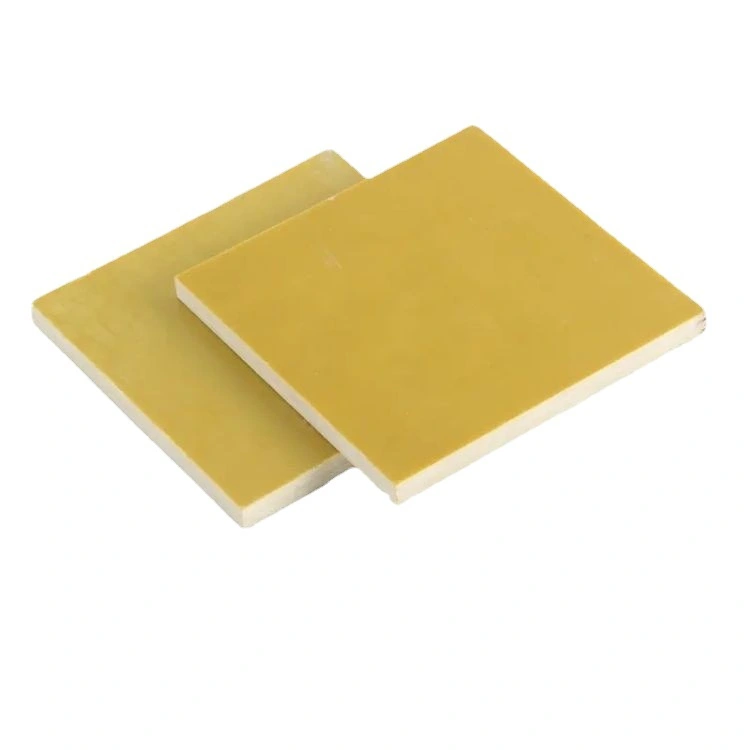
There are different types of epoxy laminates that are best for different uses. For electronics, FR4 sheets focus on being flame retardant, while 3240 epoxy resin sheets focus on being mechanically strong for insulating circuits and heavy machinery. The choice of thickness is based on energy needs and mechanical loads. A 3 mm sheet is stiff enough for switching terminal plates, while a 1 mm sheet might bend too much in the same situation. Thicker sheets don't bend as easily, but they are heavier and more expensive, so they need to be carefully balanced based on the needs of the application.
Because pigments are added, coloured and clear versions sometimes have different mechanical features. Fillers may be added to opaque sheets to make them stiffer, while clear sheets focus on visual clarity, which could mean they are less rigid overall. Instead of just using generic grade names, procurement requirements should clearly state the minimum values for tensile strength, compressive strength, flexural strength, and tensile strength. Before placing big orders, testing samples in real-world operating conditions shows which sheets meet the needs of the application.
Post-Processing Techniques to Enhance Rigidity
Post-processing for epoxy resin sheet can improve the performance of sheets that have been properly dried. After the initial cure, heat treatment can raise the glass transition temperature and lower the flexibility at high working temperatures by increasing the cross-link density. Controlled heating cycles, which last for a few hours at temperatures close to but not above the service limits, allow the leftover reactive groups to bond, which makes the molecular network tighter. This method works especially well when sheets will be used constantly at temperatures close to their rated limits. For example, heat-resistant fixtures in automotive parts or coil insulation in transformers are good examples of these situations.
Fibreglass binding improves the mechanical properties of sheets that are on the edge of being flexible. Adding more layers of glass cloth to the surface of a sheet using a suitable epoxy adhesive makes it much stiffer. This method works well for custom uses where normal sheets aren't rigid enough and changing the grade on a large scale would be too expensive. Careful surface preparation, like sanding to help the glue stick and solvent cleaning to get rid of dirt, makes sure that ties last. To keep the structure from warping due to differential temperature expansion, the reinforcement must be symmetric.
Real-World Case Study: Addressing Softness in Transformer Insulation
A company that makes power distribution equipment had trouble with the flexibility of epoxy sheets that were meant to be used as arc shields in medium-voltage transformers. The first material was the right thickness, but it bent too much during assembly, which made people worry about its long-term safety under thermal cycling. An investigation showed that the seller had changed the resin formulation without telling anyone, which meant that the phenolic content was lowered to save money. This made the material less strong mechanically while slightly making it easier to machine—not a good trade-off for this use.
Resolution meant going back to the original formula and testing all new materials. The maker made sure that every batch had a minimum flexural strength of 340 MPa, and sheets that didn't meet that standard were thrown away. In addition, they asked suppliers to show proof of performance at 155°C continuous running using heat distortion data. Putting these rules in place got rid of problems with flexibility and stopped expensive field failures. This case shows how important strong specs and testing for errors are in business-to-business purchases.
Ensuring Longevity: Maintenance and Handling Tips to Prevent Flexibility Problems
The properties of the material at arrival are just the beginning. The performance traits stay the same over the service life as long as the product is stored, handled, and managed properly. If you don't pay attention to these things, high-quality sheets can turn into problematic materials that become too flexible, delaminate, or lose their properties.
Storage Environment and Handling Best Practices
Temperature changes during storage for epoxy resin sheet can change the qualities of epoxy laminate. Long-term exposure to high temperatures speeds up ageing, which could lead to post-cure, which breaks down sheets and makes them rigid, or degradation of stabilisers, which causes property loss. In general, low temperatures are safer, but condensation during temperature cycling adds water to the cloth, which makes it more flexible. Climate-controlled buildings that keep the temperature between 15 and 25°C and the relative humidity below 60% are the best places to keep materials' properties. Gravitational loading can cause sheets and thin gauges that are easy to bend to twist. Vertical storage stops this from happening.
Handling methods keep mechanical damage from destroying the structure's integrity. When something hits glass cloth layers hard, the layers separate, leaving weak spots that can't be seen at first glance but are bad for the machine's performance. When you drag sheets across rough surfaces, you damage the protecting finishes and introduce contaminants that can make later bonding operations less successful. Damage during internal planning is kept to a minimum by teaching people who move things how to lift things correctly and giving them the right carts or racks. Edge protection during transport stops chipping, which can affect the accuracy of measurements during precise machining.
Routine Inspection and Early Detection
Periodic inspection methods find signs of wear and tear before they cause a catastrophic failure. Surface discolouration that can be seen is a sign of UV damage or chemical contact. Tactile testing shows that the surface is sticky, which means that the cure isn't complete or the liquid hasn't fully absorbed the material. Dimensional measuring checks for stability by finding warping caused by heat stress or moisture absorption. Setting baseline measurements at the time of receipt allows for objective comparisons during later inspections, which show trends that need to be looked into.
Keeping track of materials through batch coding and writing down where they are stored makes it easy to find the source of a problem quickly. When problems happen, it's easier to figure out what went wrong by keeping track of the manufacturing times and supplier information for each batch. This organised method backs up warranty claims and starts talks about improving supplier quality with facts. Colour-coded labelling systems help companies that deal with different types of materials because they keep materials from mixing, which can lead to application mismatches.
Conclusion
Improper resin ratios, insufficient curing, subpar raw materials, or environmental damage are just a few of the reasons why epoxy resin sheet flexibility exists. When engineering managers and procurement specialists deal with these problems in a planned way, using strict supplier evaluation, clear specifications, and thorough testing methods, they make sure that materials meet the needs of the application. When you compare epoxy laminates to other options, such as phenolic sheets, FR4 boards, and polyester composites, you can see how performance and cost affect the choice of material. The right way to store and handle materials will keep their properties throughout their useful life, protecting investments and making sure they work reliably in tough electrical, mechanical, and thermal uses. To be successful, you need to work with manufacturers who offer consistent quality, quick technical help, and a dedication to always getting better.
FAQ
Why do epoxy resin sheets feel like they can bend?
Flexibility usually happens when hardening isn't finished because the resin-to-hardener ratio is off, the curing temperature is too low, or the cure time is too short. Soft sheets can also be made from low-quality raw materials that don't have enough glass fibre reinforcement or from resin recipes that are too watered down. Flexibility problems can be caused by things in the environment, like too much moisture during production or bad storing conditions.
Does movement always mean that a sheet is broken?
Not all the time. Even after being properly cured, thinner sheets naturally bend more than thick sizes. Material grade is important—for example, some epoxy formulations put impact protection ahead of rigidity. But sheets that don't meet certain mechanical properties, like minimum bending strength, are flaws that make them unsuitable for uses that need structural integrity or dimensional stability.
How can buyers be sure that the width and hardness of the sheet meet the requirements?
To check the thickness, you need accurate measure tools, like micrometres that are set to 0.01mm. Barcol or Shore durometers are used for hardness testing because they give quantitative readings that can be compared to standards. Testing for flexural strength according to ASTM D790 gives accurate information about mechanical properties. Before accepting big shipments, make sure compliance by asking suppliers for certified test reports or doing your own independent research through qualified testing labs.
Partner with J&Q for Certified, High-Performance Epoxy Resin Sheets
J&Q has been making laminated insulation materials like 3240 epoxy resin sheets, FR4 boards, and phenolic laminates for more than 20 years. These materials are designed for tough electrical and mechanical uses. Our strict quality control methods make sure that each batch has the same mechanical properties, thickness tolerances, and dielectric performance. We know what electrical equipment makers, industrial machinery builders, and power sector experts need in order to do their jobs well. Email our technical team at info@jhd-material.com to talk about your needs, get samples to look over, and look into volume price that fits your buying needs. As a well-known provider of epoxy resin sheets with integrated logistics capabilities, we offer complete solutions from choosing the materials to delivering them, which helps you make your production more efficient and ensure the quality of your products.
References
American Society for Testing and Materials. (2017). Standard Test Methods for Flexural Properties of Unreinforced and Reinforced Plastics and Electrical Insulating Materials. ASTM D790-17.
International Electrotechnical Commission. (2019). Industrial Rigid Laminated Sheets Based on Thermosetting Resins for Electrical Purposes - Part 2: Methods of Test. IEC 61212-2.
Petrie, E.M. (2006). Epoxy Adhesive Formulations. McGraw-Hill Professional Engineering.
Standardization Administration of China. (2007). Electrical Insulating Materials - Industrial Rigid Laminated Sheets Based on Thermosetting Resins for Electrical Purposes. GB/T 1303.1-2007.
Lee, H., & Neville, K. (1982). Handbook of Epoxy Resins. McGraw-Hill Book Company.
Ellis, B. (1993). Chemistry and Technology of Epoxy Resins. Blackie Academic & Professional.


_1747991245292.webp)