94V0 FR4 Fiberglass Sheet Enhances Safety in Electrical Insulation Systems
2026-09-21 17:28:55
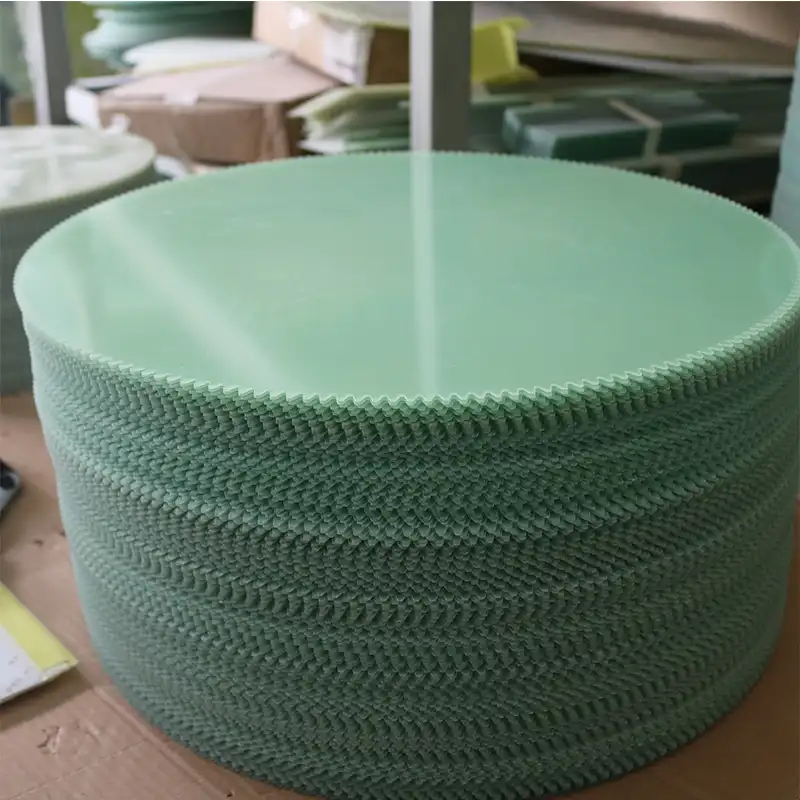
When I talk to engineering managers and procurement specialists about electrical insulation materials, one question comes up repeatedly: what material actually keeps a system safe when heat and voltage push it to the limit? The answer I give points to the 94V0 FR4 fiberglass sheet. This NEMA-grade laminate combines a woven fiberglass cloth substrate with a brominated epoxy resin to achieve the UL 94 V-0 flammability rating — the highest vertical burn classification available. It self-extinguishes within 10 seconds without dripping flaming particles, making it the material of choice for PCB substrates, high-voltage switchgear, and motor insulation across demanding industrial sectors in the United States.
Understanding 94V0 FR4 Fiberglass Sheet and Its Safety Properties
What Does the "94V0" Rating Actually Mean?
The UL 94 V-0 tag comes from the Standard for Safety of Flammability of Plastic Materials by Underwriters Laboratories. During testing, a vertical sample must put out the flame within 10 seconds of each application, and no flaming drips are allowed. If standard FR4 doesn't have this label, it may have a 94HB grade, which only needs to have horizontal burn resistance. This is a much lower standard for safety-critical electrical systems.
Core Electrical and Thermal Properties
This substance has a dielectric strength of about 50 kV/mm and a breakdown voltage that is usually higher than 40 kV when it comes to laminations. For normal grades, the glass transition temperature (Tg) is between 130°C and 140°C. For High-Tg types, it goes up to 170°C to 180°C. These numbers meet the quality standards set by IPC-4101 and ASTM D709, which are used by design engineers to choose materials for switchgear, transformer barriers, and PCB laminates.
Mechanical Durability That Supports Precision Applications
The density of the sheet is between 1.85 and 2.08 g/cm³, and its bending strength in the long-warp direction is more than 340 MPa. That stiffness is important when the material is used as a wave solder pallet or an ATE fixture, because physical warping from repeated heat cycles would cause parts to not line up correctly, which would lower the production yield. Because of its tight thickness tolerances (usually ±0.1 mm for thin sheets), the material is a good choice for CNC-machined insulation parts.
Comparing 94V0 FR4 Fiberglass Sheet with Alternatives for Optimal Procurement
94V0 vs. 94HB FR4: The Safety Gap
The difference between a 94V0 rating and a 94HB rating is not a small detail in the specifications. A 94HB material doesn't have to put out a fire on its own in a vertical example. This means it can keep burning in an electrical box that is upright. That gap is a real way for fire to spread in power distribution panels, motor control centers, or battery pack barriers in car parts. When buying materials for UL-listed products, procurement teams must make sure that 94V0 FR4 Fiberglass Sheet is V-0 certified, not just labeled as "FR4".
How CEM-1 and Aluminum Substrates Compare?
CEM-1 laminates have both paper and fiberglass cores, which makes them cheaper but less resistant to water and less stiff. They usually have a 94V0 grade, but their dielectric uniformity isn't as good as that of pure woven glass. Even though aluminum PCB substrates are better at getting rid of heat for LEDs and power electronics, they can't match the electrical isolation depth of an epoxy-glass laminate. The fiberglass epoxy sheet is still the better choice for situations that need both good shielding and flame behavior that can be managed.
Certifications and Supplier Reliability as Procurement Filters
When procurement managers look at suppliers, they should make sure that they meet basic requirements like UL 94V0 certification, RoHS compliance, and REACH compliance. These three certificates cover flammability, limits on dangerous substances, and chemical safety registration. All of them are important for getting products into U.S. and foreign markets. A useful step that lowers the chance of getting material that doesn't meet specifications is to ask for test results that are linked to specific production lot numbers instead of general certificates.
How 94V0 FR4 Fiberglass Sheet Enhances Electrical Insulation Systems?
The Material Science Behind Flame Retardancy
This material can put out fires on its own because of the brominated epoxy resin core. At the chemical level, bromine atoms mess up the combustion cycle, stopping the chain reaction that keeps a flame going. This isn't a coating that wears off over time; the flame-retardant chemicals are mixed in with the resin binder, so the property stays the same throughout the sheet's thickness and service life.
Real-World Applications Across Key Industries
Here are the main uses for this material that have been tested and shown to work consistently:
- PCB substrates for electronics manufacturing: The laminate withstands reflow soldering temperatures and provides stable electrical isolation between copper layers across thousands of thermal cycles, which directly extends product service life.
- Arc barriers and phase separators in switchgear: In high-voltage enclosures, the sheet acts as a physical barrier against arc flash propagation. Its V-0 rating means a fault event does not turn the insulation itself into a fuel source.
- Insulation pads and battery pack barriers in automotive assemblies: Tier-1 automotive suppliers rely on the material's dimensional stability and heat resistance to maintain consistent battery cell separation across temperature cycling from –40°C to elevated operating conditions.
The 94V0 FR4 Fiberglass Sheet material is used in all of these situations where failure is not just a quality issue but also a safety problem. Verified flame retardancy, high dielectric strength, and mechanical stiffness all work together to deal with all three types of risk at the same time.
Quality Assurance Parameters Engineers Should Verify
Along with a flammability test, the inbound inspection should include a Comparative Tracking Index (CTI) check, a Dielectric Breakdown Voltage test according to ASTM D149, and a surface integrity review to look for bubbles, dry spots, or resin-lean areas. For high-quality boards used in automated assembly lines, the thickness should be the same across a panel within ±0.1 mm, and the board should not bend more than 0.5%.
Procurement Guide: Sourcing 94V0 FR4 Fiberglass Sheets for Business Needs
Understanding Cost Structure and Order Planning
Prices for fiberglass epoxy laminates depend on the thickness of the sheets, the size of the panels, the Tg grade, and the number of orders. When you buy in bulk, the cost per unit usually goes down and wait times stay the same, which is important when your production plan is tight. Most reputable suppliers have standard lead times of two to four weeks for stock thicknesses. For custom dimensions, processing time is longer.
Evaluating Supplier Capabilities Beyond Price
A good supplier should show more than just a catalog of products. The evaluation factors that lower the risk of long-term buying are:
- Certified quality systems: ISO 9001 certification alongside UL 94V0 and RoHS documentation confirms systematic process control, not just occasional good results.
- Dimensional consistency across batches: Request thickness tolerance data from multiple production lots to verify process stability before committing to volume orders.
- Post-sales support and technical responsiveness: Suppliers who provide material data sheets, machining guidance, and failure analysis support reduce the engineering burden on the buyer's side.
With these criteria, procurement teams can move beyond transactional sourcing and build a relationship with a supplier that supports the quality of their products over time.
Logistics and Global Shipping Considerations
Shipping lead time and customs paperwork are important for U.S. buyers who buy 94V0 FR4 Fiberglass Sheet from foreign producers. Suppliers who have been exporting for a long time and have specialized in transportation can combine packages, keep track of paperwork correctly, and lower the risk of customs delays that throw off production plans.
Why Leading B2B Clients Choose 94V0 FR4 Fiberglass Sheets?
Operational Risk Reduction Across Buyer Profiles
This material is chosen by design engineers at companies that make gadgets because it meets the UL listing standards for finished goods. When it comes to industrial machines, OEM sourcing managers care about the mechanical strength and accuracy of the tolerances. Power sector buying experts need transformer and circuit parts to be resistant to flames and stable at high and low temperatures. Automotive R&D experts put a high value on battery pack units being accurate in size from batch to batch. There is a different main driver for each profile, but they all agree that verified V-0 flame retardancy is a must.
A Material With Long-Term Relevance
The world market for printed circuit boards keeps growing, and IPC and other industry experts think this will continue for the next ten years. As gadgets get more power-dense and transportation and energy systems become more electric, the need for solid, certified insulation substrates also grows. With a V-0 rating, the fiberglass epoxy laminate is not an old material; it is still used as a standard to measure newer materials.
Conclusion
The 94V0 FR4 Fiberglass Sheet is used in safety-critical electrical systems because it has qualities that can be measured and checked, such as a dielectric strength of about 50 kV/mm, the ability to put out fires on its own within 10 seconds, and a bending strength of more than 340 MPa. These are not just marketing claims; the values have been checked against ASTM, IPC, and UL standards and are documented. This laminate is a tried-and-true, low-cost option for buying teams and design engineers who need a material that works regularly under load, heat, and voltage. The last step in making a reliable supply chain from good material selection is to choose a certified supplier with clear quality documentation and reliable logistics.
FAQ
What is the difference between G10 and 94V0 FR4 Fiberglass Sheet?
Flame retardants that go out on their own are not in G10. FR4 is mostly G10, but bromine is added to the resin system to make it safe enough for UL 94 V-0. Because of this, FR4 is usually used for gadgets that need to meet fire safety standards.
Can this material withstand continuous high temperatures?
Class B insulation means that the standard grade can be used continuously at 130°C. For jobs that need to withstand higher temperatures, like soldering boxes or power electronics, High-Tg versions can handle temperatures up to 170°C to 180°C.
Does the sheet absorb moisture?
According to ASTM D570, it absorbs less than 0.2% of water. For precise applications, it is best to store high-frequency dielectrics in a dry place because even small amounts of absorption can change how well they work.
How should the material be machined?
Because the glass is so rough, you need tools covered in tungsten carbide or diamond. When cutting or drilling, high spindle speeds and good dust extraction keep the workpiece from delaminating and protect the health of the operator.
Is the green color required for the V-0 certification?
It is normal for epoxy to look green, but the color doesn't change the flammability rating. It doesn't matter if it's black, yellow, or white. UL 94 V-0 rating is based only on the chemistry of the resin and how it reacts to normal burn tests.
Partner with J&Q for Your FR4 Fiberglass Sheet Supply
J&Q has been making insulation sheets for more than 20 years and has been doing business internationally for more than 10 years. As a reliable provider of 94V0 FR4 Fiberglass Sheet, we maintain certified quality systems, consistent batch tolerances, and a dedicated logistics operation that makes shipping around the world easier. Our technical team is ready to help you find the panels you need, whether you need standard stock panels or panels with specific dimensions. To get examples and specs, email us at info@jhd-material.com or go to jhd-material.com.
References
1. Underwriters Laboratories. UL 94: Standard for Safety of Flammability of Plastic Materials for Parts in Devices and Appliances. 6th Edition, 2013.
2. IPC Association. IPC-4101: Specification for Base Materials for Rigid and Multilayer Printed Boards. IPC, 2017.
3. ASTM International. ASTM D709: Standard Specification for Laminated Thermosetting Materials. ASTM, 2021.
4. ASTM International. ASTM D149: Standard Test Method for Dielectric Breakdown Voltage and Dielectric Strength of Solid Electrical Insulating Materials. ASTM, 2020.
5. National Electrical Manufacturers Association. NEMA LI 1: Industrial Laminating Thermosetting Products. NEMA, 2021.
6. IPC Association. IPC-2221: Generic Standard on Printed Board Design. IPC, 2021.