
Epoxy Glass Cloth Laminated Tube Provides High Strength Insulation Solutions
2026-09-22 17:22:10
If you work in electrical manufacturing, power distribution, or industrial machinery, you already know how much depends on choosing the right insulation material. An epoxy glass cloth laminated tube is a rigid composite product made by winding alkali-free glass cloth impregnated with epoxy resin, then curing it under heat and pressure. The result is a tube that handles high mechanical loads, resists dielectric breakdown, and performs consistently across wide temperature ranges. This guide walks procurement managers, engineers, and OEM sourcing teams through everything they need to evaluate and source this material with confidence.
What Is Epoxy Glass Cloth Laminated Tube and Why Does It Matter?
Core Material Construction
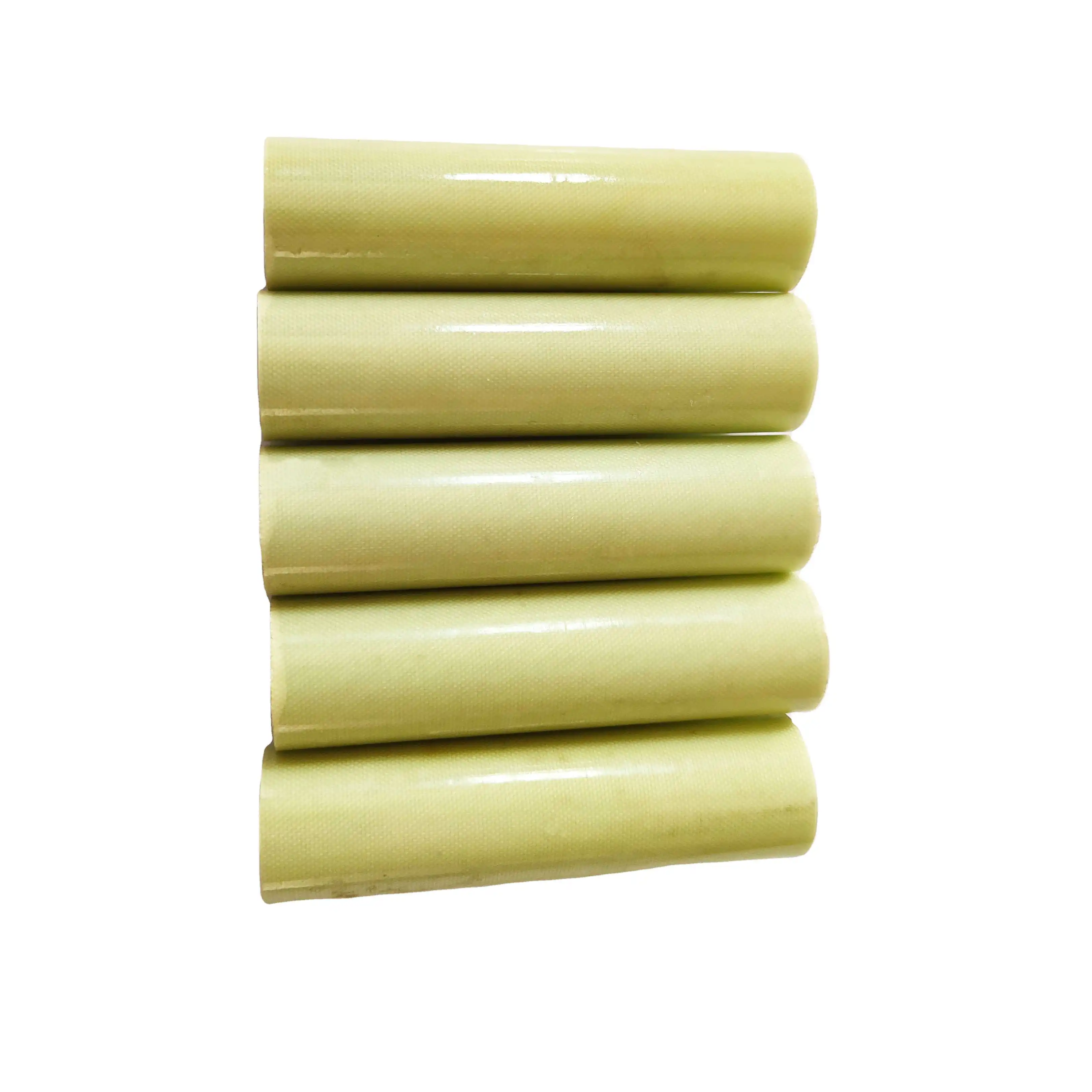
To make the tube, woven glass fabric is wound around a mandrel in a straight line. This is then glued together with epoxy phenolic resin while heat and pressure are carefully controlled. Each layer permanently fuses, so when the product is finished, it doesn't come apart when it's loaded. At 130°C, the insulation class is B class, and some grades, like G-11, can keep their mechanical strength up to 155–180°C. The main color is yellow, and the normal length is 1,000 mm, but you can get it in any size you want.
Physical and Electrical Properties
There are a number of measurable performance benefits that come with these tubes. They are very strong mechanically and electrically, very rigid and stable in size, have good dielectric properties, don't absorb water easily, can be made to fit very closely in thickness, and have smooth, clean surfaces. They are suitable for regulated areas, such as North America and Europe, because they have UL approval (E310670) and are compliant with RoHS and REACH. When your engineering team needs proof for approval processes, these confirmed specs are important.
Grade Differences: G-10, G-11, and FR-4
For general use, G-10 is approved for 130°C. G-11 is better at withstanding heat at 155–180°C for tough power production settings. And FR-4 adds a bromine-based flame retardant for a UL94 V-0 flame rating. Each grade is made of glass cloth in a similar way, but it is designed to handle a different type of risk. Knowing which grade is right for your working conditions saves both your tools and your compliance status.
Comparing Epoxy Glass Cloth Laminated Tubes with Alternatives
Epoxy vs. Phenolic Tubes
Phenolic tubes are cheaper at first, but over time they soak up more water and become less resistant to chemicals. In places like switchgear or transformers where oils or humid air are always present, phenolic materials can swell or crack. Epoxy Glass Cloth Laminated Tube: Epoxy glass cloth tubes can stand up to light acids, alkalis, and mineral transformer oils, and they will keep their measurements accurate for years to come.
Epoxy vs. Plain Fiberglass
While plain fiberglass tubes are a good insulator, they are not very strong when used as structural spacers or as working rods in circuit breakers. Epoxy-bonded glass fabric spreads load evenly in both the axial and circumferential directions, which makes it stronger and lighter. For uses like arc extinguishing tanks in SF6 breakers, this difference affects how long a part will last.
Cost and Thickness Tradeoffs
The cost of materials goes up when walls are thicker, but they protect against burst pressure and arc tracking better. Thinner walls are lighter and less expensive, but they still meet the insulating needs of lower-voltage systems. It is better to match wall thickness to real service voltage and mechanical load than to over-specify. This keeps purchase costs low without reducing safety margins.
Applications and Performance of Epoxy Glass Cloth Laminated Tubes
Many businesses need epoxy glass cloth tubes because they are strong and durable. Because they stay the same under stress, chemical exposure, and changes in temperature, engineers who can't afford field failures choose them.
Here are the main uses for these tubes where they provide measurable value:
- High-voltage switchgear and circuit breakers: Used as arc extinguishing chambers and insulating operating rods in SF6 and vacuum circuit breakers. The tube withstands explosive arc-quenching pressure while maintaining full electrical isolation between live and grounded components.
- Large power transformers: Serves as tap changer insulation shafts and structural support columns. The tube survives decades of immersion in hot transformer oil without delamination or contaminating the dielectric fluid — a critical quality verified by the acetone extraction test for full cure.
- Cryogenic and scientific equipment: G-10 grade tubes remain ductile and non-magnetic at near absolute zero temperatures, making them standard in superconducting magnets and LNG pipeline supports where thermal bridging must be eliminated.
These performance traits are backed by meeting ASTM standards and getting UL approval. Epoxy Glass Cloth Laminated Tube: This gives buying teams written proof of how the material will behave before they place bulk orders. Choosing a well-certified tube from the start lowers the chance of breakdowns in the field and the need for expensive repairs.
Procurement Guide for Epoxy Glass Cloth Laminated Tubes
Evaluating Supplier Certifications
Start by writing things down. A reliable epoxy laminate provider should have UL certification, show that they follow RoHS and REACH rules, and be able to give you test results for dielectric strength, flexural strength, and water absorption. Suppliers who have worked with major OEMs for a long time, like those who supply Schneider Electric or other global companies, can prove that their products are consistently made.
Customization and Lead Time Planning
Standard sizes like 14 mm × 18 mm or 18 mm × 22 mm ship more quickly, but for most serious uses, you'll need to make your own inner diameters, wall thicknesses, or cut lengths. For big transformer or switchgear jobs, plan talks about wait times early on. When equipment assembly schedules are set, having a supplier with its own production line and in-house logistics shortens the time it takes from order to delivery.
Sample Testing Before Volume Orders
Before agreeing to full production numbers, ask for a sample batch. Make sure the dimensions are correct, the surface is smooth, and the dielectric breakdown voltage is checked in real-world circumstances. Epoxy Glass Cloth Laminated Tube: In this step, your engineering team can also check to see if the tubes can be machined. Because they are rough, they need carbide or diamond-tipped CNC tools that are used with proper dust extraction. Both the budget and the project schedule are protected by making sure compatibility during the sample stage.
Why Choose Epoxy Glass Cloth Laminated Tubes for Your High-Strength Insulation Needs?
Longer Service Life, Lower Maintenance Costs
Epoxy fiberglass tubes can be kept for a very long time if they are stored properly: lying flat on supports in a dry room-temperature area away from direct UV light. Because they don't absorb much water and don't react with chemicals, they rarely need to be replaced on time. That means the total cost of ownership is cheaper than for materials that break down, absorb water, or need to be inspected more often.
Adaptability Across B2B Requirements
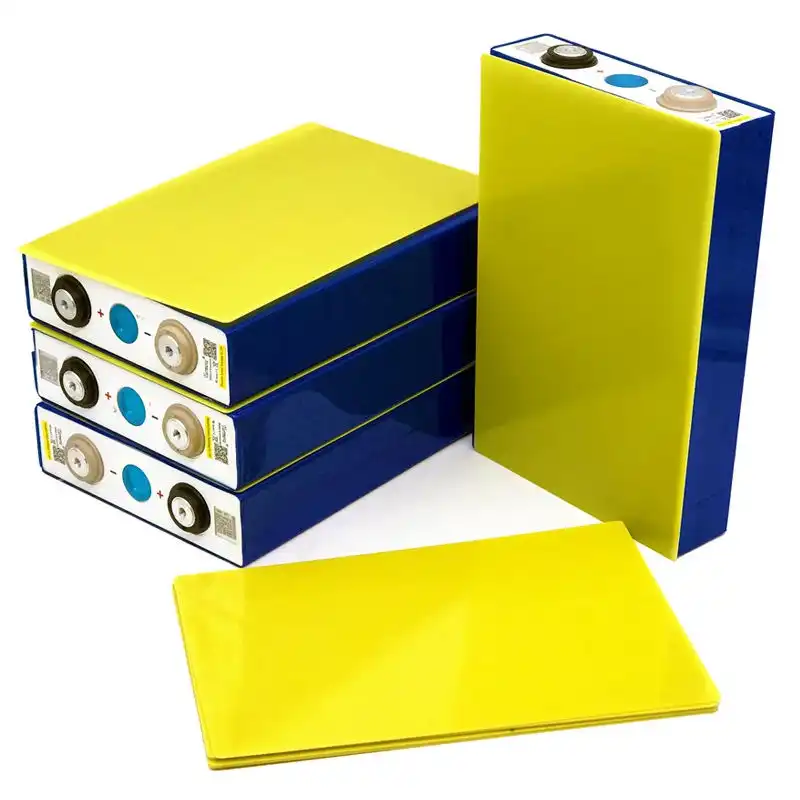
The same base material can be used to make motor parts, generator coils, or battery pack barriers for car systems. The only things that change are the wall thickness, width, and resin grade. Manufacturers of home appliances also use epoxy and similar laminates for motor brackets and insulation frames. In these cases, stability during mass production and consistent batch quality are very important.
Proven Track Record With Global Manufacturers
Large companies in the U.S. and abroad, including well-known electrical original equipment manufacturers (OEMs), have agreed to use products that meet the 3640 and 3240 grade standards. That history of acceptance gives procurement workers an outside proof point on top of internal testing, which speeds up the approval process for new supply relationships.
Conclusion
Epoxy Glass Cloth Laminated Tubes have a high dielectric strength, are mechanically strong, don't react with chemicals, and stay the same temperature. These tubes work well in places where other materials don't, like in high-voltage switches, generator coil supports, and cryogenic equipment. Your project and your budget will be safe if you choose the right grade (G-10, G-11, or FR-4) and check the supplier's certifications before placing large orders. J&Q's manufacturing depth and logistics infrastructure make it easy for teams in the US and around the world to source goods.
FAQ
What is the difference between FR-4 and G-10 epoxy glass cloth tubes?
The mechanical strength of both grades is about the same, but FR-4 has a flame retardant based on bromine that earns it a UL94 V-0 rating. G-10 doesn't have that additive, so it's not flame-resistant. However, its mechanical qualities are sometimes a little better.
Can these tubes be machined to custom dimensions?
Yes, CNC cutting works well, but the material is rough because it contains glass. To keep glass from delaminating and protect workers from glass particles, you need tools with carbide or diamond tips, as well as the right way to remove dust and cool the work area.
Will the tube degrade in transformer oil?
Mineral transformer oils can't change the way high-quality resin tubes work when they are fully set. Compounds that lower oil breakdown voltage can leak out of tubes that aren't fully dried. The acetone extraction test makes sure that the product is fully cured, and you should ask any supplier for it before you place an order for production.
What certifications should I ask for?
At the very least, look for paperwork from UL (E310670), RoHS, and REACH. If the use is in line with ASTM standards, make sure the test reports you get cover dielectric strength, flexural strength, and water absorption in a way that meets those standards.
How should these tubes be stored?
Keep them stored horizontally on supports to keep them from bowing or creeping. Do not put them in direct UV light. Instead, keep them somewhere dry and at room temperature. In those settings, the shelf life is infinite, but it is common to test again every 12 to 24 months.
Partner With J&Q for Your Epoxy Glass Cloth Laminated Tube Supply
J&Q has been making insulation materials for more than 20 years and has been trading internationally for more than 10 years. We are a reliable Epoxy Glass Cloth Laminated Tube seller, and we have our own logistics company, modern production lines, and systems for airflow and dust collection inside our own building. This means that we can handle everything from your order to delivery. You can get a unique price or sample right now by going to jhd-material.com or emailing info@jhd-material.com.
References
1. ASTM D709 – Standard Specification for Laminated Thermosetting Materials, ASTM International, 2021.
2. IEC 60893 – Insulating Materials: Industrial Rigid Laminated Sheets Based on Thermosetting Resins for Electrical Purposes, International Electrotechnical Commission, 2020.
3. UL 746B – Polymeric Materials: Long-Term Property Evaluations, Underwriters Laboratories, 2018.
4. IEEE Std C57.12.00 – Standard for General Requirements for Liquid-Immersed Distribution, Power, and Regulating Transformers, IEEE, 2021.
5. Handbook of Thermoset Plastics, 3rd ed., William Andrew Publishing, 2014.
6. Composites Manufacturing: Materials, Product, and Process Engineering, CRC Press, 2001.
_1764228361599.jpg)

