Choosing Phenolic Cotton Sheet for Machined Industrial Spacers
2026-11-03 17:22:38
Choosing Phenolic Cotton Sheet for machined industrial spacers comes down to five checks: load, temperature, voltage, moisture, and tolerance. Phenolic Cotton Sheet is a thermoset laminate made from woven cotton fabric and phenolic resin. It gives spacers rigidity, impact toughness, and easy machining at a moderate cost. It suits switchgear, motors, transformers, pumps, and appliance assemblies, provided the grade matches the duty. I recommend starting with the operating profile, comparing it against the datasheet, and approving a machined prototype before production. This guide covers properties, selection, alternatives, machining, and sourcing in plain terms.
Understanding Phenolic Cotton Sheet for Industrial Spacers
What Phenolic Cotton Sheet Is and How It Is Made?
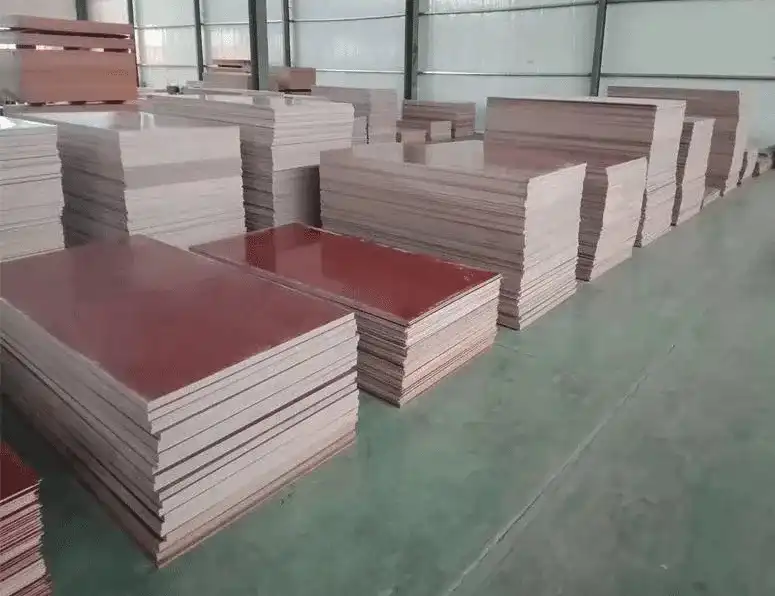
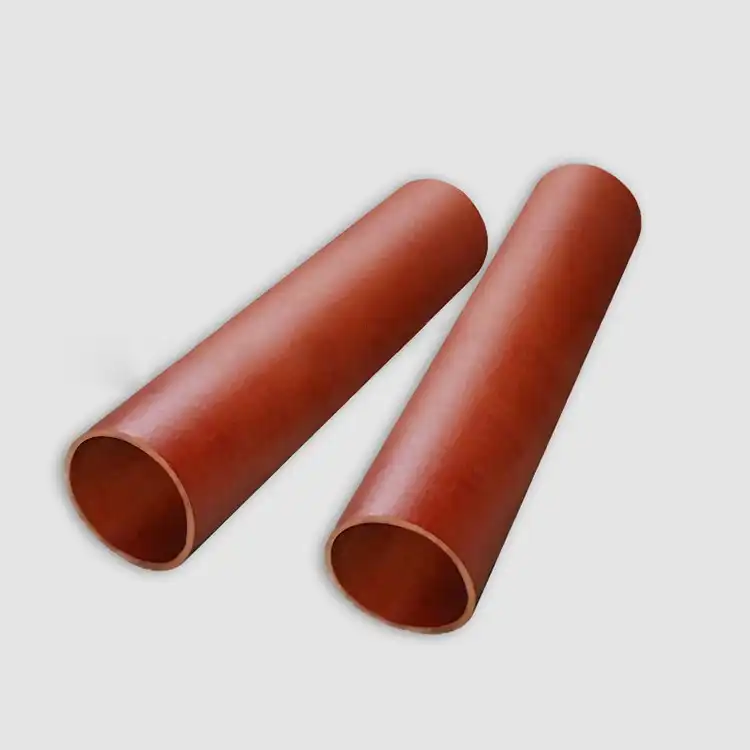
First, cotton cloth needs to be made in order to make Phenolic Cotton Sheet. The cloth is made with this glue. It's all over it. The pieces are then stacked and pressed together with heat and pressure at least 150°C. The sheet doesn't melt or flow back together when it gets hot after the glue has set. It depends on what is done with the fabric after it dries, the type of resin that is used, and how heavy the fabric is. Paper phenolic laminates aren't as strong or as hard to break as Phenolic Cotton Sheets. These days, they come in normal sheets, panels that can be cut to size, finished pieces, and parts that are already made. The steps are the same whether you buy a lot or just one item.
Why It Works for Spacers, Bushings, and Washers?
Spacers are used to keep holes together and sometimes to stop electricity from moving. This job works well with Phenolic Cotton Sheet since it is stiff, doesn't break easily, and is simple to cut into fine shapes. Noise and vibration are also lessened by the way the cloth is made. It has been used for a long time in quiet gears and guide rings because of this. Heavy machinery wears out or tears before it can break a steel shaft if a part gets stuck. Make supports, spacers, washers, and frames that keep heat in with it. People who work with motors, switchgear, transformers, and home appliances use it.
Grade Designations and Supply Formats
Industrial laminates must follow the rules in NEMA LI 1. One more is ASTM D709. Linen grades are marked with L and LE, and canvas grades are marked with C and CE. Grades that end in "E" are electrical, while grades that end in "C" or "L" are mechanical. As a rule, linen ends are sanded down more and are made from thinner cloth. It's impossible for me to tell what grade it is because each company has its own name. Instead, I always look at the datasheet. You can ask the seller if they have ready-made sheets, rings, spacers, or panels that have already been cut. How long and how much it costs to make the part depend on the arrangement.
Key Properties and How to Select the Right Grade
Mechanical and Electrical Properties to Check
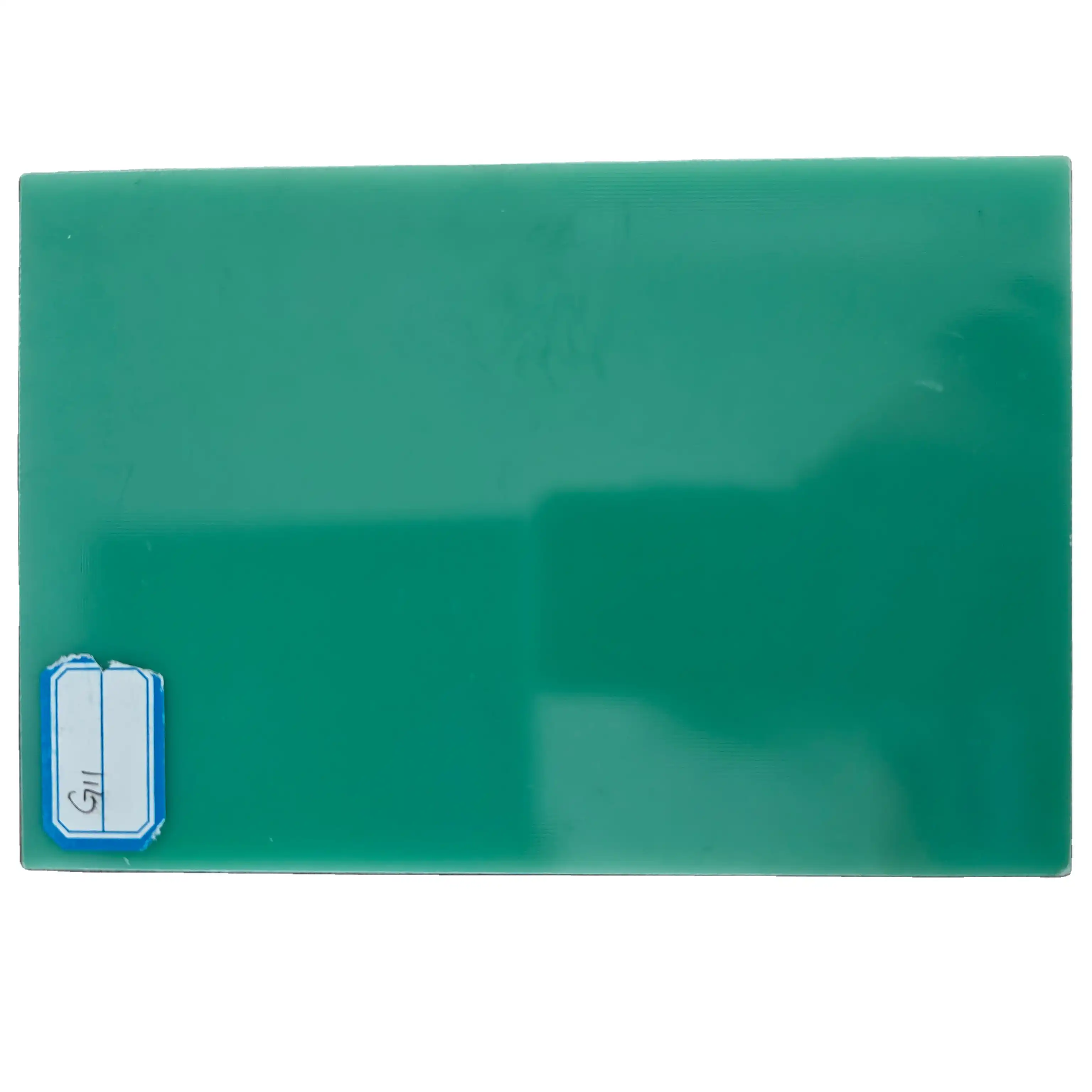
Step 1: Check the spacer's values when it is compressed, stretched, sheared, bent, and hit. Step 2: Do the same thing with electrical properties. Most of the time, spacers are used to push things closer together. After that, check the part's arc resistance, insulator resistance, and dielectric strength to see if it can split electricity. You need to know the length and width because the tilt, depth, direction, and amount of water change. How the tests are done is also important. NEMA LI 1 has a list of property values broken down by grade, and ASTM D149 talks about the voltage at which the dielectric breaks down. Polyester cloth and epoxy glass don't keep heat in or stop electricity as well. That is what you should use for things like busbar supports and terminal boards that don't need a lot of power.
Moisture, Temperature, and Chemical Exposure
Because they soak up water, cotton fibers can become a little thinner when it's humid. They can't keep heat in as well because of this. Find out how much water is used. If the site is outside or wet, make sure the edges are sealed, and the electrical grade is correct. Temp is important when you are under a lot of stress. A gap that holds a part together can move if you heat it and press on it. Find the best temperature for your load to do its job. Too strong an acid or base can damage phenolic resin, but many oils and chemicals can't. If someone says something general about the chemicals in your plant, don't believe it. Check that they are what the seller says they should be.
Matching Grade, Thickness, Tolerance, and Total Cost
Write down the name you want to use to begin with Phenolic Cotton Sheet. Temp, humidity, chemicals, voltage, speed, load (static or dynamic), and service life are some of the things that make this up. In order of how important it is to you, put your main need next to it: safety, strength, warmth, or durability. Look at the model to make sure the holes are thick, smooth, matched up, and exact. Also, leave room between the holes so that they can be cut out. Don’t just look at how much the sheet costs. These are the things that matter: tests, supplies, shipping, packing, waste, and extra work. Most of the time, a cheaper sheet that bends or breaks while being machined costs more than one that stays flat. People who buy a lot of tools and cars need to pay attention to this.
Comparing Alternative Materials and Common Applications
Phenolic Cotton vs. Phenolic Paper
Flat insulation frames and circuit boards are two electrical parts that can be made of phenolic paper and don't need to be strong. Cotton makes spacers stronger after being put together many times, with vibrations, tight bolts, and more putting together. They will last longer this way. It's often cheaper to use paper marks, which is good for computer work that needs to be done fast. Paper is best for small, light parts that are mostly electrical. As part of my job, I pick cotton when it needs to be stressed mechanically. To find the best one, you should look at the two grade datasheets made by various companies side by side.
Phenolic Cotton vs. Epoxy Fiberglass and Nylon
Electrical needs that are stiffer can be met by high-temperature epoxy fiberglass boards like FR4 and 3240 epoxy boards. This will help you keep PCBs and battery packs in place. It costs more and makes things work faster. You can hit and rub polyester, but when it gets hot, it changes size and soaks up more water. This Phenolic Cotton Sheet is good when you need something thick, warm, cheap, and simple to work with. Epoxy glass is better if you have to deal with very high temperatures or voltages all the time. Change to nylon if you want to slide quickly and easily. Datasheets and certification tests should have the last word.
Typical Industrial Applications
It's stiff and has light insulation, so it's used to make different types of busbar supports, switchgear spacers, and terminal supports. It's used to make electric parts for cars and generators, an axial washer, and a flange divider. Certain parts of ships and hydraulics can work in both oil and water. They are utilized in the creation of guide rings, pulleys, and quiet gears. There should be a link between each grade and the need for dielectric, speed, temperature, load, and vibration. To make sure that every order is the same as the last, OEM, support, and dealer buyers should add controlled drawings, version numbers, material specs, and uniform packaging.
Machining Phenolic Cotton Sheet Spacers
Cutting Methods and Tooling
You can CNC cut, saw, turn, mill, drill, ream, route, and route this laminate. You shouldn't use steel tools on the glue and cloth because they are rough. Instead, you should use sharp carbide tools or other tools that don't break down quickly. This will keep the sheet from coming apart. Use a spare plate to pull the side where the holes were made back up. Keep your lines straight and your cutting speed slow to avoid cracks, chips, burrs, and too much heat. Make the last pass lighter to get a better edge. You should leave some room on flats for cutting, and if the plan lets you, you can add edge bends. Because inside corners that are too sharp are likely to break.
Dust Control and Safety
It's bad for your eyes, skin, and lungs to breathe in fine machine dust from Phenolic Cotton Sheet. To clean up the shop, don't use compressed air to blow dust all over the place. Put on a mask and safety glasses instead. This is to find out if you are exposed to any particles that aren't already covered by OSHA's limit on air pollution. Check the supplier's safety data sheet and the program on your site. Hand tools and machine slides will stay in good shape as long as you clean up after yourself. These things are good for work and parts, and they don't cost much.
Tolerances, Inspection, and Prototype Approval
Most of the time, spacers need to be very thin, flat, straight, lined up, and have small holes in them. Let them dry out before you check them one last time. Also, make sure you're in a safe place to measure. Lanais made of cotton move around a bit when they get wet. Use calipers, micrometers, height gages, or CMM checks to do what the picture shows. Decide early on how the surface will look. Before you do it again, I believe you should verify that a model you created earlier works in the real world. You can learn more from fit, force, and clamp load tests than from any book. Make a note of the agreed-upon change to the drawing so that it can be used in all future work.
Sourcing, Validation, and Final Checklist
What to Request from a Supplier
If your customers need RoHS compliance documents, you should get them the exact grade, technical data sheet, certificate of conformity, batch information, dimensional tolerances, mechanical and electrical test data, temperature guidance, and any other documents they may need. Make sure the service provider can work with CNC spacers, rings that have already been turned, samples, and sheets that have already been cut to size. You should look at inspection reports, production capacity, lead time, logistics (to make sure you can keep track of the goods), and packaging. J&Q has made and sold soundproofing sheets for over 20 years. For more than 10 years, we have also helped countries deal with each other. We can help you with everything since we're a transportation company.
Writing a Clear RFQ
It takes less time to get good help when the RFQ is well-organized. Writing down the model, the reason for making it, the size, the weight, the load, the temperature, the amount of electricity needed, the climate, the limits, where the goods will be shipped, and any forms that need to be filled out is important. Let us know if you need blanks, spacers, or sheets that are already made. This makes it possible for the provider to give a grade without having to guess. They can name one instead. They can also tell you how much it costs to pack and cut everything at the same time. Because of this, I always say to send a picture with the first one. A lot of the time, quotes need to be changed without it, which slows down projects.
Validating Before Production Approval
Compare the information given about the material's type, thickness, size, shape, surface quality, and any flaws with what you saw before you bought it. Electricity parts might need to be checked for their ability to stop sparks, their dielectric strength, their insulator resistance, or their ability to handle changes in humidity. There are times when mechanical parts may need to be studied, like when they are shaken, put together over and over, wear out, or the temperature changes. You should agree with the first piece in real life. Every batch should be the same after you're done. The raw materials should be watched, and the package should be safe. You can change the order of things if you remember them well enough. Things don't break down as often in the field because of these steps. They also check to see if there are enough OEM and repair parts.
Final Decision Checklist
When you need to make holes, Phenolic Cotton Sheet is a good choice because it is stiff, strong, easy to work with, insulated, and lasting. You can also get it made just for you for a small fee. You might want to look at other materials if you need to deal with harsh chemicals, high temperatures that don't change, high-speed bearings that don't slip, good water resistance, or high-performance electrical needs. Before you place your order, make sure you know the lead time, shipping, chemicals, voltage, thickness, limits, machining, testing, papers, load, temperature, MOQ, and help for repeat orders. If everything looks good, move on to a prototype.
Conclusion
For a business spacer that needs to be stiff, strong against pressure, insulating, cheap, and easy to machine, Phenolic Cotton Sheet is a good choice. The right grade should be picked based on the chemicals, load, temperature, electricity, and humidity. Every grade, width, and direction has its own number on the document. It's stronger than phenolic paper and can handle more force. It's not as strong as nylon, epoxy, or fiberglass when it comes to heat, electricity, or pressure. Keep the dust down, use sharp tools, and be willing to make samples when you're cutting. The first item is checked out, the pictures are clear, and orders that are placed again and again are always the same. It's less likely that something will go wrong if the right tools are used.
FAQ
What is Phenolic Cotton Sheet used for?
As well as making terminal boards, guide rings, and silent gears, it's also used to make other things. It's not too thick, so it's good for supports that go from low to medium power. It's strong enough for mechanical parts. What makes it work well is the grade and thickness.
Does it absorb moisture?
Yes. It's not as warm to sleep on cotton strands because water can change their size. See how much water the parts can hold in real life. This is very important if you're going to use them outside or in wet places.
What should I send for a quote?
As well as the goods' width, weight, load, temperature, voltage, and limits, please send a picture of them and the address where they should be sent. Please let us know if you need new sheets, spacers, or sheets that have already been made.
Is it the same as Bakelite sheet?
Not really. Bakelite sheets are a type of phenolic plastic that often have paper stuck to the back of them. On the other hand, the Phenolic Cotton Sheet is stronger since it is made of cotton.
Request a Phenolic Cotton Sheet Quote from J&Q
Your project or picture can be sent to info@jhd-material.com, and our team will help you choose the right grade and give you a price quote. For more than 20 years, we've sold Phenolic Cotton Sheet. We have standard sheets, panels that can be cut to size, prototypes, and spacers that have been machined. We have our own logistics company that helps us deliver everything in one place. Tell them where it is, how hot it is, how much power it has, and how much it's being used. You can go to jhd-material.com to learn more about the item.
References
1. NEMA LI 1 Industrial Laminated Thermosetting Products, 1998
2. ASTM D709 Standard Specification for Laminated Thermosetting Materials, 2017
3. ASTM D149 Standard Test Method for Dielectric Breakdown Voltage and Dielectric Strength of Solid Electrical Insulating Materials, 2020
4. Machinery's Handbook, 31st Edition, Industrial Press, 2020
5. Phenolic Resins: A Century of Progress, Springer, 2010
6. OSHA Permissible Exposure Limits – Annotated Tables, Occupational Safety and Health Administration, 2020
_1740986340093.webp)