
Custom Fabricating 3025 Phenolic Gears: Step-by-Step Guide
2026-07-06 17:16:45
Custom making 3025 phenolic gears means turning fine-weave phenolic cotton cloth laminate into precise mechanical parts by choosing the right materials, using CNC machines, and checking the quality. This method uses 3025 phenolic sheet's special features—its resistance to wear, ease of machining, and high mechanical strength—which come from the bonding of phenolic resin to cotton fabric—to make gears, bushings, and structural parts for industrial machinery, electrical equipment, and power transmission systems that run quietly. By understanding each step of the manufacturing process, you can get the best results and save money.
Understanding 3025 Phenolic Sheet for Gear Fabrication
When choosing materials for making handmade gears, it can be hard to find the right balance between mechanical longevity and manufacturing accuracy. Acrylic laminates made from phenolic cotton are a great option that meets both needs.
Material Composition and Manufacturing Process
Fine-weave phenolic cotton cloth laminate starts with carefully chosen cotton fabric that has phenolic resin binders soaked into it. Manufacturers put a lot of heat and pressure on these layers to make a hard thermosetting material that has a density of 1.35 to 1.45 g/cm³. When compared to coarse-weave types, fine-weave types, which usually have 25×25 yarns per centimeter, have better surface finish and edge stability. This way of making things makes a Class E shielding material that can work continuously at temperatures up to 120°C (248°F). This means it can be used for parts of motors and transformers where thermal stability is important.
Key Technical Specifications
The material has a tensile strength of over 120 MPa and a bending strength of over 100 MPa perpendicular to the laminates. Its joining strength stays strong at around 5000 N, which keeps it from delaminating during cutting. Dimensional tolerance checking is very important during purchase because differences in thickness have a direct effect on the accuracy of CNC machining and the performance of the end part. The material meets GB/T 5130-1997 standards and is in line with foreign standards like IEC 60893-3-4 (Type PF CC 201) and NEMA Grade LE. This makes sure that the quality is the same from batch to batch.
Advantages for Industrial Applications
To understand why engineers choose this material for making gears, we need to look at what it can do. The laminate is very resistant to wear and has a low friction coefficient when properly oiled, which makes parts last longer in settings with a lot of wear. Its ability to resist solvents and mineral oils makes it very useful in places where oil is present, like generator housings and gears. Unlike options like glass-fiber epoxy, cotton reinforcement is more focused on being mechanically machinable, which means it can be shaped into complex forms and held to tight tolerances without the need for special tools.
The substance also doesn't spark, which is important for handling areas that are likely to be unstable. This helps with safety issues in chemical plants and refineries. Noise reduction is another useful benefit—phenolic gears work more quietly than metal versions, which is important for precision equipment and protected machinery where noise levels affect worker comfort.
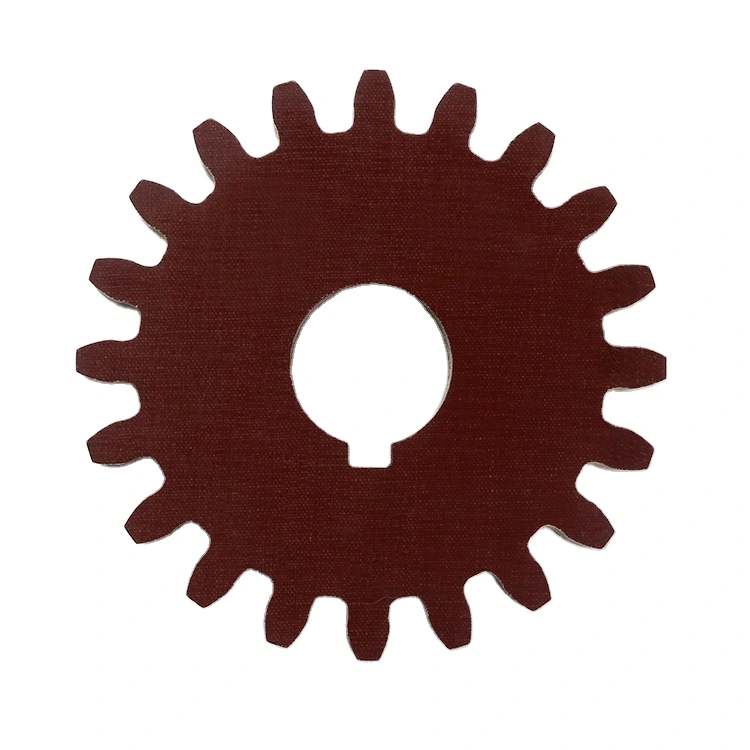
Step-by-Step Process to Custom Fabricate 3025 Phenolic Gears
Taking raw laminate sheets and turning them into precise gears requires careful planning and execution. For each job, we divide the making process into separate steps that build on top of each other.
Material Selection and Quality Verification
The first step in the production process of 3025 phenolic sheet is to choose the right grade and check the quality standards. The procurement teams should check the surface's quality, looking for bubbles, resin that isn't getting enough, or impurities that could cause stress peaks during operation. At this point, tests in the lab are very important. Water absorption tests show how the cotton base reacts to humidity, and insulation resistance tests make sure the material keeps values higher than 1×10⁷ Ω after being submerged. Testing the bond strength makes sure that the laminate won't split during the next steps of the cutting process. When you ask providers for a Certificate of Analysis (COA), it shows that they have followed the rules.
Design Considerations and CAD Modeling
When engineering something, they have to think about things like how much weight it can hold, how much power it needs, and the weather. CAD software lets you create exact tooth profiles, figure out gear ratios, and look at stress before you go into production. By making a prototype, you can test the features of the gear mesh, measure the backlash, and see how well it works in hot or cold conditions that are similar to real-life situations. During this step, problems with the shape or size of the teeth that might affect their performance are found.
Cutting and Shaping Techniques
Precision is needed for gears to work, and modern grinding techniques provide it. CNC milling can make complicated tooth profiles and hub geometries with high precision and tight tolerances. Laser cutting is good for jobs that need complicated forms, but the edges may need to be finished. When working with sheets that are thicker than 3 mm, getting them up to 90–100°C first stops the edges from cracking during punching. The fine-weave structure makes clean cuts easier, which means less trash and less need for extra processing.
Surface Finishing and Quality Control
Post-machining processes make the part more resistant to wear and make sure the dimensions are correct. Deburring gets rid of sharp edges that could cause problems with assembly or speed up wear. Polishing or grinding the surface to make it smoother improves the quality of the gear mesh, which lowers noise and friction while the machine is running. Some quality control methods are using coordinate measuring tools to check the sizes of things, analyzing the roughness of surfaces, and putting things through practical tests while they are loaded. Before being packed, these steps of checking make sure that each gear meets the required limits.
Packaging and Delivery Logistics
Protecting finished parts during shipping keeps them from getting damaged, which could affect how well they work. Specialized packaging has moisture barriers and impact protection for delicate tooth profiles. This is especially important because cotton substrates are sensitive to humidity. Our combined logistics services make delivery easier by arranging foreign shipping, customs paperwork, and following import rules. This coordination cuts down on wait times and makes it easier for procurement teams to handle the supply chain.
Comparing 3025 Phenolic Sheet with Other Materials for Gears
The choice of material has a big effect on how well the gear works, how much it costs, and what it can be used for. When you compare 3025 phenolic sheet to other materials, you can see that they have clear pros and cons.
Performance Against Epoxy Glass Laminates
Because they favor electrical insulation strength and temperature performance (Class F rating), epoxy glass sheets like 3240 grade can be used in high-voltage situations. But cotton-based phenolic laminates are better for making mechanical parts because they are easier to work with and last longer. The rougher glass fiber support in epoxy sheets can make tools wear out faster when they are being machined, which raises the cost of production. Cotton cloth makes surfaces that are smoother, which is good for gear uses where the quality of the mesh affects noise and efficiency.
Thermal and Moisture Resistance
Higher-grade epoxy materials can handle temperatures up to 155°C, while phenolic cotton only works effectively up to 120°C. This heat edge is important for uses that need to be exposed to high temperatures all the time. Moisture protection comes with a cost: phenolic materials are good at blocking oil, but they soak up water more quickly than glass-reinforced options. Electrical qualities can get worse over time when exposed to humidity, but mechanical strength is mostly unchanged. In most industry setups, these problems can be avoided with good storage and environmental controls.
Cost and Availability Considerations
Usually, phenolic cotton laminates are less expensive than their glass-epoxy counterparts. This can save you money in mechanical uses that don't need very good electrical shielding. Material availability is still high thanks to well-established supply lines and the fact that many makers make standard grades. Phenolic materials are good for high-volume production runs because they are cheaper when bought in bulk.
Procurement Guide: How to Buy 3025 Phenolic Sheets for Custom Gears
To choose a supplier and figure out how to buy things, you need to know the important factors for review and the problems that could come up regarding 3025 phenolic sheets.
Evaluating Supplier Credentials
Suppliers you can trust show that they follow licensing rules by using ISO quality management systems, RoHS limits on dangerous substances, and REACH chemical safety rules. Looking at a supplier's manufacturing skills can help you figure out if they can keep thickness limits and surface quality the same from one production batch to the next. Partnerships that last for a long time with both domestic and foreign trade companies show that the company is reliable and meets service standards. Customer reviews and case studies give you an idea of how well delivery works and how quickly technical help responds.
Pricing Structures and Customization Options
Understanding the different parts of price helps make the most of buying funds. Orders in bulk usually get volume savings, which lower the price per item by a large amount. Customization services, such as cutting to a specific size, choosing a thickness, and finishing the edges, may cost more but get rid of the need for extra processing. To accurately compare prices between suppliers, you should ask for thorough quotes that list the costs of materials, labor, and shipping.
International Shipping and Compliance
Cross-border buying adds organizational challenges that need to be managed proactively. Suppliers who offer combined services make it easier to coordinate, handle customs paperwork, figure out duties, and forward freight. Clearance delays can be avoided by knowing the rules about importing phenolic products. Packaging rules must keep things safe while they're being shipped internationally and also meet the needs of the carriers. Tracking systems make shipments visible, which helps with planning supplies and setting up production schedules.
Ensuring Quality and Trust: Choosing the Right 3025 Phenolic Sheet Supplier
The supplier you choose for your 3025 phenolic sheet has a direct effect on the dependability of the parts, the timing of the project, and the long-term success of the business. We know that careful screening keeps problems from getting worse and costing more in the future.
Certification and Standards Adherence
Checking a supplier's certifications that show they are committed to industry standards is the first step in quality assurance. Systematic quality management is shown by ISO approvals, and material-specific compliance, like UL recognition or RoHS compatibility, proves that the product is safe for use in certain situations. Suppliers should give test results that list the product's physical and electrical qualities as well as its chemical resistance. These reports help engineering teams make sure that the material specs match the needs of the application.
Brand Reputation and Customer Experience
Looking at a supplier's past performance shows trends in the quality and dependability of their service. Case studies of successful projects in similar fields give people faith in the technology's abilities. Customer reviews give you an idea of how responsive contact is, how well problems are solved, and how consistent service is. When a provider has worked with electrical equipment manufacturers, machinery builders, and automotive suppliers before, they know the unique needs and difficulties of each business.
OEM Partnership Capabilities
The best suppliers do more than just provide materials; they also give full fabrication help. Custom cutting services, CNC machining, and help with testing all make output more efficient. Minimum order amounts that are flexible can be used for both making prototypes and making a lot of them. Technical advice helps make ideas easier to make, which could lower costs and raise performance. These qualities of a partnership encourage new ideas and make it easy to adapt quickly to changing project needs.
Conclusion
When making phenolic cotton gears to order with 3025 phenolic sheet, you have to pay close attention to choosing the right materials, making sure the gears are perfectly machined, and checking the quality. Because they are easier to work with, last longer, and are stronger than other materials, fine-weave phenolic laminates are perfect for industrial uses that need to be reliable and cost-effective. Engineering teams and buying managers can make better choices when they know how things are made, how different materials compare, and the best ways to buy things. Partnering with experienced providers who offer full support from the first meeting to delivery is the best way to make sure that a project is completed successfully and that operations run smoothly in the long term.
FAQ
What maximum operating temperature can 3025 phenolic gears withstand?
As a Class E shielding material, this combination can be used continuously at temperatures of up to 120°C (248°F). Temperature spikes that last only a short time above this level usually don't cause failure right away, but long-term contact may weaken the mechanical qualities over time.
Can phenolic sheets accommodate irregular gear shapes through custom cutting?
The fine-weave structure makes it possible to punch and machine shapes with complicated shapes. CNC milling and laser cutting can still be used to make designs with complex tooth patterns, internal cutouts, and uneven shapes. Before punching, preheating thicker sheets keeps the edges from breaking and makes sure the cuts are clean.
How does phenolic performance compare to epoxy sheets for electrical insulation?
Epoxy glass laminates are better for transformer parts and switches because they have higher dielectric strength and better high-voltage performance. For motor parts and lower-voltage uses, phenolic materials provide enough protection. For mechanical parts, they provide better machinability and wear resistance.
Is moisture absorption a concern for long-term gear applications?
The cotton support makes the cloth water-resistant, not waterproof. Controlled settings with mild humidity offer little risk, and the material works great in situations where it is submerged in oil. In places with a lot of humidity, you might need protected coats or different materials that are reinforced with glass fiber.
Partner with J&Q: Your Trusted 3025 Phenolic Sheet Manufacturer
J&Q brings to every project more than 20 years of experience in production and 10 years of experience in foreign trade. As a well-known provider of 3025 phenolic sheet, we follow strict quality control standards and have all the necessary certifications to back them up. Our combined production and logistics operations offer a one-stop service, from choosing the right materials and making them to shipping them internationally and providing help after the sale. We work with engineering teams to make ideas as easy to make as possible, give models for testing to make sure they work, and then smoothly move to mass production. Get in touch with our technical team at info@jhd-material.com to talk about your unique gear manufacturing needs and get quotes that are made to fit your project.
References
American Society for Testing and Materials. (2021). Standard Specification for Industrial Laminated Thermosetting Products: ASTM D709-20.
National Electrical Manufacturers Association. (2019). Industrial Laminated Thermosetting Products: NEMA LI 1-2019.
Institute of Electrical and Electronics Engineers. (2020). Guide for Insulation Maintenance of Electric Machines: IEEE Std 432-2020.
Society of Plastics Engineers. (2018). Engineering Properties of Thermosetting Laminates for Mechanical Applications: Technical Paper Series.
International Electrotechnical Commission. (2022). Specification for Industrial Rigid Laminated Sheets Based on Thermosetting Resins for Electrical Purposes: IEC 60893-3-4.
Industrial Fasteners Institute. (2020). Design Guidelines for Non-Metallic Gears in Power Transmission: Technical Bulletin 147.
_1755583592640.webp)
