Custom Phenolic Cotton Cloth Board Processing Services
2026-05-11 17:11:32
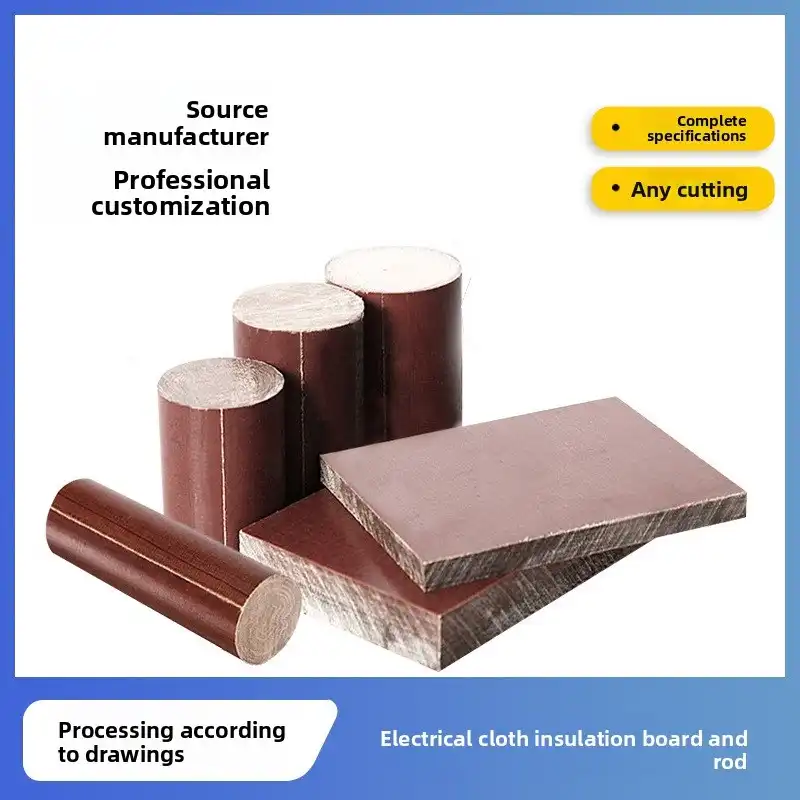
Standard off-the-shelf options rarely meet the needs of your production line for precisely designed insulation parts that meet exact dimensional limits and performance requirements. Custom phenolic cotton cloth board manufacturing services fill in this gap by turning strong composite laminates into parts that are specifically made for your needs. This substance, which is officially known as PF CC 201 under IEC standards or NEMA Grade C and CE, is made by high-pressure casting knitted cotton fabric layers together with phenolic resin. This makes parts that solve the problem of brittleness versus insulation that is common in harsh industrial settings. We have been in the manufacturing business for over 20 years and have learned that engineering managers and procurement specialists are looking for partners who not only understand material science but also the whole supply chain ecosystem that supports complex production operations.
Understanding Phenolic Cotton Cloth Board: Properties and Applications
Material Composition and Manufacturing Process
Paper-based phenolic laminates have been greatly improved by phenolic cotton cloth board. In the making process, high-quality cotton cloth is saturated with a thermosetting phenolic glue. This is then cured with controlled heat at pressures above 1,000 PSI. This makes a laminated structure where the knitted cotton gives it great tensile strength and the resin core protects against electricity and chemicals. Unlike options made of metal, this material absorbs vibration and works quietly with little lubrication, which are qualities that are especially valued in places where fine machinery is used.
Core Technical Properties
The material has an interesting mix of properties that solve several technical problems at the same time. It has very high mechanical strength; its crosswise tensile strength is usually over 70 MPa, which means it can be used for load-bearing purposes. At room temperature, the dielectric strength is between 12 and 16 kV/mm, making it a good choice for medium-voltage uses. The material stays the same size at temperatures ranging from -40°C to 120°C when used continuously, and it can withstand temperatures as high as 150°C when exposed briefly. At less than 1.5% over 24 hours, water uptake stays amazingly low, making sure that efficiency stays the same in humid settings.
One more thing that makes something unique is its chemical protection. Mineral oils, hydraulic fluids, weak acids, and most alkaline solutions don't damage these laminates much when they come into contact with them. Because of this, they are perfect for covering transformers, motor parts, and mechanical parts that work in places where chemicals are present. Surface resistance is usually between 10^9 and 10^12 ohms, which is good enough for many industrial uses where antistatic properties are needed.
Industry Applications Across Manufacturing Sectors
These laminates are used by electrical and electronics companies to make motor slot wedges, PCB support structures, and switchgear insulation barriers. The material meets important safety standards for this industry by being recognized by UL (E310670) and following ROHS guidelines. Machine builders use cotton cloth phenolic boards as structural insulation spacers, wear-resistant gears, and vibration-dampening parts when metal parts would make too much noise.
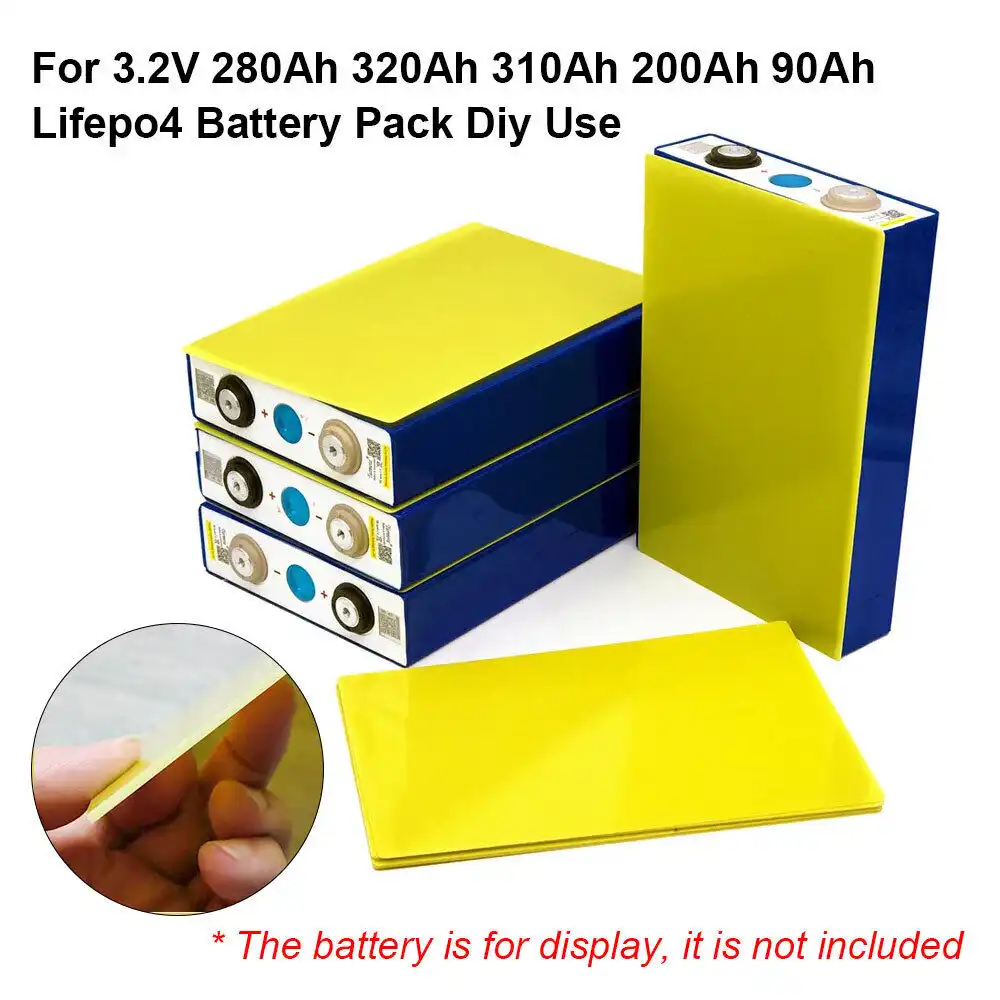
Phenolic cotton cloth board is widely used in transformers and other power distribution equipment as coil shielding, spark barriers, and thermal separation parts. Suppliers of automotive parts are using the material more and more for electrical separation parts in hybrid and electric car systems, battery pack insulation barriers, and heat-resistant mounting fixtures. Manufacturers of home appliances like how cheap the material is and how well it works for making motor brackets, insulation frames, and thermal separation elements for large-scale production.
Why Opt for Custom Phenolic Cotton Cloth Board Processing Services?
Limitations of Standard Sheet Stock
Standard phenolic laminate sheets usually have set sizes, like 1020mm x 1220mm or 1020mm x 2040mm, and thicknesses that range from 0.5mm to 50mm. Even though these standard sizes work for simple tasks, they waste materials when parts need specific sizes. The surface finishes on sheets that are mass-produced don't always have the accuracy that is needed for tight-tolerance setups. Edges may have small tears or rough spots that make binding less effective in important situations.
Customization Benefits and Performance Enhancement
Precision CNC machining, laser cutting, and special surface processes are used in custom processing to turn raw laminate stock into parts that are ready for production. Engineering managers working on switchgear projects have said that the time it takes to put together equipment is 30% shorter when they get pre-machined insulation parts instead of having to make them by hand from standard sheets. The very accurate measurements that CNC processing can achieve—usually within ±0.05mm—get rid of the fitting problems that come up with parts that are cut by hand.
We worked with a company that made power transformers that needed arc barrier parts with complicated slot patterns and rounded sides that could not be made with normal punching. Custom CNC cutting gave them parts that were exactly what they wanted, which cut down on assembly errors by 40% compared to their old source. A tier-1 car supplier wanted battery insulation pads with precise mounting holes and sides that were rounded off. They were able to get ready-to-install parts because of custom processing. This got rid of the need for extra work and cut their production cycle time by three days per batch.
Surface Treatment Options
Custom processing services include more than just shape in three dimensions. They also include special treatments for the surface. Precision grinding can make surfaces very flat, which is important for high-voltage uses; edge sealing can keep water out of outdoor installations; and conductive coats can get rid of static electricity in sensitive electronic settings. These improvements make performance better in ways that off-the-shelf materials can't.
How to Choose the Right Phenolic Cotton Cloth Board and Processing Partner
Critical Technical Specifications
To choose the right phenolic cotton cloth board grades, you need to know exactly what your product needs. Choosing the right thickness affects both mechanical strength and electrical protection. Thicker boards are more resistant to punctures, but they are heavier and cost more. Density usually falls between 1.3 and 1.45 g/cm³. Higher density means better mechanical qualities but harder to machine. Classifications of heat protection are very important. Materials in Grade C can work continuously at 105°C, while materials in CE grades can do so up to 120°C.
The division of electrical protection should be given careful thought. Standard grades can be used for low-voltage uses (below 1000V), but materials for medium-voltage equipment (1–35kV) need to meet certain guidelines for dielectric strength and tracking resistance. Surface resistance is very important in situations where managed static discharge is needed or where electrostatic buildup could harm sensitive parts.
Material Comparison Analysis
When compared to phenolic laminates made from paper, cotton cloth versions are more resistant to pressure and have a higher flexural strength (about 50% higher in most uses). Compared to fiberglass-reinforced epoxy (FR4), cotton phenolic boards are easier to work with and less expensive, but FR4 has better electrical qualities when heated up. While phenolic materials are stronger and better at withstanding heat, melamine laminates are better at looking nice. Alternatives made of wood don't have the stability in dimensions and resistance to moisture that are needed for precise uses.
Supplier Evaluation Criteria
Certifications are concrete proof of quality processes and the ability to make things. ISO 14001 certification shows that a company cares about the environment, while ISO 9001 certification shows that they have built quality management methods. When a material is recognized by UL, it means that it has been tested independently and is under constant inspection. Standardized testing methods are used in ASTM test reports to confirm the mechanical and electrical qualities that were stated.
When an OEM evaluates a supplier's skills, they should look at the supplier's range of machining tools, their ability to hold tolerances, and their experience with similar projects. A provider that has five-axis CNC routers and precise grinding tools can work with complicated shapes. Quality control methods are very important. You should look for routines for inspecting incoming materials, checking dimensions while the product is being made, and final inspections with written measurement systems. Technical help skills are what set good providers apart from great partners. Can they help you choose the materials? Do they offer help with planning for manufacturing? Will they send test records and material approvals with every shipment?
The Custom Phenolic Cotton Cloth Board Processing Workflow Explained
Initial Consultation and Requirement Assessment
The first step in custom processing is to have in-depth technical conversations to find out what your component needs. As part of this step, important details are written down, such as required surface finishes, number estimates, and shipping times. This process goes faster when technical drawings are sent in common forms like PDF, DWG, and DXF. Talking about the details of your application helps processors offer the best material grades and design changes that make it easier to make without affecting performance.
Material Selection and Procurement
The right phenolic cotton cloth board grade is chosen based on the needs of the product and bought from certified raw material providers. This is where you can start tracking down materials because batch numbers and mill certifications are written down to make sure the quality. Before production starts, pre-processing inspection makes sure that arriving sheets meet standards for thickness, surface quality, and electrical properties.
Precision Cutting and Machining Operations
Modern CNC machining centers use automatic toolpaths designed from your CAD files to turn raw laminate sheets into precise parts. Routing processes make internal cutouts and complicated forms around the edges. Drilling processes make fixing holes that are accurate to within 0.05 mm of where they should be. Milling processes make features with holes, pockets, and steps. Grinding makes the surface flat within 0.02 mm across all sides of a component, which is very important for high-voltage insulation uses where air holes cause the voltage to drop.
When cutting phenolic laminates, specialized tools give the best results. Diamond coating on cutting tools makes them last longer and make the edges better. Feed rates and spinning speeds that are just right keep heat from building up and causing delamination or changes in size. Dust extraction devices collect machining waste, keeping parts clean and protecting both workers and equipment.
Quality Control and Testing Protocols
Strict checking steps make sure that all the requirements are met by finished parts. For dimensional verification, standardized measuring tools are used, such as coordinate measuring machines (CMM) for checking complicated shapes, micrometers for checking thickness, and optical comparators for checking profiles. Visual inspection finds flaws on the surface, delamination along the edges, or grinding marks that could affect performance.
Flexural strength testing according to ASTM D790, tensile strength testing according to ASTM D638, and impact resistance testing according to ASTM D256 may all be done on phenolic cotton cloth board sample parts. According to ASTM D149 and D257 guidelines, electrical testing checks the dielectric strength, surface resistivity, and volume resistance. To check how well something works in real-world settings, environmental testing puts samples through changes in temperature, humidity, and chemical contact.
Packaging and International Logistics
When shipping fine parts, the right packing keeps them safe. Usually, interleaving materials are used to keep parts from touching each other and damaging the surface. The parts are then packed in rigid cases so they don't move around, and moisture barriers are added when sending to humid areas. When designing packaging, you should think about how you receive and store items. Can parts come in production-ready shapes that require the least amount of handling?
Our integrated operations make foreign shipping easier for business-to-business buyers all over the US. We take care of all the paperwork that needs to be done, like commercial bills, packing lists, and certificates of origin. We have been exporting for over ten years and run our own transportation business. We work with freight forwarders to find the best shipping options for you based on your price and time frame. Real-time tracking of your package lets you know when it leaves and when it arrives.
Pricing, Ordering, and Procurement Tips for B2B Buyers
Understanding Cost Drivers
The main thing that affects the price of laminate is the cost of the raw materials, which changes with the markets for phenolic resin and cotton cloth. Material grade has a big effect on price; specialty grades with better features sell for more than regular grades. Processing costs are directly linked to how complicated customization is. It is much cheaper to make simple rectangular cuts with basic hole shapes than to make complex designs with tight tolerances. The final price depends on how long it takes to machine, what tools are needed, and how hard it is to set up.
Order number gives you a lot of power over prices. Setup costs for production are spread out over the number of units ordered, which makes per-unit costs drop greatly as volume rises. It's possible for the price of a part that costs $12 for 100 pieces to drop to $7 for 1,000 pieces and $5 for 10,000 pieces. Knowing these number break points can help you make the best decisions about what to order.
Requesting Quotations Effectively
When you ask for a lot of quotes, you get more exact prices and faster service. Include thorough scientific drawings that clearly show all the sizes, tolerances, and surface finish standards. List your preferred material grade or give performance standards if you're not sure which grade to choose. Give your yearly volume estimates and desired delivery times. List any special needs, like certificates for the materials, inspection records, or unique packaging.
Lead Time Management and Supply Chain Integration
Custom processing usually takes between two and four weeks, but this depends on how complicated the order is and how busy production is at the moment. For pressing needs, there may be choices for fast processing, but there are fees for this. Strategic buyers set up blanket purchase orders with set release dates. This way, they make sure that capacity is allocated and keep their inventory flexible. This method also takes advantage of volume price advantages over the whole length of the deal.
When buying things from other countries, communication methods are very important. Set up clear people to talk to about technical questions, checking on the progress of an order, and quality problems. Regular updates on the production keep you up to date on how things are going and let you know early on if there might be delays. Understanding the changes in time zones helps you set up calls and meetings more efficiently. To make real-time contact easier, we work around U.S. business hours.
Factory-Direct Procurement Advantages
When you buy straight from makers, you skip the markups that distributors usually add, which are between 20 and 40 percent on the cost of parts. Direct relationships also give you access to engineering experts during the development of a product, let you address quality issues more quickly, and give you more freedom to change specifications. Established providers have been making things for more than 20 years, so they know a lot about the process and how to use it, which sales partners can't match.
Conclusion
Custom processing services for phenolic cotton cloth board turn flexible composite laminates into precisely designed parts that meet the exact needs of tough industrial uses. Procurement pros can make choices that improve both technical performance and total cost of ownership by learning about the properties of materials, the benefits of customization, how to choose a source, and the whole processing workflow. The strategic benefits of working directly with a factory, such as engineering help, quality verification, and combined logistics, go beyond just price. As manufacturing technologies keep getting better and application needs get more complex, working with skilled processors gives you access to the tools you need to stay competitive in the long run.
FAQ
What advantages does cotton cloth phenolic laminate offer over paper-based phenolic materials?
Compared to paper-based options, phenolic cotton cloth board is much more resistant to pressure and have a higher mechanical toughness. The structure of the woven cotton cloth is about 50% stronger in bending and more resistant to delamination when mechanical force is applied. Because of this, cotton cloth types are better for uses that involve shaking, mechanical loading, or possible impacts. This material is also easier to work with and doesn't chip at the edges as much when it's being cut.
Can custom processing accommodate complex geometries and tight tolerances?
These days, CNC machines can precisely make parts with complicated patterns. Five-axis machining centers make complicated three-dimensional forms, and coordinate measure machines make sure that the shapes are accurate to within 0.05 mm. Custom processing allows for much tighter tolerances than hand manufacturing, which makes it perfect for parts that need to fit perfectly in assemblies. Sharing CAD files during the quote process lets processors figure out if the product can be made and make suggestions for improvements.
How do you ensure material compliance with international standards?
Reliable providers keep a lot of quality records, such as UL recognition files, ROHS compliance certificates, and REACH test results. Material certificates are sent with packages so that they can be tracked back to specific production batches. Mechanical and electrical qualities are checked by a third party following ASTM guidelines. By asking for copies of important certificates while evaluating a seller, you can be sure that they can meet your quality and regulatory standards.
Partner with J&Q for Precision Phenolic Cotton Cloth Board Solutions
Electrical equipment makers, industrial machinery builders, and car part sellers all over the United States depend on J&Q to provide engineered insulation parts that meet their strict requirements. With 20 years of experience making things and the ability to use modern CNC processing, we can turn phenolic cotton cloth board into precise parts that exactly match your needs. We use UL-approved products, have thorough quality control systems, and handle all of our own processes, which makes sure that the supply chain works smoothly. Whether you need custom battery barriers, complex switchgear insulation parts, or precision-machined motor parts, our expert team can help you from the first planning phase through mass production. As a reliable provider of phenolic cotton cloth board dedicated to high-quality production, we ask you to talk to our research team about the parts you need. You can email us at info@jhd-material.com to get full quotes, technical specs, and material certifications that show how committed we are to quality and dependability.
References
National Electrical Manufacturers Association (NEMA). "Industrial Laminated Thermosetting Products Standards Publication LI 1-2018." Rosslyn, VA: NEMA, 2018.
International Electrotechnical Commission (IEC). "Specifications for Individual Materials: Cotton Fabric-Reinforced Phenolic Resin Laminated Sheets." IEC 60893-3-2 Standard, Geneva: IEC, 2020.
Harper, Charles A. "Handbook of Plastics, Elastomers, and Composites." 4th Edition, New York: McGraw-Hill Professional, 2002.
Ashby, Michael F. and Johnson, Kara. "Materials Selection in Mechanical Design." 5th Edition, Oxford: Butterworth-Heinemann, 2016.
ASTM International. "Standard Test Methods for Electrical Insulating Materials: ASTM D149, D229, D257, D638, and D790." West Conshohocken, PA: ASTM International, 2019.
Rao, P.S. and Chanda, Manas. "Industrial Laminates: Applications and Material Selection Criteria for Electrical and Mechanical Engineering." Materials & Design Journal, Vol. 45, 2013, pp. 289-302.
_1740986340093.webp)
_1753952475136.jpg)