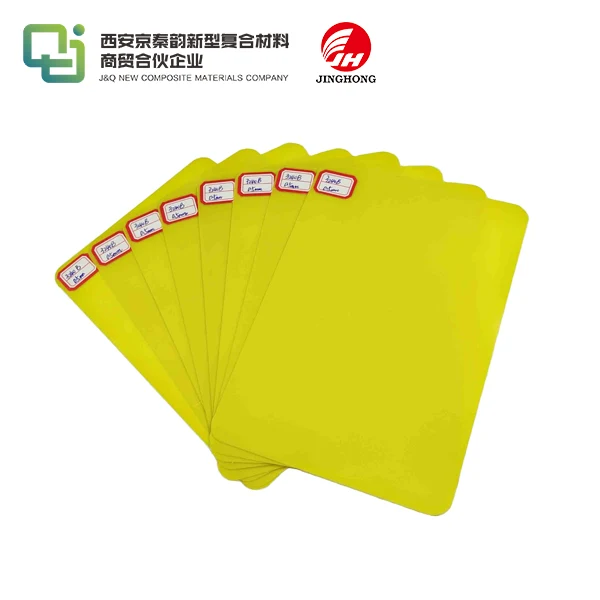
G10 Fiberglass Sheet in Aerospace Structures
2026-05-29 11:00:42
When you work in aircraft engineering, where accuracy is key, the choice of material affects both safety and efficiency. G10 fiberglass sheet has become an important composite material because it gives aircraft companies the best combination of electrical protection, mechanical strength, and thermal stability. This high-pressure laminate is made of weaved glass cloth and epoxy resin. It has great dimensional stability even in harsh situations. From avionics housings to structural supports, G10 fiberglass sheet solves important problems like dielectric breakdown risks, moisture-induced warping, and mechanical failure under extended load cycles. This makes it an essential material for flight uses that need to be reliable all the time.
Understanding G10 Fiberglass Sheet and Its Properties
Manufacturing Process and Composition
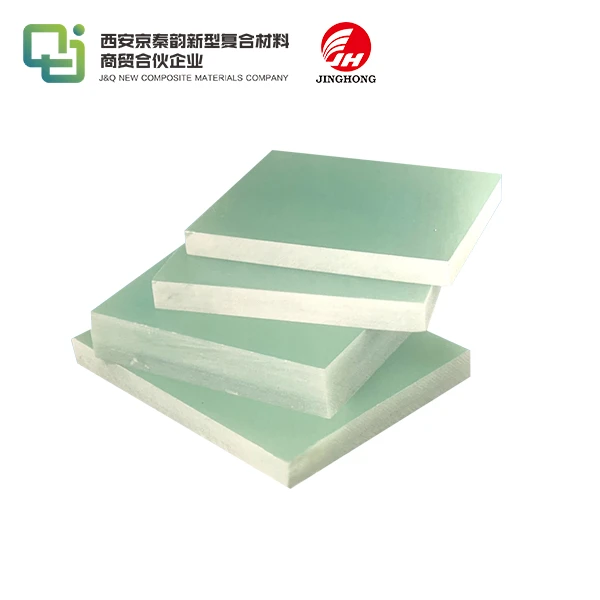
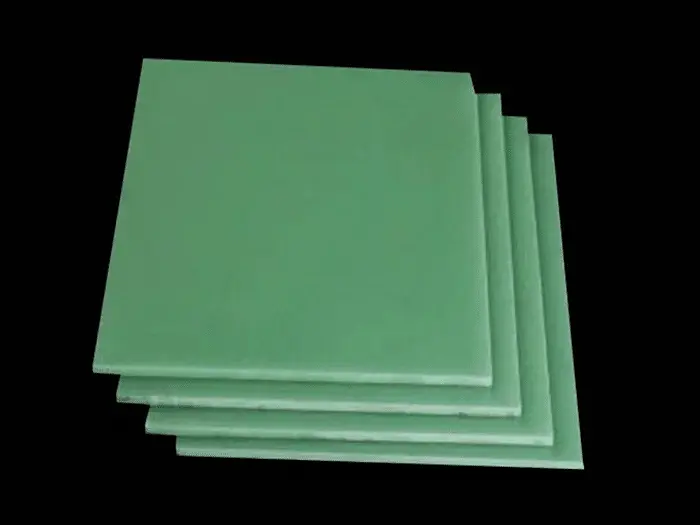
A high-pressure lamination method is used to make G10 fiberglass sheet. During this process, several layers of woven glass fabric are soaked with epoxy resin and cured under controlled heat. This thermosetting material forms a structure that is thick and free of holes that meets NEMA G-10 requirements. Because it doesn't have any brominated flame retardants like its cousin FR4, it has slightly better mechanical strength and protection to moisture. Precision in manufacturing makes sure that the surface is flat and smooth, with no bubbles, wrinkles, or delamination. This is what aircraft engineers need for CNC cutting and assembly.
Key Performance Characteristics
The material is very good at shielding, and its dielectric strength is more than 20 kV/mm perpendicular to the laminations. This keeps electrical problems from happening in high-voltage areas. Tensile strength is usually between 310 and 380 MPa, and the material stays the same size at temperatures ranging from -196°C to +130°C. Even after long-term contact, moisture absorption stays below 0.1%. This stops hygroscopic growth that can damage precision-fit parts. Chemical resistance to hydraulic fluids, airplane fuels, and cleaning solvents saves the structure's stability over the course of its useful life. Because it is so strong mechanically and has great electrical qualities, G10 fiberglass sheet keeps growing its share of the aircraft market.
Why Aerospace Applications Demand G10?
Rapid changes in pressure, temperature, shaking, and harsh chemicals are all things that can happen to objects in space. G10 fiberglass sheet solves both problems at the same time: its low thermal expansion coefficient keeps tolerances tight during thermal cycle, and its glass-reinforced makeup keeps it from wearing out when stressed over and over again. Its radio-frequency-transparent and nonmagnetic nature keeps signals in communication and navigation systems intact. Metal alternatives add weight or rust, but G10 fiberglass sheet is a lightweight material that can last forever in the right conditions, cutting down on upkeep times and costs for aerospace users over the course of its life.
Critical Comparison of G10 Fiberglass Sheet with Other Materials for Aerospace Use
G10 Versus Related Fiberglass Grades
When purchasing teams look at epoxy laminates, they often compare G10 fiberglass sheet to G11 and FR4. G11 uses higher-temperature epoxy resins, which raises the working range to +170°C. This means it can be used in engine compartments where the G10 fiberglass sheet +130°C limit isn't enough. FR4 is technically similar to FR3, but it has fire retardant chemicals that meet UL94 V-0 standards. This is needed when self-extinguishing behavior is required by law. When maximum mechanical strength and minimum wetness absorption are more important than flame resistance, G10 fiberglass sheet is the best choice. Mechanical qualities are about the same for all of these types, but the choice of material depends on the unique thermal and legal requirements of the aerospace application.
Benchmarking Against Carbon Fiber Composites
Carbon fiber-reinforced polymers are good for main aircraft structures because they are strong for their weight. Tensile strengths of carbon fiber parts are higher than 600 MPa, and their densities are about 1.6 g/cm³, while G10 fiberglass sheet's are 1.8 g/cm³. The trade-off comes from the conductivity of electricity: carbon fiber's conductivity makes electromagnetic shielding and lightning strike risks worse, while G10 fiberglass sheet's insulation properties keep sensitive electronics safe. Carbon fiber parts cost three to five times more per kilogram than G10 fiberglass sheet laminates, showing how different the prices are. Aerospace engineers choose G10 fiberglass sheet for electrical insulation barriers, circuit boards, and structures that don't have to hold weight because it has the best qualities without the high cost of carbon fiber.
Application-Specific Material Selection Logic
Buying choices have to take many things into account at the same time. Avionics racks and PCB substrates are made from G10 fiberglass sheet because it is dielectrically good and easy to machine with a CNC machine, which lets it have complicated shapes and tight tolerances. Its mechanical strength is increased by structural spacers and fixing clamps, which also keep electrical connections between parts separate. Its radio-transparency and low outgassing properties make it useful for supporting antennas in vacuum settings. By knowing about these benefits specific to each application, engineering managers can choose materials that improve performance, compliance, and cost-effectiveness in a wide range of aircraft parts.
How to Effectively Use and Process G10 Fiberglass Sheets in Aerospace Structures?
Machining Best Practices
Because they contain rough glass fibers, G10 fiberglass sheets need to be processed in a certain way. Cutting, drilling, and grinding processes don't wear down tools that are coated in carbide or diamond. High spindle speeds (3,000 to 6,000 RPM) and modest feed rates make lines that are clean and don't delaminate. The dust that is made has glass fibers in it that can be harmful to your lungs. To protect workers and keep tools precise, you need to use strong vacuum extraction or wet machining methods. Heat sheets to room temperature before cutting them to cut down on thermal stress cracks. When aerospace machinists follow these steps, they can regularly get tolerances within ±0.05mm, meeting strict dimensional standards.
Standard and Custom Sizing Options
G10 fiberglass sheets are usually made in normal thicknesses of 0.5mm to 50mm, and their most common sizes are 1020mm × 1220mm and 1020mm × 2040mm. Custom sizing is often needed for aerospace uses to get the most out of the materials used and cut down on waste during manufacturing. With precision pre-cutting services, buying teams can get parts that are already put together, which cuts down on labor costs and wait times. To make sure that stacked structures work as expected, thickness tolerances are usually kept to ±10%. Customizing the size is especially helpful for OEMs that make a lot of parts because material economy has a direct effect on their profits.
Joining and Assembly Techniques
For multi-component structures to have structural stability, the right bonding methods must be used. When surfaces are properly prepared by abrading and liquid cleaning, epoxy glue made for composite substrates form bonds that are close to the strength of the base material. Using stainless steel hardware for mechanical fastening spreads loads well, but the locations of the holes need to take into account the required edge distance to keep the material from breaking. Using a mix of adhesive bonds and mechanical fasteners creates multiple load lines that meet safety standards for aircraft. Surface treatments help paint stick better for protecting against rust and UV rays in outdoor uses, which increases service life while still meeting aesthetic standards.
Procurement Guide for G10 Fiberglass Sheet in Aerospace Applications
Identifying Reputable Suppliers
To find high-quality G10 fiberglass sheets, you have to look at providers in a lot of different ways. ISO 9001 certification and quality control systems designed specifically for aerospace are ways that well-known makers show that their products are always of high quality. Professional sellers are different from commodity vendors because they have production skills like in-house testing labs, controlled curing processes, and paperwork that shows how the goods were made. With a global reach and area transportation networks, materials are always available without having to wait too long. When problems happen, responsive technical support teams help with choosing the right materials, making suggestions for how to process them, and figuring out why they failed. Before making long-term partnerships with a seller, procurement professionals check their credentials by calling past customers, inspecting the facility, and trying samples.
Cost Evaluation and Volume Purchasing
Material prices change based on the diameter, sheet size, and number of sheets ordered. Buying in bulk can save you a lot of money. When you commit to buying more than 500 sheets of G10 fiberglass sheet, you can usually get 15–25% off the price of a small lot. Setting up blanket purchase orders with scheduled releases is helpful for OEM makers because it keeps costs stable and makes sure that inventory is available at the right time for production plans. The total cost of ownership includes not only the price of the materials, but also the cost of shipping, the minimum order quantity, and the terms of payment. Distributor networks may offer low prices for smaller orders, but they may limit your ability to make changes. Strategic procurement teams weigh the ability of suppliers, the dependability of wait times, and the quality of expert help against the need to save money right away.
Supply Chain Management Considerations
For aerospace production plans to work, G10 fiberglass sheet must be available at regular times. Lead times for basic configurations are usually between two and four weeks for local sellers. For foreign suppliers, the time frame goes up to six to eight weeks, which includes clearing customs. Just-in-time stocking methods lower the cost of holding on to stock, but they make you more vulnerable to problems with the supply chain. When you figure out your safety stock, you take into account how demand changes and how reliable your suppliers are. Logistics features, such as faster shipping options, give you options when project deadlines get squished. When technical questions come up during implementation, after-sales support that includes paperwork for material certification, handling instructions, and quick contact routes is very helpful. When supply chain relationships work well, buying goes from being a transactional task to a strategic benefit.
Real-World Aerospace Applications of G10 Fiberglass Sheets
Avionics and Electrical Systems
Modern airplanes have a lot of complicated electrical systems that need strong insulator materials. Electrical isolation is provided between sensitive electronics and metal airframes by G10 fiberglass sheets, which are used to place avionics units. G10 fiberglass sheet bases for circuit boards allow for the assembly of parts while keeping the purity of signals over a wide frequency range, from DC to several GHz. The material's arc resistance is used in terminal blocks and busbar supports to stop flashovers in high-voltage power distribution systems. G10 fiberglass sheet doesn't give off much gas, which is what NASA wants for spaceship uses. This keeps optical systems and sensitive equipment from getting dirty in vacuum settings.
Structural and Mechanical Components
G10 fiberglass sheet are used for more than just electrical purposes; they are also used in the building of aircraft structures. Bearing supports and bushings made of G10 fiberglass sheet don't need to be oiled or lubricated to last, so they don't need to be serviced as often in hard-to-reach places. Spacers and standoffs keep the exact distances between parts and keep sensitive parts electrically isolated. Lightweight inner panels have G10 fiberglass sheet faces and honeycomb cores, which makes them strong enough for use as aircraft furniture and cargo bay liners. Antenna radomes made of G10 fiberglass sheet keep radar and communication systems safe from the outside world while still letting radio waves pass through. This keeps transmission performance high without signal loss.
Emerging Trends in Hybrid Composite Integration
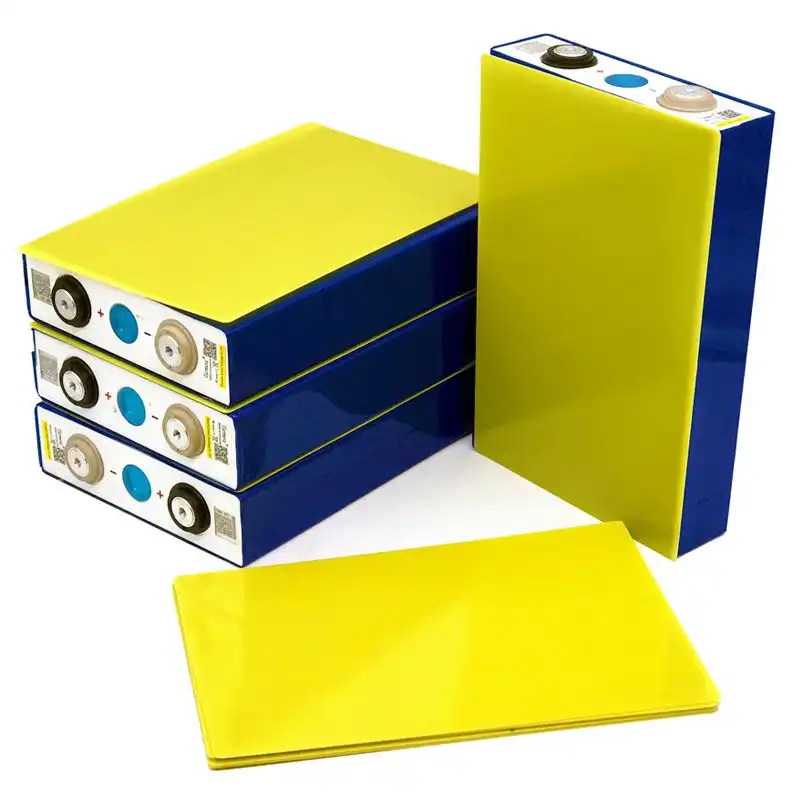
Aerospace innovation is looking into mixed composite designs that use both G10 fiberglass sheet and new materials more and more. Co-cured parts include insulation layers inside carbon fiber structures, which lets electricity flow through airframes that would normally be conductive. Using additive manufacturing, conductive lines are built into G10 fiberglass sheet substrates. This makes it possible to make three-dimensional circuit designs that aren't possible with standard PCB creation. Next-generation planes use G10 fiberglass sheet in the cases of battery packs for electric power systems. This gives them heat barriers and electrical insulation that are necessary for safety approval. The use of these uses shows that the material can adapt to new aircraft technologies, making it useful even as the industry moves toward electrification and digitization.
Conclusion
G10 fiberglass sheet is an important material for aircraft structures because it has a good mix of electrical insulation, mechanical strength, and resistance to the environment that not many other materials can match. Its proven performance in electronics, structural components, and new hybrid uses shows that aircraft makers who value dependability and low cost will find it useful. Knowing about its qualities, how it needs to be processed, and how to buy it can help engineering teams and sourcing specialists choose materials that will help projects succeed. As aircraft technology moves toward more electric power and system integration, G10 fiberglass sheet's unique properties make it a good building block for new ideas while still meeting the high safety standards the industry needs.
FAQ
Is G10 Fiberglass Sheet Waterproof?
According to the ASTM D570 testing guidelines, G10 fiberglass sheet has very low water absorption, meaning it doesn't absorb much water. This small amount of absorption keeps the electrical qualities stable in humid conditions like those found in airplane operations. A shield against water is made by the epoxy resin matrix, which protects the glass fiber support. Even though the material isn't completely sealed, it works consistently in wet situations and doesn't break down like phenolic laminates do when they get wet. This stability is good for aerospace uses because changes in humidity caused by changes in altitude don't affect the fit of parts or the efficiency of electrical insulation over the course of their operational lives.
Can G10 Be Custom Cut for Complex Aerospace Components?
CNC machines with advanced features can precisely cut G10 fiberglass sheets into complicated shapes that meet aircraft tolerances. Laser cutting lets you make quick prototypes to make sure your idea works, while water jet cutting makes complex shapes without any hot spots. When routers are equipped with carbide tools, they can make three-dimensional shapes and pockets. Custom manufacturing services make parts that are ready to be put together, which cuts down on wait times and labor costs. Aerospace providers that can do all kinds of machining make buying easier because they send finished parts instead of raw sheets. This is especially helpful for low-volume specialized parts that can't be processed in-house because the cost of the tools is too high.
How Does G10 Compare to Carbon Fiber in Strength?
Carbon fiber composites have tensile strengths between 600 and 700 MPa, which are higher than G10 fiberglass sheet's 310 to 380 MPa range. Carbon fiber is better for main load-bearing buildings where weight reduction justifies higher costs because of its strength-to-weight advantage. G10 fiberglass sheet still has competitive compression strength and better electrical insulation qualities than other materials. It is better than conductive carbon fiber for aerospace uses that need both structural support and electrical separation. Cost is an important factor because the material has good mechanical properties at much lower prices for materials and processes. Instead of just looking at strength, choosing a material relies on things like load requirements, electrical limits, and price. This means that G10 fiberglass sheet is perfect for many aircraft uses where carbon fiber's superior qualities are not needed.
Source Quality G10 Fiberglass Sheet from J&Q
It has been over twenty years since J&Q has been making high-quality G10 fiberglass sheets for use in aircraft and industry. Our fully integrated businesses combine advanced production skills with quick technical help to make sure that every sheet meets the strictest aircraft standards. As a trusted provider, we make sure that the quality is checked at every step of the production process, from choosing the raw materials to the final inspection. This ensures that the sheets are always the right size and work properly electrically. Our in-house transportation network makes delivery across North America easier, cutting down on wait times that make it hard to meet tight project deadlines.
Partnering with J&Q gives you access to their extensive material knowledge, which they have gained by working with aircraft makers, electrical system designers, and precision machining operations for many years. We offer customization services such as precise cutting, paperwork for material approval, and expert advice to help you with the specification process. With volume purchasing plans, you can get low prices without giving up quality or speed of service. Get in touch with our team at info@jhd-material.com to talk about the needs of your aircraft project and find out how our proven skills can help you get the best deals on materials and make sure you get parts on time that work perfectly in tough conditions.
References
National Electrical Manufacturers Association (NEMA). "Industrial Laminating Thermosetting Products Standards Publication LI 1-2020." NEMA Standards Publication, 2020.
Campbell, F.C. "Structural Composite Materials for Aerospace Applications." ASM International Handbook of Composites, Materials Park, Ohio, 2010.
Miracle, D.B. and Donaldson, S.L. "ASM Handbook Volume 21: Composites—Polymer Matrix Composites for Aerospace Structures." ASM International, 2001.
Chawla, K.K. "Composite Materials: Science and Engineering, Third Edition." Springer Science & Business Media, 2012.
Mallick, P.K. "Fiber-Reinforced Composites: Materials, Manufacturing, and Design, Third Edition." CRC Press, Taylor & Francis Group, 2007.
Peters, S.T. "Handbook of Composites, Second Edition—Aerospace Applications of Advanced Composite Materials." Chapman & Hall, London, 1998.