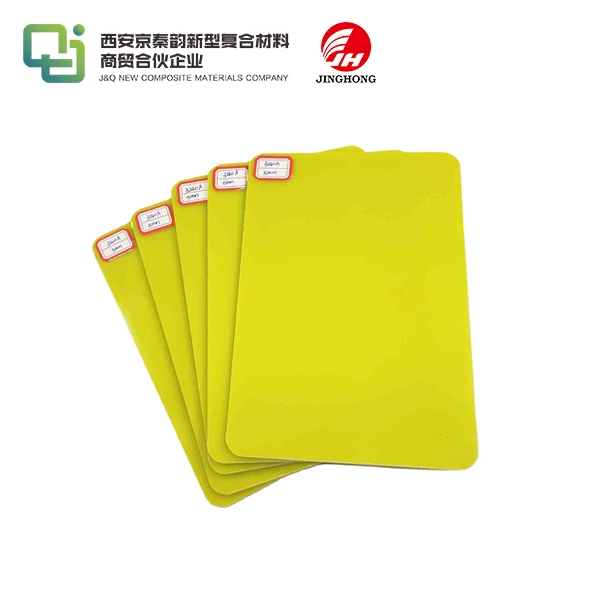
G10 Sheet for Aerospace Components Requiring High Strength
2026-07-23 17:20:15
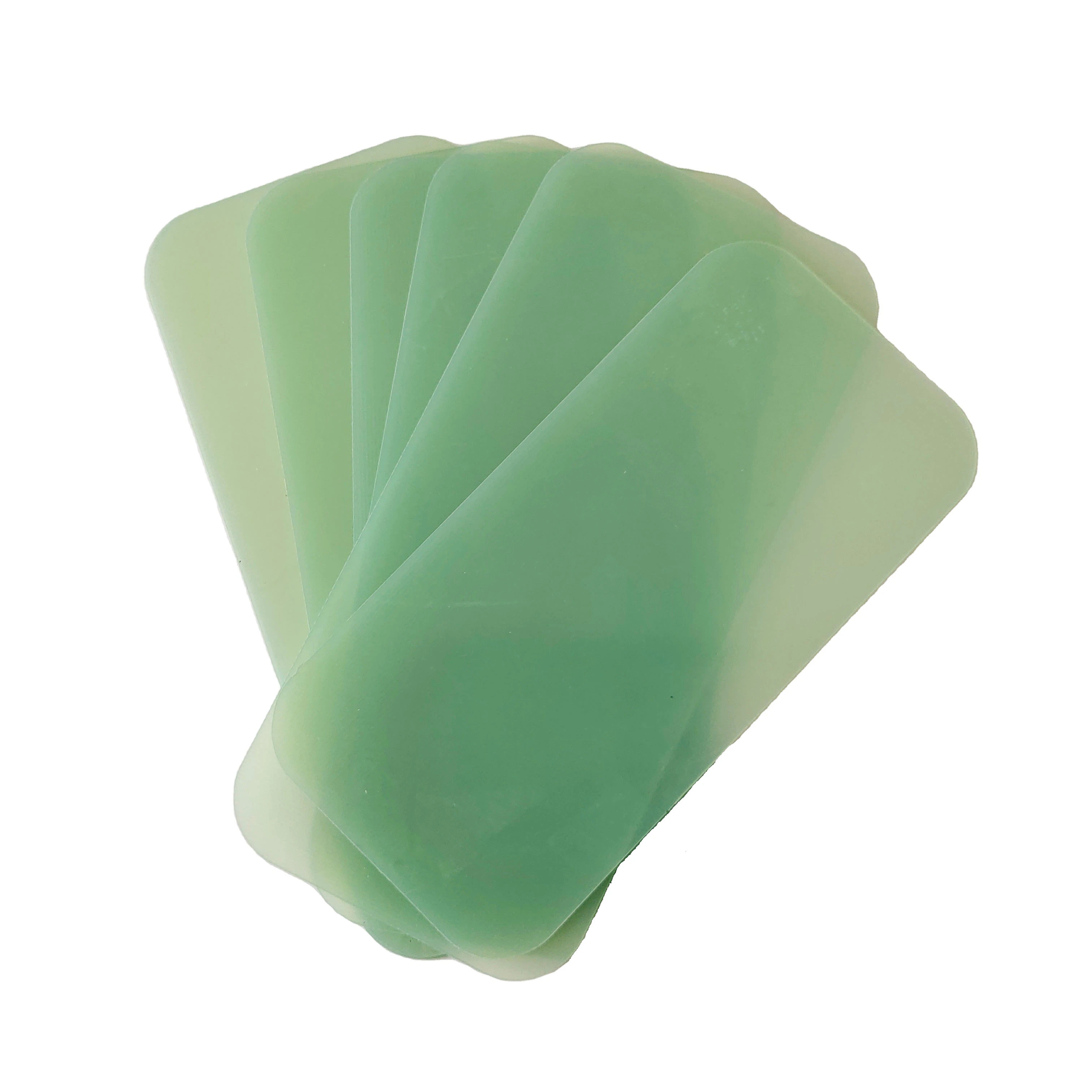
When aerospace engineering demands uncompromising structural integrity combined with electrical insulation, the G10 sheet stands as a trusted solution. This high-pressure thermosetting laminate, composed of continuous filament glass cloth impregnated with epoxy resin binder, delivers an exceptional strength-to-weight ratio that aerospace manufacturers rely on. Its near-zero water absorption and dimensional stability under extreme conditions make it indispensable for components where failure is not an option, bridging the gap between structural durability and functional reliability in the most demanding environments.
Understanding G10 Sheet and Its Relevance in Aerospace
The aerospace business works in harsh environments that would damage most materials. Every day, temperatures can go from below zero to very high temperatures, vibrations can be so strong that they test every joint and bolt, and changes in air pressure can make it hard for materials to stay the same.
The Manufacturing Foundation Behind G10's Performance
To make a G10 sheet, several layers of woven fiberglass cloth are stacked on top of each other and soaked in epoxy resin. The whole thing is then heated to over 150°C and put under pressure that can reach several hundred psi. This process makes a chemical link that can't be broken, joining layers together to form a single structure. The material that was made has the same qualities all the way through, so there are no weak spots that could weaken the structure. Epoxy-glass laminates keep their mechanical properties over their service life if they are properly maintained, while metal alloys can rust or get fatigue cracks.
Why Aerospace Engineers Specify G10 Over Alternatives?
Teams that buy things for the aerospace industry are always trying to find the right balance between performance needs and weight limits. Traditional phenolic laminates are cheap, but they absorb water and become less stable in their shape when they are exposed to moisture. This is a very important point where precision parts can fail. Even though FR4 is flame-resistant, it has bromine added to it, which lowers its tensile strength slightly and makes recycling more difficult. G10 gives you pure technical speed with no trade-offs. Its tensile strength is often higher than 40,000 psi, and its flexural strength is also high. In terms of strength-to-weight, it is stronger than many aluminum alloys. This benefit directly translates to lower fuel costs over the life of an aircraft.
It doesn't matter what the dielectric features are. G10 is a reliable material for electrical isolation in high-voltage aerospace systems because its dielectric strength is above 400 volts per mil and its volume resistivity is more than 10^14 ohm-cm. This dual purpose helps with handling mechanical loads and stopping electrical leakage, which is useful for satellite parts, electronics housings, and electrical bus supports.
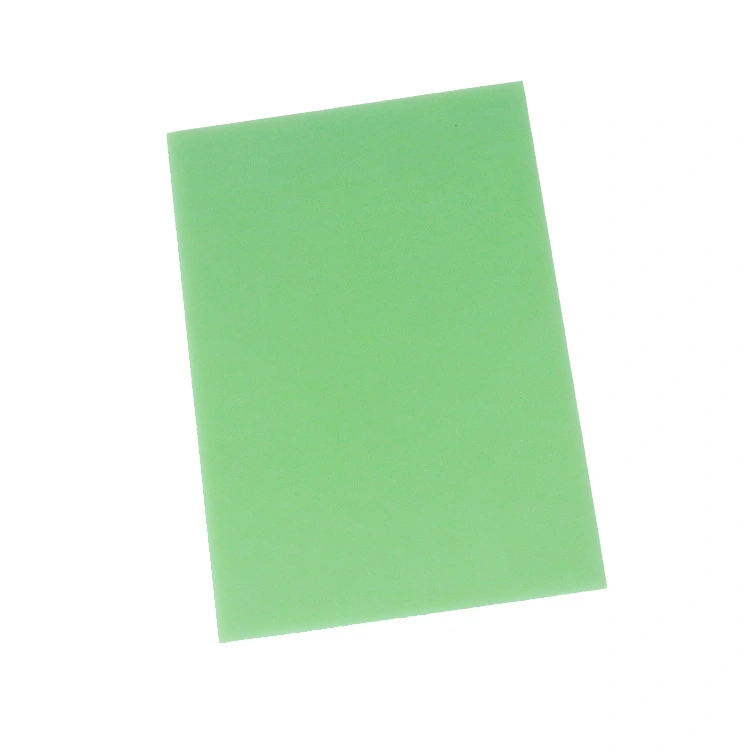
High-Strength Requirements in Aerospace and How G10 Meets Them
Aerospace parts have to handle loads that wouldn't make sense in normal uses on Earth. Launch vibrations of up to 15G could happen to a single satellite bracket. After that, it would be exposed to decades of temperature changes between -150°C and +120°C in orbital vacuum while keeping its positional accuracy measured in microns.
Mechanical Testing Data That Validates Specifications
Independent tests using ASTM D638 guidelines show that good epoxy-glass laminates keep their tensile strength above 35,000 psi perpendicular to the laminates, with only a 2 to 3 percent increase in length at break. This controlled deformation feature stops catastrophic brittle failure and lets parts take in impact energy. According to ASTM D790, bending tests show modulus values close to 3 million psi, which is about the same as structural aluminum but less than half as dense.
Another benefit is shown by compression tests. While metals can bend and thermoplastics can creep under long-term load, properly orientated glass-epoxy laminates spread compression forces across their fiber structure. This quality is very useful for attaching clamps and support structures that are constantly under stress. Real-world proof comes from aircraft workers who say that properly installed parts can last more than 20 years without breaking down.
Environmental Resilience That Protects Investment
G10 is different from paper-based phenolics and some polyester composites because it doesn't absorb water, and for G10 sheet, the water absorption rate of less than 0.1% ensures that dimensional changes remain minimal even after prolonged submersion, allowing aerospace electrical assemblies to maintain tolerances and insulation properties in coastal or tropical climates, while chemical resistance to jet fuel, hydraulic fluid, and common solvents prevents breakdown of the epoxy matrix, simplifying maintenance and extending component life. Even after being submerged for a long time, changes in size are still very small because the water absorption rate is less than 0.1%. When used in coastal or tropical climates, aerospace electrical assemblies keep their tolerances and insulation properties. This longevity is increased by chemical resistance; jet fuel, hydraulic fluid, and common cleaning solvents don't break down the epoxy matrix. This makes upkeep easier and increases the life of the component.
Stability at room temperature is very important. Standard grades can work constantly at 130°C, but some formulas raise this temperature limit. Even better, the material doesn't have the problems with thermal expansion that happen with metal-composite hybrid assemblies. The coefficient of thermal expansion is very close to that of many aircraft metals. This means that there is less stress at the interfaces when the temperature changes.
Key Features and Customization Options of G10 Sheets for Aerospace
When making things for aerospace, accuracy is needed that goes beyond what is normal in industry. Most off-the-shelf products can't meet the exact needs without being changed.
Dimensional Precision and Surface Finishing
Controlling the thickness is what makes quality possible. For sheets less than 0.250 inches thick, aerospace-grade laminates usually keep tolerances within ±0.005 inches. For critical applications, the tolerances are even tighter. Because of this accuracy, there is no need for a lot of post-processing, which cuts down on production time and cost. There are different types of surface finishes, from as-laminated textures that are good for bonding to precision-ground faces with Ra values below 32 microinches that are great for closing surfaces and slide contacts.
Directional qualities are best when custom layup combinations are used. Commercial sheets usually have balanced fabric structures, but oriented reinforcement is often better for aerospace uses. By carefully placing one-way glass layers inside the laminate stack, the tensile strength along load paths can be increased by 40% while the properties perpendicular to the layers remain adequate for secondary stresses. This way of engineering gets the best performance from the least amount of material.
Machining Compatibility and Fabrication Efficiency
CNC machinability has a direct effect on the cost of production. Because glass fibers are rough, carbide or diamond tools are needed to make glass-reinforced laminates. However, cutting factors have been improved in modern manufacturing to reduce tool wear. Fabricators who work in aerospace often drill, mill, and turn G10 parts with complicated shapes while keeping margins to less than 0.002 inches. When the right methods are used—sharp tools, enough chip clearance, and controlled feed rates—the material can be machined cleanly without delamination. These methods stop fiber pullout and resin spreading.
Options for bonding and assembly give designers more freedom. Epoxy-glass laminates are easy to join with structural adhesives, which makes the joints stronger than the base material. Another way to put things together is to use mechanical fasteners that go through drilled holes. These have enough bearing power to keep the holes from stretching when the system shakes. Threading lets you add inserts directly, so you don't have to deal with the weight and complexity of different mounting tools.
Specialized Grades for Extreme Service
The basic G10 meets a lot of aircraft needs, but there are also specialised versions that meet specific needs. High-temperature epoxy solutions can work continuously at temperatures above 180°C, making them good for use in engine compartments. Formulations with low outgassing meet NASA SP-R-0022A standards for vacuum environments, which keeps sensitive optical or electronic equipment from getting dirty. Depending on the purpose, aerospace buying teams can ask for custom resin systems that are better at resisting radiation, staying stable in cold temperatures, or being tougher when hit.
Procurement Guide: Sourcing G10 Sheets for Aerospace Applications
When buying materials for aircraft uses, there are more things to think about than just price and supply. Traceability, certification compliance, and the dependability of the supply chain are now things that can't be negotiated.
Certification and Quality Documentation Requirements
At every step, aerospace supply lines need paperwork, and for G10 sheet, material test reports must be traceable to specific production lots, documenting mechanical testing, chemical analysis, and dimensional verification, while meeting MIL-I-24768 and NEMA standards provides baseline assurance, though many aerospace OEMs impose stricter requirements, so procurement specifications should explicitly require approval documentation including ASTM-based test results, REACH and RoHS compliance claims, and individual lot traceability. Material test reports need to be able to link back to specific production lots. They must record and keep track of mechanical testing, chemical analysis, and dimensional verification. Meeting international standards for aircraft materials like MIL-I-24768 and NEMA guidelines gives you a basic level of security, but many aerospace OEMs have stricter requirements. Specifications for buying things should clearly say that they need approval paperwork that includes test results that follow ASTM guidelines, claims that the product meets environmental standards like REACH and RoHS, and the ability to track individual lots.
Certification for manufacturing quality systems is just as important. Suppliers who keep their AS9100 approval show that they know how to meet the quality standards for aircraft, which include controlling configurations, handling nonconforming materials, and taking corrective action. This certification lowers buyers' risk by making sure that suppliers know how important aerospace parts are and keep the right process controls in place.
Lead Time Planning and Inventory Strategy
Aerospace production plans are based on months or years, but the supply of materials can make it hard to complete whole projects. Standard commercial grades usually ship in two weeks, but custom specs, like exact thickness tolerances, specialised resin systems, or custom sheet sizes, could take 8 to 12 weeks. In order to keep production going while keeping inventory costs low, strategic buyers plan ahead for what they will need throughout the lifecycles of multiple programs. They do this by setting up blanket orders with planned releases.
When buying in bulk, you can save money, but aeroplane buyers need to think about how much room they have and how long the goods will last. When stored properly, fully cured laminates stay stable for a long time. However, keeping goods in stock costs a lot of warehouse room and money. Progressive sellers offer leasing agreements where the material stays theirs until it is used. This lowers the buyer's inventory risk and makes sure the material is available.
Evaluating Supplier Capabilities Beyond Price
Look at a supplier's skills rather than just price. When buying aircraft parts, the lowest price isn't always the best deal. Small price differences are less important than a supplier's technical help, willingness to work with engineers, and ability to respond to quality problems. Experienced suppliers help with choosing materials, suggesting ways to make things, and fixing problems with applications. These services keep production from being delayed, which costs a lot of money.
Geographic logistics should be considered. When you need to restock quickly, domestic providers may be able to help you more easily and more quickly, while foreign sources may be able to offer you specific grades or better prices on large orders. Instead of just looking at the unit price of a material, buyers should look at the total landed cost, which should include freight, customs taxes if they apply, and any wait time effects.
Troubleshooting and Maintenance Tips for G10 Aerospace Components
Service problems can happen with parts that were properly designed and built, and for G10 sheet, common issues include delamination from impact damage, surface tracking from contamination, and stress cracking from improper fastener torque, all of which can be mitigated through proper handling, regular visual inspection, and adherence to recommended torque values and cleaning procedures. Knowing the most common ways that things go wrong and how to stop them can help parts last longer and keep the system running smoothly.
Identifying and Addressing Delamination Issues
The worst thing that can happen to composite materials is delamination, which is when the layers of the laminate separate. When you look closely, you can see edge delamination as a whitish line or separation along the cut edges. Internal delamination might not be visible from the outside, but it can be found using ultrasound testing or tap testing. If you tap a coin across the surface, it will make a slow thud over delaminated areas instead of a sharp ring over solid material.
Installing things correctly is the first step in stopping delamination. Delamination risk can be lowered by not over-torquing screws, which can cause localised crushing stress, using nuts to spread loads, and keeping edges from hitting each other while handling. When delamination happens in non-critical areas, epoxy injection and clamping can fix the problem. But when safety is at stake, parts that are delaminated should be replaced instead of fixed.
Moisture Management and Environmental Protection
Even though the laminate doesn't absorb much water, it can get some water on it after being exposed to condensed humidity or touching water directly for a long time. This is especially likely to happen at cut edges where glass fibers are visible. This moisture might not have a big effect on the mechanical properties, but it can make dielectrics work less well in electrical applications. Using epoxy glue or the right coats to seal cut edges stops water from getting in. Keeping things in climate-controlled spaces keeps their properties stable and stops condensation from forming on cold parts.
Chemical exposure needs your attention. The epoxy compound can stand up to most aircraft fluids, but some solvents and paint strippers can damage it. Before using any chemical on composite parts, maintenance staff should make sure it is compatible. When pollution happens, cleaning right away with isopropyl alcohol usually stops damage from happening.
Inspection Protocols and Service Life Management
Visual checks for cracks, chips, or surface wear should be part of regular inspection plans. Pay extra attention to areas that are under a lot of stress and bolt holes. If epoxy resins are treated too much, they turn dark, which could mean they were overexposed to heat. Even if there is no visible mechanical harm, these parts should be taken out of service because heat degradation weakens the structure.
Aerospace parts have working life limits that are written down. Even though laminate doesn't wear out as metals do, the stresses of installation and exposure to the environment add up over time. Failures in service can be avoided by replacing things at the intervals suggested by the manufacturer. Keeping thorough service records with installation dates, history of environmental exposure, and inspection results helps with lifetime management and gives information for evaluating whether to extend the service life when needed.
Conclusion
G10 sheet material has earned its place in aerospace applications by showing it can work in the toughest conditions. It meets the complicated needs that aircraft engineers face every day by having high mechanical strength, great dielectric qualities, environmental stability, and the ability to be made in a variety of ways. Teams in charge of buying things feel more confident when materials are put through strict tests, full certification records are kept, and relationships with suppliers go beyond simple transactions. The right specifications, quality checks, installation methods, and maintenance schedules make sure that these parts work at their best for a long time. As long as the aircraft industry keeps using epoxy-glass laminates, it's not just because of the material's features on a datasheet. It's also because they've been reliable for decades in situations where failure would have terrible results.
FAQ
What distinguishes G10 from FR4 in aerospace applications?
The materials are made in similar ways, but they are not all flame retardant. To get UL94 V-0 ratings, FR4 has bromine-based additives that slightly lower its mechanical properties. Since G10 doesn't have these additives, its tensile and flexural strengths are slightly higher. G10 is often used in aerospace applications that need the best mechanical performance and don't need to worry about flame retardancy because of the way the material is made or because of safety measures that are in place.
Can G10 withstand cryogenic temperatures in space applications?
G10 works effectively at cold temperatures as low as -200°C without becoming brittle, keeping its structure intact when many other materials break. Both the epoxy binder and the glass support keep their features stable over a wide range of temperatures. The material can be used for parts in satellites, supports for cryogenic fuel lines, and other uses where the temperature needs to change quickly from very cold to very hot.
What machining precautions prevent damage to G10 components?
During machining, delamination and fiber pullout can't happen with sharp carbide tools. Abrasive glass particles quickly dull cutting edges and pose a health risk to workers who breathe in dust. When drilling, backing plates are needed to keep the exit side from delaminating as the drill breaks through. Feed rates and spinning speeds should be adjusted to the width of the material being worked on. If they are too slow, they create too much heat, and if they are too fast, they make the surface rough and could crack.
How do you verify material authenticity and quality compliance?
Ask for full material test reports that include mechanical properties, water absorption, and dielectric strength tests that meet ASTM standards. The data should be able to be linked to the exact production lot. Process security comes from suppliers who are certified to AS9100 or ISO 9001 with an aircraft focus. A physical inspection should make sure that the color is the same throughout the laminate, that there are no holes or dry spots that can be seen at the edges, and that the dimensions are within the acceptable range. Reliable suppliers give out certification packages that show full compliance without being asked.
Partner with J&Q for Certified G10 Sheet Solutions in Aerospace Manufacturing
If you don't choose the right G10 sheet supplier, your aircraft parts might not meet performance requirements or shipping dates. J&Q has been making precise epoxy-glass laminates for more than twenty years and has also worked for foreign aircraft contractors for more than ten years. Our combined logistics skills make sure that delivery goes smoothly from production to installation, so there are no planning problems that slow down projects. We keep full tracking records that meet AS9100 standards, offer expert advice on choosing materials and making things, and keep a wide range of grades in stock to meet the needs of both prototypes and production runs. Email our tech team at info@jhd-material.com to talk about the details of your application and get material suggestions based on test results. Our buying specialists can quickly give you quotes for orders ranging from small prototypes to large-scale production. The terms are flexible to fit your project's schedule and budget.
References
1. Mallick, P.K. (2021). Fiber-Reinforced Composites: Materials, Manufacturing, and Design. CRC Press, Fourth Edition.
2. Peters, S.T. (2022). Handbook of Composites for Aerospace Applications. Springer International Publishing.
3. American Society for Testing and Materials. (2023). ASTM D709-19: Standard Specification for Laminated Thermosetting Materials. ASTM International.
4. National Electrical Manufacturers Association. (2020). NEMA LI 1-2020: Industrial Laminated Thermosetting Products. NEMA Standards Publication.
5. Campbell, F.C. (2021). Structural Composite Materials for Aerospace Applications. ASM International Handbook Series.
6. Society of Aerospace Engineers. (2023). AS9100D Quality Management Systems—Requirements for Aviation, Space, and Defense Organizations. SAE International Standards.
_1732777843529.webp)