Is 3240 Epoxy Sheet Equivalent to FR4? A Technical Breakdown
2026-07-14 17:24:07
The question "Can 3240 Epoxy Sheet replace FR4?" comes up a lot when buying managers are looking for laminate materials. Even though both are made of epoxy resin and fiberglass, they are used for different things in electrical and industrial settings. The 3240 epoxy sheet is great for projects that need high mechanical strength and low cost insulation. On the other hand, FR4 is the most popular material for making PCBs because it has a flame rating that goes out on its own. Knowing these differences will help you avoid making mistakes that cost a lot of money and make sure that your parts meet safety standards without spending too much on features they don't need.
Understanding 3240 Epoxy Sheet and FR4
The two materials are both glass-reinforced 3240 epoxy sheets, but their formulas are made to meet different business needs. During the definition phase, we've seen a lot of engineers get these goods mixed up, which has caused delays and redesigns.
Composition and Manufacturing Process
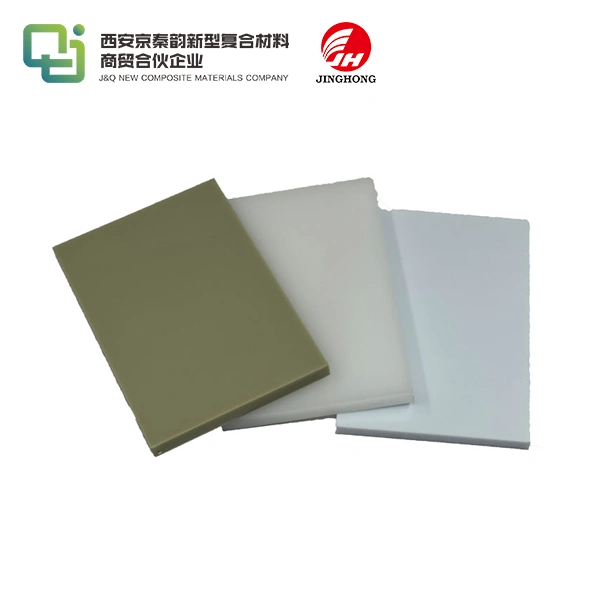
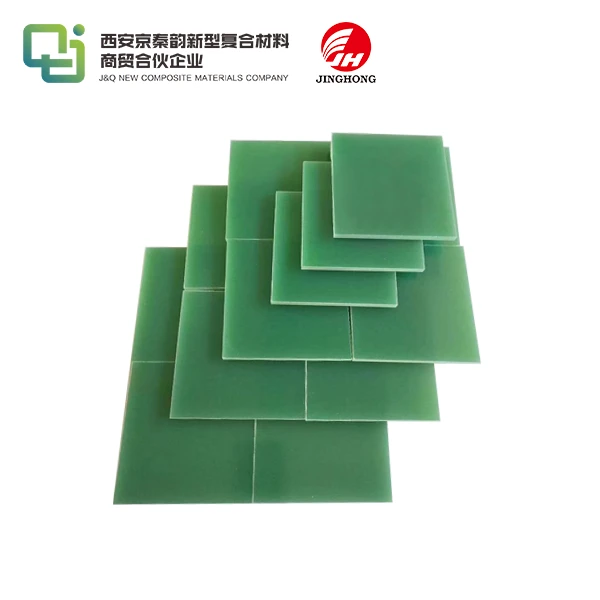
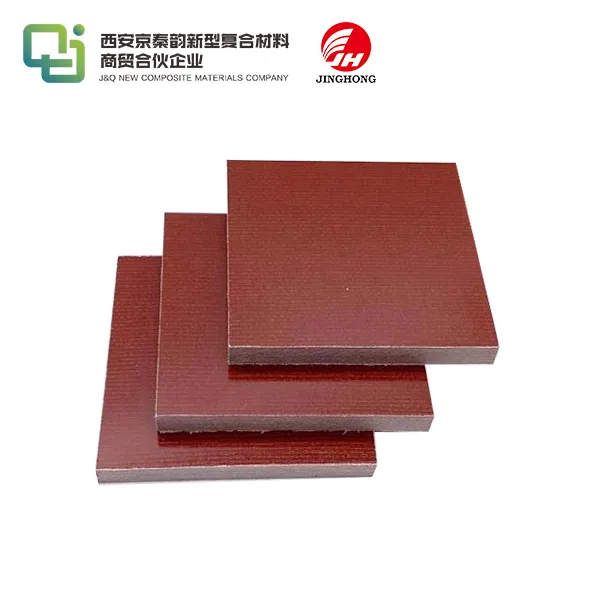
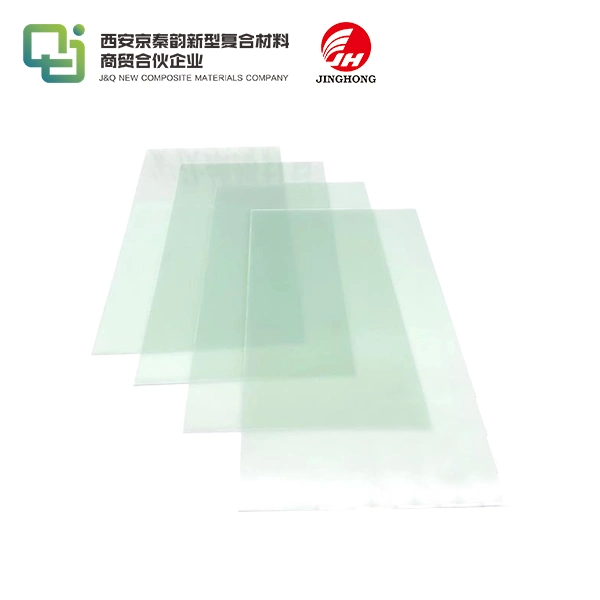
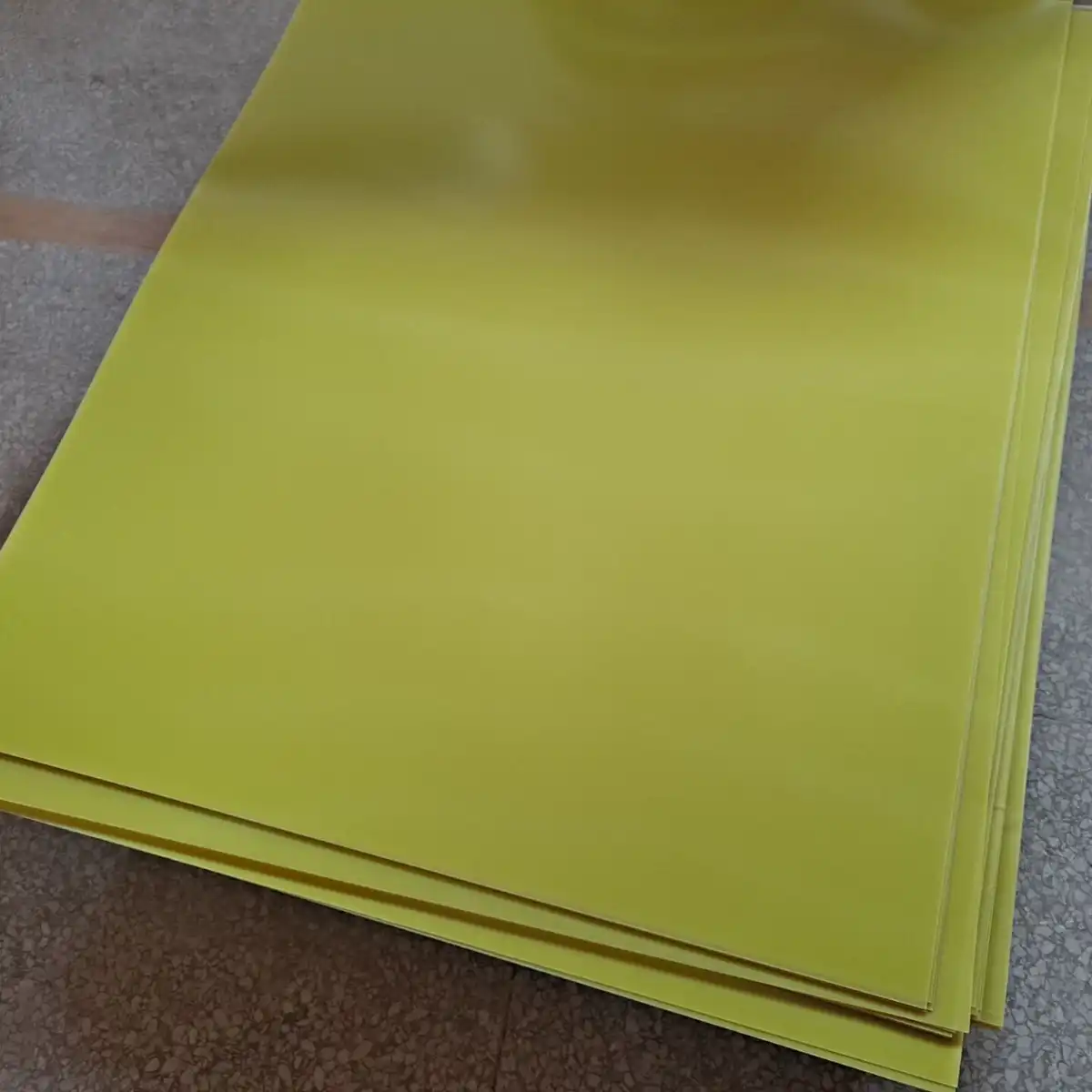
The 3240 epoxy sheet is made of electrical-grade fiberglass cloth that was mixed with epoxy resin and then hardened by heat and pressure. This way of making things makes a thick material that is very stable in terms of its dimensions. In its original state, the material is yellow, but producers can add pigments to make red, green, or black versions. GB/T1303.1-1998 guidelines say that sheets must have smooth surfaces that are free of bubbles, pits, or wrinkles that could damage the electrical structure.
The way FR4 is made is similar, but it has brominated flame retardants mixed into the plastic core. Because of this chemical change, FR4 can get UL94 V-0 ratings, which means that the material can put out a flame on its own within seconds. The "FR" marking means "flame retardant," which is an important difference for uses that need to follow fire safety rules.
Temperature Classification and Thermal Performance
Ratings for temperature have a direct effect on how reliable electrical uses are over time. Class B means that the 3240 epoxy sheet can be used continuously at 130°C, but Class F means that the best grades can be used at 155°C. When these limits are crossed, the resin turns into carbon and the insulator breaks down. We often tell clients who make transformers to check the temperature rates during heat shock testing, in which samples are heated to 130°C to 155°C to see if they split or delaminate.
Standard types of FR4 laminates stay stable up to 130°C, and high-temperature versions can handle temperatures up to 170°C. A very important specification point is the glass transition temperature (Tg). Standard FR4 has a Tg of about 130°C to 140°C, while improved forms can hit 170°C to 180°C. Peak working temperatures are more important than normal conditions when choosing between materials, because thermal cycling speeds up the aging process in epoxy systems.
Key Technical Specifications Comparison
Metrics that measure performance show where each item is most useful. The density of the 3240 epoxy sheet is between 1.90 and 2.0 g/cm³, and it absorbs less than 0.1% water, so it will keep its shape in damp places. Flexural strength is over 340 MPa and tensile strength is over 300 MPa. This makes it perfect for motor slot wedges and structural gaps that are vibrating and under mechanical stress.
The electrical properties of the material include a breakdown voltage of at least 30kV in transformer oil and a high volume resistance, which makes it good for insulating coils and blocking arcs. Resistance to transformer oil and industrial solvents makes things last longer in tough conditions.
The tensile strength of FR4 is between 310 and 380 MPa, which is a little lower than that of other grades, but it makes up for it by being more resistant to fire. At 1MHz, the dielectric constant is between 4.4 and 4.8, and the dissipation factor is usually 0.02 or less. This makes sure that signals stay intact in high-frequency circuits.
Comparing 3240 Epoxy Sheet and FR4: Performance and Applications
Choosing the right material depends on how well its qualities match the needs of the job. We've worked with power distribution companies and car suppliers for more than 20 years and seen how mismatched materials cause products to break down early and lead to guarantee claims.
Electrical Insulation and Dielectric Properties
Both materials are good at insulating, but their dielectric properties make them better for different uses. Due to its low water absorption (<0.1%), the 3240 epoxy sheet keeps its insulation resistance even when the humidity changes. In transformer settings, where moisture can cause tracking and partial discharge, this steadiness is very important. Volume resistivity stays high even after being exposed to damp conditions for a long time, which is better than paper-based phenolic laminates in terms of performance.
FR4 has a similar dielectric strength, but it focuses on managed impedance for signal transfer. The even fiberglass weave makes dielectric constant values that can be predicted, which is very important for PCB design. But it absorbs a little more water than 3240 epoxy sheet materials (usually 0.1 to 0.15%), so it needs to be coated in high-humidity electronics systems.
Flame Resistance and Safety Compliance
In regulatory settings, the way these materials behave in flames sets them apart. According to UL94 tests, traditional 3240 epoxy sheet has an HB grade, which means it burns at controlled rates but doesn't put itself out on its own. This feature works well in places where there isn't much chance of fire, like inside motor parts or switching systems that are closed off. Manufacturers who want to save money like how well the material works mechanically without having to pay extra for flame retardancy that isn't needed.
The UL94 V-0 approval for FR4 meets strict standards in the electronics business. Within 10 seconds of the flame being put out, the components themselves extinguish, stopping the fire from spreading in tightly packed circuit units. More and more, automotive battery pack barriers and household device insulation frames require UL94 V-0 ratings. This makes FR4 the standard design, even though it costs more to make.
Mechanical Strength Under Load
Material strength is very important when mechanical engineers ask for structure insulation or load-bearing gaps. When compared to normal FR4 types, the 3240 epoxy sheet has higher tensile and flexural strengths. We've given sheets to industrial machines where parts have to be able to handle constant vibration and impact loads. The high compressive strength of the material keeps bolted parts from breaking, so electrical gaps are kept even after decades of use.
Another useful thing to think about is CNC machinability. Even though it is hard, 3240 epoxy sheet cuts neatly with carbide tools, making exact holes and shapes without delamination. The quality of the edges stays the same during cutting, which is very important when making complicated insulation profiles for motor kits or switchgear parts.
FR4 can also be machined well, but it breaks more easily when drilling and threading. To make up for it, manufacturers find the best feed rates and backing materials, which makes the process more complicated. When precise mechanical tolerances meet standards for electrical insulation, it is important to carefully look at both sets of specs when choosing a material.
Application-Specific Guidance
Costly mistakes can be avoided by knowing which materials are best for different situations. 3240 epoxy sheet is often used for coil insulation, arc shields, and structural support in power distribution equipment. The material is strong and stable at high temperatures, making it good for transformers where flame resistance is not as important as long-term mechanical integrity.
PCB production is still FR4's job. Printed circuit systems need to be resistant to flames, have controlled dielectric qualities, and work with soldering methods. FR4 substrates are always required for consumer gadgets, car control units, and telecommunications gear.
Builders of industrial machinery often choose 3240 epoxy sheet for wear-resistant parts, mechanical spacers, and gears where electrical insulation helps the structure do its job. When a lot of things need to be made, the difference in cost becomes big, which lets the budget go toward fine machining or better assembly methods.
Procurement Considerations for 3240 Epoxy Sheet and FR4
Sourcing strategy affects both the short-term prices of a project and the dependability of the supply chain in the long run. We learned over 20 years working in the insulation products business that price alone doesn't always tell the whole story of a purchase.
Cost Analysis and Budget Planning
The prices of materials are based on more than just the cost of raw resin and fiberglass. The 3240 epoxy sheet usually costs 15–30% less than similar FR4 types because the resin is made in an easier way and doesn't have any flame retardant additives. When specs allow standard thicknesses between 0.5mm and 50mm, volume savings become very big for orders that are bigger than the standard sheet numbers.
Lead times depend on the thickness and level of customization needed. Standard sheets can be shipped within days if they are in stock, but special sizes (50–150mm) or precision-cut blanks take two to four weeks to make. We keep relationships with transportation providers that let us combine packages and lower freight costs for business-to-business clients all over the US.
The price of FR4 changes depending on the Tg grade, copper coating (if used), and the flame retardant formulation. It costs more for high-temperature versions, but they work well in tough situations. The total cost of ownership should be looked at by procurement teams. This should include the cost of cutting labor and any repair costs that might come up because of problems with the material.
Supplier Qualification and Quality Assurance
Certified producers stand out by following strict quality standards. When looking at 3240 epoxy sheet sources, we suggest checking that they:
Surface integrity inspection ensures that sheets don't have any bubbles, deep scratches, or edge delamination that could cause partial discharge when they come. A visual inspection should show that the color and feel of all the sheet sides are the same, which means that the resin has been infused consistently.
Dimensional tolerance verification uses calibrated measuring tools to make sure that the thickness is always the same (within ±0.1mm to ±0.4mm, based on the standard thickness). During CNC cutting, checks for flatness stop problems with bending.
Breakdown voltage testing applies electrical stress on the laminations in transformer oil in a way that is not parallel to them. Good materials can handle 10-15kV/mm without breaking, but sheets that aren't up to par break early, which means they haven't been properly cured or are contaminated.
Thermal stress inspection exposes samples to thermal stress testing at their stated working temperatures, revealing blistering or breaking that means the resin crosslinking isn't good enough. These tests back up what the maker says about how to classify temperatures.
Third-party approvals like ISO certification, RoHS compliance, and UL recognition show that consistent manufacturing practices are being used. Long-term buying ties with certified sellers cut down on the number of inspections that need to be done and the number of times that supplies are interrupted.
Customization Services and Lead Time Management
Today's industry needs more freedom than just standard sheet sizes. Precision cutting, CNC turning, and hole drilling are some of the services we give that make ready-to-install parts. Custom manufacturing gets rid of extra steps in the process, which saves money on work and prevents damage from handling.
Customizing the thickness meets the needs of different shielding applications. Standard ranges are good for most uses, but sometimes transformer makers need sheets that are thicker than 50 mm for high-voltage insulation walls. For these standards, production wait times are longer, so involving suppliers early on is important for keeping the project on schedule.
Color choices help people find their way around complicated structures. The yellow color means the normal formulation, and the green, red, or black variations help assembly workers tell the difference between voltage levels or functional zones. Color doesn't change the electrical qualities, but visual coding makes it easier to put things on big projects.
Common Questions and Misconceptions About 3240 Epoxy Sheet vs FR4
Getting rid of common misunderstandings helps buying teams make smart choices. When we talk to engineering managers and expert buyers, we often talk about these worries.
Can 3240 Replace FR4 in Circuit Boards?
Substitution is completely based on the needs of the program. When flame retardancy isn't needed, like in sealed equipment housings or industrial control panels, 3240 epoxy sheet is a good choice for insulation because it's cheap and has good mechanical qualities. However, FR4 is almost always needed for PCB uses because it is listed as safe by UL, can be soldered, and is compatible with standard production processes. If you try to substitute in business goods, you could fail the certification process and be held responsible.
When industrial control systems work in controlled settings, they may need 3240 epoxy sheet for things other than circuit boards, like structural supports and insulation walls. This mixed method cuts down on costs while still meeting safety standards in places where flame-resistant bases are needed.
Understanding Temperature Limits and Longevity
Service life is directly affected by operating temperature. The Class B rating (130°C) is for steady job cycles, not short-term temperature jumps. We tell our clients to figure out the highest temps that the conductors could reach in the worst-case scenarios of loading, and then choose materials that have 20–30°C of safety cushion.
Above the recommended temperature, thermal age speeds up. Over time, rust and chain scission break down epoxy resins slowly, lowering their mechanical and electrical qualities. When used in the right settings, properly stated materials will keep working for 20 to 30 years, while overheated parts will break within months.
Moisture Resistance in Practical Applications
The 3240 epoxy sheet is very stable in damp places because it absorbs very little water (less than 0.1%). When exposed to water, paper-based phenolic materials grow and break down, but epoxy laminates keep their shape and electrical qualities. This resistance to moisture helps power distribution equipment that is placed outside, as it stops tracking problems that happen with hygroscopic insulation materials.
FR4 is a little more sensitive to wetness, but a good conformal coating can ease most of your worries. Electronics systems that work in marine or tropical settings need more safety than just choosing the right base material.
Conclusion
The question of whether 3240 epoxy sheet and FR4 are the same is answered by looking at each case separately, rather than using general rules for replacement. Even though they are both made of epoxy resin and fiberglass, these materials are used for different things. 3240 epoxy sheet is great for mechanical strength and cost-effective shielding, while FR4 is the best when it comes to flame retardancy and controlled dielectric qualities. Professionals in procurement get the best value by matching the properties of a material to its operational needs. For example, 3240 epoxy sheet is used for its strong mechanical properties in power distribution and industrial machinery, while FR4 is needed for its safety certifications and electrical consistency in electronics manufacturing. Successful buying relationships combine technical know-how with dependable supply chains to make sure that the quality of the materials meets requirements without delaying the project or going over budget.
FAQ
What thickness ranges are available for 3240 epoxy sheet?
Standard production covers 3240 epoxy sheet thicknesses from 0.5 mm to 50 mm with very close limits. Special orders can be made for sizes between 50mm and 150mm, but they take longer to make because they aren't common. To get the best shipping times, procurement teams should be clear about the thickness needs early on in the project planning process.
How does chemical resistance compare between these materials?
Transformer oil, lubricants made from gasoline, and most industrial fluids can't get through either material. Mineral oils and aliphatic molecules, which are common in electrical equipment, don't damage the 3240 epoxy sheet. Strong alkalis and concentrated acids can break down both materials over time, so in harsh chemical conditions, you may need to use different insulation methods.
Can 3240 epoxy sheet undergo CNC machining without delamination?
If you choose the right tools, you can cleanly machine 3240 epoxy sheet. Carbide drill bits and cutters have sharp cutting edges that make holes and curves without breaking the layers of laminate. Feed rates should be matched to the hardness of the material so that heat doesn't build up and soften the resin, which can lead to rough edges.
What certifications should buyers verify when sourcing these materials?
Some of the most important certificates are ISO 9001 for quality management systems, RoHS compliance for environmental laws, and UL recognition when it applies. FR4 needs UL94 flame rating paperwork in particular. Third-party test results that confirm the electrical and mechanical qualities give even more proof that the specifications are being met.
Partner With J&Q for Certified Epoxy Laminate Solutions
J&Q has been making 3240 epoxy sheet and other industrial insulation materials for more than 20 years and has also been trading internationally for ten years, helping electrical makers, machinery builders, and clients in the power sector all over the United States. Our logistics are handled by our own in-house logistics department, which makes it easier to complete orders from precision cutting to door-to-door transport. We have been a provider of 3240 epoxy sheets for a long time, and we make sure that our quality control procedures are strict. These include breakdown voltage testing, measurement verification, and thermal stress inspection. These procedures make sure that our products meet GB/T1303.1-1998 and IEC standards. Technical support teams help you choose the right material by giving you full datasheets and application advice that match your unique insulation needs to the best laminate grades. For your next project, contact our sourcing experts at info@jhd-material.com or visit jhd-material.com to talk about custom thickness choices, volume prices, and faster shipping.
References
Institute of Electrical and Electronics Engineers (IEEE). "Standard for Electrical Insulating Materials - Test Methods and Performance Criteria." IEEE Transactions on Dielectrics and Electrical Insulation, Vol. 28, No. 4, 2021.
National Electrical Manufacturers Association (NEMA). "Industrial Laminating Thermosetting Products: Standards Publication LI 1-2020." NEMA Standards, 2020.
Zhang, H., & Peterson, M. "Comparative Analysis of Epoxy Resin Laminates in High-Voltage Applications." Journal of Materials Engineering and Performance, Vol. 30, No. 6, 2021, pp. 4328-4341.
Underwriters Laboratories. "UL 94: Standard for Safety of Flammability of Plastic Materials for Parts in Devices and Appliances." UL Standards & Engagement, 8th Edition, 2018.
IPC Association Connecting Electronics Industries. "IPC-4101 Specification for Base Materials for Rigid and Multilayer Printed Boards." IPC Standards, Revision C, 2020.
Wilson, R.K., & Thompson, L.A. "Thermal Aging Mechanisms in Glass-Reinforced Epoxy Composites for Electrical Insulation." Polymer Degradation and Stability, Vol. 178, 2020, Article 109195.