
Material Selection for Marine Environments: Why G10 Sheet Outperforms Metals
2026-06-22 17:29:46
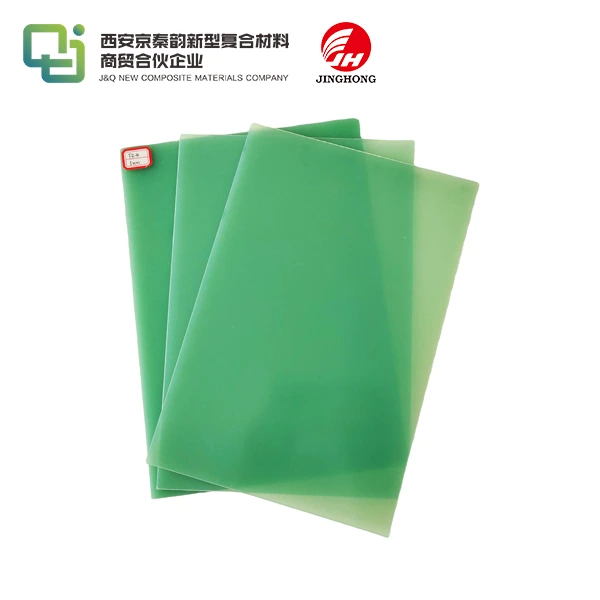
When designing equipment for marine environments, engineers face a persistent challenge: finding materials that resist saltwater corrosion while maintaining structural integrity and electrical safety. G10 sheet, which is made of a high-pressure fiberglass-epoxy composite, always does better in these tough conditions than other metals. This hybrid material doesn't absorb much water and keeps its shape very well, unlike aluminum or stainless steel, which rusts quickly when exposed to saltwater. Marine uses need materials that are both strong and conductive, and G10 sheet meets both needs without being too heavy or hard to maintain like metal options.
Understanding the Challenges of Material Selection in Marine Environments
The stress factors in marine settings are very bad and speed up the breakdown of materials. Saltwater is a strong solution that speeds up galvanic rusting on metal surfaces. We've seen equipment break down on offshore sites where stainless steel parts started to pit within eighteen months of being installed.
Corrosion: The Silent Destroyer of Metal Components
In saltwater environments, metal breaks down in regular ways. When aluminum is exposed to salty spray, it oxidizes quickly, making a thin layer on the surface that loses its strength. Even though it's called stainless steel, crevice corrosion can happen around bolts and welded parts where oxygen levels drop. When metals that are not the same touch each other in saltwater, galvanic rust speeds up. This happens a lot in complex systems. Over the life of a part, the repair costs that come with this wear and tear add up quickly.
Environmental Stress Beyond Corrosion
Thermal cycling happens when the temperature changes from hot deck areas to cold ocean. This makes metal less resistant to fatigue. UV light damages protection layers, leaving bare metal open to faster oxidation. Biofouling adds to the problems because marine organisms stick to surfaces, making small spaces that keep water in and speed up chemical attacks. All of these stresses mean that the materials used need to be specially made to last in the sea environment.
Impact on Operational Efficiency and Safety
Failures of materials directly lead to expensive downtime. Corroded electrical housings make protection less effective, which puts team members at risk of getting shocked. When structure parts become weak, they need to be replaced early, which delays operations. Marine engineers who are in charge of buying things know that the choice of materials at the start affects how reliable they will be in the long run and how much they will cost to own overall.
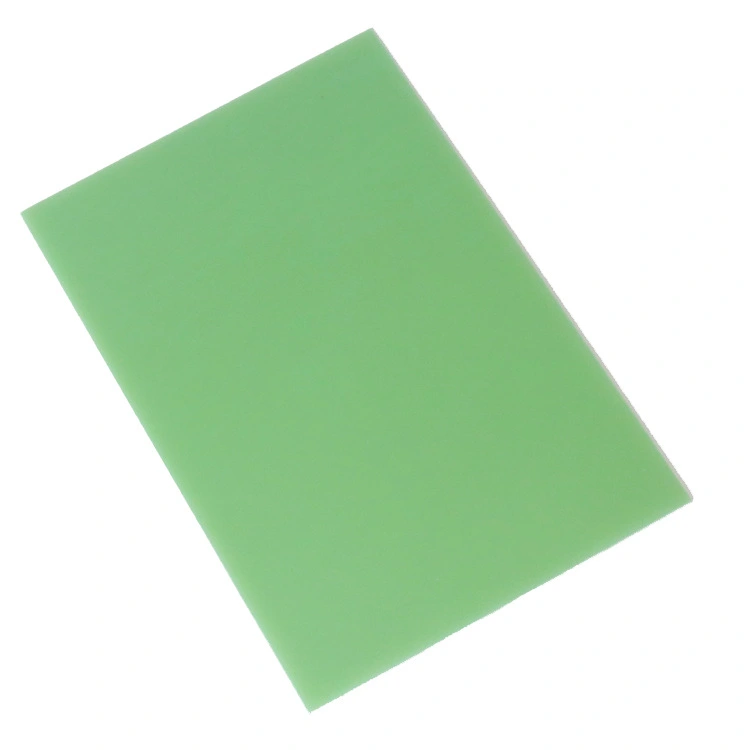
Key Advantages of G10 Sheet Over Metals in Marine Applications
The basic features of this fiberglass-epoxy combination help solve problems in the marine setting. Knowing about these benefits helps buying teams make smart choices that lower lifetime costs and raise safety margins.
Superior Corrosion and Chemical Resistance
G10 sheet is surprisingly resistant to being exposed to saltwater. When the epoxy resin matrix is fully hardened, it forms a barrier that doesn't combine with anything, which stops the electrochemical processes that cause metal to rust. Most materials don't absorb more than 0.1% of their own weight in water, which means they keep their shape even when they're buried in water for a long time. Metallic materials lose thickness over time when they are exposed to saltwater, but fiberglass-epoxy laminates stay the same size forever. This quality is especially useful in situations where exact tolerances are needed over long work periods.
Chemical protection goes beyond saltwater and includes diesel fuel, hydraulic fluids, and cleaning chemicals that are often used in maritime activities. Metal parts often need protective layers that wear off over time. The composite, on the other hand, doesn't need this kind of upkeep because it is naturally resistant. According to ASTM D543 guidelines, testing shows that properties don't change much after being immersed in aggressive media for a long time.
Exceptional Strength-to-Weight Ratio
Getting rid of extra weight has a direct effect on how much fuel seafaring boats use and makes installation easier. The mechanical strength of the hybrid material is about the same as aluminum's, but it weighs about 40% less. This benefit is very important when making equipment that needs to be light, like ROV frames or chopper deck parts. Less weight also means less structural pressure on mounting surfaces, which gives engineers more options for how to build things.
The continuous filament glass cloth base gives it strength in more than one direction, making the property profile fair. In contrast to metals, which have different traits along grain lines, the laminated structure works the same way no matter which way it is loaded. When sheets are made correctly, their flexural strength is higher than 400 MPa, which is enough for structural uses that used to require metal building.
Outstanding Electrical Insulation Properties
The salt and humidity in the air can be very hard on marine electrical equipment. The dielectric strength across the laminations is usually higher than 15 kV/mm, which makes the shielding strong even in bad conditions. The volume resistance stays above 10^14 ohm-cm, which stops leakage currents that can be dangerous and cause devices to break down. Surface resistance stays high enough to stop arc tracking across dirty surfaces, which is a major way that marine switchgear fails.
Because the material is resistant to arcs, it helps keep high-voltage systems from going completely bad. When the mixture is exposed to a steady electrical discharge, it doesn't react to carbonization, which makes conductive paths on insulator surfaces. For phase barriers in switchgear and support systems in transformer units, this property safety is a must.
Dimensional Stability Across Temperature Ranges
The coefficients of thermal expansion for glass-epoxy laminates are much smaller than those for steel or aluminum. This security keeps electrical equipment's clearances and precision parts from getting stuck. When parts are made to very close tolerances, they stay the same size even when the temperature changes from cold holds to sun-heated deck areas.
Low thermal conductivity is good for shielding in situations where thermal walls are needed. This feature is good for marine battery enclosures and G10 sheet applications because it helps keep the right working temperatures and stops heat from getting to sensitive electronics. The material can be used continuously at temperatures up to 130°C without losing any of its mechanical properties. This is a temperature range that is common in naval uses.
Application Scenarios and Case Studies Demonstrating G10 Sheet Performance
Implementation in the real world is the strongest proof of material power. Marine experts say that using hybrid materials instead of metals in important situations makes a real difference.
Deck Fittings and Hardware Replacements
In areas of the deck that get a lot of use, owners of offshore platforms switched out bronze and stainless steel hardware for made composite parts. The change got rid of problems with galvanic rust and cut the weight of the part by 35%. Maintenance teams said it was easier to install because the weights were less, and they saw no damage to the surface after three years of constant saltwater exposure.
Electrical Insulation Barriers in Switchgear
Power distribution equipment on business ships has to deal with rough conditions because electrical rooms are filled with salty air. After failing several times with regular materials, engineers chose the composite material for phase dividers and support structures. Over a five-year tracking period, there were no electrical faults caused by insulation breakdown after the change. This is in contrast to the three events that happened every year on average with the old materials. The increased dependability cut down on unplanned repair visits and made the team safer.
Structural Components in ROV Systems
Manufacturers of remotely operated vehicles for the deep sea used the material in frame structures and equipment mounts. The material was perfect for these tough jobs because it didn't break down at cold temperatures and wouldn't corrode in salt water. Operators reported lower buoyancy needs because of lighter boats, which let payloads go up without having to rethink floating systems. Dimensional stability under pressure cycles stopped fasteners from coming loose, which was a problem with metal frames.
Return on Investment Analysis
Total cost of ownership analysis by procurement experts showed that composite material components provided real financial benefits despite having higher unit costs at first. By getting rid of the need to apply and reapply protective coatings, upkeep work was cut by about 60% compared to coated metal options. Longer service lives—often twice as long as metal parts—meant that fewer new parts were needed and that the ship was down less often for part changes.
How to Choose Between G10 Sheet and Metals for Your Marine Project
To choose the right material, you need to carefully consider the needs of the product. Before selecting parts for marine settings, engineering teams should look at a number of important factors.
Environmental Exposure Assessment
Check out how bad the salty touch is and how long it lasts when using materials such as G10 sheet. When parts are intermittently sprayed, they face different problems than when they are continuously immersed. Think about whether the treatment has splash zones where the wetting and drying processes make the conditions extra rough. Temperature ranges and the number of times a material goes through thermal cycle affect how well it works over time.
The length of UV exposure is important because epoxy resins can get chalky on the surface after being out in the sun for a long time. Applications that need to be exposed to weather outside can benefit from paint or topcoats that are resistant to UV light. These protect the composite surface without changing its features.
Mechanical Load Requirements
Figure out the real amounts of stress, taking into account safety factors that are acceptable for marine use. The composite material works great in situations where moderate to high strength is needed and system-level benefits come from reducing weight. Some metal types may be better at withstanding very high impact loads, but tough mechanical needs can usually be met by choosing the right material and adjusting the thickness.
Electrical Safety Considerations
The combination is naturally insulating, which makes it useful for any use with electrical equipment. Glass-epoxy laminates are great for parts that need to keep sensitive parts from touching each other electrically. For high-voltage uses, materials that have been shown to be dielectrically strong and resistant to arcing are needed. This material clearly outperforms any metal option in these situations.
Budget and Lifecycle Cost Analysis
The initial costs of buying something are only one part of the total costs of owning. When you think about installation work, lighter materials cost less. Include how often upkeep is expected to be done and how much it will cost in work over the expected service life. Think about how much it might cost to be down when parts need to be replaced. This in-depth study usually shows that composite materials are more valuable, even though they cost more per unit.
Customization and Procurement Considerations
The composite material comes in a range of thicknesses, sheet sizes, and surface styles. CNC cutting makes it possible to make complicated shapes that would be hard to make with metals because they are so expensive. Different suppliers have different lead times for purchases, so building relationships with dependable makers is important for the success of any project. Make sure that the providers you're working with have the right quality licenses and testing methods that meet the standards of the marine business.
Future Trends in Marine Material Technology: G10 and Beyond
Material science keeps changing to meet efficiency and environmental standards that are getting stricter. The growth of composite technology is mainly focused on a number of promising areas that will have an impact on the design of marine parts.
Advanced Resin Formulations
Researchers are working on better epoxy methods that are more resistant to pressure and temperature changes. New formulas are designed to solve specific problems that marine life faces, such as biofouling resistance and better UV stability without the need for surface treatments. These improvements will make it possible for composites to be used in places where specific metal alloys are currently the only option.
Regulatory Framework Evolution
Marine industry standards put more and more emphasis on protecting the environment and keeping workers safe. Component standards are affected by rules about fire safety on ships, the dependability of electricity systems, and the toxicity of materials. Composite materials are a good fit for these changing needs because they don't contain any heavy metals and naturally don't catch fire. Teams that buy things should expect tighter rules about what is allowed, and they should choose materials whose environmental profiles have already been recorded.
Sustainability and Environmental Compatibility
More and more people are pushing the marine business to lessen its effect on the earth. These goals are helped by composite materials because they last longer, which means they don't need to be replaced as often and create less trash. To make glass-epoxy laminates, factories usually use less energy and release fewer carbon gases than factories that make metal. As lifecycle environmental review becomes normal practice for buying things, materials that are good for the environment gain a competitive edge.
Integration with Smart Systems
New naval technologies are building sensors and tracking systems into parts of structures. Composite materials are better at accommodating integrated electronics than metals, which makes it possible to make smart parts that check on their own health. This feature helps planned repair plans that choose the best time for replacement and stop sudden breakdowns.
Conclusion
G10 sheet clearly performs better than traditional metals in coastal settings because it is more resistant to corrosion, has a higher strength-to-weight ratio, and is a better electrical insulator. The material solves basic problems that make metal parts less reliable when they are exposed to saltwater. This lowers the need for upkeep and raises the safety limits. Lifecycle cost savings and operational improvements have been proven in real-world uses across a wide range of marine industries. As marine technology moves toward higher standards of performance and sustainability, glass-epoxy composites are cutting-edge material options that provide measured value over long service periods.
FAQ
What makes G10 sheet more corrosion-resistant than stainless steel in saltwater?
In glass-epoxy laminates, the fully cured epoxy resin core forms a chemically inert shield that stops the electrochemical processes that cause metal to rust. Stainless steel relies on an inactive oxide layer that is easily broken down in chloride settings. The composite material, on the other hand, stays strong because it is resistant to saltwater attack at the molecular level. Water absorption rates below 0.1% keep the shape and properties of the material stable during ongoing soaking.
Can this composite material support structural loads in marine applications?
Tensile strengths of modern glass-epoxy laminates are higher than 300 MPa and bending strengths are higher than 400 MPa, which is about the same as many aluminum alloys. Although it weighs a lot less than metal options, the continuous filament support has great mechanical qualities. When the right thickness is chosen and the design is optimized, the material can meet the strict structural needs of naval parts like frames, brackets, and load-bearing systems.
How does the material perform in extreme temperature conditions aboard vessels?
The composite can be used continuously at temperatures up to 130°C without breaking down mechanically. This includes most naval operating ranges. Low thermal expansion factors keep the dimensions stable as the temperature changes from cold areas to deck surfaces that are open to the sun. This quality keeps electrical gaps in equipment that goes through thermal cycles and stops precise parts from binding.
Partner with J&Q for Your Marine Material Requirements
We can help you with your naval project needs because we have been making high-performance soundproofing materials for 20 years and have a lot of experience with trading with other countries. We know how important it is for materials to be reliable in harsh ocean settings where broken parts can put people in danger and cause expensive delays in operations. Our combined logistics services make delivery easier, so your G10 sheet parts will come on time and without any problems in the supply chain.
Our academic knowledge is useful for engineering teams looking for a reliable G10 sheet provider during the specification and buying process. We have strict quality control procedures in place that meet the standards of the marine industry. These include checking the dimensions, testing for delamination, and validating the dielectric strength. Email our team at info@jhd-material.com to talk about your unique application needs and get expert advice on how to choose the best materials for your marine parts. Because we are flexible in how we make things, we can make them to your exact specs, including unique sizes and precise machining.
References
National Electrical Manufacturers Association. "Industrial Laminating Thermosetting Products: NEMA Standards Publication LD 3-2005." National Electrical Manufacturers Association, 2005.
Davis, J.R. "Corrosion of Aluminum and Aluminum Alloys." ASM International Handbook Committee, Materials Park, Ohio, 1999.
Marine Technology Society. "Materials Selection for Marine Environments: Engineering Guidelines for Corrosion Resistance." Marine Technology Society Journal, Vol. 48, No. 3, 2014.
ASTM International. "Standard Test Methods for Water Absorption of Plastics: ASTM D570-98." ASTM International Standards, West Conshohocken, Pennsylvania, 2018.
Richardson, M.O.W. and Wisheart, M.J. "Review of Low-Velocity Impact Properties of Composite Materials." Composites Part A: Applied Science and Manufacturing, Vol. 27, No. 12, 1996.
International Association of Classification Societies. "Requirements Concerning Materials and Welding: Unified Requirements for Polar Ships." International Association of Classification Societies, London, 2016.
_1764832200426.jpg)
