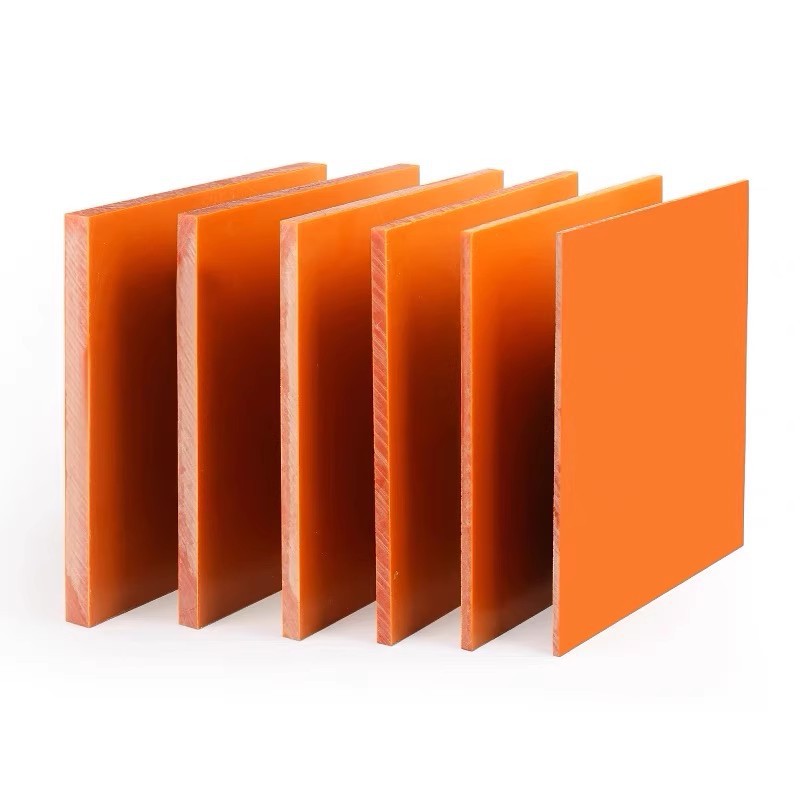
Phenolic Cotton Cloth Board Delivers Wear Resistance for Industrial Gears, Bushings, and Structural Parts
2026-10-14 17:25:09
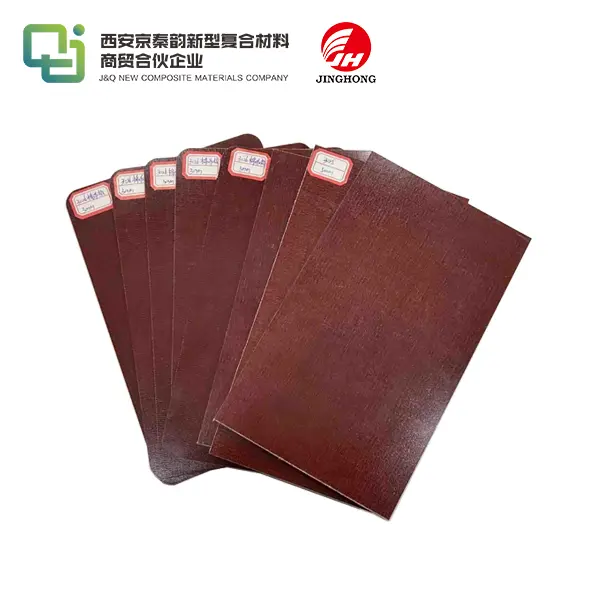
If your industrial components are wearing out faster than expected, the material you're using might be the problem. Phenolic cotton cloth board—a thermosetting composite made from woven cotton fabric impregnated with phenolic resin—answers the call where metal and standard plastics fall short. Designated as PF CC 201 under IEC standards and NEMA Grade C/CE, this laminate material offers a proven combination of wear resistance, mechanical toughness, and electrical insulation that keeps gears, bushings, and structural parts running longer under real-world load conditions.
Understanding Phenolic Cotton Cloth Board: Composition and Properties
What Is It Made Of?
Several layers of cotton cloth are stacked on top of each other, soaked in phenolic resin, and then the whole thing is cured under high heat and pressure. This makes a thermosetting laminate that is dense and has a specific gravity of 1.35 to 1.45 g/cm³. Because it is made of spun cotton, it is tougher than phenolics made from paper.
Mechanical and Electrical Properties
The Charpy flatwise impact strength of Grade C boards is ≥ 8.8 kJ/m², and their bending strength is more than 100 MPa. Canvas Electric's Grade CE reduces moisture absorption to less than 1.6% (at 1.5 mm thickness) and has a dielectric strength of about 5.5 kV/mm in oil, so it can be used for both structural and medium-voltage insulation tasks.
Chemical Resistance Profile
Mineral oils, common solvents, and weak acids don't damage the phenolic resin structure very well. It always works the same way in places where gear lubricants and hydraulic fluids are present. Engineers should know that strong alkalis can break down the resin, so a chemistry study specific to the application is suggested before the final specification is made.
The basic features of this material are what make purchasing teams in the electrical, machinery, power, and car industries choose it over other materials.

How Phenolic Cotton Cloth Board Enhances Performance in Industrial Gears, Bushings, and Structural Parts?
Countering Wear in High-Load Gears
When metals touch each other in gear use, friction, wear, and noise are created. Cotton-fabric phenolic laminates absorb vibrations and don't need much grease to work, which greatly lowers the rate of wear. The weaving structure of the material spreads stress across fiber junctions instead of gathering it at a single failure point. This makes gear teeth last longer in medium-load drives.
Reliable Performance in Bushings
Bushings made from Phenolic Cotton Cloth Board phenolic cotton laminates are quiet, can handle shaft misalignment better than metal ones, and don't seize up even when the motor isn't moving. Underwater bearings that are oiled with water are a common use for this material because it has a low friction coefficient and doesn't rust. For a long time, OEM sourcing managers in industrial machinery have used this material to make replacement bushings for pumps, conveyors, and rolling mills.
Structural Integrity in Insulating Environments
This board blends the load-bearing capacity that mechanical engineers need with the dielectric strength that electrical teams need for structural spacers and insulating frames in switches and motor housings. Precision CNC milling, drilling, and tapping can be done on it without delamination, and it can hold tight physical limits that meet ASTM D709 and IS 2046 standards.
Because of these performance qualities, phenolic cotton laminates are the first choice for component makers who can't afford things to go wrong in the field.
Comparing Phenolic Cotton Cloth Board with Alternative Materials for Industrial Use
Before deciding on a material, procurement specialists usually look at a number of different options. Comparing phenolic cotton laminate to other options, here are the pros and cons:
- vs. Phenolic Paper Board (Grade XX/XP): Paper-based grades cost less upfront but offer lower impact strength and absorb more moisture. In dynamic mechanical parts like gears, they crack under cyclic loading where cotton-fabric grades continue performing.
- vs. Fiberglass Epoxy (FR4/G10): FR4 delivers higher dielectric strength and is the preferred choice for PCB support and high-frequency insulation. However, its brittleness under impact and higher machining tool wear make it less practical for mechanical wear parts like bushings and gears. Phenolic cotton laminate remains the better choice for tribological applications.
- vs. Plywood or Wood Composites: Wood-based materials absorb water, swell under humidity, and lack consistent dielectric properties. Phenolic cotton laminate maintains dimensional stability and electrical performance across varying ambient conditions.
- vs. Bronze or Steel Bearings in Abrasive Environments: Metal bearings work well under heavy loads but require lubrication, generate noise, and corrode in wet or chemically active environments. Phenolic cotton laminate bearings run dry or water-lubricated, resist corrosion, and dampen vibration.
These tests show that phenolic cotton laminate is a good compromise between being mechanically strong, electrically functional, and cost-effective over the lifecycle of the component. Total cost of ownership teams will find that the material's small price boost over paper phenolics is balanced out by longer repair intervals.
Procurement Guide: How to Source the Best Phenolic Cotton Cloth Board for Your Industrial Needs?
Certifications and Standards to Check
Check that the supplier's product is UL-approved (the J&Q 3025 phenolic cotton cloth laminated sheet has UL No. E310670). Also, make sure that the product is RoHS- and REACH-compliant for projects that need to report on the environment. Boards should meet IEC 60893, NEMA LI 1, or ASTM D709, depending on what you need them for.
Key Ordering Parameters
When choosing a supplier, you should look at useful things like the thickness range of Phenolic Cotton Cloth Board (usually between 0.5 mm and 100 mm), sheet sizes, minimum order amounts, control of tolerances, and wait times. Suppliers who also make their own products, instead of just trade middlemen, usually offer more consistent batches and more reliable schedules.
Avoiding Common Procurement Pitfalls
Instead of relying only on catalog specifications, ask for material test reports (MTRs) with every shipment. Check with the supplier to see if they can meet your needs for custom cutting, CNC profiling, or different thicknesses without any delays. A supplier with dedicated logistics skills can combine shipping, lower damage during transit, and make import paperwork easier for buyers in the US.
Procurement teams can be sure of both quality and delivery performance when they buy from a verified manufacturer with more than 20 years of production experience and a dedicated logistics arm.
Why Choose Phenolic Cotton Cloth Board for Industrial Wear Resistance?
Long Service Life Reduces Replacement Costs
The thick cotton-reinforced matrix lasts much longer than paper phenolics or thermoplastics that aren't strengthened against abrasion and long-term mechanical stress. Fewer replacement cycles directly lead to less repair work and less downtime for production, which is a measure that mechanical engineers and plant managers keep a close eye on.
Adaptability Across Industries
This material can be used in many different areas, such as motor brackets for home tools, arc barriers for power transformers, and insulation pads for car battery packs. It can be used in places where electrostatic discharge is a problem because it is antistatic and has a flat, uniform surface. It can also be used in oil-soaked gear systems because it is chemically resistant.
Machinability as a Competitive Advantage
Cutting tools wear out quickly on glass-fiber laminates, but standard CNC equipment can cleanly cut phenolic cotton laminates. Parts can be drilled, tapped, and profiled without the need for special tools. This cuts down on the cost of extra processing and speeds up the time it takes to go from raw sheet to final component.
Because of these things, phenolic cotton laminate is a material that has a strong value case that goes far beyond the price of purchase and covers the whole span of the parts it makes.
Conclusion
Phenolic Cotton Cloth Board has been used in industrial manufacturing for decades because it works well in gears, bushings, structural spacers, and insulating parts. Engineers and buying teams can use this material to solve a number of design problems at once because it is tough, has controlled friction behavior, doesn't conduct electricity, and can be machined on a CNC machine. This material gives a reliable return on investment in tough industrial settings as long as the seller has the right certifications, batches are always of high quality, and transportation is quick to respond.
FAQ
What grades of phenolic cotton laminate are available?
The two primary grades are NEMA Grade C (coarse weave) and Grade CE (fine weave/canvas electric). Grade C prioritizes mechanical impact strength for structural and gear applications. Grade CE modifies the weave and resin content to reduce moisture absorption and improve dielectric strength, making it suitable for electrical insulation duties at medium voltage levels.
Can phenolic cotton laminate be machined to custom dimensions?
Yes. This material machines well with standard CNC drilling, milling, and tapping equipment. It holds tight dimensional tolerances without delamination—a known issue with glass-fabric laminates. Custom sheet sizes, thicknesses, and machined profiles are available from full-service suppliers.
Is this material compliant with US and international standards?
Quality suppliers provide boards conforming to ASTM D709, IEC 60893, and NEMA LI 1. Look for UL recognition and RoHS/REACH compliance documentation, particularly for electronics and automotive applications in the US market.
How does it perform in wet or oil-lubricated environments?
The phenolic resin matrix resists mineral oils and most industrial solvents effectively. Grade CE shows moisture absorption below 1.6% at standard thickness. It is widely used in water-lubricated bearings and oil-bath gear systems without measurable degradation over normal service intervals.
Get a Quote from J&Q — Your Trusted Phenolic Cotton Cloth Board Supplier
J&Q has been making soundproofing sheets for more than 20 years and has been trading with other countries for more than ten years. Our Phenolic Cotton Cloth Board is compliant with UL, RoHS, and REACH regulations. It comes in a range of sizes and is always of the same high quality. We also handle all of our own shipping within the US. Visit jhd-material.com or email our expert team at info@jhd-material.com to talk about your needs and ask for a sample.
References
1. ASTM International. ASTM D709: Standard Specification for Laminated Thermosetting Materials. ASTM International, 2021.
2. National Electrical Manufacturers Association. NEMA LI 1: Industrial Laminating Thermosetting Products. NEMA, 2020.
3. International Electrotechnical Commission. IEC 60893-3: Specifications for Industrial Rigid Laminated Sheets Based on Thermosetting Resins. IEC, 2020.
4. Harper, Charles A. Handbook of Plastics Technologies. McGraw-Hill, 2006.
5. Brydson, J.A. Plastics Materials, 7th Edition. Butterworth-Heinemann, 1999.
6. Rosato, Donald V., and Dominick V. Rosato. Reinforced Plastics Handbook, 3rd Edition. Elsevier, 2004.