Preventing Surface Damage on G10 Fiberglass Sheet
2026-06-03 17:01:28
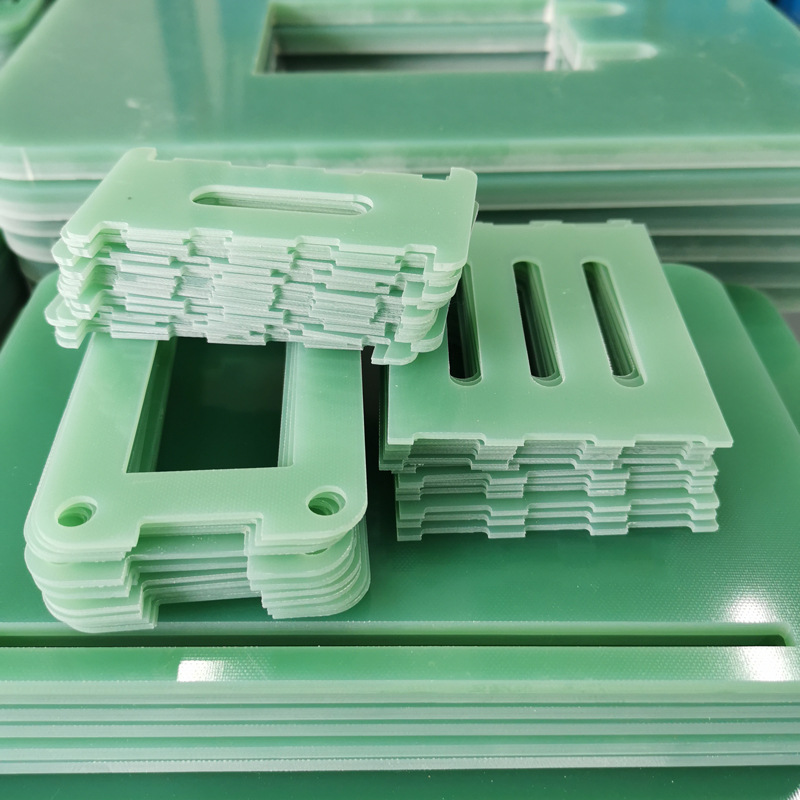
To keep the surface of G10 fiberglass sheet from getting damaged, you must first understand how it is made and what weaknesses it has. This high-pressure thermosetting laminate is made up of woven glass cloth that is joined together with epoxy glue. This makes a dense structure that is good at keeping electricity out and being strong. Surface damage, like scratches, delamination, and chemical etching, weakens these important features, making the dielectric function and structural stability worse. Procurement teams can protect the surface quality of materials throughout their entire lifetime by following the right handling procedures, choosing the right protective treatments, and working with experienced sources. This ensures that the materials will work reliably in tough electrical, industrial, and automobile applications.
Understanding Surface Damage on G10 Fiberglass Sheets
What Constitutes Surface Damage in Industrial Applications?
Damage to the surface can show up in a number of ways that directly affect how things work. Scratches and abrasions can get through the protective epoxy layer and let water into the glass fibers below. When the connection between laminate layers gets weaker, air spaces form that weaken the dielectric strength. This is called delamination. Chemical etching happens when solvents or alkaline substances come in touch with the resin core and break it down. When a material's temperature changes quickly outside of its normal range, thermal stress causes microcracks. Each type of flaw comes with its own set of risks: scratches lower arc resistance in switchgear applications, delamination makes hotspots in transformer insulation, and cracks let current leak out of PCB support structures.
Intrinsic Properties That Influence Surface Durability
How resistant an object is to damage depends on how it is made. G10 fiberglass sheet has a flat, smooth surface that doesn't have any bubbles or wrinkles. This means that the dielectric performance is the same across the whole sheet. Its high Rockwell hardness keeps it from wearing down during CNC cutting, which is common in making accurate parts. Excellent resistance to water stops water from absorbing, which would weaken the ties between layers. The epoxy binder keeps its shape at mild temperatures, but its performance drops above 140°C, which is an important thing to keep in mind when choosing materials for thermal management uses. These traits work together to keep the bond strong and prevent delamination. Dimensional stability stops stress concentrations that cause cracks, and moisture resistance keeps the bond intact.
Common Industrial Causes of Surface Damage
There are many ways that damage can happen in manufacturing and working settings. If you don't stack things correctly during storage, the weight will be concentrated on the places of contact, leaving lasting marks. Handling tools made of metal can scratch surfaces when they are being cut or routed. Epoxy cement can be broken down by harsh cleaners, especially phenolic-based solvents that are used in some industrial settings. Rapid heating processes cause thermal shock, which causes the glass and resin stages to expand at different rates. Edge delamination happens faster in buildings where humidity levels aren't managed. We've seen that facilities that don't have specific rules for handling materials have damage rates higher than 30% during the pre-installation phase, which leads to a lot of wasted materials and project delays.
Proven Methods to Prevent Surface Damage on G10 Fiberglass Sheets
Proper Handling and Storage Protocols
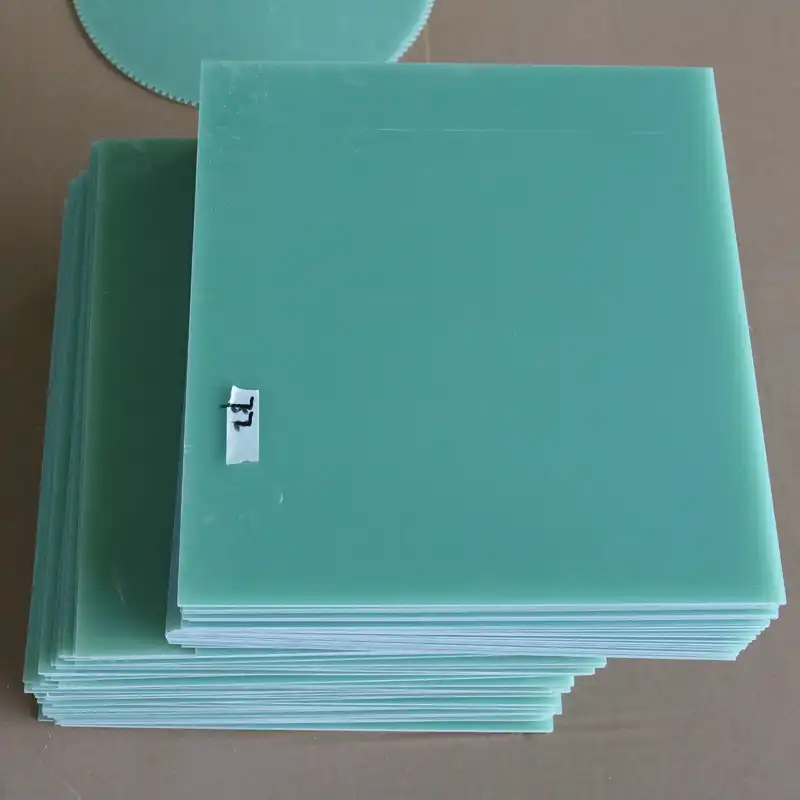
Using structured dealing methods cuts down on damage to property by a large amount. When the G10 fiberglass sheet is delivered, it should have a protected polyethylene film on both sides. This film keeps the surfaces from getting scratched during storage and shipping. To keep things from delaminating because of wetness, storage areas need climate control that keeps the relative humidity between 40 and 60% and the temperature between 15 and 25°C. Instead of putting all of the weight on flat surfaces, vertical racking systems spread it out equally along the edges. When horizontal storage is needed, sheets can be kept from touching each other by interlocking them with foam dividers. Protocols for handling people say that you should use padded lifting gear and cotton gloves instead of bare hands or rough work gloves that let oils and abrasives pass through them.
Putting these controls in place handles the root causes that have been found in many businesses. Electrical makers say that storing materials in climate-controlled spaces makes them last eighteen months longer than storing them in normal warehouse conditions. Builders of machinery say that vertical racking gets rid of the surface warping that was seen with bottom-stacked sheets.
Surface Treatments and Protective Coatings
Applied coats improve the strength of the material itself. Temporary protection sheets act as sacrifice layers during production and are only taken off before the final assembly. In high-wear areas like mechanical gaps and gears, semi-permanent polyurethane coats make them more resistant to wear. When parts are exposed to cleaning agents or hydraulic fluids, special treatments on the silicone make them more resistant to chemicals. Anodic processes aren't used as often on composite materials, but they can be used on electrical G10 types that are used for grounding.
When choosing therapy, cost-benefit research is very important. Adding protective layers doesn't cost much and stops 90% of handling scratches. It costs fifteen to twenty percent more to make polyurethane coats, but they last three times longer in rough settings. Coatings are more cost-effective in high-value situations, like on car battery barriers, where replacing parts would require a lot of work.
Routine Inspection and Maintenance Schedules
Systematic inspection processes find damage early on, before it spreads. When looked at under the right lighting, surface scratches and coloring show that chemicals have been exposed. Ultrasonic testing finds delamination below the surface that can't be seen with the naked eye. Measuring the dimensions shows that heat cycling hasn't caused any bending. Electrical testing shows that damage to the surface hasn't changed the insulating qualities. How often you review depends on how tough the application is. Once a month checks are enough for controlled settings, but every week checks are needed for parts that are subject to temperature changes or mechanical stress.
Quality assurance records made by documented inspection programs are useful for source checks and renewing certifications. This paperwork is especially useful for clients in the power sector who need to show that they meet NEMA and UL standards.
Comparing G10 Fiberglass Sheet to Other Fiberglass and Composite Sheets in Surface Durability
Material Performance Benchmarking
G10 fiberglass sheet is a unique plastic material that fits into a certain category. Even though it costs more, G10 sheets are better for structural uses than FR4 epoxy sheets because they are stronger mechanically and don't absorb as much water. G11 versions offer better temperature protection up to 180°C thanks to modified epoxy formulations. They can be used in situations where G10's 140°C limit isn't enough. Phenolic cotton laminates have similar mechanical qualities but are cheaper. However, they don't fight chemicals as well and don't stay the same size. Carbon fiber materials are stronger than G10 when it comes to weight, but they don't have the same dielectric performance, which means they can't be used for electrical protection.
Surface hardness tests show important differences: G10 has Rockwell hardness values 15% higher than FR4, which means it is less likely to scratch when CNC manufacturing is done. Chemical resistance tests show that G10 keeps its shape after being immersed in mineral oil for seven days, while phenolic materials lose their shape and become softer on the outside.
Application-Specific Selection Guidance
To choose the right material, you have to match its qualities to what you need them for. When it comes to high-voltage switchgear, arc resistance and dielectric stability are very important. G10's resistance to moisture keeps its performance from dropping in damp places. Cryogenic uses use G10's ability to keep its physical traits at very low temperatures without becoming weak. Total protection to saltwater corrosion is used in marine uses. G10 is the perfect material for automotive battery pack dividers because it is strong, doesn't melt, and doesn't catch fire.
Procurement choices are based on cost-performance improvement. G10 costs more than other materials, but its longer surface life makes up for it in situations where broken parts would be expensive to repair or could put people in danger. FR4 or phenolic options can be used in projects that are on a tight budget and have less strict standards.
Procurement Considerations for High-Quality G10 Fiberglass Sheets
Supplier Evaluation Criteria
To get high-quality G10 fiberglass sheets, you have to carefully check out the suppliers. Manufacturing qualifications like ISO 9001 for quality management and ISO 14001 for environmental standards show that production is being controlled in a planned way. The NEMA G-10 compliance approval shows that the electricity performance standards have been met. UL approval and ROHS compliance meet the rules for the electronics and power industries. The production capability review looks at how accurate CNC cutting is, how well tolerances are controlled across a range of thicknesses, and how consistent batches are with each other. The review of distribution infrastructure looks at how to keep warehouses cool, how to package items, and how to ship them in a way that keeps the surface intact.
With more than twenty years of production experience and ten years of exporting, we keep in touch with trade partners both in and outside of the United States. Our integrated logistics skills allow for single-source buying, which makes managing the supply chain easier and makes sure that materials can be tracked.
Specification and Customization Options
Detailed buying specs lower the risk of harm. Tolerances for thickness should be made clear. For most uses, normal tolerances of ±10% are enough, but fine parts may need ±5% control. Specifications for surface finish tell the difference between precision-machined and industrial-grade surfaces. Custom cutting services cut down on handling steps that cause damage. CNC cutting, drilling, and routing are done in controlled production settings with special tools by suppliers. Beveling and radiusing are two edge finishing choices that get rid of stress clusters that cause cracks. Applying protective film as a normal feature instead of an extra choice makes sure that the surface is always protected.
More and more, procurement teams in the automotive and aircraft industries are asking for custom-cut parts that are shipped ready to be put together. This means that companies no longer have to do their own machining, which used to cause thirty to forty percent of surface damage events.
Logistics and Packaging Standards
Transportation is a key area for preventing damage. Flexing doesn't happen during transport with rigid box packing. Sheets are protected from shaking and pressure by foam padding inside. During ocean shipping, moisture protection wrapping keeps you from being exposed to humidity. When you build a pallet, the weight is spread out over the load-bearing edges instead of being concentrated on the sheet cores. Documentation should make it clear that packaging standards are part of the deal and not just something that is done.
Our dedicated logistics section handles everything from packaging to clearing customs to setting up delivery times. This gives us full insight throughout the whole process, which lets us control our goods just-in-time. This unified method cuts down on handling changes that usually cause damage.
Case Studies and Real-World Applications Showcasing Surface Protection Success
Electrical Insulation with Extended Service Life
A transformer maker had to deal with early component failure that was linked to surface scratches that caused arc tracking. Seventy-two percent fewer defects were found when protection film was kept on until final assembly and foam-padded handle carts were used. The service life of the parts was increased from eight to thirteen years, which made the total cost of ownership much lower. The purchasing team set up quality deals with suppliers that required protective films to be put ahead of time and storage in a climate-controlled area. This made everyone in the supply chain responsible.
Heavy-Duty Mechanical Components with Wear Coatings
An industrial machinery builder who used epoxy laminates to make high-load gears ran into surface wear that created conductive trash that messed up the electricity in nearby parts. By choosing polyurethane-coated G10 fiberglass sheet versions, the production of trash was stopped, and gear life was increased from 18 months to 5 years. The coating cost 12% of the cost of the materials, but it cut down on repair downtime by 60%, giving the investor a quick return on their investment. Coated materials are now required by mechanical engineers for any job that involves moving touch or rough conditions.
OEM Customized Solutions and Business Partnerships
A major car supplier needed battery pack insulation shields that had to meet strict size requirements and have no surface flaws. Working with an experienced supplier made it possible to come up with custom packing methods, specialized production runs that made sure each batch was the same, and inspection paperwork for before delivery. The partnership method cut the rate of rejecting incoming materials from 14% to less than 2%, which kept production plans stable and got rid of costly line stops. Expertise and speed in contact from suppliers are just as important to procurement professionals as the quality of the materials themselves.
Conclusion
In conclusion, to keep G10 fiberglass sheet surfaces from getting damaged, you need to use strategies that include choosing the right materials, following proper handling procedures, applying protected coatings, and working with suppliers. Knowing how damage happens, like mechanical wear and chemical etching, lets you take specific steps to stop it. By comparing the qualities of different materials, you can make choices that are best for your needs while also keeping costs low. Tough purchasing procedures make sure that only the best goods from approved sources are bought. Real-life case studies show that organized surface protection makes parts last longer, work more reliably, and have lower total costs of ownership in the automobile, industrial, and electrical sectors.
FAQ
Does G10 Material Resist Water Damage That Affects Surface Integrity?
Because it is made of tightly knitted glass cloth and an epoxy resin matrix, G10 fiberglass sheet is very resistant to water. It doesn't absorb more than 0.5% of water, even after being submerged for a long time. This keeps the material from growing and delaminating, which can happen with phenolic materials. This natural waterproofing property keeps the surface in good shape in damp places and when it comes into contact with liquids. This trait is especially useful for marine uses and outdoor electrical equipment because it keeps moisture from getting through surface defects more easily than hygroscopic alternatives.
What Thickness Provides Optimal Mechanical Surface Protection?
The choice of thickness is based on the needs for mechanical loads and strength. Sheets with a thickness between 0.5 mm and 3 mm are good for uses like PCB backing and insulation shields that need to be flexible and have light structural support. The best mix for mechanical spacers and motor parts is found between 5mm and 12mm in thickness. These sizes offer enough rigidity while still being cost-effective. 15mm to 25mm widths that don't bend when stressed are good for heavy structural uses like high-load gears and arc barriers. Because they are more hard, thicker materials naturally avoid damage to the surface, but they cost more to buy and machine.
Can Surface Damage Be Repaired or Must Components Be Replaced?
Fine-grit abrasives can be used to clean away small surface scratches that only affect the top layer of epoxy. This restores the smooth finish without affecting the structure's strength. Chemical stains that are only a few layers deep often come out after liquid cleaning and a protection coating is applied. If there are deep scratches going through the glass fabric layers, obvious delamination, or through-cracks, the part needs to be replaced because repairs can't bring back the original dielectric and mechanical qualities. Trying to fix badly broken parts could lead to field failures in electrical uses. When it comes to damage that goes beyond the surface, cost analysis usually shows that replacement is better than fix.
Partner with J&Q for Superior G10 Fiberglass Sheet Quality
J&Q can help you with your buying needs because they have been making soundproofing materials for more than twenty years and have been trading internationally for more than ten years. As a G10 fiberglass sheet provider, we can do tight quality control, custom CNC machining to your exact specs, and combined logistics that protect the surface from production to delivery. We keep our warehouses at a constant temperature and humidity, put protective films on everything as normal, and give you thorough inspection reports to meet your quality assurance needs. Email our technical sourcing team at info@jhd-material.com to talk about your application needs and get samples that show how committed we are to providing the best surfaces.
References
National Electrical Manufacturers Association. (2021). NEMA Standards Publication LI 1-1998: Industrial Laminating Thermosetting Products. Rosslyn: NEMA.
Harper, C.A. (2018). Handbook of Plastics Technologies: The Complete Guide to Properties and Performance. New York: McGraw-Hill Education.
Lubin, G. (2014). Handbook of Composite Materials. Boston: Springer Science & Business Media.
Mallick, P.K. (2020). Composites Engineering Handbook: Materials and Design. Boca Raton: CRC Press.
Chawla, K.K. (2019). Composite Materials: Science and Engineering (4th ed.). New York: Springer International Publishing.
Strong, A.B. (2017). Fundamentals of Composites Manufacturing: Materials, Methods, and Applications (2nd ed.). Dearborn: Society of Manufacturing Engineers.
_1740986340093.webp)