
Electrical Insulation Ratings for Bakelite Sheet
2026-06-03 17:01:26
When it comes to businesses that need dependable dielectric barriers, Bakelite sheet is unmatched in its ability to provide excellent electrical insulation. This thermosetting material is made of phenol formaldehyde resin that is strengthened with layers of paper, cloth, or glass. It has a dielectric strength of more than 10 MV/m and a volume resistance of more than 10¹² Ω·cm. Its insulation rates, which are based on NEMA and IEC standards, put it in Class E thermal endurance (120°C continuous operation). This means that it will work reliably in switches, motor parts, and power distribution equipment where an electrical failure could cause big problems.
Understanding Electrical Insulation Properties of Bakelite Sheet
In 1907, Leo Baekeland made the first fully manufactured polymer, which was the start of phenolic laminates. These materials are still very important because their cross-linked molecule structure keeps them from melting in hot conditions, keeping their shape and insulation intact. When phenol and formaldehyde are pressed together under controlled conditions, they make a hard network that doesn't break down even when voltage stress lasts for a long time.
How Dielectric Strength Defines Performance?
The dielectric strength of an object tells you how much of an electric field it can handle before it breaks down. As per ASTM D149, standard test methods put samples under rising power until they break. Values for good Bakelite sheets are usually between 12 and 20 kV/mm, though this depends on the grade and thickness. This measure directly affects how well it works in a given application. Higher values make it possible to use the material in small spaces where voltage concentrations happen, like on printed circuit board bases and high-density terminal blocks.
Volume and Surface Resistivity Measurements
Surface resistivity measures how much current leaks across the face of a material, while volume resistivity measures how much current flows through its mass. Bakelite sheet has a volume resistance of 10¹² to 10¹⁴ Ω·cm, which means it blocks current routes. If the surface resistance is higher than 10¹¹ Ω, tracking (the creation of conductive paths by contaminants or wetness) can't happen. This is especially important in damp places. Because of these qualities, phenolic laminates can be used in outdoor shelters and naval electrical systems that are often exposed to condensation.
Standards Governing Insulation Testing
International standards make sure that evaluations of materials are always the same. IEC 60893 sets the standards for shielding materials made from thermosetting resins, while ASTM D229 talks about how to make and test phenolic sheets. NEMA grades (X, XX, XXX, L, and LE) tell buying teams what standards to use by describing how well a material resists water and electricity. UL recognition under File E55614 proves that safety standards for flame resistance and tracking resistance have been met, which is important for getting approvals in controlled markets.
Comparative Analysis with Alternative Insulators
Epoxy resin laminates (FR4) are stronger and better at resisting moisture than paper-based Bakelite sheet grades. However, phenolic materials are better at arc resistance, which means they can handle surface flashover without creating lasting electrical paths. When compared to current thermoplastics like PEEK or PPS, Bakelite sheet is cheaper and still works well below 120°C. According to test results, phenolic cotton laminates are better than glass-filled nylon at withstanding voltage when oil gets on them, which happens a lot in transformer bushings.
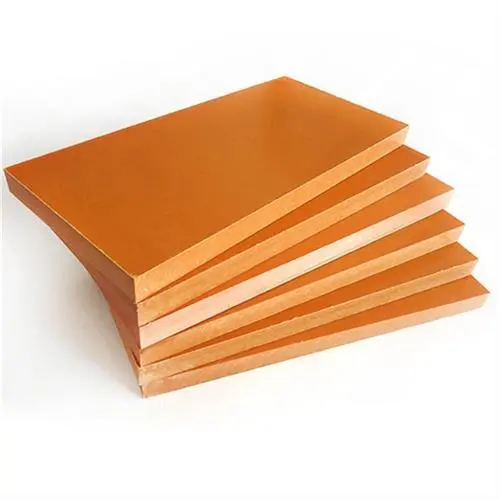
Critical Factors Affecting Electrical Insulation Ratings of Bakelite Sheets
The real-world usefulness of insulation depends on the materials used and how well they were made. Standardized testing gives us a starting point for values, but operating conditions add new factors that purchasing managers need to think about when choosing materials for important uses.
Material Grade and Reinforcement Type
Electrical properties of different Bakelite grades are very different. Grade XXX has a lot of resin in it, which makes it better at resisting wetness and having dielectric qualities that work well in damp places. Grade X has less glue because it puts mechanical strength over electrical performance. This makes it good for structure insulation where voltage stress is low. Glass-reinforced versions (PFCP 202) keep their dielectric strength at high temperatures, which makes them last longer in motor end plates and generator parts that are constantly heated and cooled.
Influence of Thickness and Surface Finish
Through increased insulation distance, thicker parts can handle higher voltages, but too much thickness makes them harder to machine and raises the cost of the materials. For continued AC uses, engineering estimates usually say that the minimum width should be 1 mm per kilovolt based on the voltage gradient. The finish on a surface affects its resistance. Rough surfaces that trap wetness and dirt need to be removed after they have been machined. Leakage resistance is better with fine-grained finishes below 3.2 Ra. This is especially important for high-voltage connector uses.
Environmental Degradation Mechanisms
Extreme temperatures make insulation wear out faster. Resin breaks down over time when exposed to temperatures above 120°C, as shown by darkening and stiffening. Moisture absorption is low compared to biological materials, but it creates conductive paths that lower the volume resistance. Microcracking is caused by mechanical vibration in tools and cars, which creates places where failure can start. Engineers can choose protective coatings, environmental seals, and upkeep plans that keep insulation values high throughout the lifecycles of products by understanding these degradation modes.
Impact of Contaminants and Tracking
When moisture condenses on insulator surfaces, dust builds up and makes leaking tracks. This is especially a problem in industrial settings where dust is in the air. Carbon tracking, which happens when repeated arcing creates conductive carbonized tracks, forever breaks down insulation. Comparative tracking index (CTI) testing according to IEC 60112 rates materials by how well they keep from moving when they are dirty. The best Bakelite grades have CTI values above 600 V, making them ideal for outdoor sites that are likely to be polluted and chemical processing plants.
How to Select the Right Bakelite Sheet Based on Electrical Insulation Requirements?
To match material requirements to operating needs, electrical factors, regulatory requirements, and supply chain issues must be carefully looked at. The best procurement results come from decision models that combine technical success with business viability.
Voltage and Frequency Considerations
Because of cycle polarization losses, AC applications put more stress on the insulator than DC applications with the same voltage. For 60 Hz power distribution, materials must be able to handle both steady voltage and short-term overvoltages during switching events, which are usually 2 times the maximum voltage. Low dissipation factors are needed for high-frequency uses like RF equipment and induction heating to keep dielectric heating to a minimum. Standard phenolic laminates have dissipation factors of about 0.03 at 1 MHz, which is fine for moderate-frequency switching parts but not good enough for RF insulators, where ceramic or PTFE alternatives work better.
Regulatory Compliance and Certification Requirements
Products that want to sell in North America still need to be UL-approved. UL 94 flammability grades group materials based on how easily they spread fire. V-0 rated Bakelite doesn't catch fire and goes out on its own in seconds, passing strict safety standards for electrical enclosures. RoHS compliance limits the use of dangerous materials in electronics production and requires sellers to provide material statements that say restricted heavy metals are not present. In order to get CE marking for European distribution, products must meet the requirements of the Low Voltage Directive (LVD) and possibly also be registered with REACH. This means that suppliers must provide proof of the chemicals that are used.
Evaluating Supplier Capabilities and Quality Systems
Supply chain delays and quality differences are kept to a minimum with reliable sources. Suppliers with quality management systems that are ISO 9001 approved show that they can control and track the process, which lowers differences between batches. Technical data sheets need to include test methods as well as values. For example, materials tested using the ASTM D149 short-time method show higher dielectric strength values than those tested using step-by-step processes, which makes comparisons less accurate. Requesting third-party test reports from approved labs (A2LA, CNAS) verifies the stated specs and keeps you from getting materials that aren't up to par.
Customization and Lead Time Considerations
Standard Bakelite sheet sizes (1000 x 2000 mm) are good for most cutting jobs, but special sizes are better for high-volume production because they cut down on waste. With CNC cutting, grinding, and turning, raw sheets can be turned into finished insulators that fit together perfectly. When suppliers offer combined machining services, it's easier to buy things and less work to move things between sellers. Lead times change with the seasons. Making framework deals with qualified suppliers makes sure that materials are available during times of high demand, so production doesn't have to be held up when parts are in short supply.
Practical Applications of Bakelite Sheets in Electrical Insulation
In the real world, phenolic laminates are used to solve specific technical problems in a wide range of fields. The results of case studies show how things work in real-life situations, which is more reliable than lab tests.
Electrical Panels and Switchgear Assemblies
Low-voltage switchgear needs shields that can stop arcs and fault currents without letting them spread between phases. As per ASTM D495 (time to failure under continuous arcing), Bakelite's arc resistance is longer than 180 seconds, which gives important safety reserves. Phenolic laminates are used to make terminal blocks that separate circuits while keeping the space small, which reduces the panel's size. Field experience in industrial buildings shows that Bakelite insulators that are properly defined stay intact for decades of use, staying longer than the equipment they guard.
Automotive Under-Hood Applications
Materials for modern cars need to be able to handle 150°C peaks near the exhaust pipes and automobile fluids like oils, coolants, and fuels. In hybrid and electric cars, phenolic laminates protect the battery packs by keeping high-voltage busbars from touching the frame lines. Because they don't change size when the temperature changes, fixed connections don't come loose, which could cause hot spots and insulation failure. Tier-1 car providers define phenolic grades that meet UL 746 standards for polymeric materials in end-use applications. This makes sure that the materials will work reliably for a long time inside the hood.
OEM Components and Custom Insulation Solutions
For motor slot liners, transformer spacers, and coil forms, equipment makers need insulators that are made to exact shapes. Because Bakelite is machinable, it can have complicated features like counterbores, chamfers, and threaded holes without the need for special tools. For radio frames and tube socket insulators that are historically accurate, projects that restore old electronics use real phenolic materials. Because the material is stable, new parts can match the original electrical properties. This keeps old equipment working when current replacements would make it less useful.
Power Distribution and Transformer Applications
During voltage spikes, phenolic walls keep the coil layers from breaking down from turn to turn in high-voltage transformers. The material's thermal conductivity (0.3 W/m·K) makes it easier for heat to escape while keeping electricity from flowing through it, which is very important in oil-filled transformer designs. Arc chutes in circuit breakers use Bakelite's flame resistance to put out sparks when a fault happens, which protects equipment further down the line. Utility companies say that phenolic insulators in outdoor substations can last more than 40 years if they are properly kept. This shows that they are very durable even when exposed to tough environments.
Advantages of Choosing Bakelite Sheets for Electrical Insulation Over Other Materials
Phenolic laminates have a reasonable performance profile that meets many technical needs at the same time. By knowing about these benefits, you can choose materials that will give you the best professional performance and project costs.
Superior Dielectric Performance and Thermal Endurance
For high-reliability uses, consistent dielectric strength across production batches makes sure that the product will work as expected. When heated above the glass transition temperature, thermoplastics start to soften, but thermoset phenolics stay stiff and insulating until temps above 200°C. This quality is very important in situations where there are irregular overloads and short-term temperature spikes must not cause lasting property loss. Studies that speed up the aging process show that the dielectric strength stays the same after 20,000 hours at room temperature, proving that the material is stable over time.
Cost-Effectiveness Across Product Lifecycles
The initial cost of materials for phenolic laminates is about the same as for industrial thermoplastics, but they work better electrically. The mild toughness of the material makes it easier to machine because tools wear out less quickly than when working with glass-filled composites. This lowers the cost of making the product. Longer service life cuts down on the number of replacements needed and the costs of downtime that comes with them. This is especially important in situations where insulation failure can damage expensive equipment or stop production. Total cost of ownership estimates always show that Bakelite is better for electrical equipment that will stay in one place for 20 years or more.
Chemical Resistance in Harsh Environments
Cutting fluids, hydraulic oils, and cleaning solvents get into the air where industrial gear works, making the surroundings dirty. These substances can't break down phenolic laminates, so they keep their insulation qualities when regular plastics would grow or crack. Chemical processing machinery and plating processes can use it more because it is resistant to weak acids and alkaline solutions. This chemical inertness takes away any worries about insulation failing because of accidental contact. This makes designing equipment easier and cuts down on servicing requirements.
Recyclability and Environmental Considerations
While thermoset materials can't be reshaped, phenolic laminates can be recycled mechanically by being ground up and used as fillers in composites. Industrial recycling programs get old metal from factories and put it back into use, keeping trash out of dumps. When there is an accident in the workplace, phenolic resins produce less harmful burning products than some other materials that use halogenated flame retardants. This makes the workplace safer. Sustainable forestry programs make sure that paper additives come from sources that can be used again and again. This addresses environmental worries in purchasing policies that stress responsibility throughout the supply chain.
Addressing Common Misconceptions
Problems with material brittleness happen when cutting is done wrong. Chipping and edge fracture can be avoided by using sharp carbide tools, controlling the feed rate, and making sure the clamps are tight enough. People think that Bakelite sheet is no longer useful because of newer plastics, but it is still useful in cost-effective situations where high performance isn't needed. Specification mistakes happen when people aren't sure about the different electrical grades; looking at the NEMA LI 1 standards makes it clear how to choose the right grade. By being aware of these issues, buying teams can avoid quality problems and make the most of the strengths of phenolic laminates.
Conclusion
Electrical shielding values for Bakelite sheet are based on a hundred years of experience using the material and improving it in harsh industrial settings. Phenolic laminates are good insulators for electrical equipment that is working under constant voltage stress because they have dielectric strengths above 10 MV/m, volume resistivities above 10¹² Ω·cm, and Class E temperature ratings. When choosing a material, you have to weigh the electricity performance against the environment, government rules, and business needs. Specifications that are in line with NEMA grades and IEC standards make sure that performance is reliable, and the ability of the provider to provide quality management and expert support lowers the risks of purchasing. Power distribution, car systems, and machinery parts are just some of the many uses for Bakelite sheets that show how versatile and reliable they are over time. This is why they are still used in current electrical designs.
FAQ
What differentiates Grade X from Grade XXX Bakelite sheet in insulation applications?
When making Grade X, less glue is used because mechanical strength is more important for structure uses where electrical stress is low. Grade XXX Bakelite sheet has more resin, which makes it better at resisting moisture and improving dielectric qualities. This is important for places with a lot of dampness, like outdoor switches and naval equipment. Which grade to use relies on whether the design needs to handle mechanical loads or electricity performance.
Can phenolic laminates withstand prolonged outdoor exposure?
Bakelite sheets don't get damaged by water or small changes in temperature, but UV light that stays on them for a long time changes the color of the surface phenolic glue and weakens it over time. Coatings or covers that protect insulators from UV damage while keeping their electrical separation function are useful in situations where they will be exposed to direct sunlight.
What machining practices prevent chipping during fabrication?
Phenolic materials are fragile and need carbide or diamond-coated tools that are very sharp. Controlled feed rates and high spindle speeds (3000+ RPM) keep edge chipping to a minimum. Phenolic dust is irritating to the lungs and can start fires, so active dust clearance is necessary. When drilling through holes, breakout can be avoided by using the right clamping and backing support.
How does chemical exposure affect insulation performance?
Phenolic laminates are very resistant to alcohols, weak acids, and petroleum products, and they keep their insulating qualities even after being exposed to them. Resin matrices are broken down by strong oxidizing acids and concentrated alkaline solutions, which lowers their dielectric and dynamic qualities. When choosing materials, they should be compatible with the chemicals they will be used in, and the seller should test them to make sure they are compatible for important uses.
What maximum temperature can Bakelite sheet tolerate continuously?
Standard grades can handle constant operation at 120°C according to Class E temperature standards without losing a lot of their properties. Intermittent peaks of up to 150°C are still fine for short periods of time. If you go over these limits, the glue carbonizes, which shows up as blackening and weakening, which causes the insulation to fail. Different materials, like polyimide or clay insulation, are needed for uses that involve higher temperatures.
Partner with J&Q for Reliable Bakelite Sheet Supply
J&Q has been making phenolic laminates and electrical insulation materials for more than 20 years. They serve companies across North America that make electrical equipment, build machinery, and distribute electricity. Our combined production skills, which include everything from making the resin to precise CNC machining, make sure that every Bakelite sheet we give is of the same high quality and the right size. Traceability and group stability are guaranteed by processes that are ISO 9001 certified, and regulatory approvals are made easier by documents that are UL recognized and RoHS compliant. As a well-known company that makes Bakelite sheets and has its own logistics system, we offer one-stop solutions that include help with choosing the right materials, custom machining, and sending directly to your plant, which cuts down on lead times and makes buying easier. Technical support teams help choose the right grade, do application engineering, and test the performance to make sure that the specs fit the needs of the business. Contact our team at info@jhd-material.com to discuss your insulation requirements and discover how J&Q's material knowledge and reliable supply chain can help you reach your production goals.
References
Harper, C.A. (2006). Handbook of Plastics Technologies: The Complete Guide to Properties and Performance. McGraw-Hill Professional.
National Electrical Manufacturers Association (2018). NEMA LI 1-1998 (R2018): Industrial Laminated Thermosetting Products. NEMA Standards Publication.
Kuffel, E., Zaengl, W.S., & Kuffel, J. (2000). High Voltage Engineering Fundamentals. Butterworth-Heinemann.
International Electrotechnical Commission (2016). IEC 60893-1: Insulating Materials - Industrial Rigid Laminated Sheets Based on Thermosetting Resins for Electrical Purposes - Part 1: Definitions, Designations and General Requirements. IEC Standards.
Tanaka, T., Montanari, G.C., & Mulhaupt, R. (2004). Polymer Nanocomposites as Dielectrics and Electrical Insulation-Perspectives for Processing Technologies, Material Characterization and Future Applications. IEEE Transactions on Dielectrics and Electrical Insulation, 11(5), 763-784.
Seymour, R.B. & Deanin, R.D. (1987). History of Polymeric Composites. VSP International Science Publishers.
_1755583592640.webp)

_1764747988943.jpg)
