Tensile Strength Test: Phenolic Cotton Cloth vs. Epoxy Resin Boards
2026-07-13 17:30:30
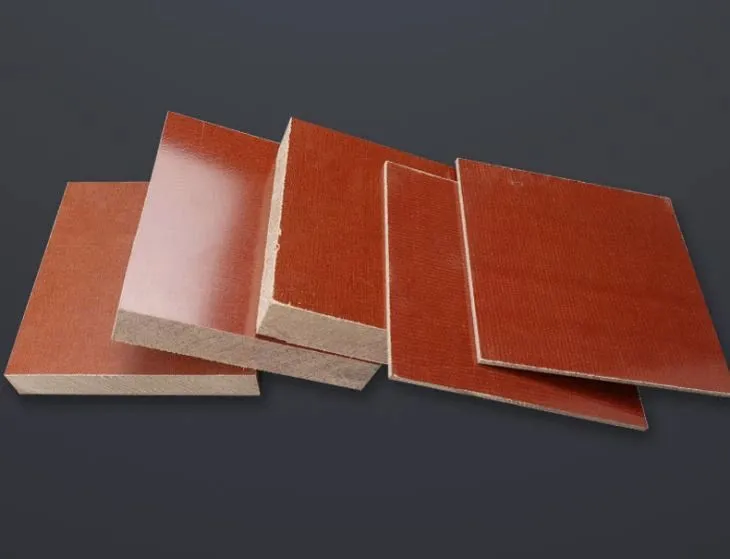
If you want to choose between phenolic cotton cloth board and epoxy resin boards, you need to know how their tensile strengths compare. Phenolic cotton cloth board is made from woven cotton fabric that is soaked with phenolic resin. It has a crosswise tensile strength that often exceeds 50 MPa, which makes it stable for use in gear uses and as structural insulation. When epoxy resin boards are made with glass fiber support and epoxy matrices, they usually have higher lengthwise tensile strength values that reach 300–400 MPa in FR4 grades. These differences can be measured and have a direct effect on the choice of material used in electrical, machinery, and power uses where mechanical dependability is important for safety at work and long-term component life.
Understanding Phenolic Cotton Cloth and Epoxy Resin Boards
Composition and Material Structure
Phenolic cotton cloth board is made up of several layers of woven cotton fabric that has been mixed with phenolic resin and heated to harden under controlled pressure. This laminated structure makes a hybrid material that is tough like cotton fibers and stable at high temperatures like phenolic plastics. For industrial uses like gears and bearings, NEMA Grade C uses heavier, coarser cotton fabric that is stronger against pressure. Grade CE uses finer weave cloth, which makes it easier to work with and has better electrical insulation qualities that make it ideal for structural electrical parts.
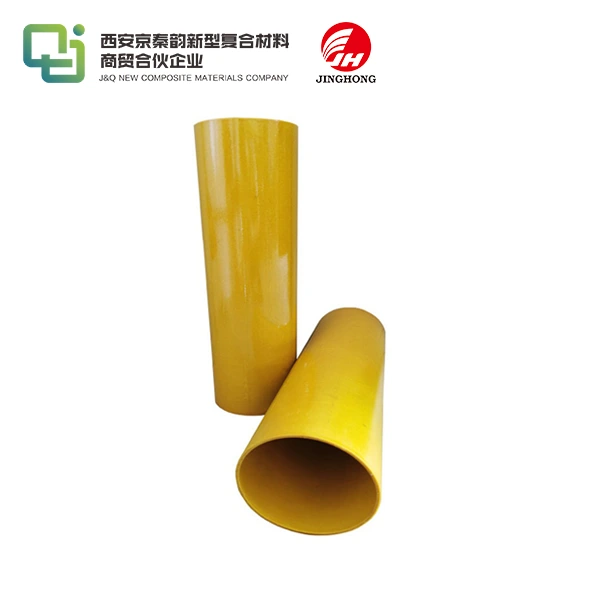
Epoxy resin boards, which are also called FR4 sheets or 3240 epoxy boards, are made of woven glass cloth that is filled with epoxy resin systems. The glass fiber structure has great mechanical strength and keeps its shape even when the temperature changes. These boards go through a multi-stage curing process that makes sure all the glue cross-links. Compared to natural fiber composites, this gives them better chemical protection and less water absorption.
Key Mechanical and Electrical Properties
Both material families have different properties that affect which ones can be used in which situations. Depending on the type of resin used, phenolic cotton cloth board can work in Thermal Class E (115°C) or Class B (130°C), and it can handle short-term temperature drops of up to 150°C. It usually absorbs between 1% and 2% of its weight in water, so it needs to be given extra space when it's in a wet place. The material is very resistant to solvents, oils, and mild acids. It also has a good dielectric strength of 10-15 kV/mm.
Epoxy resin boards can handle higher temperatures for longer periods of time. FR4 types are recommended for 130°C to 180°C, based on the formulation. Glass support lowers the amount of water that is absorbed to less than 0.1%, which keeps the shape stable in places with a lot of wetness. These boards have a better dielectric strength than 20 kV/mm and keep their electrical properties over a wider frequency range. This makes them essential for high-frequency communications and precision PCB uses where signal integrity is important.
Industry Testing Standards and Protocols
Standardized testing procedures are needed for material approval to make sure that performance is evaluated consistently. ASTM D709 and EN 60893 set strict rules for industrial laminated thermosetting goods that include their electrical and thermal qualities as well as their mechanical strength. Tensile testing is done according to the ASTM D638 standard, which describes how to prepare the surroundings, test speed, and sample shape in a way that makes the results dependable.
Testing the bond strength according to ASTM D229 checks the interlaminar stability, which is a key part of keeping the layers from coming apart during cutting. Verifying the thickness tolerance makes sure that the CNC will work with the material, and for accuracy uses, a variation of up to ±3% is usually fine. Insulation resistance tests done 24 hours after immersing the resin in water show lower resin quality. This is especially important when certifying Grade CE phenolic cotton cloth board for electrical uses.
Tensile Strength Test Methodology and Results
Sample Preparation and Testing Parameters
To compare tensile strengths accurately, samples must be carefully prepared according to standard procedures. Test models that are 150 mm long and 25 mm wide are cut from production-grade sheets with carbide-tipped cutting tools to keep the edges from coming apart. Samples are put in a setting with 23°C and 50% relative humidity for at least 48 hours. This makes sure that the wetness levels are balanced, which is what happens in real life. This preparation phase gets rid of the differences in testing results that come from hygroscopic phenolic boards and minimal-absorption epoxy laminates having different amounts of wetness.
Universal testing tools that are set up to international standards are used for testing. Tensile loads are applied at controlled crosshead speeds of 5 mm/minute. Stress-strain graphs show the material's elastic modulus, yield strength, and final tensile strength. Strain gauges or extensometers measure how much a material stretches when it is loaded. Multiple samples from various production batches are needed for statistical validity. Five samples of each material grade are usually needed to set accurate performance values.
Comparative Tensile Strength Analysis
Because the braided fabric is oriented differently, phenolic cotton cloth board has anisotropic tensile behavior, which means that its crosswise strength is much higher than its lengthwise strength. In general, Grade C has a crosswise tensile strength of 50 to 70 MPa and a lengthwise strength of 30 to 45 MPa. This directional strength property is useful in situations where the direction of the load can be predicted. It lets engineers choose the best material layout when designing the part. The cotton fiber support absorbs energy when the structure fails, causing stress to decrease gradually instead of breaking completely.
The tensile strength of epoxy resin boards is much stronger. Standard FR4 grades hit 300–400 MPa in the warp direction and 250–350 MPa in the fill direction. This performance benefit comes from the fact that glass fiber is naturally strong and the epoxy matrix and glass fiber stick together better. However, epoxy composites break more easily than phenolic cotton cloth board, showing little to no plastic deformation before they break suddenly. Even though they have lower absolute strengths, phenolic materials may be useful in situations where they need to absorb shock or show signs of failure over time.
Temperature and Environmental Effects on Tensile Performance
Tensile strength changes a lot with working temperature, which affects the choice of materials for hot places. Phenolic cotton cloth board keeps about 80% of its tensile strength at 115°C when used continuously, but the strength decreases slowly as the temperature rises. After 125°C, the resin starts to break down faster, which leads to carbonization that weakens the material's tensile stability. Short-term contact to 150°C is still fine, but long-term use needs to be lowered or an alternative material must be chosen.
At their rated constant working temperature, epoxy resin boards keep about half of their tensile strength at room temperature, which is better than other materials. At the glass transition temperature, polymer chains can move around more easily. This is also the point where tensile traits start to drop quickly. High-temperature FR4 types have special resin systems that make this transition point longer. This lets them work reliably in high-temperature uses like power distribution equipment and parts under the hood of cars.
Performance Implications in Industrial Applications
Electrical and Electronics Manufacturing Applications
Manufacturers of electrical tools use the unique qualities of these materials to make parts that meet specific needs. Phenolic cotton cloth board works great as protection for switchgear structures, supports for busbars, and terminal plates inside circuit breakers. Its ability to absorb mechanical shocks means it can handle the impact forces that are created during arc-extinguishing operations. Its adequate dielectric strength also stops electricity from tracking in damp industrial settings. The natural fibers in the material naturally reject arcing, which stops surface carbonization routes that could make electrical connections between charged parts.
FR4 epoxy boards are mostly used for PCB support structures and high-precision electrical parts where better insulating qualities and stable dimensions make up for higher material costs. Because they don't absorb much water, their dimensions don't change, which could cause circuit lines or connector contacts to become out of alignment. Because the material is so easy to work with, CNC processes can be done with very tight tolerances, making complicated shapes that are needed for modern computer assemblies. UL and ROHS compliance approvals, which are standards for high-quality FR4 products, make it easier for electronics makers around the world to get their goods qualified.
Industrial Machinery and Heavy Equipment Uses
Machine builders like phenolic cotton cloth board because it has a unique mix of mechanical hardness and self-lubricating qualities. Cast iron parts are replaced with gears and pinions made from this material that are quiet in places where noise is a problem, like weaving looms and packaging machines. The material's elastic modulus lets it absorb pressure during gear mesh cycles. This makes the life of metal parts that are joining much longer and lowers the noise level during operation. It works great as wear-resistant spacers, thrust washers, and alignment guides in high-load systems because it has a low coefficient of friction when it is properly oiled.
Marine and hydro-generator uses benefit from phenolic cotton cloth board's ability to lubricate with water and keep its shape. This material is great for making stern tube bearings and rudder bushings because it works very well in saltwater, where metal parts rust and grow. The material keeps its mechanical qualities even when submerged in water for a long time, but designers have to account for its 1-2% dimensional growth due to water absorption. This growth actually improves the performance of the bearing by keeping the clearances the same as the material molds to the shaft sides during the first operation.
Power Distribution and Transformer Applications
For use in the power industry, materials need to be strong, stable at high temperatures, and not easily caught on fire. When used as coil insulation spacers and arc barriers in distribution transformers, phenolic cotton cloth board works safely within its temperature grade and supports the structure during mechanical shocks and short-circuit forces. The material breaks down slowly, which is better for safety than brittle materials that break down quickly without any notice. This is because obvious wear and tear lets you know when maintenance is needed before a catastrophic failure.
Epoxy glass laminates are most common in high-voltage situations that need the strongest insulator and the least amount of partial discharge activity. Their low loss tangent makes sure that very little energy is lost at high power levels. This makes the transformer more efficient and lowers the temperature inside it. The material's high bond strength keeps it from delaminating even when temperatures change and when it's vibrated. This makes sure that it will work reliably for a long time in mission-critical power infrastructure, where equipment breakdowns have big financial and safety effects.
Decision-Making Guide for Procurement Managers
Cost-Performance Balance and Total Ownership Value
The cost of buying something is only one part of the total economics of ownership. Phenolic cotton cloth board usually costs 40–60% less than FR4 epoxy boards of the same thickness, which can save you money right away in situations where its properties meet the needs. But people who work in buying need to look at how much it takes to machine phenolic materials, which need carbide tools and good dust extraction systems. The phenolic dust that is made by CNC machines is a respiratory irritant and can catch fire. This means that proper workplace hygiene rules and ventilation tools are needed, which costs money on a regular basis.
Epoxy resin boards are more expensive, but their better mechanical qualities, low wetness absorption, and ability to handle higher temperatures make up for it. Because they are so easy to machine, cutting tools last longer and tolerances can be made tighter with fewer secondary processes. Even though the cost of materials is higher, applications that need precise-machined features or complex shapes often have lower total manufacturing costs. The benefits of long-term reliability, especially in settings that are wet or chemically harsh, lower warranty costs and failures in the field, which can more than make up for the original material savings.
Customization Capabilities and Lead Time Considerations
In today's industry, supply chains need to be flexible enough to offer customized materials that meet exact specifications. Trustworthy providers offer thickness tolerances of just ±3%, custom sheet sizes that cut down on waste, and approved compliance paperwork that makes quality assurance processes run more smoothly. Because phenolic cotton cloth board is already used in a lot of industries, makers tend to keep larger stocks of standard thicknesses. This could cut down on lead times for popular sizes.
Because the electronics industry needs more customized options, makers of epoxy resin boards have made it easier to make your own boards. High-temperature formulations, halogen-free compositions that meet environmental standards, and copper-clad laminates that are ready to be used to make PCBs are all examples of value-added choices that shorten supply lines and cut down on processing steps. When buying in bulk, purchasing managers should check to see what kind of professional support their sellers offer. This should include help with application engineering, advice on choosing materials, and performance testing services that lower the risk of new product development.
Supplier Qualification and Quality Assurance
The supplier's quality management and process control methods are very important for making sure that materials work consistently. Specifications for purchases should require that products meet ASTM D709 or EN 60893 standards. This should be proven by testing certificates from a third party that should be sent with every package. Important inspections include checking the bond strength to make sure the interlaminar integrity, the flatness to make sure the CNC compatibility, and the visual surface inspection to find scorching, pitting, or resin starvation that could mean the curing temperature profiles aren't right.
Long-term relationships with suppliers offer benefits beyond just buying things. Established makers with decades of production experience offer process stability that ensures accuracy from batch to batch, which is important when qualifying materials for controlled industries like power distribution or the car industry. When application problems come up during the product development or production scaling phases, suppliers who offer expert paperwork, application case studies, and quick customer service can help solve them more quickly.
Conclusion
When you compare the tensile strength of phenolic cotton cloth board to epoxy resin boards, you can see that they are made of similar but complementary materials that meet different business needs. Phenolic composites are strong mechanically, they absorb noise well, and they work well for a low cost for electrical protection and moderate-stress mechanical parts. Epoxy glass laminates have better absolute tensile strength, dimensional stability, and heat performance, which is why they cost more in challenging situations. When making a good procurement choice, you need to weigh these performance traits against the needs of the application, the working setting, and the total cost of ownership. When engineering managers have access to standard test data and information about how materials are used in real life, they can safely choose materials that meet both short-term performance needs and long-term reliability goals.
FAQ
How does material thickness affect tensile strength testing results?
Because there are more likely to be internal flaws and partial resin penetration in the center layers, thicker laminated sheets may have slightly lower tensile strength per unit area than smaller ones. However, the actual load-bearing capacity goes up as the cross-sectional area goes up. This means that thicker materials can be used for high-load structural uses even though their stress values are slightly lower.
Can phenolic cotton cloth board handle high-temperature electrical applications reliably?
Grade CE phenolic cotton cloth board works safely within its Thermal Class B grade (130°C constant), and it can be used for a lot of different electrical tasks, like making motor parts and low-voltage switchgear. High-temperature epoxy types offer better heat protection and long-term thermal stability, so they should be considered for applications that need to withstand higher temperatures or for longer periods of time.
What durability differences exist between these materials in chemically aggressive environments?
Epoxy resin boards are very resistant to acids, alkalis, and hydrocarbon solvents. They keep their mechanical qualities even after being exposed to chemicals for a long time. Phenolic cotton cloth board is good at resisting oils and moderate acids, but it can break down when exposed to strong alkalis or oxidizing agents. This means that it needs to be tested in its surroundings before it can be used in chemically difficult situations.
Partner with J&Q for Premium Phenolic Cotton Cloth Board Solutions
J&Q has been making high-quality insulation sheets for over 20 years and has also been trading internationally for ten years. This makes us your reliable source for phenolic cotton cloth board. Our production sites are UL-certified (E310670), and the materials they make are ROHS and REACH-compliant, which means they meet the toughest global standards. We have a large collection of both NEMA Grade C and Grade CE versions, so we can quickly meet the needs of both prototypes and large-scale production. Our integrated transportation business handles everything from placing an order to delivering it. This eliminates the coordination problems that come up with supply lines that use more than one provider. Email our technical team at info@jhd-material.com to get samples of our materials, full specification sheets, or application engineering help that is suited to your project needs. Find out how our precise manufacturing and quick customer service can give your businesses the consistent materials and reliable supply chains they need.
References
ASTM International. (2018). ASTM D709-19: Standard Specification for Laminated Thermosetting Materials. West Conshohocken: ASTM International Standards Organization.
Chen, W., & Liu, Y. (2020). Mechanical Properties and Industrial Applications of Phenolic Resin Composites. Journal of Composite Materials Technology, 45(3), 287-304.
Harper, C. A. (2015). Handbook of Plastics Technologies: The Complete Guide to Properties and Performance. New York: McGraw-Hill Professional Engineering.
International Electrotechnical Commission. (2019). IEC 60893-3: Specifications for Industrial Rigid Laminated Sheets Based on Thermosetting Resins for Electrical Purposes. Geneva: IEC Publications.
Mallick, P. K. (2021). Fiber-Reinforced Composites: Materials, Manufacturing, and Design. Boca Raton: CRC Press Engineering Materials Series.
Society of Plastics Engineers. (2017). Thermoset Resins for Electrical Insulation: Properties, Testing, and Performance Criteria. Plastics Engineering Handbook Series, Volume 12.
_1764228361599.jpg)