The Use of Phenolic Paper Boards in Domestic Appliance Switchgear
2026-06-24 17:27:23
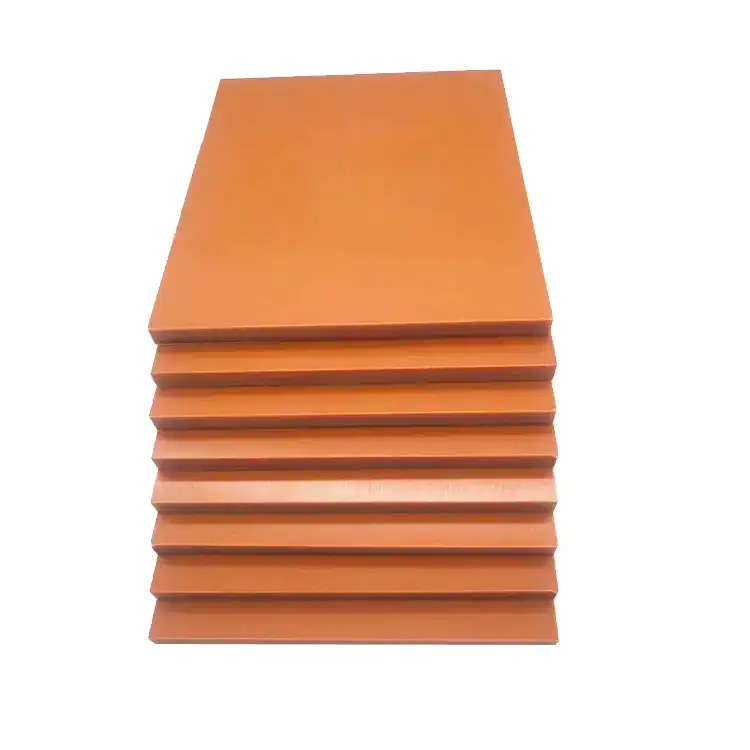
When engineering managers look at different insulation materials for home device circuits, phenolic paper board stands out as a tried-and-true option that is both safe for electrical use and easy to make. This thermosetting composite laminate, which is made by injecting layers of kraft paper with phenolic resin under high pressure and temperature, solves some of the most important problems in modern appliance design, like making sure there is reliable arc resistance, uniform dielectric performance, and easy precision cutting. We've been providing electrical manufacturers for 20 years and have seen how this material fills the gap between performance needs and production efficiency. This is especially true when extreme mechanical loads aren't the main worry but electrical integrity is.
Understanding Phenolic Paper Boards in Switchgear Applications
Composition and Manufacturing Process
Engineered composite materials called phenolic paper boards are made by mixing cellulose paper with phenolic resins and then melting them together at high temperatures and pressures of about 1000 psi. This method makes hard thermosetting laminates that meet NEMA standards and are rated as Grade X, XX, or XXX. These grades are the same as IEC numbers PF CP 201/202. Careful saturation of the resin, exact building of paper layers, and controlled curing processes decide the end density, which is between 1.30 and 1.45 g/cm³. Phenolic paper boards are easier to work with than glass-reinforced epoxy composites because they can be hot-punched into complex forms without the risk of delamination.
Standard Dimensions and Grade Classifications
Manufacturers of switchgear usually ask for phenolic paper boards with widths ranging from 0.8 mm to 50 mm, and standard sheet sizes can fit a wide range of component shapes. Grade X is used in industrial uses that need the lowest amount of glue while still being easy to work with. Grade XX has balanced electrical properties and a mild resistance to moisture, making it a good choice for indoor equipment. Grade XXX has the best dielectric strength, which is more than 500 V/mil short-time rate. It was specially designed for places with a lot of dampness, where water getting into the insulation could damage it. When buying teams understand these differences, they can match material standards exactly to application needs.
Key Differentiators from Alternative Insulators
In electrical uses that aren't solid, phenolic paper boards are much better than FR-4 epoxy glass laminates. The material naturally lubricates, which keeps tools from wearing out during CNC operations and keeps mechanical systems running more quietly. Due to its lower cost structure—about 30–40% less than glass-epoxy alternatives—it is a good choice for making a lot of appliances. But engineers need to know the difference between FR-4's higher temperature range and Class E's (110–120°C constant operation) so that applications stay within the right thermal limits.
Advantages and Performance Benefits in Domestic Appliance Switchgear
Because household appliance switchgear is a tough environment, it needs insulating materials that are safe for electricity, good at managing heat, and easy to make. Phenolic paper boards are the best in all of these areas because they have properties that directly lead to better product stability and production efficiency.
Electrical Insulation and Arc Resistance
When designing switches, dielectric breakdown strength is very important because voltage differences across small gaps need reliable insulation walls. When there is too much power, high-quality phenolic paper boards keep the dielectric strength above 12 kV/mm, which stops catastrophic arc-over events. The phenolic resin matrix is very good at stopping arcs from spreading because it creates carbonized paths that go out on their own instead of spreading failures. Testing according to ASTM D149 guidelines shows that performance is the same across production runs. This gives engineers a way to predict what safety limits to use in case of a fault.
Thermal Stability and Fire Safety Compliance
The hardware in modern appliances works in small areas where heat buildup can be dangerous. Phenolic paper boards keep their shape well up to the temperature limits that are recommended for them, so they don't bend and make it hard for parts to fit together. The material doesn't catch fire easily and meets UL 94 standards for flammability. Its ability to put itself out is important for safety approvals for consumers. RoHS compliance makes sure that products don't contain any harmful materials and is in line with environmental rules for home goods in both North America and other countries.
Mechanical Properties and Structural Integrity
In addition to their electrical performance, switchgear parts are put under a lot of mechanical stress during setup, operation, and wear over their lifetime. Phenolic paper boards have a bending strength of more than 135 MPa in the direction of the laminate, which means they can hold structure loads without deflecting too much. Because it has high compressive strength, the material can be used to hold busbars and act as phase barriers in places where electromagnetic forces cause mechanical stress during switching transients. The phenolic paper boards stay the same size across normal working temperature ranges, which keeps the contact pressure in terminal modules stable.
Manufacturing and Machining Advantages
When making a lot of appliances, production speed has a direct effect on the total cost of the parts. Normal tools can easily cut phenolic paper boards, but carbide or diamond-tipped tools can make production runs longer while keeping tight standards. With hot-punching, you can make complicated shapes without having to do any extra work, which cuts down on worker costs and throughput time. The material isn't as hard as glass-reinforced options, which keeps tools from wearing out as quickly. However, proper dust extraction is still needed because cutting creates small particles.
Procurement Insights: Selecting and Ordering Phenolic Paper Boards
Supplier Qualification and Technical Capability
The first step in a successful procurement process is to evaluate the professional skills and quality systems of potential sellers. Manufacturers who are ISO 9001 certified show that their process controls are written down, and manufacturers who are UL recognized make sure that their materials meet North American safety standards. We suggest checking out the testing services that providers offer, especially the dielectric breakdown voltage testing according to ASTM D149 and the water absorption proof according to ASTM D570. When a supplier has their own testing facilities, they can usually get unique specs and batch validation paperwork to you faster.
Customization Options and Lead Time Considerations
Standard sheet stock can be used for many things, but special thicknesses, standards, and surface treatments can often make the end assembly process better. Reliable makers offer custom slitting, precision grinding to ±0.05mm standards, and pre-machined blanks that cut down on the work that needs to be done later. Lead times depend a lot on how complicated the specifications are. Standard grades usually ship within 5–7 business days, but custom formulas that need unique hardening profiles may take 3–4 weeks. Setting up blanket purchase orders with planned releases helps producers balance the costs of inventory with the need to keep supplies flowing.
Cost Structure and Volume Pricing
The cost of materials depends on the grade, thickness, and size of the order. Because they have different amounts of glue, Grade X mechanical variants cost less than Grade XXX electrical versions. Discounts for buying in bulk usually start at 500 kg, and prices get more aggressive above 2000 kg. But when making a purchase choice, the total cost of ownership should be taken into account. For example, better machinability may be able to make up for higher unit costs by cutting down on tooling costs and speeding up cycle times. To accurately compare suppliers, you should ask for specific cost breakdowns that include freight, minimum order amounts, and payment terms.
Quality Documentation and Compliance Requirements
Full material tracking makes sure that safety standards for appliances are met. For every output batch, we give full mill test records that list the physical qualities, electrical characteristics, and tolerances for size. RoHS and REACH compliance certificates make sure that a product doesn't contain any banned substances, which is very important for goods that are sold in areas that follow rules. Specifications for buying things should make it clear that these papers are needed. This way, there will be clear quality checks before materials go into production settings.
Case Studies and Industry Applications in Domestic Appliance Switchgear
Coffee Maker Timer Switch Assemblies
A well-known small appliance maker had trouble with timer switch units breaking down in the field because moisture got into the FR-1 board and made it work less well. In the first year of production after switching to NEMA Grade XXX phenolic paper board, guarantee claims dropped by 67%. The better resistance to moisture kept tracking from failing in kitchens with a lot of humidity, and the material's punchability made assembly easier by letting parts be made in a single step. This application shows how choosing the right grade has a direct effect on how reliable a product is and how much it costs over its lifetime.
Washing Machine Control Panel Barriers
Control systems for home washing machines need strong phase barriers to keep high-voltage switching circuits away from screens that users can reach. An OEM appliance maker used 3mm phenolic paper boards instead of more expensive glass-epoxy ones as arc chutes in motor control contactors. The material had great arc resistance, which kept fault currents in check during overcurrent events. Its structural rigidity also kept the exact distance between charged contacts, even when it was vibrating or under mechanical stress. Compared to earlier versions, production costs went down by about 35% without lowering safety margins.
Refrigeration Compressor Terminal Blocks
Compressor terminal parts need insulation materials that can keep electricity from getting through and prevent heat cycling. After a lot of testing, a company that sells parts for industrial refrigerators chose Grade XX phenolic paper board for the substrates of terminal blocks. The material's dimensional stability from -20°C to +90°C kept the terminals from coming loose, and its high machinability made it possible to make complicated shapes with wire passing channels at a low cost. When compared to ceramic options that broke during automatic insertion processes, the approach cut down on assembly errors by 42%.
Conclusion
When it comes to electrical insulation, temperature management, and making things more efficiently, phenolic paper boards are a great choice for household device switchgear. Their proven dielectric strength, arc resistance, and mechanical qualities meet important safety and dependability standards. Their ease of machining and low cost structure also support lean production methods. Engineering and buying teams can improve both product performance and total cost of ownership by learning about grade differences, the right way to choose materials, and how to qualify suppliers. Even though device designs are changing to be more energy-efficient and small, these materials are still the building blocks of safe, reliable electrical systems.
FAQ
What thickness ranges are available for switchgear applications?
Thicknesses of phenolic paper boards range from 0.8mm to 50mm, which is wide enough to meet the needs of almost all home device hardware. Standard stock usually has choices in thicknesses of 1.0mm, 1.6mm, 2.0mm, 3.0mm, and 5.0mm. Custom widths can be made through precision grinding. Terminal shields and insulation pads are made of thinner materials, while busbar supports and structural parts that need to be stronger mechanically are made of thicker materials.
How does phenolic board compare to FR-4 for electrical insulation?
In electrical uses with low frequencies below 1 MHz, phenolic paper boards with the right specifications offer dielectric strength similar to FR-4 at a much lower cost. However, phenolic materials are better at absorbing water and can only handle temps up to 120°C (Class E), while FR-4 can handle temperatures up to 130°C (Class F/H). Which one to use relies on the application's temperature needs, mechanical load requirements, and budget. When cost and ease of machining are important, phenolic grades are best. On the other hand, FR-4 should be used in high-temperature or high-mechanical-stress situations.
Can phenolic boards be customized for specific switchgear designs?
Manufacturers often make phenolic paper boards unique by precisely grinding to exact thickness limits, custom sheet cutting, pre-drilling mounting holes, and treating the surface in ways that make glue bonding better. With hot-punching, you can make complicated shapes like holes, cutouts, and curved sides without worrying about delamination. Custom configurations usually have lead times of one to three weeks, depending on how complicated they are. Large orders can support investing in special tools that lower unit costs even more.
Partner with J&Q for Reliable Phenolic Paper Board Supply
For more than 20 years, J&Q has been making high-quality phenolic paper board products that are designed to work in tough electrical environments. Our expert team works directly with engineering managers and sourcing specialists to find the best grades, sizes, and customizations for your switchgear manufacturing processes. As a fully integrated phenolic paper board maker, we are in charge of quality from choosing the raw materials to the final review. This means that we can guarantee consistent performance from batch to batch that meets the strict requirements of UL and RoHS. Because we have integrated transportation, we can send goods exactly when they are needed for output, so there is no uncertainty in the supply chain. Get in touch with our applications engineering team at info@jhd-material.com to talk about your unique switchgear needs and get full technical specifications as well as cheap volume price that fits your manufacturing needs.
References
National Electrical Manufacturers Association (NEMA), "Industrial Laminating Thermosetting Products – LI 1-2019," Standards Publication, 2019.
American Society for Testing and Materials (ASTM), "ASTM D709-18: Standard Specification for Laminated Thermosetting Materials," Annual Book of ASTM Standards, 2018.
International Electrotechnical Commission (IEC), "IEC 60893-2: Specifications for Industrial Rigid Laminated Sheets Based on Thermosetting Resins for Electrical Purposes – Part 2: Methods of Test," 2020 Edition.
Underwriters Laboratories (UL), "UL 746E: Polymeric Materials – Industrial Laminates, Filament Wound Tubing, Vulcanized Fiber, and Materials Used in Printed Wiring Boards," Standard for Safety, 2017.
Harper, Charles A., "Handbook of Plastics, Elastomers, and Composites," Fifth Edition, McGraw-Hill Professional, Chapter 8: Thermosetting Laminates, 2022.
Zhang, L., and Morrison, T., "Electrical Insulation Systems for Household Appliances: Material Selection and Performance Optimization," Journal of Applied Polymer Science, Volume 139, Issue 12, 2022.
_1740986340093.webp)