Tips and Tricks for Working with Epoxy Resin Sheets
2026-05-08 17:21:25
To get consistent, high-quality results when working with epoxy resin sheet materials, you need to know a lot about them and be good at doing things with them. Whether you're an engineering manager looking for FR4 sheets for PCBs or a procurement specialist looking at 3240 epoxy boards for transformer insulation, knowing how to use these materials well can make a huge difference in the success of your projects. We've been making and selling industrial-grade insulation materials for decades, and we've learned that the key to success in electrical, machinery, power distribution, car, and device manufacturing is to use the right handling methods and choose high-quality materials.
Understanding Epoxy Resin Sheets: Key Properties and Applications
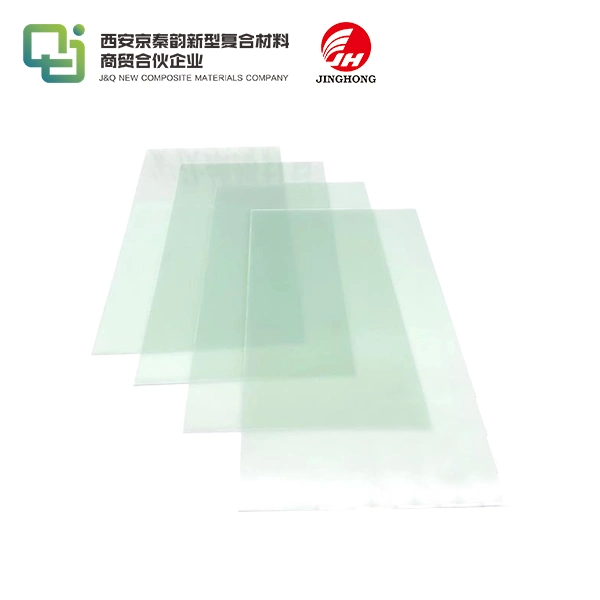
Epoxy bonded sheets are a complex group of composite materials that were made to meet the strict needs of industry. Fibreglass cloth or other reinforcement fibres are mixed with epoxy resin systems in these products. The mixtures are then heated and pressed under controlled conditions to make structures that are rigid and long-lasting.
What Makes Epoxy Sheets Different from Standard Plastics
Epoxy laminate sheets are basically different from regular plastic products because of how they are made. During production, several layers of strengthening cloth are fully saturated with resin before going into compression presses. This makes a structure that is one piece, with the polymer core bonding molecularly to the fibre support. The result has a mechanical strength that is higher than that of most thermoplastics and great structural stability across a wide range of temperatures.
We've seen that many buying teams don't realise how much better epoxy composites are than regular plastics at first. In situations with changing temperatures, steady mechanical loads, or electrical stress, the difference becomes clear.
Core Properties That Matter for Industrial Applications
Dielectric strength is one of the most important things that electrical and tech makers think about. Breakdown voltages for good epoxy resin sheet materials are usually between 10 and 16 kV/mm, but this depends on the grade and the testing settings. Because they don't conduct electricity, they are essential for switches, motor slot fillers, and PCB surfaces.
Mechanical qualities also play a role in choosing a material. In luxury types like 3240 epoxy sheets, the flexural strength values often go above 340 MPa, which supports structural uses in machinery and equipment. This material stays strong even when it comes in contact with generator oils, hydraulic fluids, and many other industrial poisons.
Temperature resistance is different for each recipe. Continuous working temps for FR4 sheets are usually around 130°C, but for Class F insulation systems, 3240 epoxy boards can handle temperatures up to 155°C. Knowing these temperature limits keeps things from breaking down too soon in power distribution and vehicle uses.
Application Diversity Across Manufacturing Sectors
FR4 epoxy sheets are used in large amounts to make printed circuit boards because they stay in place very well during the glueing process. The material can go through many temperature cycles without bending, which makes it possible to reliably put together electronics.
Epoxy laminate sheets are used to insulate generator coils, make spark shields, and make terminal boards in power plants and distribution centers. When you combine dielectric strength, flame protection, and mechanical sturdiness, you meet a lot of safety and efficiency needs at once.
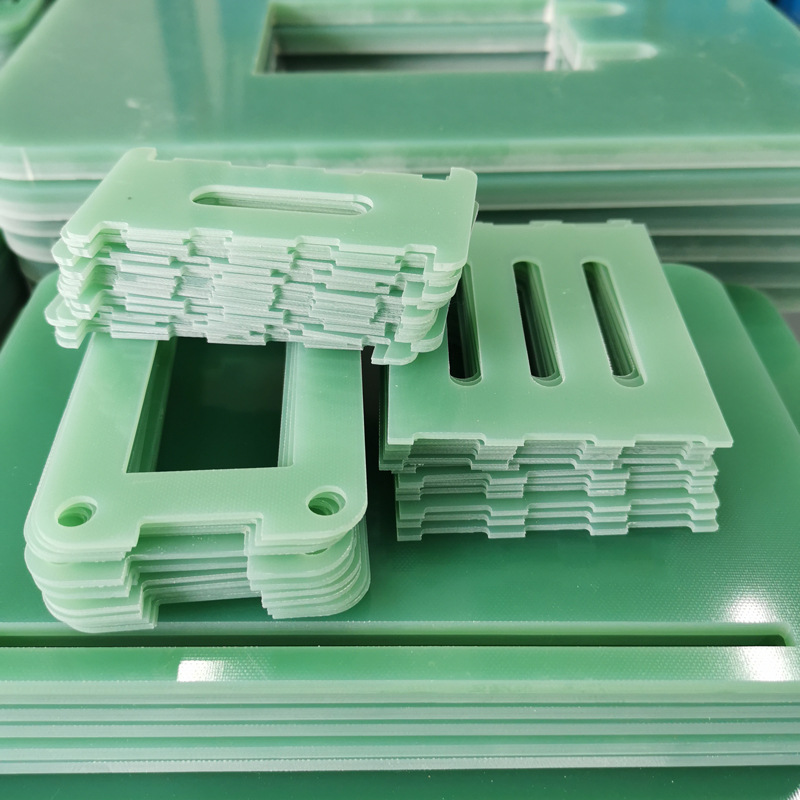
Industrial machinery makers are using epoxy resin sheet phenolic and epoxy sheets more and more for parts that don't break down easily, like bearing supports, gears, and spacers. The material's qualities make it long-lasting even under repeated loads, and its ability to be machined accurately allows for CNC production.
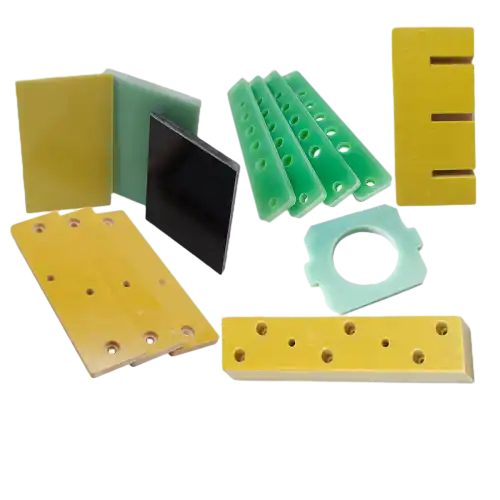
Essential Tips for Working with Epoxy Resin Sheets
With epoxy laminate materials, success starts a long time before they are installed. The planning step lays the groundwork for everything that comes next.
Surface Preparation Strategies That Prevent Failures
When epoxy sheets are stuck to other materials, contamination is the most common reason why the sticky bond fails. Even invisible marks from handling can make it harder for things to stick together. Setting up a regular cleaning routine with isopropyl alcohol or approved industrial fluids is what we suggest. Before putting on any coats or glue, the surface should look like it is completely dry.
Conditions in the environment during planning and placement have a big effect on the results. When humidity levels are above 70%, moisture can enter the air and mess up the bonding and healing processes. Extremes of temperature also change how materials are handled and how fast they fix. The most constant results come from keeping the area between 18°C and 25°C and with a modest amount of humidity.
When combining different types of materials, roughening the surface with light sanding makes the mechanical link stronger. This step adds tiny roughness to the epoxy sheet that makes it easier for things to stick together without weakening its structure. Always get rid of all the sanding dust completely before applying glue.
Cutting and Machining Techniques for Precision Work
Choice of tool has a huge impact on both the quality of the cut and the safety of the person. When cutting epoxy laminate sheets, saw blades with fine teeth and a carbide tip are best because they prevent chipping and delamination. You have to be very careful when setting the blade speed. If it's too fast, it makes too much heat that can damage glue systems, and if it's too slow, it makes the edges rough and tears the fibres.
When drilling, extra care needs to be taken to keep the entry and exit points from delaminating. It's been our experience that backing boards are very important for keeping the laminate's structure during cutting. Peck drilling methods, in which the bit retracts every so often to clear out chips, keep the tool from getting too hot and make it last longer.
When making epoxy sheets, the cleanest edge lines are made with router bits that are made for composite materials. Most of the time, climb cutting methods give better results in these materials than regular cutting. Using coolant or compressed air to control the buildup of heat during long grinding tasks is helpful.
What CNC machines can do depends on the type of material and how thick it is. The 3240 epoxy resin sheet keeps its shape very well during precision production, staying within ±0.05mm limits even for complicated shapes. This level of certainty helps with high-volume production where quality is important.
Installation Best Practices for Different Applications
The type of epoxy sheet and the material that goes with it must both be compatible with the adhesive. Most of the time, structural epoxy glue make the strongest bonds for long-term installs, but they need to be mixed carefully and cured under controlled circumstances. Acrylic glue dry faster and can be used in situations where strength is not the most important thing.
Curing methods for epoxy resin sheet have a direct effect on the end strength of the bond and the qualities of the material. Most commercial epoxy sealants are strong enough to handle in a few hours, but they need between 24 and 72 hours to fully set. After hardening, raising the temperature can speed up this process and relieve stress on the joint at the same time. To keep the sheet's dimensions from changing, the curing temperature must stay below the temperature at which the epoxy sheet turns into glass.
Systematic methods are needed to keep air from getting trapped during installation. Bubbles are less likely to form when you apply glue in a continuous bead pattern and then press down evenly across the whole glueing surface. Vacuum bagging methods that get rid of all gaps are useful for some high-stakes situations.
Maintenance Approaches That Extend Service Life
Protocols for regular inspections help find problems as they start to form before they become fails. Surface crazing, edge delamination, or discolouration that shows environmental decline can be seen with the naked eye. Thermal imaging can sometimes show electrical uses with hot spots that mean there are problems with the insulation.
The best cleaning methods should be able to work with a wide range of materials. For regular cleaning, mild soap solutions work well. For getting rid of certain contaminants, stronger chemicals may be needed. To keep the epoxy glue system from reacting in strange ways, cleaning agents should always be tested on small areas before being used all over.
A process called photo-oxidation breaks down many epoxy mixtures over time when they are exposed to UV light. Protective coats or UV-stabilized material types are useful for uses that will be exposed to the elements or strong artificial lighting. The extra money spent up front usually pays off in the long run thanks to longer repair gaps.
How to Procure Epoxy Resin Sheets Efficiently?
Strategic sourcing has a direct effect on both the time it takes to complete a project and how reliable it is in the long run. There is a lot more to the buying process than just comparing price quotes.
Supplier Evaluation Criteria That Matter
An evaluation of a company's manufacturing capabilities should look at its technical know-how, output tools, and quality control systems. Suppliers with ISO 9001-certified facilities tend to keep the quality of their products more stable than those without certification. Being able to provide certificates and test results for materials shows that you are committed to quality assurance.
Different providers offer very different levels of technical help. Help from engineers with choosing materials, making suggestions for manufacturing, and fixing adds a lot of value to the product itself. We've kept our professional team together for more than 20 years so that we can offer this kind of advice to customers who are having trouble with complex applications.
Material will come when it's needed if the supply line is reliable. As important as the estimated arrival date is how predictable the lead time is. Suppliers who keep enough goods on hand can meet pressing needs, but suppliers who only do make-to-order may have trouble with requests that come in at the last minute.
Certification and Compliance Considerations
UL certification for epoxy resin sheet is still needed for many electrical and computer tasks. UL94 V-0 flame rating approval is usually needed for materials that are going to be used to make PCBs. Some parts used in power distribution may need extra approvals that are specific to the utility business. Making sure that your supplier's goods have the right certifications stops later legal problems that cost a lot of money.
RoHS compliance affects all goods that are going to places that have rules about dangerous substances. RoHS-compliant materials must now be used in electrical and computer goods sold in Europe and many Asian markets. Making sure that your provider of epoxy sheets offers goods that are in line with regulations makes your own efforts to follow the rules easier.
Certifications in environmental management, such as ISO 14001, show that providers are serious about their environmental duties. This is more and more important as companies use sustainable programs, along with technical and economic factors, to make choices about what to buy.
Ordering Strategies for Different Project Types
For many uses, standard sheet sizes work well, but unique measurements can cut down on waste and production time. When a supplier offers custom cutting services, they take on the responsibility of handling and maintaining the tools, which used to be your job. This is especially helpful for large production runs where consistent dimensions directly affect how quickly parts can be put together.
If samples are available, you can try them out before making big purchases. When you use your real manufacturing tools to test a material's machinability, surface finish, and physical stability, you can find problems that specs alone can't tell you about. Reliable providers are happy to give samples because they know that this step of checking builds trust.
There are clear cost benefits to buying in bulk, but the costs of keeping goods and the space needed for storing are countervailing factors. A lot of the time, setting up blanket buy deals with planned releases is the best way to get the best of both worlds: secure volume price while keeping supplies flexible.
Troubleshooting Common Issues When Working with Epoxy Laminates
Epoxy resin sheet products can be difficult to work with sometimes, even for experienced teams. Seeing signs of a problem early on lessens their effects.
Addressing Machining Difficulties
When cutting epoxy resin sheet, too much edge chipping is usually caused by using the wrong tools or feed rates. Edge quality is usually better when the number of teeth on the blade is increased while the feed speed is decreased. Supporting the material on both sides of the cut line stops it from bending, which can cause delamination.
A lot of the time, a broken drill bit is caused by too much feed pressure or not enough chip removal. With peck drilling, chips can move around before they get stuck in the flutes and stop the bit from moving. Lowering the feed rate, especially as the bit comes out of the material, stops grabbing that can break bits with a smaller diameter.
Problems with dimension accuracy could mean that the tools are worn out or that the material is expanding during the cutting process. Carbide tools keep their sharp cutting edges for a lot longer than high-speed steel tools, which makes it easier to keep the same dimensions across production runs. If you let made parts cool down to room temperature before taking the final measurement, thermal expansion is no longer a factor.
Resolving Installation and Bonding Challenges
Poor glue performance is usually caused by a dirty surface or the wrong choice of adhesive. When you look at the process of preparing the surface, you can usually find holes in the cleaning procedure. Problems with compatibility are often fixed by switching to a glue system made especially for connecting epoxy to metal or epoxy to epoxy.
If you can see bubbles or holes in joined parts, that means air got trapped during installation. This problem can be fixed by changing the way the material is applied so that air moves around more, for example by spreading from one edge to the whole area. For important uses where gaps can't be allowed, hoover bagging is the most reliable option.
Managing Environmental Degradation
Surface discolouration in structures that are outside or exposed to UV light is a sign that the plastic system is photo-oxidizing. This type of degradation can be stopped by using UV-resistant coats or changing to UV-stabilized material grades. For some uses, it's helpful to make protected housings that keep insulation materials from being exposed to direct light.
In wet places, electrical qualities can be damaged by absorbing moisture. Epoxy laminates don't pick up as much wetness as some other organic materials, but being in wet conditions for a long time can weaken their dielectric strength. Conformal coats or sealing methods keep important electrical insulation jobs safe in tough settings.
Conclusion
To work well with epoxy resin sheet materials, you need to choose the right materials, handle them carefully, and have good relationships with your suppliers. Investing in good materials and the right way to do things pays off in the form of higher efficiency, less redo, and longer service life in industrial fields like electronics, machines, power, cars, and appliances. By learning about the differences between types of epoxy boards like FR4 and 3240, you can match the qualities of the material to the needs of a particular application. Paying close attention to the little things is necessary during the whole process of buying, making, installing, and maintaining something. This process is easier and less risky when you work with experienced sellers who offer both good items and expert help.
FAQ
What thickness should I choose for uses that support PCBs?
FR4 sheets with a thickness of 0.8 mm to 3.2 mm are often used as standard PCB boards. The thickness depends on the size of the component and its engineering needs. Thinner materials work best for small gadgets, while thicker sheets make bigger boards more stiff. The technical team at your provider can tell you what width is best for your purpose.
What effect does weather have on cutting resin sheets?
Cold materials are easier to clean, but they put more stress on the tools. Warm materials, on the other hand, are easier to cut, but the edges may be harder. The best mix of machinability and edge sharpness is to keep the material and work area temperatures between 18°C and 25°C. Thermal growth problems can be avoided by letting the material get used to the shop temperature before cutting it.
Epoxy laminate sheets can be reused or recovered.
Epoxy sheets and other thermoset materials can't be melted down and reshaped like thermoplastics can. On the other hand, ground material is used as a filler in other composite goods. Some companies have take-back programs that use scrap in new products, which is better for the earth and gets the materials their value back.
Partner with J&Q for Reliable Epoxy Resin Sheet Solutions
Every epoxy resin sheet project that J&Q works on is backed by more than 20 years of experience making high-quality products and 10 years of experience trading with other countries. Our engineering team knows exactly what is needed for electrical protection, building machines, distributing power, making car parts and making appliances. We keep a large stock of FR4, 3240 epoxy boards, and phenolic laminates in both standard and special sizes. All of these materials come with full material certifications and quality paperwork. Our combined transportation operation makes it easier for you to handle your supply chain by making it easier to coordinate deliveries. Whether you need small amounts to test or large amounts to make something, our technical support team works closely with your engineering and purchasing teams to make sure that the material specs exactly match the needs of the application. Contact our experts at info@jhd-material.comto talk about your needs with a seller of epoxy resin sheets who is dedicated to the success of your project.
References
Harper, Charles A. Handbook of Plastics, Elastomers, and Composites. McGraw-Hill Education, 2002.
Lubin, George. Handbook of Composites. Van Nostrand Reinhold Company, 1982.
Petrie, Edward M. Epoxy Adhesive Formulations. McGraw-Hill Professional, 2006.
Goosey, Martin T. Plastics for Electronics. Springer Science & Business Media, 1999.
Lee, Henry and Kris Neville. Handbook of Epoxy Resins. McGraw-Hill Book Company, 1967.
Strong, A. Brent. Fundamentals of Composites Manufacturing: Materials, Methods and Applications. Society of Manufacturing Engineers, 2008.