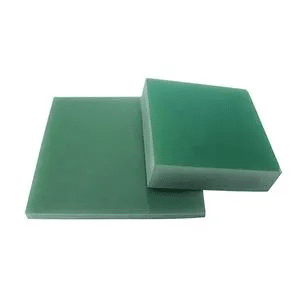
What Factors Matter When Selecting G11 Sheet for High-Voltage Equipment?
2026-11-16 17:01:21
Aside from the grade, the heat rating, the dielectric test data, the mechanical load, the exposure to moisture, and the supplier documentation are the most important things to look at when choosing G11 Sheet for high-voltage equipment. For hot, heavy-duty insulation parts, G11 Sheet is a good choice because it is made of glass, fabric, and epoxy. To 155°C, it can stand up to heat. Before you double-check the numbers, you should see how each property works in real life and then compare that to the numbers. Each batch should have its own test report. J&Q has made and sold insulation sheets for more than 20 years. Before you place your order, read this guide to help you figure out what to do.
Match G11 Sheet to Your Electrical and Thermal Conditions
Confirm the Application Fits G11 Sheet
You should start with the tools instead of the datasheet. You should write down the voltage that will be used, the type of insulation, the distances of clearance and creepage, and the chance of a partial discharge. Then choose whether the sheet will be a part that is machined, a wall, or a spacer. Switchgear, circuit breakers, transformers, busbar supports, and generator parts are some of the things that it is used for. Gear that is used outside needs different checks than gear that is used inside. You should also check for changes in temperature, vibration, humidity, and oil exposure. You can't judge something by its dielectric strength alone. You need to look at how it fits in with the rest of the insulation. Buyers from the electronics, power, machinery, and appliances industries all start here, even though their loads and volumes are different.
Evaluate Thermal Performance Beyond the 155°C Label
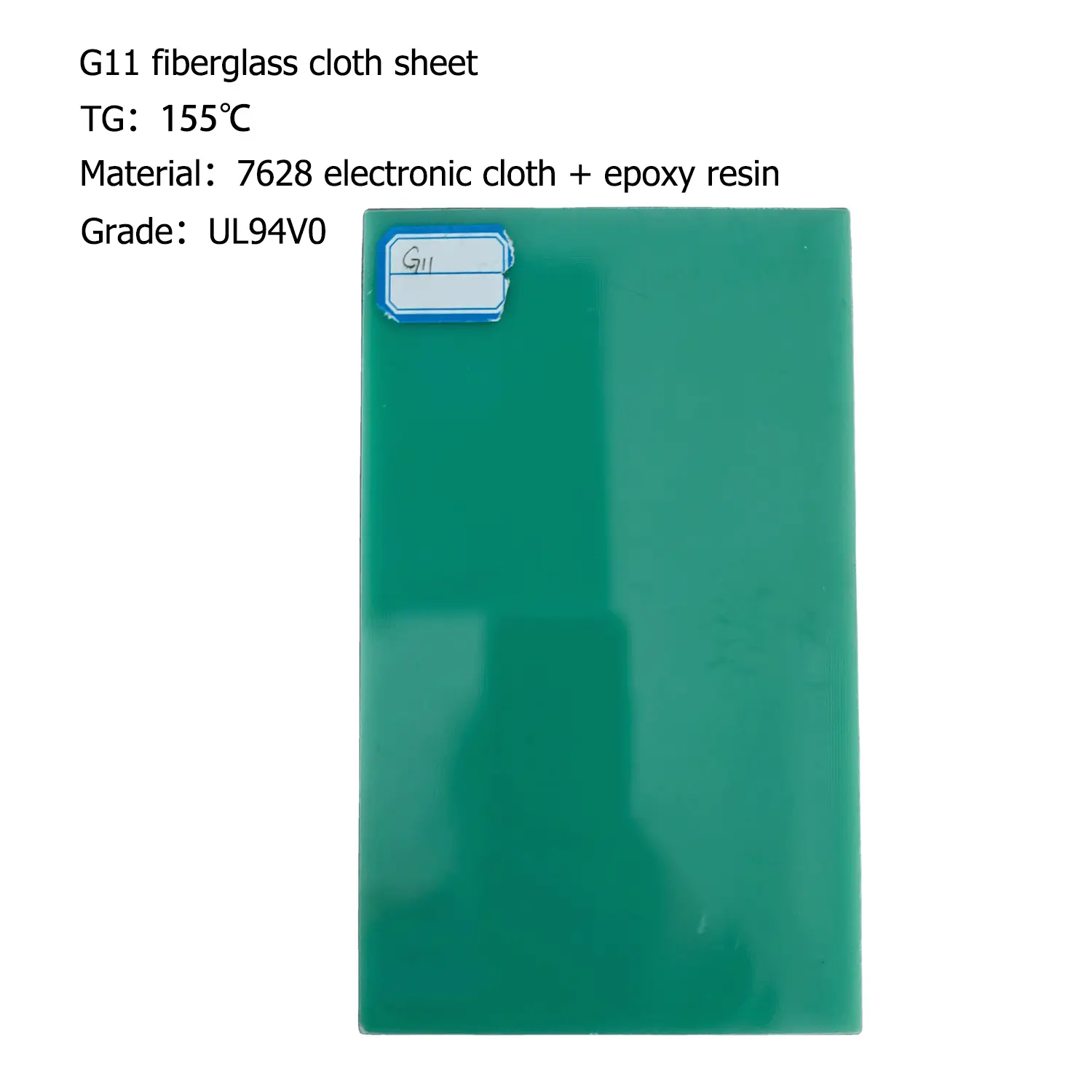
What NEMA LI 1 says is that G11 Sheet is a high-temperature epoxy glass laminate that can stand up to 155°C. When it gets above about 130°C, standard G10/FR4 is usually no longer strong. Even with a label, it's not a sure thing. The real strength is based on the type of resin, the thickness of the sheet, the amount of water on it, how long it is out in the weather, and how heavy the object is. By taking the steady operating temperature away from the short-term peaks, you can find the hotspot temperature inside your equipment. The temperature range where G11 usually turns into glass is 155°C to 180°C. You should get proof from the supplier that the properties of the material will not change when it is heated and aged thermally.
Verify Electrical Insulation Data
If you want to use electrical tests, the test data should match the thickness, process, and direction of the test. It is important to look at the dielectric strength, the breakdown voltage, the volume and surface resistivity, and the insulation resistance. If you look at G11 from the side, it usually has a low dissipation factor and a breakdown voltage above 50 kV. The results change based on how thick it is, though. Materials that arc can have holes or other flaws that can be found with tests like ASTM D149 or IEC 60243-1. Compare tracking index, arc resistance, and tracking resistance are some other things you might want to think about. Find out what standards the lab used, like IEC 60893 or NEMA LI 1, and make sure the report covers your exact grade and batch of production.
Check Mechanical, Moisture, and Chemical Resistance
Match Mechanical Strength to the Load Path
G11 Sheet is often used to keep things warm and carry weight. Compressive strength is important for spacers and supports, while flexural strength is important for plates that are being held up. To find flexural strengths greater than 65,000 psi along a lengthwise direction, the ASTM D790 standard test method is used. If you want to use laminates, make sure that the fibers are facing the right way when you put weight on them. To make sure the size doesn't change over time, it's important to check for creep and stress relaxation in busbar supports and assemblies that move. When the machining is still early on, check the finish. Holes, slots, and sharp internal corners that aren't finished well can cause cracks or delamination. When mechanical engineers ask about thickness tolerances, they should also know how fasteners load a spacer or structural insulator based on how flat it is.
Review Moisture and Chemical Exposure
Water has a hard time getting into a G11 Sheet epoxy glass laminate. Most G11 doesn't soak up more than 0.15% water, which helps it keep its shape when the air is damp. Still, surface changes can happen when water is absorbed, which can make insulation less useful. If air or condensation comes in from the outside, you should ask for data for both the dry state and the conditioned state. Also, find out if the chemicals can be mixed with other things like transformer oil, hydraulic fluids, or stronger ones. Many solvents can't damage G11, but you should still check the temperature and type of fluid you are using. UV rays, salt spray, and dust can damage things when they are used outside. It might need to be sealed, coated, or given more time to cure.
Confirm Flame Requirements Separately
The grade determines what the flame does. There is no way that NEMA G-11 is naturally fire resistant right now. The part of this standard that doesn't let flames happen is named FR-5. Our G11 Sheet is said to meet UL 94 V-0 and ASTM D635 standards in the information we have about it. That's why we still tell people who want to buy something to ask for the test report that matches the batch and thickness. A lot of the time, people who work with power distribution and transformers need things that can stand up to flames and stay stable in temperature. A switchgear barrier might also need to be able to stop arcs. Every quote for the purchase specification should include a flame rating. This is because flame and low-smoke specs can change the grade and price.
Choose the Correct Grade, Thickness, and Format
Do Not Select by Product Name Alone
The flame ratings, certifications, and flame performance of epoxy glass laminates G10, G11, FR-4, and FR-5 are all the same, but they are not the same. Even though it's 155°C, G11 still has at least half of its properties. But G10 starts to lose some of them above 130°C. Also, cutting tools don't work as well with G11. See ASTM D790 for more information on how to make sure the resin meets G-11 standards and not G-10 ones. A lower grade could be used if it does. To get the exact grade, compare checked datasheets instead of brochure labels. Around the world, people use something called IEC 60893-3-2 Type EP GC 203.
Set Thickness and Tolerances from the Design
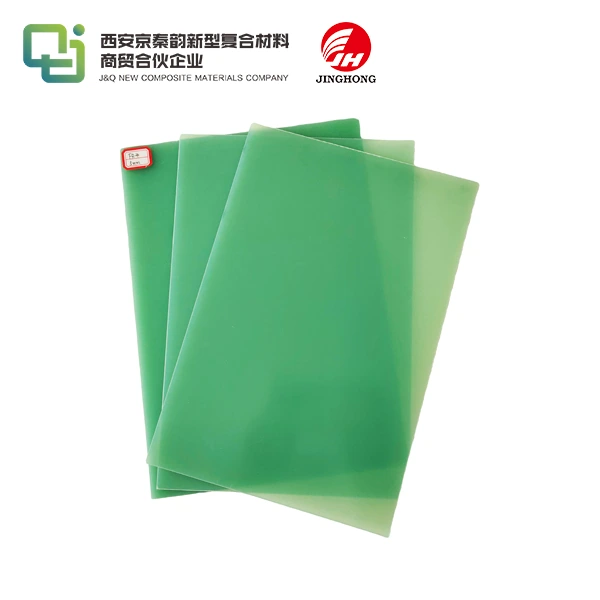
The thickness of something can be changed by things like the distance of the insulation, the mechanical load, the support span, the rigidity, the design of the fasteners, and the machining allowance. Sheets that are stiffer and have a bigger dielectric margin cost more and take longer to machine. There are rules for quality control that say the differences between sheets should be about 0.05 mm. Find out how much your supplier can really hold. Along with length, width, and range of thickness, you should also list how flat or square it is, the surface finish, and the condition of the edges. You can choose from 0.3 mm to 100 mm thick JingHong G11 Sheet, which means it can be used for both thin barriers and thick roof supports.
Pick the Sheet Size and Machining Plan
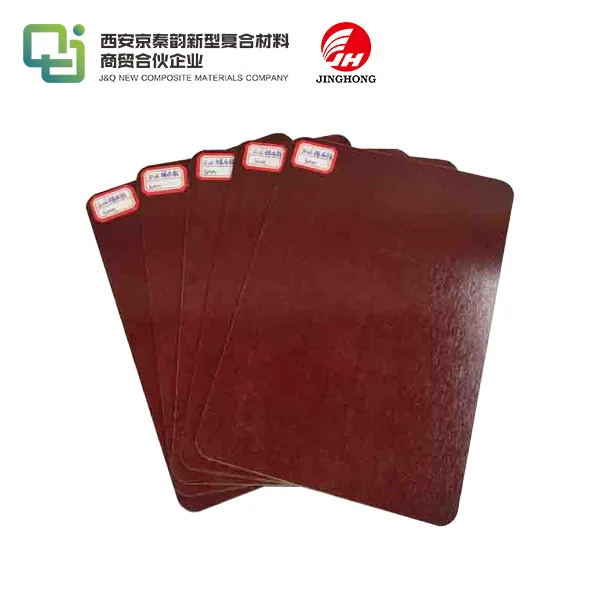
Epoxy resin is what the light green JingHong G11 Sheet is made of. It needs to be 1030 mm x 1230 mm. You can order them in 1030 mm x 2030 mm, 1220 mm x 2440 mm, 1030 mm x 1030 mm, and 1030 mm x 2070 mm sizes. Standard sheets can be used to make prototypes and fix things. Custom-cut or machined parts are easier to put together and take less time if you want to make OEM parts. Because the glass reinforcement is rough, you need tools that are coated in diamond or tungsten carbide for CNC work. They also need to do a good job of collecting dust. We can change the size, color, and thickness to fit the plans you give us with our OEM service.
Assess Supplier Quality and Compare Offers
Request Complete Documentation
A good supplier will give you a technical datasheet that lists the product's test standards, dimensional tolerances, thermal classification, and how well it burns. It will also list the electrical and mechanical properties of the item. Check to see if each value is the lowest, the most common, or the value that you can be sure of. The difference will change how much space is around your piece. You should ask for inspection reports, batch numbers, and the ability to find raw materials if the equipment is very important for safety. We use ISO 9001 to make sure the quality of G11 Sheets, and we test each one for dielectric strength, resistance to heat, and flame. Also, they should be able to drill, mill, cut, and smooth parts without breaking them.
Use a Decision Matrix to Compare Quotes
It is important to make sure that the comparison is fair because the unit price doesn't show how much something really costs. Include the electrical performance, thermal class, mechanical strength, resistance to the environment, measurement accuracy, standard compliance, machineability, lead time, documentation, technical support, and the limited number of items that can be ordered. Pay the most attention to things that are very important for safety. If you want to know how much something costs to own, add up the costs of the parts, labor, tools, shipping, customs, inspection, delays, and waste. Send all of them the same specs so that you can really compare the quotes. There are tests and approvals of the first item to make sure it looks good, fits well, and works properly electrically before it is mass-produced.
Avoid Common Selection Mistakes
Many of the same mistakes are being made over and over again in different projects. People don't look at the test standards, resin formulation, or thermal rating of something that says "G11" on it before they buy it. They look at the dielectric values that were found at different thicknesses, after being prepared in different ways, or when the tests were done facing different directions. They don't mind the water, oil, dust, salt, or separation that happens when you cut. Folks sometimes use the least expensive parts to put together a safety-critical system. This can cause issues with compliance, downtime, and failures in the field. For example, people who want to buy electronics should look at both the test report and the brochure to make sure they meet the flame rating requirements. There are fewer of these risks when there is a clear specification, matched quotes, sample validation, and a weighted review.
Follow a Controlled Procurement Process
Write the Requirement Sheet and Prequalify Suppliers
Start by making a technical requirement sheet that lists the loads, sizes, tolerances, standards, documents, and volume that is expected. The application, voltage, temperature, environment, and loads should also be written on the sheet. Next, make a short list of suppliers based on how well they can machine, how good their quality systems are, and how well they can help with exports. The electricity sheet has been made and sold by J&Q for over 20 years. They've done business with other countries for more than 10 years. We make 43,000 tons of steel every year, so many projects can order from us again and again. The same people make and deliver the goods because we have our own logistics company.
Clarify Commercial Terms Before You Order
Quotes should include the grade, the testing that will be done, the packaging, the Incoterms, the lead time, the payment terms, and how claims will be handled. For JingHong G11 Sheet, the least amount you can order is 500 kg, and you can pay us by T/T. The sheet is packed regularly and kept safe on pallets. You can pick whether we ship by air, sea, or land. You should agree on how to deal with problems and what changes need to be tested again before you start making things. When the terms are clear, things go faster. It's possible for an assembly line to lose a lot more than just a little money if the shipped goods are late.
Run a Final Checklist Before Release
Make sure you know the grade, voltage, operating temperature, dielectric performance, insulation resistance, environment, loads, thickness, tolerances, and machining needs of the order before you send it. Check the standards, certificates, inspection records, batch tracking, and flame approvals of the product to make sure they are correct. Other things to think about are the specifics of the business, like the tools, shipping, Incoterms, MOQ, total landed cost, warranty terms, and the ability to place repeat orders at a cost. The checked-off list should be sent to the teams in charge of engineering, quality control, purchasing, and production. This makes things clearer for everyone and finds issues quickly, so they can be fixed for a small fee.
Conclusion
Make sure that the verified material data matches how the equipment will be used in the real world before you choose G11 Sheet for high-voltage equipment. For how much electricity to use, you need to know the voltage, the creepage distance, and the chance of partial discharge. When looking at how long something lasts and the 155°C Class F rating, it's important to compare the two. What you find from dielectric, flexural, and moisture tests is only useful if the thickness, test direction, and standard are right for the job. That's why flame requirements, grade identity, thickness tolerance, and sheet format need to be checked one at a time. FR-5, G10, and G11 are nothing alike. Some things that can help cut down on specification mistakes and failures in the field that could have been avoided are supplier documentation, batch traceability, weighted quote comparison, sample approval, and a final checklist. These steps make it simple for the buying and engineering teams to check if something works and how much it costs.
FAQ
Is G11 Sheet suitable for high-voltage equipment?
Voltage, temperature, moisture, mechanical stress, and creepage distance are all taken into account when standards are used. You should test the perpendicular breakdown voltage on your own thickness to be sure. Most of the time, it is more than 50 kV.
How does G11 differ from G10?
G11 keeps a lot of its strength up to 155°C (Class F). Going over 130°C makes G10 or FR4 less strong. It's also tougher to use G11. What the manufacturer says is more important than what the grade is called.
Which documents should I request?
To get the exact grade and thickness, ask for the datasheet, the proof of conformity, the inspection report, and the ability to keep track of each batch. Ask to see some before you say you can start making it.
What are the ordering terms for JingHong G11 Sheet?
You can use T/T to pay, and the least you can order is 500 kg. It is possible for it to be 0.3 mm to 100 mm thick. You can send them by land, sea, or air, and they come in any size you want.
Request a G11 Sheet Quotation from J&Q
Want a company that can make G11 Sheets that are the right size, voltage, and temperature? For more than 20 years, J&Q has been making insulating sheets. It can make 43,000 tons of them every year, can make them to order for OEMs, and takes care of all of its own shipping. Send us an email at info@jhd-material.com with the test you need help with, the drawings you have, and how much you want to order. We'll help you find a grade, sample, or quote that works for you. You can also visit jhd-material.com to see all of our goods.
References
1. NEMA LI 1: Industrial Laminated Thermosetting Products, 1998
2. IEC 60893-3-2: Insulating Materials – Industrial Rigid Laminated Sheets Based on Thermosetting Resins for Electrical Purposes – Epoxy Resin Sheets, 2011
3. ASTM D149: Standard Test Method for Dielectric Breakdown Voltage and Dielectric Strength of Solid Electrical Insulating Materials at Commercial Power Frequencies, 2020
4. ASTM D790: Standard Test Methods for Flexural Properties of Unreinforced and Reinforced Plastics and Electrical Insulating Materials, 2017
5. UL 94: Standard for Tests for Flammability of Plastic Materials for Parts in Devices and Appliances, 2023
6. IEC 60243-1: Electric Strength of Insulating Materials – Test Methods – Part 1: Tests at Power Frequencies, 2013

_1753952475136.jpg)