What Is the Dielectric Constant of FR4 and Why Is It Important?
2026-03-25 16:01:20
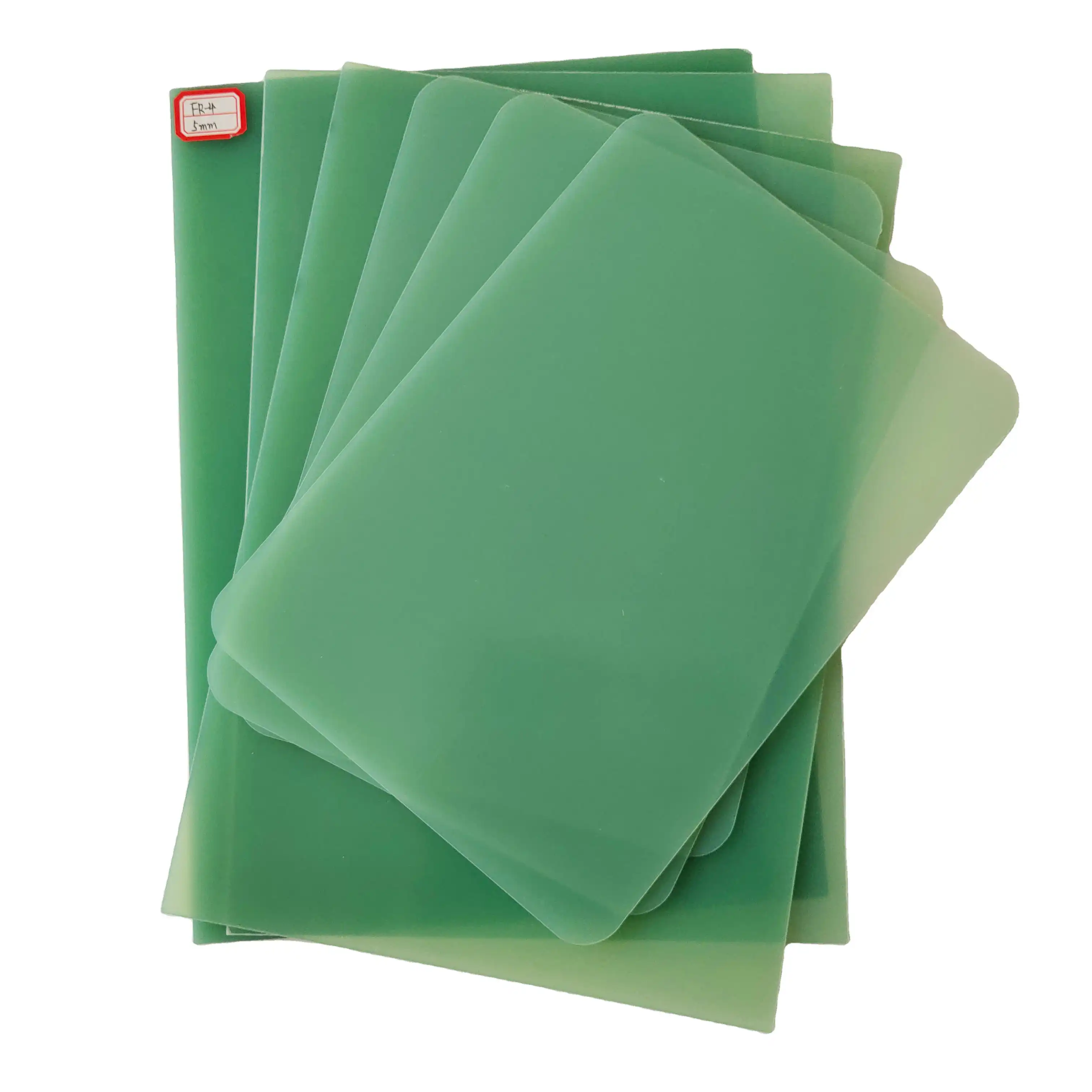
Most FR4 sheets have a dielectric constant of between 4.2 and 4.8. One important electrical parameter that controls how fast signals move, how well characteristic impedance is managed, and how well signals stay together in electronic circuits is this one. That's why FR4 is the most important material for making modern PCBs, which need to work the same way in all situations. Because engineers and procurement professionals know the dielectric constant, they can pick the best substrate materials to make sure that the electrical behavior is best in high-frequency applications while still meeting the standards for reliability and cost-effectiveness that are needed for product development to go well.
Understanding the Dielectric Constant of FR4
The dielectric constant tells you how much electrical energy it can hold in an electric field if you compare a material to a vacuum. When we look at FR4 sheet substrates, this parameter helps us figure out how electrical signals will act as they move through PCB traces and transmission lines.
What Makes FR4's Dielectric Properties Unique
Epoxy resin that doesn't catch fire is mixed with woven fiberglass cloth to make FR4. This makes a composite material whose electrical and mechanical properties are equal. This is because the epoxy resin adds about 3.5 to 4.0 and the glass fibers add about 6.0. The effective dielectric constant of this mix is usually between 4.2 and 4.8, but it can be different depending on the amount of glass to resin and how it was made.
Because its dielectric constant stays the same in a lot of different environments, FR4 is very useful in industry. FR4's electrical properties don't change much with temperature, unlike ceramic substrates or polyimide materials, which do.
Frequency-Dependent Behavior and Its Engineering Implications
It is important to think about how dielectrics change with frequency because modern electronics work over a wider range of frequency ranges. As the frequency goes up, FR4's dielectric constant tends to go down. It ranges from about 4.7 GHz at 1 MHz to about 4.2 GHz at 10 GHz. This change in frequency affects how signal timing is calculated and needs to be carefully thought through when making high-speed circuits.
When engineers work with RF or millimeter-wave systems, they need to know about this frequency dependence when they figure out what a transmission line is made of. When you change the dielectric constant, it can cause impedance mismatches. These can make signals bounce back, power transfer less efficient, and electromagnetic compatibility issues possible.
Technical Specifications and Properties of FR4 Related to Dielectric Constant
Procurement teams can choose the right materials if they know the technical details that affect how well dielectrics work. Dielectric stability and different FR4 properties are linked in a way that changes how reliable and consistent the performance is over time.
Glass Transition Temperature and Dielectric Stability
The temperature where epoxy resin goes from being stiff to being more bendy is known as the glass transition temperature (Tg). The Tg value for regular FR4 is around 130°C to 140°C. High-Tg versions, on the other hand, can reach as high as 170°C. The dielectric constant is less stable when it is under thermal stress when it is cooled below this temperature limit.
Because it has more molecules that can move around, FR4 works better when it's above its Tg. This could cause changes in the dielectric constant and a higher dissipation factor. High-Tg FR4 sheet materials are good for uses that need consistent electrical performance across a wide range of temperatures. They keep their stable dielectric properties even when temperatures are very high.
Moisture Absorption Effects on Electrical Performance
One of the most important environmental factors that changes FR4's dielectric properties is how much water it absorbs. Standard FR4 can take in between 0.1% and 0.15% of its weight in water when things are normal. The effective dielectric constant and dissipation factor may go up because of this.
When it comes to water molecules, a dielectric constant of about 80 is high. This means that even small amounts of water can have a big effect on the electrical properties of the composite material. Things will be affected by this effect even more in damp places or when they are exposed to water for a long time. When something is UL-certified, it has been through a lot of tests to make sure it works the same way in all kinds of wet conditions. This helps procurement teams get the right specs for important projects.
Commercial vs High-Performance FR4 Grades
You can buy different grades of FR4 on the market to meet your needs in terms of performance and price. Commercial-grade materials are good enough for most industrial and consumer electronics uses, but high-performance grades are better for tough jobs because they are more stable at low and high voltages.
High-performance FR4 sheet materials often have different resin systems, better manufacturing methods, and better glass weave patterns in order to get tighter dielectric constant tolerances and less frequency dispersion. These materials cost more, but they are more consistent electrically, which is important for high-frequency uses, precision instruments, and electronics in space.
Procurement Considerations for FR4 Material Based on Dielectric Properties
Before you can buy FR4 sheet materials, you need to understand how the dielectric specifications you see on the paper affect performance and dependability in real life. Procurement teams have to be aware of both technical needs and things like cost, quality control, and the supply chain when they buy things.
Specification Verification and Quality Assurance
Having clear technical specs that fit the needs of the application is the first step to making procurement work well. When it comes to controlling impedance and making sure your signal timing is correct, dielectric constant tolerances, which are usually given as ±0.1 to ±0.2, are very important. When they buy something, the people in charge should ask for a lot of information about its properties, like how it reacts to changes in frequency, how it changes with temperature, and how easily it absorbs water.
Having quality management systems for suppliers is very important to make sure that the materials are always the same from one production lot to the next. An important step toward quality assurance is getting ISO 9001 certification. It's possible that you will need extra certifications like AS9100 or ISO 13485 for medical and aerospace uses. As part of the normal process of inspecting new products, key electrical properties should be checked to see if the material has changed in a way that could affect how well the product works.
Volume Purchasing and Lead Time Management
While electronic materials are being shipped around the world, there are times when problems arise that can affect the costs and availability of certain FR4 grades. Strategic purchasing methods include building relationships with several qualified suppliers, keeping the right amount of safety stock for important materials, and, when possible, coming up with different material specifications.
Deals to buy a lot of something can save you a lot of money and make sure you always have goods on hand. A lot of suppliers use tiered pricing, which means that customers who promise to buy more get discounts on each unit and are given priority when supplies are low. Rule for making sure that material properties stay the same and for telling the other party ahead of time about any changes to the formulation should be in long-term contracts.
Customization Options and Engineering Support
Certain thickness tolerances, copper foil options, and unique stackup arrangements are all things that some of the best suppliers can do for you. There is better electrical performance with these services, and they don't cost as much as more expensive materials.
There is a wide range of technical support from different suppliers, from simple facts about how materials work to full design assistance and application engineering. Strong technical teams at suppliers can help pick materials, process them, and fix issues. This speeds up development and makes the product more reliable.
Enhancing PCB Performance Through Dielectric Constant Optimization
To get the most out of FR4 sheet materials, you need to know how the dielectric properties affect the design parameters of circuits and the manufacturing processes. If you use strategic optimization techniques, you can get performance levels close to those of specialty materials while still getting the cost and processability benefits of FR4.
Signal Integrity Design Techniques
When FR4 substrates are used for high-performance PCB layouts, controlled impedance design is the first step. In order to get the impedance values that are wanted while still taking manufacturing tolerances into account, the copper weight, trace width, and dielectric thickness must all be carefully brought together. The design tools we use today guess the impedance ranges and find the best routing strategies by looking at changes in the dielectric constant.
Differential pair routing techniques are very important when signal timing accuracy is important for high-speed situations. The dielectric constant controls how fast the waves travel. In digital systems, this has a direct effect on the time margins for setup and hold. Careful length matching and via optimization are used to keep the signal's integrity even when routing is hard.
Manufacturing Process Optimization
How PCB assemblies are put together has a big impact on how dielectric they are in the end. How much glass is mixed with the resin and how many holes are in the panel depend on the lamination temperatures, press pressures, and curing times. There is a direct link between these changes and the consistency of the dielectric constant across the panel.
When they are making things, modern companies use statistical process control to keep an eye on the dielectric properties. That way, the electrical work will always be the same. Builders and designers can make stackup designs that are better at balancing electrical performance with goals for cost and manufacturing yield when they work together.
Emerging Material Innovations and Future Trends
As material science gets better, FR4 formulations keep getting better while still being able to be made with the methods that are used now. To make low-loss versions, the resin chemistry has been changed to lower the dissipation factor while keeping the strength and ability to resist fire. It's not necessary to change any tools or methods to get better results with these new materials.
It is possible to find cheap solutions to hard problems when you mix FR4 with certain materials in key signal layers. People who use stack-up designs might choose low-loss materials for high-speed signals. For power and ground planes, they could use standard FR4, which would make the most of every dollar.
Conclusion
The basic property of FR4 sheets called dielectric constant affects every part of how well an electronic circuit works, from how fast signals travel to how well impedance is controlled and how well the circuit works with electromagnetic fields. When engineers and procurement professionals know about this important property, they can make choices that balance the need for performance with concerns about cost and the limits of what can be made. Modern FR4 formulations keep getting better in terms of their electrical properties, but they still have the dependability and ease of processing that made them the building blocks of the electronics industry. To make sure the implementation goes smoothly, suppliers must meet quality standards, specifications must be followed to the letter, and techniques for design optimization must be used to get the most out of these flexible substrate materials.
FAQ
How much does the dielectric constant vary between different FR4 suppliers?
This is the range of changes in dielectric constant that happen between suppliers. The exact changes depend on how the products are made and the quality control standards. Some standard commercial grades may have wider tolerances, but premium suppliers keep them tighter with better resin formulations and more careful statistical process control. When the electrical performance of an application needs to be reliable, procurement teams should ask for detailed specification sheets and think about qualification testing.
What happens to FR4's dielectric constant at high temperatures?
The dielectric constant usually goes down a little as the temperature rises. At room temperature, the coefficients should be between -50 and -200 ppm/°C. When the temperature gets close to the glass transition temperature (Tg), molecules move around a lot more. You can see this change more clearly. For uses in cars, spacecraft, and factories, high-Tg FR4 sheet materials are better because their dielectric properties stay stable over a wider temperature range.
Can moisture absorption permanently damage FR4's electrical properties?
When something normally takes in water, the dielectric constant and dissipation factor change in a way that can be undone. Getting rid of the moisture that was absorbed through baking in the right way can bring back the original electrical properties. On the other hand, high temperatures and humidity for a long time can damage the epoxy matrix in a way that can't be fixed. Since this can change the dielectric properties, the product may not work as well in the long run.
Partner with J&Q for Premium FR4 Sheet Solutions
J&Q has the most up-to-date quality control systems and more than 20 years of experience making things. They can offer FR4 sheet materials that meet the strictest electrical performance standards. Our detailed material specs include a lot of information about the dielectric constant over a wide range of temperatures and frequencies. This lets you make precise circuits and be sure they will work. We keep a lot of standard and special grades of FR4 sheets in stock because we are a reliable source for them. We can also make changes to fit the needs of each application. By making sure you get your products on time, our integrated logistics help you meet your quality goals and production schedules. Use info@jhd-material.com to email our technical team and tell them about your dielectric needs. They can then tell you how our experience with tried-and-true materials can help you make your product development go better.
References
COMBS, CLYDE F. (2008). McGraw-Hill Professional says, "Printed Circuits Handbook, Sixth Edition."
Raghbir S. Kingdpur and Michael S. Collins said. A book by McGraw-Hill Education in 2005 is called "Printed Circuit Boards: Design, Fabrication, Assembly, and Testing."
Three people: himself, Michael Steer, and Terry Edwards. That year, John Wiley & Sons put out "Foundations for Microstrip Circuit Design, Fourth Edition."
There is Inder Bahl, you, and Prakash Bhartia. That year, John Wiley & Sons put out "Microwave Solid State Circuit Design, Second Edition."
Artech House Publishers put out a book in 1991 called "Transmission Line Design Handbook." Wadell, B. C.
Graham, Howard Johnson, and Smith. It was published by Prentice Hall PTR in 1993 and is called "High-Speed Digital Design: A Handbook of Black Magic."