
Which Industries Need Epoxy Glass Cloth Laminated Tubes?
2026-09-18 17:08:18
Epoxy glass cloth laminated tubes are widely used across multiple high-demand industries. From power distribution systems to automotive assembly lines, these engineered composite tubes deliver consistent electrical insulation, thermal stability, and mechanical load-bearing capacity. Industries such as electrical and electronics manufacturing, industrial machinery, the power and energy sector, automotive production, and home appliance manufacturing all depend on this material to meet strict safety and performance standards. If you're sourcing epoxy glass cloth laminated tubes for a B2B application, understanding where and why they're used helps you make better procurement decisions.
Understanding Epoxy Glass Cloth Laminated Tubes: Properties and Manufacturing Process
What Are They Made Of?
To make these Epoxy Glass Cloth Laminated Tubes, alkali-free knitted glass cloth that has been mixed with epoxy glue is wound around a mandrel while it is hot and under pressure. During curing, the layers stick together permanently, making a tube with smooth walls and a flat outside. The end result is a product that is rated at insulation Class B and falls under Grade 3640 (or the foreign version G-10/FR-4). This means that it can be used continuously up to 130°C.
Key Performance Properties
The substance has a high electrical strength, doesn't absorb water well, and is very resistant to weak acids and bases. Because it doesn't change size when mechanical loads are put on it, it can be used for precision-machined parts. UL approval (No. E310670), RoHS compliance, and REACH certification all back up the material's trustworthiness for B2B supply chains around the world.
How Quality Is Controlled
Tight thickness standards are met for every tube on production lines that have automated winding equipment, ventilation systems, and places to get rid of dust. When tubes are machined into insulation cylinders, operating rods, or support columns, it's important that the ends are clean, the color is uniform (mostly yellow), and the surface finish stays smooth.
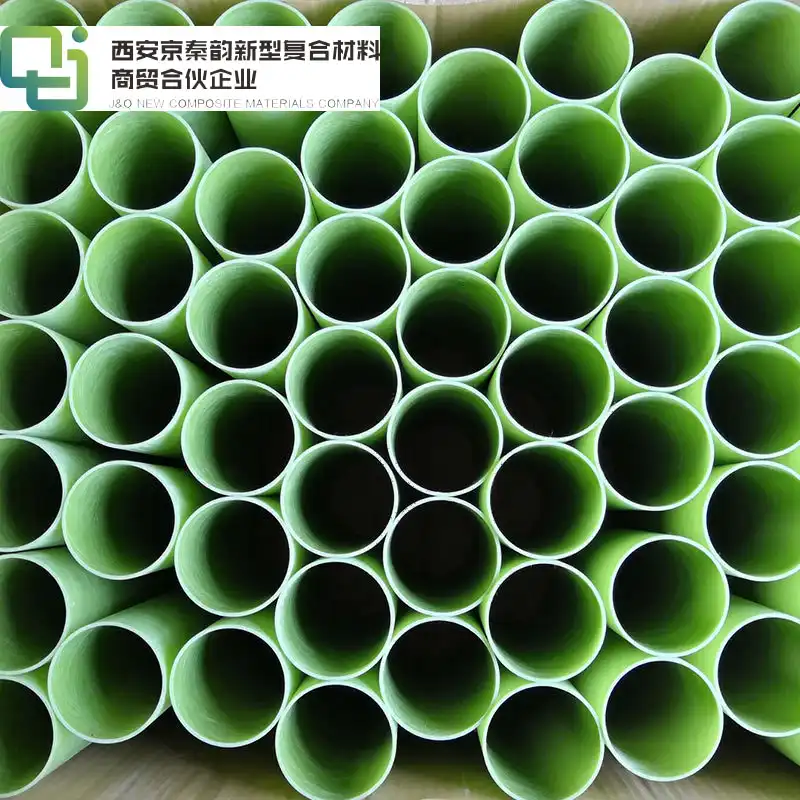
Industries That Rely on Epoxy Glass Cloth Laminated Tubes
This material is used in many areas because there isn't another one that has the same electrical, thermal, and mechanical qualities at the same price.
Electrical and Electronics Manufacturing
Electrical engineers and technical buying teams use these tubes to protect switchgear and motor systems and keep them from short-circuiting. Epoxy Glass Cloth Laminated Tubes are better at resisting arc discharge and have higher dielectric ratings than regular fiberglass products. This is a big plus when designing high-voltage cabinets. Because they can be cut with a CNC machine, parts can be made exactly the same way over and over again in large production runs.
Power and Energy Sector
The people who make transformers use these tubes as coil insulation cylinders and tap changer insulation shafts in dry-type transformers. When good epoxy tubes are submerged in mineral transformer oil for a long time, they don't change chemically. Alternatives that aren't properly cured can leak chemicals that lower the oil breakdown voltage. This is why the acetone extraction test is always done to make sure a new supplier is trustworthy.
Industrial Machinery and Equipment
Some of the things that mechanical engineers use these tubes for are spacers, guide sleeves, and wear-resistant bushings when they're making rotating equipment, geared drives, and high-load structural assemblies. The material stays true to its size even in humid plant settings because it doesn't absorb much water when it's compressed. OEM sourcing managers care about consistent batch quality because differences in dimensions directly lead to assembly rejects.
Automotive and Transportation
To get Epoxy Glass Cloth Laminated Tubes for battery pack barriers, insulation pads between live and grounded parts, and heat-resistant fixings in engine spaces, automotive R&D engineers and tier-1 supply chain managers look for them. It is known that changing steel insulation clamps with composite tubes can cut the weight of a component by 40–60% without affecting its dielectric performance.
Home Appliances Manufacturing
These tubes are used by appliance brands as motor brackets and insulation frames in small power tools, air conditioners, and washing machines. The 3640-grade tube is a good choice for high-volume assembly work because it is affordable, stable for mass production, and comes in short delivery cycles.
Comparing Epoxy Glass Cloth Laminated Tubes with Alternative Materials
People who work in procurement often compare this information to three other options. This is how it stacks up:
- Versus standard fiberglass tubes: Epoxy Glass Cloth Laminated Tubes have better mechanical strength and better size accuracy. Polyester or vinyl ester resins are used in standard fiberglass. These resins soak up more water and have lower insulation values. Epoxy glue systems are the best choice for uses that need at least Class B shielding.
- Versus carbon fiber tubes: Carbon fiber is stiffer and lighter, but it conducts electricity, which means it can't be used for most electrical insulation tasks. It also costs a lot more for carbon fiber tubes. Industrial insulation needs can be met by epoxy glass cloth tubes, which are long-lasting, don't conduct electricity, and are affordable.
- Versus metal tubes (aluminum, steel): When metals are in places with a lot of chemicals, they rust, and they also conduct heat and electricity. Epoxy glass cloth tubes don't rust, keep electricity from flowing through them, and are lighter. When insulating composite tubes are used instead of metal structural members in transformer and switchgear assemblies, secondary insulation layers are not needed.
These practical differences help buying teams explain their choices of materials to stakeholders in both engineering and business.
Procurement Guide for Epoxy Glass Cloth Laminated Tubes
There's more to smart sourcing than just price per meter. Total purchase value is based on a number of things.
Certifications and Standards
Before you approve a seller, make sure they are listed on UL, follow RoHS rules, and have passed REACH tests. For uses in the power sector, make sure that the Epoxy Glass Cloth Laminated Tubes from the provider pass the acetone extraction test to show that the epoxy has fully cured. For automotive supply chains, ask for proof that the wall thickness and dielectric strength are the same from batch to batch.
Customization and MOQ
Standard tubes are 1,000 mm long and come in sizes like 14 mm x 18 mm and 18 mm x 22 mm. However, reputable makers can make tubes to specific sizes for specific uses. Make sure you know the minimum order quantity early on. When the plant uses automated production lines, bulk orders usually have lower prices and faster wait times.
Supplier Due Diligence
Look for manufacturers that have been exporting for more than 10 years and have a track record of good logistics. When suppliers handle their own freight, there is less risk at the handoff, and procurement teams only have to talk to one person from production to delivery. If you want to sign a long-term contract, ask for client references from international markets and look at their quality records.
Practical Applications and Case Studies
High-Voltage Switchgear
For SF6 and vacuum circuit breakers, Epoxy Glass Cloth Laminated Tubes act as the walls of the arc-extinguishing room, and the working rods keep the electricity from flowing. The tube has to be able to handle powerful arc-quench pressure and still keep the electricity from flowing through it. Data from switchgear OEMs in the field shows that Grade 3640 tubes meet these requirements for more than 20 years of service.
Cryogenic and Scientific Equipment
As for superconducting magnet assemblies and LNG pipeline supports, G-10 grade epoxy glass cloth tubes are what you need. Their low thermal conductivity stops heat from moving between normal and cold areas, and they stay flexible and non-magnetic at temperatures close to absolute zero, which is something that no metal tube can do.
Dry-Type Transformer Manufacturing
One of the most common uses is for coil insulator tubes in dry-type transformers. The tube has to be able to withstand going back and forth between room temperature and working temperature for decades without delaminating. Manufacturers who work with Schneider Electric record how well their products perform in rapid temperature aging tests to show that they will last for a long time.
Conclusion
Epoxy Glass Cloth Laminated Tubes are useful and have been used for a long time in electrical manufacturing, power systems, industrial machinery, car production, and putting together home appliances. Because they are dielectrically strong, thermally stable, chemically resistant, and easy to machine on a CNC machine, they are a reliable choice when other materials don't work. Your long-term investment in buying will be safe if you choose a provider with verifiable certifications, consistent production quality, and dependable shipping, whether you need standard 3640-grade tubes or parts with custom dimensions.
FAQ
What is the difference between FR-4 and G-10 epoxy glass cloth tubes?
The mechanical strength of both grades is about the same. FR-4 has a UL94 V-0 flame rating because it has a flame retardant made of bromine in it. Since this ingredient isn't in G-10, it's not flame retardant. However, it does sometimes have slightly better mechanical qualities. When flame proof is required by law, choose FR-4.
What temperature can these tubes handle?
All Grade 3640 and G-10 Epoxy Glass Cloth Laminated Tubes meet Class B insulation standards, which means they can be used continuously at 130°C. The G-11 grade can handle temperatures between 155°C and 180°C and is best used in power plants where the working temperatures are higher than the Class B standards.
Can these tubes be machined?
Yes. They can be machined with a CNC, but the glass fiber in them makes them rough. To avoid delamination and keep workers safe from fine glass particles, you need tools with carbide or diamond tips, fast spindles, and good dust extraction.
What is the shelf life?
If you store these tubes horizontally on stands in a dry, room-temperature place away from direct UV light, they will last forever. As a safety measure, most quality programs plan to test again every 12 to 24 months.
Do epoxy tubes degrade in transformer oil?
High-quality tubes that are fully dried can stay chemically stable in mineral transformer oils. When tubes aren't fully dried, chemicals that weaken the oil's electrical strength can leak out. Ask your provider for the results of an acetone extraction test to make sure the product is fully cured before using it in oil-immersed applications.
Get Your Epoxy Glass Cloth Laminated Tube Quote from J&Q
J&Q has been making insulation materials for more than 20 years and has been trading internationally for more than 10 years. As a reliable Epoxy Glass Cloth Laminated Tube provider, we offer UL-listed, RoHS-compliant tubes with tight thickness tolerances, clean-cut ends, and stable batch quality. We also have our own transportation network to make sure that delivery is always on time. You can visit jhd-material.com or email us at info@jhd-material.com to get a quote or talk about your specific needs.
References
1. ASTM International. ASTM D709: Standard Specification for Laminated Thermosetting Materials. ASTM International, 2021.
2. IEC. IEC 60893: Specification for Industrial Rigid Laminated Sheets Based on Thermosetting Resins for Electrical Purposes. International Electrotechnical Commission, 2019.
3. UL. UL 746E: Standard for Polymeric Materials — Industrial Laminates, Filament Wound Tubing, Vulcanized Fibre, and Materials Used in Printed Wiring Boards. Underwriters Laboratories, 2020.
4. Harper, C. A. Handbook of Plastics Technologies. McGraw-Hill, 2006.
5. Brydson, J. A. Plastics Materials, 7th ed. Butterworth-Heinemann, 1999.
6. National Electrical Manufacturers Association (NEMA). NEMA LI 1: Industrial Laminating Thermosetting Products. NEMA, 2020.
