Why Is G10 Fiberglass Tube Preferred for Electrical Insulation?
2026-08-03 17:19:29
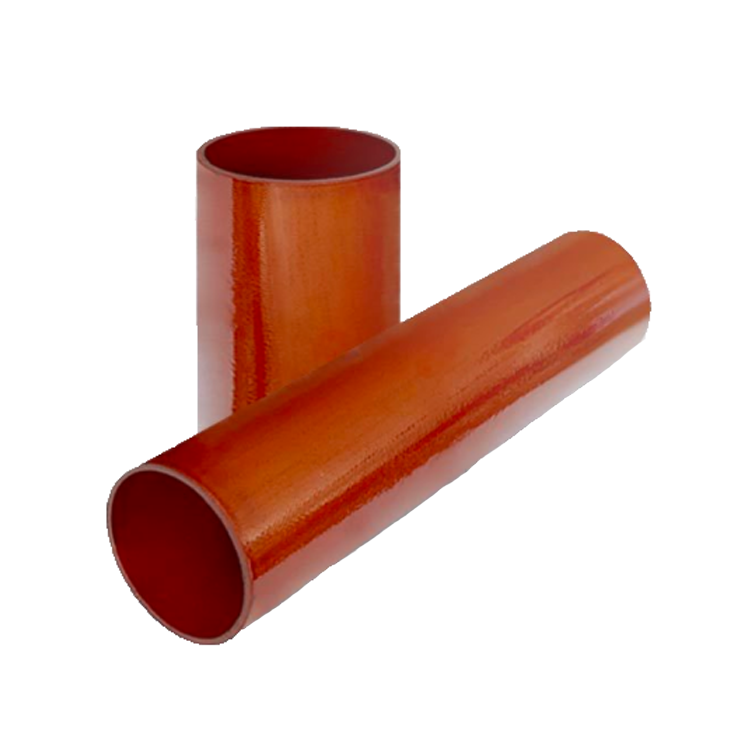
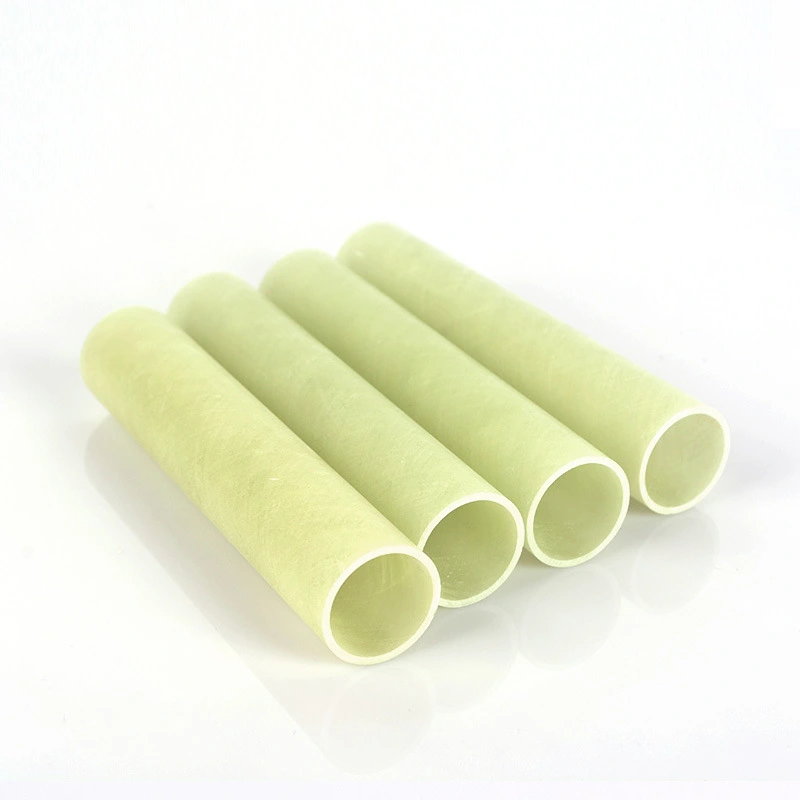
G10 Fiberglass Tube stands as the preferred choice for electrical insulation across industries because it combines exceptional dielectric strength with mechanical durability that outlasts conventional materials. This premium-grade composite—formed by layering continuous filament glass cloth with epoxy resin under high pressure—delivers reliable performance in high-voltage environments while resisting moisture, chemicals, and thermal shock. Engineering managers and procurement specialists consistently choose G10 because it reduces system failures, extends equipment lifespan, and maintains dimensional stability under demanding electrical loads where safety and longevity cannot be compromised.
Understanding G10 Fiberglass Tube: Composition and Key Properties
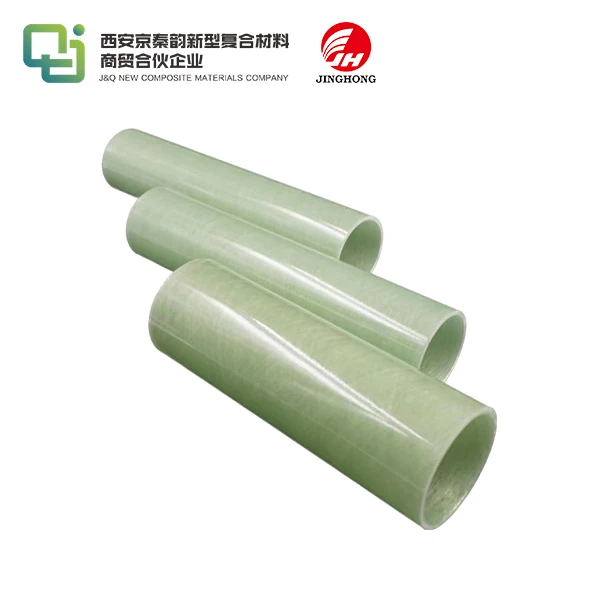
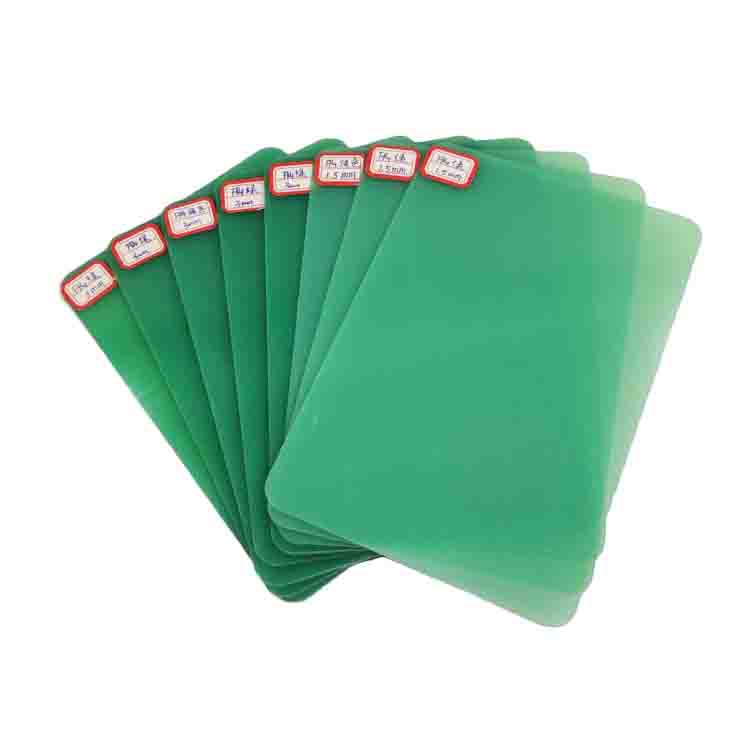
G10 Fiberglass Tube is a high-performance composite that was made for uses that need to keep electrical signals away and keep the structure strong. To make it, epoxy resin is mixed with knitted fiberglass cloth and then several layers are stacked on top of each other using controlled heat and pressure to make a thick, even structure. This makes a material that meets the standards of NEMA G10 and MIL-I-24768/2, which makes sure that all production batches are the same.
Because G10 is a hybrid, it can solve important industry problems that simpler materials can't. Metal tubes carry electricity and pose the risk of an arc, and plastic options break down in heat. G10, on the other hand, keeps its traits at all temperatures, from very cold to very hot. The continuous glass filament reinforcement gives the material tensile strength up to 40,000 psi, and the epoxy matrix makes it resistant to chemicals and water, absorbing less than 0.11% of water over 24 hours.
Material Composition and Manufacturing Process
Precision control over the building of G10 is what makes it work so well. Manufacturers choose high-quality E-glass fibers that are made into cloth. This makes the tube wall stronger all the way through. The epoxy resin system, which was chosen for its excellent electrical and adhesion properties, fills every fiber completely, leaving no gaps that could affect the insulation's performance. High temperature and pressure during curing drive out water and volatiles while cross-linking the resin molecules into a thermoset structure that can't be melted down or reshaped.
This level of strictness in the manufacturing process makes tubes with reliable mechanical qualities and uniform wall thickness tolerances from batch to batch. This predictability is important to procurement teams because it lowers the number of rejected items during incoming review and makes sure that parts fit perfectly into systems without needing to be reworked.
Distinguishing G10 from Related Materials
Knowing how G10 is different from other composites that are similar helps buyers choose the right material. G10 and FR4 are both made of glass-epoxy, which is a similar building material. However, FR4 has brominated flame retardants added to it to get UL94 V-0 fire ratings. This means that FR4 has to be used when flammability rules apply, but G10 has slightly better flexural strength and less water absorption for uses that aren't flame-critical.
G10 has better electrical qualities and can handle moisture better than phenolic laminates like Bakelite. Standard G10 costs less than materials like G11 that can handle higher temperatures, but it meets the thermal needs of most electrical insulation tasks below 140°C. Because of its position, G10 is the best option when performance needs are balanced with budget limits, which is a calculation that every technical procurement specialist is familiar with.
Why G10 Fiberglass Tube Excels in Electrical Insulation Applications
G10 is good at keeping electricity from leaking because it has basic qualities that stop current leaks and voltage breakdown. G10 keeps sensitive electronics and power systems from breaking down, which could cost a lot of money in downtime, because its dielectric strength is higher than what the industry requires and its dissipation factor stays low across all frequency ranges.
Superior Dielectric Performance Under Voltage Stress
G10 has a high dielectric strength that keeps it from breaking down electrically even when it is exposed to high voltage for a long time. There are no conductive paths in the epoxy resin matrix, and the glass strands themselves don't carry electricity. This mix makes a wall that keeps electrical current on its intended path, stopping dangerous arcing or damage to parts.
Because G10 Fiberglass Tubes have a low dissipation factor, which is a measure of how much energy is lost as heat when an alternating current flows through close insulating material, they don't make a lot of heat when used at high frequencies. This feature is very important in places where heat builds up and hurts nearby parts, like in transformer assemblies, RF coil forms, and PCB standoffs. When electrical engineers choose insulation materials, they know that these qualities directly lead to more reliable systems that need less upkeep.
Thermal Stability That Protects Electrical Integrity
Temperature changes can be hard on a lot of insulation materials because they can lose their shape, leaving gaps, or be subjected to mechanical stresses that can cause them to break. G10 is very stable at high temperatures; it keeps its shape and electrical qualities even after being heated and cooled many times. The material can be used continuously at temperatures up to 140°C without getting soft or breaking down. Its low coefficient of thermal expansion also keeps changes in size to a minimum.
This ability to withstand high temperatures is especially useful in power distribution equipment, motor assemblies, and car battery systems where temperatures can rise above normal. Thermal cycling doesn't cause parts to fail early because they stay in the right place and are protected throughout the equipment's service life.
Mechanical Strength That Resists Physical Stress
In addition to keeping electricity out, electrical insulation often has to support the structure. Because G10 has great mechanical properties, like tensile strength, compressive strength, and impact resistance, it can be used for two different things in the same assembly. The material doesn't crack when it's vibrated, stays in shape when it's loaded mechanically, and doesn't break when it's hit.
Because of these mechanical properties, designs don't need as many parts, which makes assembly easier and lowers the cost of production. Machine builders like how G10 spacers and standoffs provide both electrical insulation and exact placement without the need for separate structural elements. This speeds up production and ensures long-term dependability.
Chemical Resistance in Harsh Operating Environments
Oils, solvents, coolants, and cleaning agents that are used in industrial tools often damage many types of materials. Chemical resistance in G10 keeps it from breaking down when it comes in contact with these substances. It keeps its mechanical strength and insulation properties for a long time. When the epoxy core is fully set, it doesn't swell, soften, or dissolve like other materials do.
This makes tools last longer between repairs and lowers the cost of replacement, both of which have a big effect on the total cost of ownership estimates. When purchasing materials for chemical processing equipment, marine uses, or industrial machinery, procurement experts know that G10's resistance to environmental attack makes it worth choosing over cheaper alternatives.
Real-World Use Cases and Industry Applications
G10 Fiberglass Tubes are very important in many fields where electrical protection is needed to keep tools working well and keep workers safe. When procurement teams understand these uses, they can find ways to make their own product designs and production methods better.
Transformer and Power Distribution Systems
G10 Fiberglass Tubes are used by power companies and transformer makers as phase barriers, coil separators, and bushing insulators. The dielectric strength of the material keeps flashover from happening between windings that are working at different voltage potentials, and its thermal stability can handle the heat that is made during normal operation and when the system is overloaded. Because G10 is dimensionally stable, these blocks will stay in the right place for decades of use, stopping the slow wear and tear that leads to catastrophic breakdowns.
One big utility company said that moving to G10 insulation parts extended the life of transformers by 30% because the material doesn't absorb water and stays stable under thermal cycles. This improvement in performance cut down on emergency replacements and the costs of downtime that comes with them by a large amount.
PCB Fabrication and Electronics Manufacturing
Companies that make electronics use G10 Fiberglass Tubes as spacers, standoffs, and structural supports in printed circuit board assemblies. The material keeps electrical currents from flowing between sensitive layers and keeps boards in the right place automatically. Its low dissipation factor keeps signals from degrading in high-frequency circuits. This keeps signals in computers, communications equipment, and test instruments intact.
Because G10 can be machined with a CNC tool, manufacturers can make parts with very precise measurements and tight tolerances. This makes sure that the parts always fit and work properly in automated assembly processes. Quality managers like how consistent the material is from batch to batch, which means there are fewer changes during inbound review and fewer production interruptions.
Automotive and Transportation Components
G10 insulation is used by auto parts manufacturers in battery packs, motor controls, and charging systems for electric vehicles. The material acts as an arc barrier between high-voltage cells, separates heat in battery thermal management systems, and supports the structure of power electronics. As the number of electric vehicles on the road rises, the need for reliable high-voltage insulation materials also rises quickly.
Researchers and developers working on the next wave of electric cars choose G10 because it is good at insulating electricity, being strong, and being light. The material helps keep vehicles safe by stopping electricity problems and adding very little weight compared to other shielding systems.
Industrial Machinery and Equipment
Machine builders use G10 Fiberglass Tubes in motor systems, switchgear, and control screens to keep the equipment working and protect workers from electrical shock. The material's mechanical features make it suitable for use as bearing surfaces, guide bushings, and alignment fittings in structures. It must also be able to keep electricity from flowing through it. This two-in-one feature makes plans easier and cuts down on the number of parts needed.
Maintenance managers like that G10 parts don't wear out or break down in harsh environments, which means that they don't need to be replaced as often and less spare parts are needed. Because the material lasts a long time in harsh industrial settings, it is chosen for tools that will need to work effectively for decades.
How to Choose the Right Fiberglass Tube for Your Application: A Practical Guide
To choose the right insulation materials, you need to match the product specs to the needs of the application while also thinking about the skills of the seller and the long-term value. This evaluation process helps procurement professionals make choices that are the best in terms of both performance and cost-effectiveness.
Defining Technical Requirements
First, write down the electrical, thermal, mechanical, and environmental requirements that your product has for insulation materials. Include the electrical strength that is needed, the highest temperature that it can operate at, the mechanical loading conditions, and whether it will be exposed to chemicals or water. Before moving on with the seller review, make sure that these requirements are in line with G10's stated properties.
Think about whether the normal tube sizes will work for you or if you will need to have them made to order. Standard sizes usually have faster wait times and cheaper prices, but custom measurements get rid of the need for extra machining, which can be expensive and cause quality problems. The most cost-effective method can be found by adding up all the costs of production, such as materials, labor, and quality control.
Evaluating Supplier Qualifications
Choosing the right supplier has a big effect on the quality of the product, how reliably it is delivered, and the total cost of ownership. Check out potential suppliers' manufacturing skills, quality system certifications, and experience in the industry. ISO certification shows that quality management is organized, and following electrical standards like UL recognition shows that products have been tested and proven to work.
The ability to manufacture affects both the quality of the product and the degree to which it can be customized. When a supplier has their own machining, testing, and engineering support, they can quickly meet special needs and answer complex questions. Having long-term ties with reliable providers lowers the risks of buying things and gives you access to technical knowledge that helps with product development.
Conducting Cost-Benefit Analysis
G10 has higher material prices than some other options, but a full cost study often shows that it is a better overall value. Lifecycle costs include the cost of materials, the time needed to machine them, the rate of failure, the need for upkeep, and how often they need to be replaced. Materials that are cheaper at first often end up costing more in the long run because they break down more often, need more upkeep, or don't last as long.
Make sure you keep track of these calculations to back up your material selection decisions and budget allocations. Engineering managers and financial stakeholders respond to data-driven analyses that show how much money will be saved and how much risk will be reduced over time. This makes it easier to approve materials that maximize overall value instead of just lowering the purchase price.
Purchasing and Logistics: How to Buy G10 Fiberglass Tube Efficiently
Costs are cut, delays are kept to a minimum, and materials are available when work plans call for them. Systematic buying methods make the supply chain more reliable while keeping costs down. Identifying qualified sources and optimizing order quantities ensures that you can efficiently get G10 Fiberglass Tube whenever your production schedule requires it.
Identifying Qualified Sources
Look into companies that make and sell industrial composites and have a history of meeting the needs of demanding applications. You can start looking for potential suppliers by using industry directories, trade associations, and professional networks. Before starting the official buying process, make sure you have the technical data sheets, certifications, and customer references you need to confirm the capabilities.
Direct connections with manufacturers often have benefits, such as the ability to make changes, get help from engineers, and get better prices for bigger orders. Distributors make it easy to get smaller amounts and standard sizes faster, and they're also good sources when customization isn't needed. A lot of procurement teams keep in touch with both manufacturers and distributors so that they can get the best deals on all kinds of purchases.
Optimizing Order Quantities and Timing
When you buy in bulk, you can save money because of big deals and lower transaction costs per order. But you have to weigh these benefits against the costs of keeping inventory and your cash flow. Look at how things are used to find the best order quantities that keep total costs low while also making sure that materials are available to meet production schedules without having to keep too much inventory on hand.
Lead times are very different for standard stock items and custom orders. Standard tubes ship quickly—often within days—but custom-sized tubes take longer to make, so delivery can take up to a few weeks. Planning purchasing activities around these dates keeps production from being interrupted and gets rid of the extra freight costs that come with fast orders.
Managing Logistics and Quality Assurance
Coordinate with sellers on shipping methods and packing needs to keep items from getting damaged during travel and to make receiving easier. Glass-epoxy composites can withstand a lot of environmental factors, but they can break if they are hit hard. Using the right packing and handling methods will protect the quality of the materials from the plant to the receiving dock.
Set up procedures for inspecting incoming items that check the size, appearance, and material properties against the requirements. Finding quality problems during receiving stops them from spreading to production, where they cause waste, extra work, and plan delays that cost a lot more than replacing the materials. Strong quality systems at suppliers make sure that their products are always good enough, but verification is still needed for important uses.
Conclusion
G10 Fiberglass Tube is the best electrical shielding because it combines high dielectric strength, thermal stability, and mechanical sturdiness all in one material. Power distribution, electronics manufacturing, automotive systems, and industrial machinery have all used it successfully and found it to be reliable. This makes it the material of choice for engineering teams that want to ensure long-term equipment performance and operational safety. Even though G10 costs more up front than some alternatives, it is always better for demanding uses because it lasts longer, requires less upkeep, and has lower failure risks. When purchasing managers know about these benefits and use strategic sourcing methods, they can gain a competitive edge by making products more reliable and lowering their costs over their entire lifecycle.
FAQ
What distinguishes G10 from FR4 fiberglass tubes?
Both materials are made of glass-epoxy and have similar mechanical qualities, so they can often be used together in non-critical situations. The main difference is how flame retardant they are. FR4 has brominated additives that meet UL94 V-0 self-extinguishing ratings, which means it has to be used in places with strict fire safety rules. Because G10 doesn't have these ingredients, it has slightly higher mechanical strength and lower water absorption, which are benefits that matter when flammability rules don't apply. When fire safety rules say FR4 must be used, procurement teams can choose G10 Fiberglass Tubes instead, which offer better mechanical performance and resistance to moisture.
How should manufacturers machine G10 material safely?
Because G10 contains a lot of glass, it is very rough on cutting tools. To make it work well, you need carbide or diamond-coated tools and high spindle speeds. When you cut something, glass fibers and epoxy particles are released into the air as dust. These are very dangerous to your health, so you have to use aggressive dust extraction or wet machining techniques. Proper ventilation systems and personal safety equipment are needed during fabrication processes to keep workers healthy. Shops that have done a lot of composite machining know what these needs are and follow the right safety rules.
Can G10 tubes withstand outdoor installation environments?
Mechanically and electrically, G10 works well outside because it keeps its strength and insulation properties even when it's wet. But ultraviolet light slowly breaks down epoxy glue, turning the surface yellow and chalky, which is more of an aesthetic issue than a functional one. For outdoor projects that need to look good for a long time, UV-resistant polyurethane paints or coats should be used to protect the epoxy surface. This easy defensive step makes things last longer and look better when they're outside.
Partner with J&Q for Your Electrical Insulation Needs
Every G10 Fiberglass Tube supplier relationship J&Q makes is based on our more than 20 years of experience making things and our 10 years of experience trading internationally. In power systems, electronics manufacturing, auto parts, and industrial machinery, our technical team knows exactly what is needed for electrical insulation applications. We have a lot of quality standards and testing tools that make sure every package meets your needs before it leaves our building. Our own transportation network and integrated logistics operations speed up delivery and cut down on wait times, making sure that your production plans don't get pushed back, which could cost you a lot of money.
Our application engineering support helps you choose the best materials and design the best parts, whether you need standard sizes that can be delivered right away or sizes that are engineered to fit your exact needs. We want procurement managers, engineering teams, and technical experts to see for themselves the quality of our service and dependability that has helped us keep long-term relationships with top makers. Visit jhd-material.com or email info@jhd-material.com to talk about your electrical insulation needs and find out how J&Q's knowledge can help your products work better and make your manufacturing process more efficient.
References
1. National Electrical Manufacturers Association. (2019). Industrial Laminating Thermosetting Products: NEMA LI 1-1998 (R2019). NEMA Standards Publication.
2. Harper, C.A. (2006). Handbook of Plastics, Elastomers, and Composites (4th ed.). McGraw-Hill Professional Engineering.
3. Tanaka, T., & Imai, T. (2013). Advances in nanodielectric materials over the past 50 years. IEEE Electrical Insulation Magazine, 29(1), 10-23.
4. Military Specifications and Standards. (1991). MIL-I-24768/2: Insulation, Electrical, Fiberglass, Glass-Cloth Laminated. U.S. Department of Defense.
5. Gorur, R.S., Cherney, E.A., & Burnham, J.T. (1999). Outdoor Insulators. Ravi S. Gorur Inc.
6. Society of Plastics Engineers. (2017). Electrical and Electronic Applications of Polymers and Composites. SPE Technical Conference Proceedings.